

Have you ever painted a room a beautiful shade of beige, only to find that it looks yellow at night? Or bought a stylish light fixture that made your living room feel more like an office than a cozy place to relax? The problem might not be your paint, furniture, or decorating choices. It could be the color of your lighting.
Choosing between warm vs cool lighting is one of those home design decisions that seems small until you see the difference it makes. The right light can make a room feel inviting, highlight the natural beauty of wood and textiles, and help you see clearly when preparing dinner or working at a desk. The wrong light can make a comfortable room feel sterile, distort colors, or leave important areas poorly illuminated.
Warm lighting usually has a soft, yellowish or amber appearance, while cool lighting looks whiter or slightly bluish. Neither is automatically better. The best option depends on the room, the activities you do there, the materials in your home, and the atmosphere you want to create.
For example, warm white lighting often works beautifully in bedrooms and living rooms because it creates a relaxed feeling. Cooler or more neutral lighting can be useful in kitchens, bathrooms, and workspaces where visibility and accurate color perception matter. Many homes benefit from a combination rather than using one color temperature everywhere.
In this guide, you will learn how warm and cool lighting differ, what Kelvin numbers mean, which bulbs suit each room, and how to combine lighting temperatures without making your home feel inconsistent. Whether you are replacing a single bulb or planning an entire lighting makeover, these practical tips will help you make confident choices.
1. What Is Warm Lighting?
Warm lighting is light that appears yellowish, golden, or slightly amber. It creates an atmosphere many people associate with candlelight, sunset, cozy cafés, and comfortable evenings at home. In interior design, warm light is commonly used in spaces where people want to relax, talk, read casually, or unwind after a busy day.
Warm white LED bulbs are often available around 2700K to 3000K on the Kelvin color-temperature scale. A lower Kelvin number produces a warmer-looking light, while a higher number looks cooler. The number describes the appearance of the light, not how much heat the bulb produces. A modern warm white LED can remain relatively cool to the touch while giving your room a soft, golden glow.

One reason warm lighting works so well in living rooms is that it complements many common interior materials. Wood often looks richer, beige textiles feel softer, and earthy colors can appear more inviting under a warm light source. It also works nicely with materials such as linen, wool, rattan, brass, and natural stone, making it a popular choice for traditional, rustic, Scandinavian, Japandi, and contemporary interiors.
Warm lighting is especially useful when you want to create different layers of illumination. A table lamp beside a sofa can establish a comfortable reading corner, while a floor lamp can brighten a dark area without flooding the entire room with overhead light. Wall sconces and pendant lights can add further warmth and visual depth.
However, warm lighting is not ideal for every task or every color scheme. Very warm bulbs can make white walls look creamy or yellow, and some cool paint colors may appear less accurate. If you need to distinguish subtle colors for detailed work, a more neutral light source may be preferable.
The key is to use warm lighting where its qualities support the room’s purpose. In a bedroom, living room, or dining area, it can help establish a relaxed atmosphere. In a kitchen or bathroom, it may still be appropriate, but you should consider the task, the finish colors, and whether the light provides enough visibility.
2. What Is Cool Lighting?
Cool lighting appears whiter, crisper, or sometimes slightly bluish compared with warm lighting. It is often associated with daylight, bright workspaces, modern commercial interiors, and environments where clear visibility is important. In homes, cool or neutral light can be useful in kitchens, utility rooms, garages, and work areas, although the ideal temperature depends on how the space is used.
Cool white bulbs commonly fall around 4000K to 5000K, while bulbs around 5000K to 6500K are often described as daylight bulbs. Labels vary by manufacturer, so checking the Kelvin rating is more reliable than relying only on terms such as “cool white” or “daylight.” A 4000K bulb usually appears more neutral than a distinctly blue-white 6000K bulb.

One advantage of cooler lighting is that it can make a space feel crisp and visually clear. This can be useful when chopping vegetables, cleaning surfaces, sorting laundry, or completing detailed tasks. In a home office, some people prefer a neutral or cooler light because it resembles daylight more closely than a strongly yellow bulb. Personal preference, screen brightness, natural light, and the amount of illumination all influence how comfortable the space feels.
Cooler lighting can also suit modern interiors with white cabinetry, gray finishes, polished metal, and cooler color palettes. If your kitchen has crisp white surfaces and a contemporary design, neutral white lighting may help preserve the intended appearance. It can also be useful in garages and storage areas where visibility is more important than creating a soft atmosphere.
That said, cooler is not always clearer or better. A high-Kelvin bulb can feel harsh if it is excessively bright, poorly diffused, or placed directly in your line of sight. A room with cool white light everywhere may feel less relaxing in the evening, especially if the lighting is intense and the walls and furnishings have warm undertones.
Cool lighting should therefore be chosen for a reason, not simply because it seems brighter. Remember that color temperature and brightness are different things. A warm bulb can be very bright, and a cool bulb can be dim. To create comfortable lighting, consider both the Kelvin rating and the amount of light the room actually needs.
3. Warm vs Cool Lighting: The Main Differences
The biggest difference between warm and cool lighting is how the light appears and how it influences the look and feel of a room. Warm lighting produces a golden, cozy impression, while cool lighting creates a cleaner, whiter appearance. Both can illuminate a room effectively, but each interacts differently with colors, materials, and the atmosphere you want to achieve.


Warm lighting is generally associated with relaxation and comfort. It tends to flatter earthy colors, warm wood finishes, cream upholstery, and brass or bronze accents. Cool lighting often emphasizes crisp whites, cooler grays, and some blue-based colors, making it a practical choice for areas where you need clear visual detail. Neutral white lighting sits between the two and can offer a useful compromise for multipurpose rooms.
Here is a quick comparison to help you choose:
| Feature | Warm lighting | Cool lighting |
|---|---|---|
| Typical color temperature | 2700K–3000K | 4000K–5000K or higher |
| Appearance | Golden, yellowish, or soft white | Crisp white, sometimes bluish |
| Common uses | Bedrooms, living rooms, dining rooms | Utility spaces, some kitchens and work areas |
| Interior effect | Cozy, relaxed, intimate | Clean, bright-looking, focused |
| Complements | Warm wood, beige, earthy colors | Cool whites, gray finishes, some blue tones |
| Potential drawback | Can make cool colors appear warmer | Can feel harsh if too cool or too bright |
These are general guidelines rather than strict rules. A kitchen designed for relaxed family meals might look beautiful with 3000K lighting, while a bedroom used for detailed crafts may benefit from a separate task light with a more neutral temperature. The same room can also use different lighting sources for different activities.
Another important distinction is color rendering. Color temperature tells you whether light looks warm or cool, but the color rendering index (CRI) indicates how accurately a light source reveals colors compared with a reference. If you want paint, food, artwork, clothing, or makeup to look reasonably true to color, consider a bulb with a CRI of 90 or higher where practical. This can matter just as much as choosing between warm and cool lighting.
Brightness also deserves attention. Lumens indicate the amount of light a bulb produces, whereas watts measure electrical power consumption. Two bulbs can have the same Kelvin rating but produce very different amounts of light. For a comfortable result, select the right color temperature, adequate brightness, suitable color rendering, and a fixture that distributes light well.
Understanding Kelvin Color Temperature
Kelvin, abbreviated as K, is the unit used to describe the color temperature of a light source. It can sound technical, but the basic idea is easy to understand: lower Kelvin numbers look warmer, while higher Kelvin numbers look cooler. This scale helps you compare bulbs even when manufacturers use different marketing terms.
A Simple Color-Temperature Guide
🟠 2700K — Warm White
Soft, golden light for bedrooms, living rooms, and relaxing spaces.
🟡 3000K — Soft Warm White
A warm appearance with a little more crispness; useful for many home interiors.
⚪ 3500K — Intermediate White
A middle ground for some kitchens, bathrooms, and multipurpose areas.
🔵 4000K — Neutral White
A relatively balanced white for task-oriented rooms and work surfaces.
💙 5000K — Cool Daylight
A cooler, daylight-like appearance for selected task areas and utility spaces.
These color swatches are illustrative; an actual bulb’s appearance depends on the LED technology, surrounding colors, fixture, and your display settings. A 3000K bulb from one manufacturer may look slightly different from another, even when the numbers match.
When choosing bulbs, think about the atmosphere you want to create rather than assuming the highest Kelvin rating is the best. You might use 2700K in the bedroom, 3000K in the living room, and 4000K for a workbench. This gives each space a suitable character without forcing your entire home into one lighting style.
If you are replacing several bulbs in the same fixture or room, check that their color temperatures match. Mixing noticeably different white tones side by side can make the lighting look inconsistent. If you want flexibility, consider adjustable-white bulbs that let you change the color temperature when your needs change.
4. Warm vs Cool Lighting for the Living Room
The living room is usually one of the most versatile spaces in a home. You might watch television, chat with friends, read, play games, work on a laptop, or simply stretch out on the sofa at the end of the day. Because the room serves so many purposes, warm lighting is often a good starting point, while additional task lighting can provide the clarity needed for specific activities.
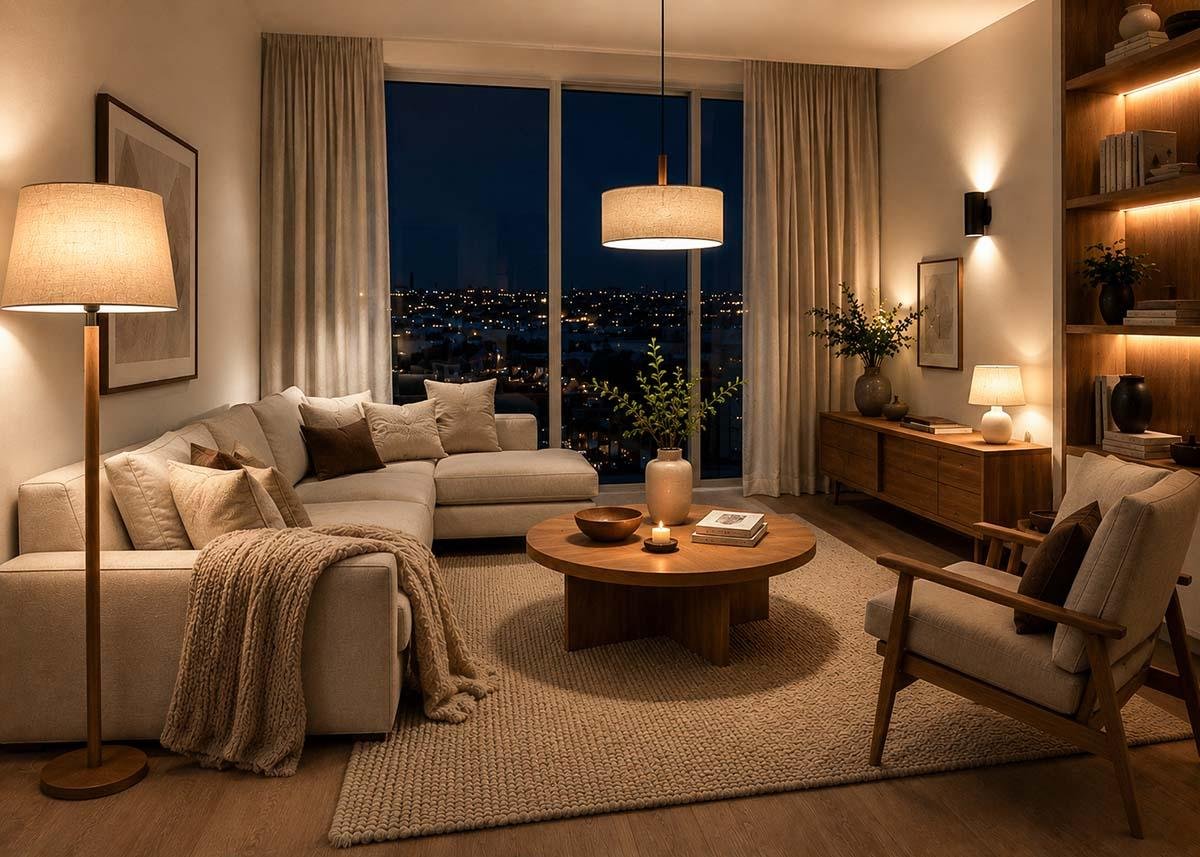
A warm white bulb around 2700K to 3000K can make a living room feel inviting, particularly when paired with soft upholstery, wooden furniture, rugs, and curtains. Rather than relying entirely on a central ceiling fixture, use several light sources at different heights. A table lamp can brighten a side table, a floor lamp can illuminate a reading corner, and wall lights can add a gentle glow without dominating the room.
Layering also gives you more control. When you are hosting guests, you may want a combination of ambient light and brighter task lighting. During a quiet evening, you might switch off the overhead light and rely on two lamps. This simple change can alter the room’s mood without changing any furniture or decor.
Cool lighting can still have a place in a living room. If you use one corner as a home office or craft area, a dedicated task lamp with neutral white light may be useful. The key is to keep the main lighting comfortable and make the task light controllable, so the room does not feel like a workplace when you want to relax.
Consider how the light interacts with your finishes, too. Warm bulbs can make oak, walnut, beige, and terracotta tones feel richer. If your living room uses cooler gray walls or crisp white decor, test a few bulbs before making a decision. A neutral white temperature may preserve the intended color more accurately.
Glare matters as much as color temperature. Exposed bulbs, reflective screens, and poorly positioned fixtures can be uncomfortable even when the Kelvin rating is suitable. Choose shades and diffusers that direct light where you need it, and avoid placing bright sources directly in your line of sight.
For more ways to build a comfortable atmosphere, explore these living room lighting ideas. The best living room lighting is flexible: warm enough for comfort, bright enough for everyday activities, and layered so you can adjust it to the moment.
5. Best Lighting Color for Bedrooms
For most bedrooms, warm white lighting around 2700K is a reliable choice because it creates a soft, relaxed atmosphere. Your bedroom is often where you want to slow down, read, prepare for sleep, and wake up gradually. Strong, cool lighting may be useful for cleaning, dressing, or other detailed tasks, but it does not need to dominate the room at every hour.

Start with the bedside lights. A table lamp or wall-mounted reading light allows you to illuminate your book without lighting the entire room. If two people share the bedroom, individual lights can be particularly helpful because each person can adjust their own illumination. Choose shades that soften the light and bulbs that provide enough brightness for reading comfortably.
A central ceiling light can still be useful when you are getting dressed, changing bedding, or cleaning. Consider using a dimmable fixture or adding separate task lighting near a wardrobe or dressing area. A neutral white bulb may help you see clothing colors more clearly, especially if the room has limited daylight. The important thing is to avoid creating unnecessary glare or a sharp contrast between a bright ceiling light and a dark room.
Lighting habits in the evening also deserve attention. Bright light can influence alertness, and the effects depend on intensity, timing, duration, and individual sensitivity. If you find it difficult to wind down, try reducing the brightness in the hours before bed and using warmer, lower-level lighting. This is a practical comfort measure, not a guarantee of improved sleep, and it works best alongside a consistent sleep routine.
Think about the appearance of the bedroom itself. Warm lighting can make cream bedding and natural wood feel inviting, while cool white light can emphasize gray, blue, or other cooler tones. Test bulbs in the room before buying several, because wall colors and fabric finishes may look different under artificial light than they do in daylight.
If you want flexibility, adjustable-white bulbs can shift from a brighter neutral tone when you are getting ready to a softer warm tone in the evening. Make sure the bulb is compatible with your fixture and control system. For a simple setup, two separate lighting sources—a comfortable bedside lamp and a brighter overhead fixture—may be all you need.
The goal is not to make your bedroom dim all the time. It is to make lighting suit the activity, with soft and controllable light for relaxation and sufficient visibility when you need it.
6. Warm vs Cool Lighting for Kitchens
Kitchens need lighting that helps you see what you are doing, but that does not mean they must feel clinical. You prepare food, clean surfaces, organize groceries, and often gather with family or friends in the same space. The best kitchen lighting combines clear visibility with a comfortable atmosphere, which is why 3000K to 4000K can be a useful range to consider.
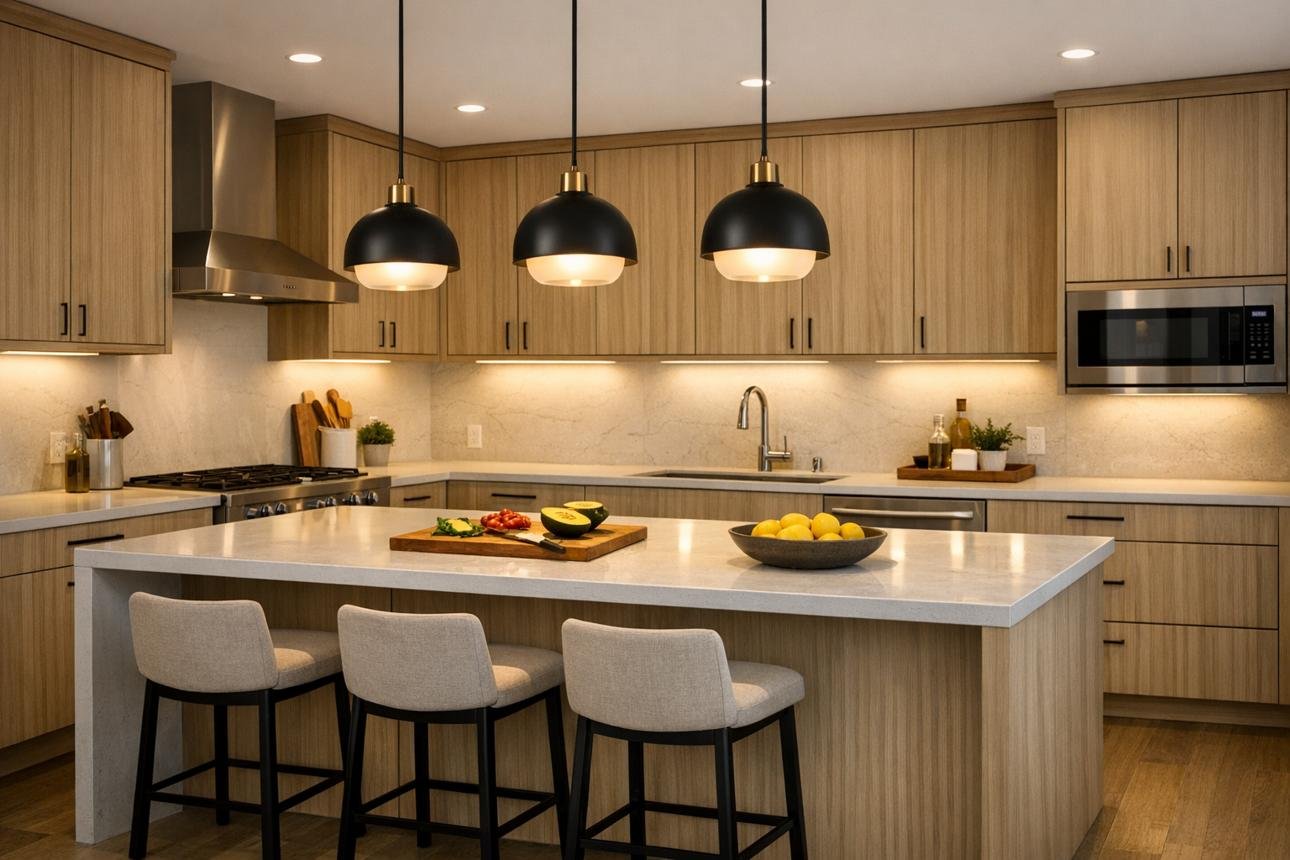
Warm white lighting around 3000K can work beautifully in kitchens with oak cabinets, warm stone, cream surfaces, or earthy colors. It gives the room a welcoming character, especially in open-plan homes where the kitchen connects directly to a living or dining area. If you often eat breakfast at the kitchen island or entertain guests while cooking, a warm-neutral tone can help the entire space feel connected.
Neutral white lighting around 3500K to 4000K may be preferable for detailed food preparation, particularly if you want a crisper appearance. Under-cabinet lights are especially useful because they illuminate the worktop directly, reducing shadows cast by overhead fixtures. Good task lighting can make chopping vegetables, reading recipe instructions, and checking food much easier.
The placement of the lights matters just as much as the color temperature. A bright ceiling fixture alone may leave shadows beneath cabinets or behind your body as you work at the counter. Consider a combination of general ceiling lighting, under-cabinet task lighting, and pendants over an island or dining counter. Each source should serve a purpose rather than simply adding more brightness.
Color rendering is also important in a kitchen. A bulb with a good CRI can help ingredients and food appear more natural. This can be useful when checking the freshness or color of produce, preparing meals, or serving food to guests. For most home kitchens, a CRI of 90 or higher is a worthwhile feature to look for if it fits your budget.
Avoid mixing very warm and very cool bulbs in the same visible area unless you have a deliberate lighting plan. For example, a 2700K ceiling fixture paired with a 6000K strip beneath the cabinets may make the kitchen feel inconsistent. If you want warmer ambient light and cooler task lighting, choose compatible fixtures and keep the difference subtle.
Finally, think about how the kitchen looks after dark. If it opens into the living room, dimmable pendants or separate switches can let you lower the brightness after cooking. You can keep the worktops well lit while making the surrounding area feel softer. That flexibility is often more valuable than choosing one supposedly perfect Kelvin number for every fixture.
7. Choosing Bathroom Lighting
Bathroom lighting has to perform several jobs. You need enough visibility to shave, apply makeup, style your hair, clean surfaces, and move around safely, yet you may also want a softer atmosphere for a relaxing bath or evening routine. A balanced approach is usually more effective than choosing either very warm or very cool lighting for the entire room.

For general bathroom illumination, 3000K to 4000K is a practical range to explore. Around 3000K can complement warm tiles, wood-look cabinetry, and beige stone. Around 3500K to 4000K can provide a more neutral appearance for bathrooms with crisp white fixtures or cooler finishes. Your choice should reflect the room’s colors and the tasks performed there.
Mirror lighting deserves special attention. A single ceiling fixture can cast shadows beneath your eyes and chin, making grooming more difficult. Lights positioned on either side of the mirror, or a suitable illuminated mirror designed to distribute light evenly, can provide a more useful result. Choose a high-CRI bulb when accurate skin and makeup colors matter, and avoid fixtures that produce harsh glare.
Cooler lighting is not automatically more accurate, and warmer lighting is not automatically more flattering. The result depends on color rendering, brightness, fixture position, and the surrounding finishes. If you apply makeup in the bathroom, aim for consistent lighting that resembles the conditions where you will spend the day. If you mostly use the bathroom for evening showers and relaxation, softer ambient lighting may be more important.
You can create two distinct moods through separate circuits. Bright vanity lighting supports grooming, while a dimmable overhead fixture or appropriately rated accent light can provide a gentler atmosphere at night. This approach avoids forcing one lighting setting to serve every purpose.
Safety is essential in bathrooms. Choose fixtures with the appropriate damp or wet-location rating for where they will be installed, and follow local electrical requirements. Any electrical work near water should be handled by a qualified professional when necessary. Do not select a fixture solely because it looks attractive in a photograph.
The best bathroom lighting makes everyday routines easier while complementing the room’s materials. A thoughtful combination of well-positioned task lights, comfortable ambient lighting, and consistent color rendering can achieve both goals.
8. The Best Lighting for Home Offices
A home office needs lighting that supports reading, writing, video calls, and screen-based work without creating unnecessary glare or eye discomfort. Neutral white lighting around 3500K to 4000K is a useful starting point for many workspaces, although the best choice depends on your preference, daylight, and the type of work you do.
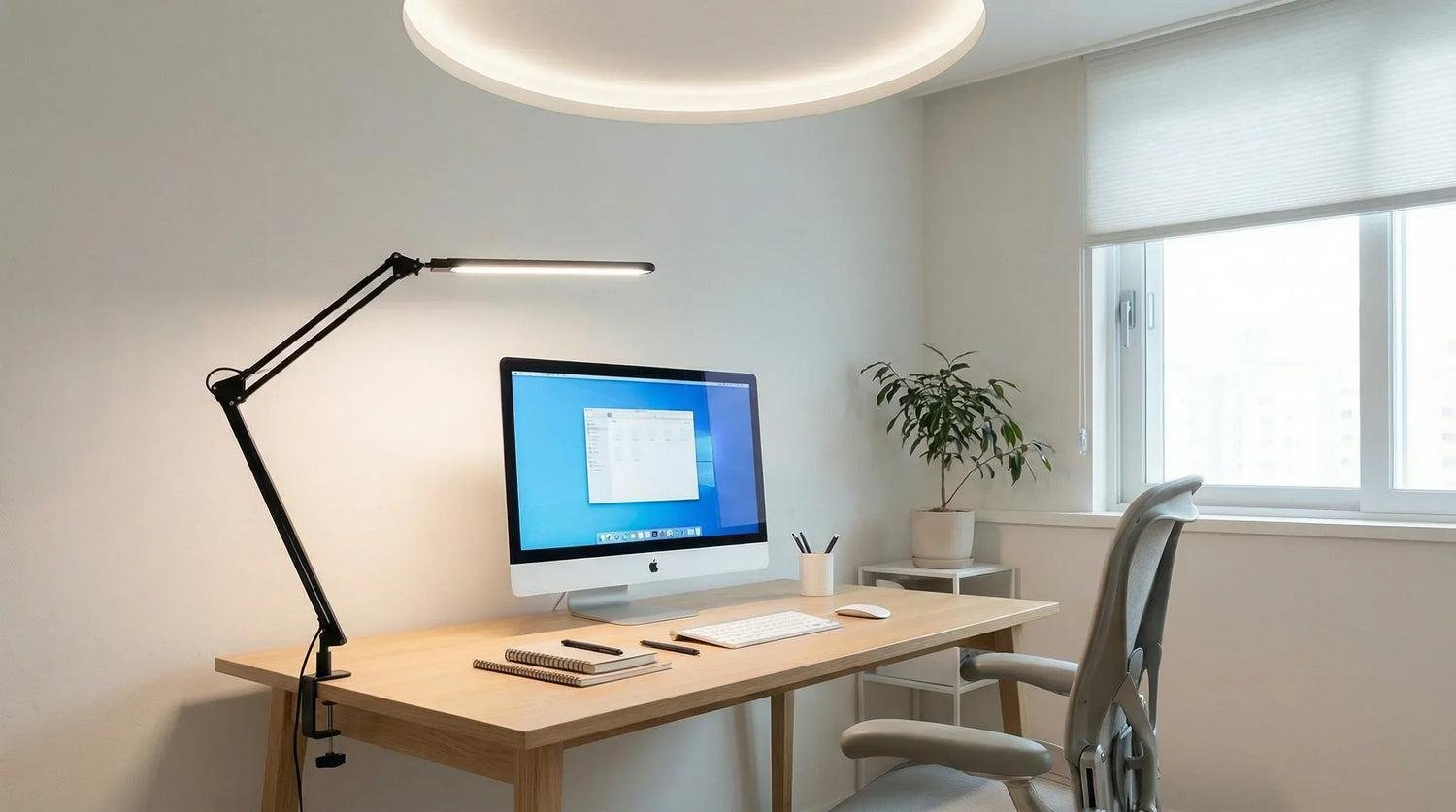
Begin with natural light if the room has a window. Position your desk so that daylight illuminates the work surface without creating strong reflections on your monitor. For many people, placing the screen perpendicular to a window is a useful starting point, though the best arrangement depends on the room’s layout and the direction of the light.
A desk lamp provides more control than relying on ceiling lighting alone. Choose a lamp that directs light onto paperwork, books, or other work materials while keeping the bulb out of your direct line of sight. Adjustable arms can be useful because they allow you to change the light’s position as your task changes. If you work with photographs, design materials, or color-sensitive projects, prioritize a high-CRI bulb as well as a suitable color temperature.
Cooler lighting can look crisp and may feel appropriate in a bright, task-oriented office. However, a high-Kelvin bulb is not a substitute for sufficient illumination, and it does not automatically improve productivity. A poorly positioned 5000K bulb can be less comfortable than a well-diffused 3500K lamp. Brightness, glare, contrast, and the quality of the light all affect the experience.
Consider how the office connects to the rest of your home. If your desk is in a living room or bedroom, you may want a task lamp that can be switched off independently when the working day ends. This helps the multipurpose room return to its usual atmosphere without changing the main lighting.
Video calls introduce another consideration. A light source placed in front of you or slightly to the side can illuminate your face more evenly than a strong light behind you. Avoid relying on a bright window directly behind your head, which may leave your face looking dark on camera. A diffused lamp can help, provided it is not uncomfortably bright.
Finally, give your eyes regular breaks and adjust the screen’s brightness to suit the surrounding environment. Lighting can improve the visual comfort of a workspace, but it cannot compensate for poor posture, an unsuitable screen position, or long periods without rest.
9. Warm vs Cool Lighting for Dining Rooms
Dining room lighting affects how the room feels during meals, celebrations, and everyday conversations. A warm white light around 2700K to 3000K often creates an inviting atmosphere, making it a popular option for dining tables and pendant fixtures. It can bring out the richness of wood furniture, soften neutral upholstery, and make the room feel intimate without requiring elaborate decor.
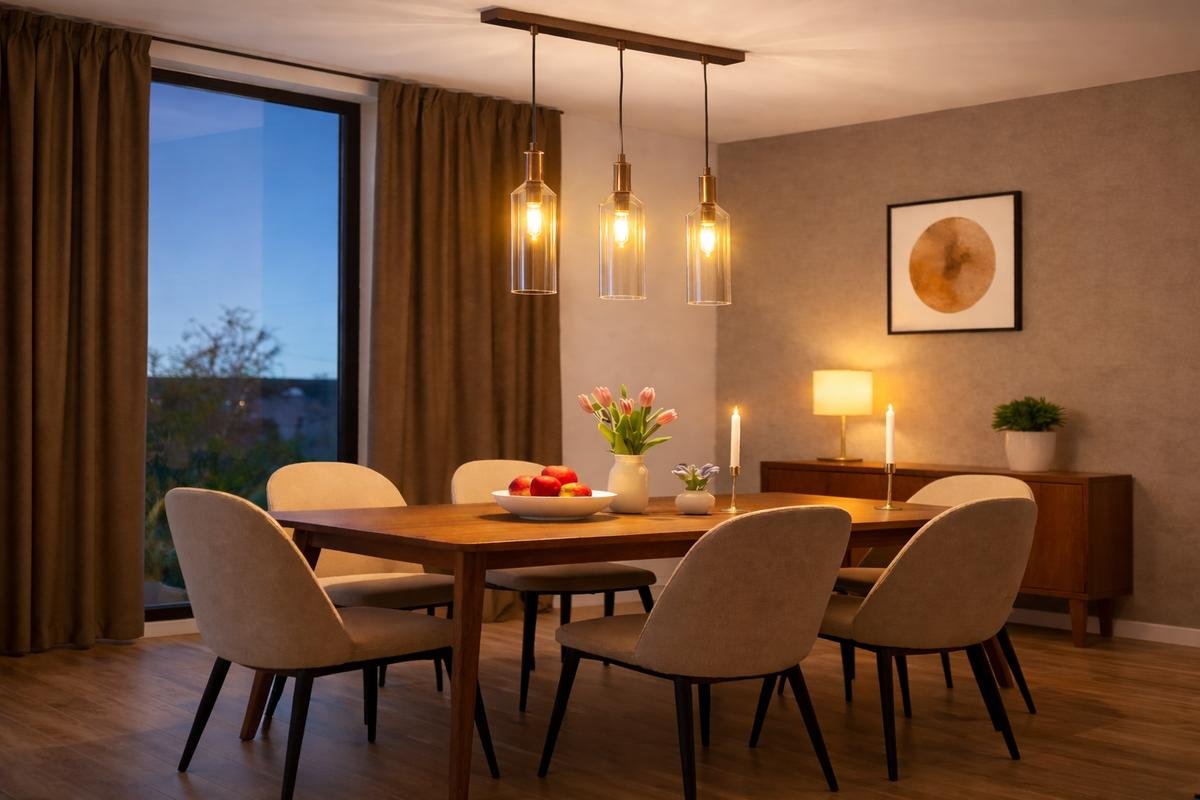
A pendant light above the table can provide a visual anchor for the room. Choose a fixture that suits the size and shape of the table, and position it so that it illuminates the dining surface without shining directly into diners’ eyes. A shade or diffuser can soften the light, while a dimmer gives you control over the atmosphere.
Warm lighting works especially well in dining rooms with wood, terracotta, cream, or earthy color schemes. If your dining space has cool gray finishes or crisp white surfaces, you may prefer a neutral white bulb around 3000K to 3500K. Testing the light before committing to several fixtures is a simple way to avoid unwanted color shifts.
Color rendering can affect how food appears. A high-CRI bulb can help meals look more natural and can be particularly useful if your dining area doubles as a place for crafts or other detailed activities. However, brightness and light distribution matter too. A beautiful pendant that leaves the table in shadow will not perform well simply because it has a warm color temperature.
If the dining room is part of an open-plan living area, consider how the lighting temperatures interact. A 2700K pendant above the dining table can work alongside 3000K living room lamps without looking dramatically different. Keeping the temperatures reasonably close helps the open space feel connected, while separate dimmers allow each zone to serve its purpose.
You can also use wall sconces or a sideboard lamp to add softer light around the edges of the room. This prevents the dining table from becoming the only illuminated area, which can make the surrounding space feel unusually dark. In the evening, a layered arrangement can create a more balanced atmosphere.
Ultimately, dining room lighting should help people feel comfortable and see their food clearly. Warm light is a strong choice for relaxed meals, but the best result comes from combining a suitable temperature with good fixture placement, appropriate brightness, and flexibility.
10. Lighting for Hallways and Entryways
Hallways and entryways are easy to overlook because people often pass through them rather than spend long periods there. Yet these areas shape the first impression of your home and help everyone move safely from one room to another. The right lighting can make a narrow hallway feel more welcoming, highlight artwork, and reduce dark corners.
Warm white lighting around 2700K to 3000K is often a comfortable option for residential entryways. It creates a welcoming transition from the outdoors into the home, particularly when paired with wood flooring, a console table, a mirror, or textured walls. If your hallway connects directly to a kitchen or office with neutral white lighting, a temperature closer to 3000K may help maintain visual continuity.
Brightness and spacing matter more than simply choosing a higher Kelvin number. A very cool bulb will not solve a hallway that has too few fixtures or poorly distributed light. Depending on the layout, recessed ceiling lights, flush-mount fixtures, wall sconces, or a pendant may work well. In a narrow corridor, choose fixtures that do not obstruct movement or create excessive glare.
Mirrors can help reflect available light, although their effect depends on placement and the brightness of the source. A mirror opposite a window or a well-lit area may brighten the space, while a mirror reflecting an exposed bulb can create uncomfortable glare. Consider what the mirror will actually reflect before installing it.
Entryways also benefit from practical controls. Motion sensors can be useful for night-time movement, while dimmers allow you to reduce brightness in the evening. If the hallway leads to bedrooms, a low-level night light can help people navigate without switching on a bright overhead fixture.
Artwork and architectural features can be highlighted with accent lighting, but restraint usually works best. One or two carefully illuminated pieces can make the hallway feel intentional. Too many competing fixtures may create a cluttered appearance, particularly in a small area.
Choose fixtures with suitable ratings for the environment and ensure that light reaches steps, thresholds, and changes in floor level. A welcoming entryway is not just about appearance; it should also provide clear visibility and safe movement for everyone who uses it.
11. How Lighting Color Affects Mood and Atmosphere
Lighting changes how a room feels, but the effect is more nuanced than saying warm light makes people relaxed and cool light makes them productive. Color temperature, brightness, timing, glare, personal preference, and the room’s surroundings all influence the experience. A softly illuminated room may feel peaceful because the light is low and indirect, while a brightly illuminated room may feel energetic regardless of whether its bulbs are warm or cool.
Warm lighting often creates an impression of intimacy because its golden appearance resembles familiar evening light sources such as candles and fires. This makes it a natural choice for living rooms, dining areas, and bedrooms. A warm table lamp beside a sofa can establish a comfortable pool of light without illuminating every corner of the room.
Cooler lighting tends to create a crisp visual appearance, which some people prefer for detailed tasks and daytime work. It can be useful in areas where you need to inspect surfaces, read small text, or distinguish objects clearly. However, cooler light can feel uncomfortable if it is excessively bright, poorly diffused, or used late in the evening when you want to wind down.
The timing of light exposure is important for the body’s circadian system, which helps regulate daily rhythms. Light’s effects depend on its intensity, spectrum, timing, duration, and the individual. Bright light during the day can support normal alertness, while exposure to bright light at night may affect some people’s ability to wind down. Color temperature alone does not determine the biological effect of a light source.
If you want your home to support different activities throughout the day, think about creating lighting scenes. In the morning, you might use brighter, more neutral light for getting ready. During the afternoon, natural daylight can do much of the work. In the evening, dimmer warm lighting can help the home feel less stimulating.
You do not need smart bulbs to achieve this. Separate switches, table lamps, and dimmers can offer considerable flexibility. The most useful arrangement is one that makes it easy to change the atmosphere without needing to replace bulbs or rearrange the room.
Pay attention to your own response, too. Some people love warm light in almost every room, while others prefer neutral white for everyday tasks. Use general guidance as a starting point, then test options and choose what feels comfortable in your home.
12. How Lighting Changes the Appearance of Paint and Decor
One of the most frustrating decorating experiences is choosing a paint color in the store, applying it to the wall, and discovering that it looks completely different at home. Lighting is a major reason for this change. A color is not perceived in isolation; the light source, surrounding finishes, time of day, and neighboring colors all affect how it appears.
Warm lighting can make cream, beige, warm gray, and wood tones look richer or more golden. It may also make cool whites appear slightly yellow and can soften the appearance of blue-based paint colors. Cool lighting can make white surfaces look crisper and may emphasize blue or gray undertones. Depending on the paint, it can also make some warm colors look less vibrant than expected.

This is why testing paint samples in your actual room is so important. Apply sample patches to more than one wall if possible, then observe them in daylight, under your existing lights, and after dark. If you are choosing a color for a room with limited natural light, evaluate it under the lighting you intend to use rather than assuming daylight will make it look the same.
Wood finishes are affected, too. Warm lighting can emphasize the golden and reddish tones in some woods, while cooler lighting may make them look more neutral or gray. If you are combining wood flooring, cabinetry, and furniture, inspect samples under the same light source before making a large purchase. This is particularly important when the materials will be next to one another.
Artwork, textiles, and decorative accessories also respond to light. A cushion that looks neutral in a showroom may appear creamier under a warm bulb, while a colorful painting may look different under a low-CRI light source. If accurate color matters, choose lighting with good color rendering and avoid mixing bulbs with noticeably different spectral characteristics in the same area.
Finish type plays a role as well. Glossy surfaces reflect light and can produce glare, while matte finishes tend to scatter reflections more softly. A room with polished stone, mirrors, and glossy cabinetry may need carefully positioned fixtures to avoid uncomfortable bright spots.
Before committing to a full lighting scheme, test a few bulbs with your actual paint and furnishings. This inexpensive experiment can reveal whether the color temperature supports the look you wanted. It is often easier to adjust a bulb than repaint an entire room.
13. LED Bulbs: Warm White, Soft White, and Daylight
LED bulbs are widely used in homes because they can provide substantial light while consuming relatively little electricity compared with many older lighting technologies. They are available in a broad range of color temperatures, shapes, brightness levels, and fixture types. The challenge is understanding the labels, because terms such as “soft white,” “warm white,” “bright white,” and “daylight” are not always used consistently across manufacturers.
The most reliable starting point is the Kelvin rating printed on the packaging. A bulb around 2700K usually produces warm white light, while 3000K is often described as soft or warm white. Around 3500K to 4000K is generally more neutral, and 5000K or above usually appears cooler or more daylight-like. Check the actual number rather than assuming every brand uses the same terminology.
| Common label | Typical color temperature | Potential uses |
|---|---|---|
| Soft white | Around 2700K | Bedrooms, living rooms, dining areas |
| Warm white | Around 2700K–3000K | Living spaces, hallways, cozy interiors |
| Neutral or bright white | Around 3500K–4000K | Kitchens, bathrooms, general task areas |
| Daylight | Around 5000K–6500K | Selected task areas, garages, utility spaces |
These ranges are approximate, and packaging terms vary. Always check the manufacturer’s specifications.
Do not confuse color temperature with brightness. A bulb’s lumens tell you how much visible light it produces, while watts describe the electrical power it consumes. If a room feels too dark, changing from 2700K to 5000K will not necessarily solve the problem. You may need more lumens, better fixture placement, or additional task lighting instead.
Compatibility is another consideration. If you use a dimmer, confirm that the LED bulb is specifically rated for dimming and that it is compatible with the control. Some combinations can flicker, buzz, or have a limited dimming range. Smart bulbs and certain fixtures may also require specific switches or control systems.
Color rendering is worth checking if you want your decor to look its best. A CRI of 80 or above is common in general-purpose lighting, while a CRI of 90 or above can be preferable where accurate colors matter. This is particularly useful in kitchens, bathrooms, dressing areas, and rooms where artwork or colorful materials are important.
Finally, check the fixture’s requirements and the bulb’s physical size. Some enclosed fixtures require bulbs rated for enclosed use, and outdoor or damp areas may require appropriately rated products. Choosing the correct bulb involves more than picking a warm or cool color; it means matching the bulb to the fixture, activity, and room.
14. Layering Warm and Cool Lighting in One Home
You do not have to choose a single lighting temperature for your entire home. In fact, different rooms often benefit from different settings because their purposes vary. A bedroom may feel best with warm light, while a utility room may benefit from a more neutral white. The goal is to create a coherent overall experience rather than making every bulb identical.
Start by deciding how each room should feel and function. Living rooms and bedrooms often benefit from warm ambient lighting, while kitchens and work areas may need more neutral task lighting. Bathrooms can use a balanced combination for grooming and relaxation. These are starting points, not rules, and your materials and personal preferences should guide the final choice.
In open-plan spaces, the relationship between adjacent lighting sources deserves extra attention. Imagine a living room with 2700K table lamps next to a kitchen with 6000K ceiling lights. The difference may feel abrupt, especially when both areas are visible at once. Choosing a warmer kitchen light or a more neutral living room source may create a smoother transition.
You can also separate ambient and task lighting within one room. A kitchen might have 3000K pendant lights for general atmosphere and well-positioned 3500K or 4000K under-cabinet lights for food preparation. A home office in a bedroom could have warm bedside lighting plus a dedicated neutral task lamp. When the sources serve distinct functions, the difference can feel intentional.
Use fixture placement and light distribution to support the plan. A task light should illuminate the work area rather than spill harsh light across the entire room. Ambient sources should provide comfortable background illumination. Dimmers and separate switches make it easier to adjust the combination for different activities.
If you are unsure how to coordinate the temperatures, keep them relatively close in areas that connect visually. A shift from 2700K to 3000K is often subtle, while a jump from 2700K to 6000K is more noticeable. You may still choose a larger difference for a specific purpose, but test it in context before installing many bulbs.
A simple lighting plan can help. Write down each room, its main activities, the desired atmosphere, and the bulb temperature you intend to use. This reduces accidental inconsistencies and makes future replacements easier. The result is a home that feels connected while allowing each room to have the light it needs.
15. Dimmable Bulbs and Smart Lighting
Dimmable and smart lighting can make it easier to adapt a room throughout the day. Instead of relying on one brightness level for every situation, you can use brighter light for cleaning or detailed tasks and lower light for a relaxed evening. Some systems also let you adjust color temperature, giving you more control over the appearance of the light.
A traditional dimmer can be enough for many homes. It allows you to reduce brightness without changing the bulb, which can be especially useful in living rooms, dining areas, and bedrooms. However, not every LED bulb works with every dimmer. Check compatibility before purchasing, and follow the manufacturer’s recommendations to avoid flickering, buzzing, or inconsistent performance.
Smart bulbs offer additional flexibility. Depending on the model, you may be able to switch between warm and cool white, adjust brightness from a phone, create schedules, or control multiple lights together. Some adjustable-white bulbs provide a range from warm white to daylight-like tones, while other products offer a limited selection of preset temperatures.
These features can be useful in multipurpose rooms. For example, you might set a home office to a brighter neutral tone during work hours, then change to warmer light in the evening. In a bedroom, a schedule could gradually reduce brightness as bedtime approaches. These settings are conveniences rather than guarantees of better sleep or productivity, and their value depends on how you use them.
Before buying smart bulbs, check your existing fixtures and switches. Some systems require a compatible hub or wireless connection, while others operate directly through a phone or smart-home platform. If a wall switch cuts power to a smart bulb, app-based control may stop working until the switch is turned back on. Consider whether the system will be convenient for everyone in the household.
You do not need smart technology in every room. A dimmable lamp in the living room and a simple warm bedside bulb may offer all the flexibility you need. Prioritize areas where adjustable light would genuinely improve daily routines.
The best system is the one you can use comfortably and reliably. Keep controls simple, make sure essential lights remain easy to operate, and choose products that fit your budget. Flexibility matters, but it should not make ordinary lighting more complicated than necessary.
16. Common Lighting Mistakes to Avoid
One common mistake is assuming that cool lighting is always brighter. Color temperature and brightness are separate characteristics. A 2700K bulb can produce more lumens than a 5000K bulb, depending on the products being compared. If a room feels too dim, check the lumen output, fixture placement, and number of light sources before changing the Kelvin rating.
Another mistake is using the same bulb temperature everywhere without considering the room’s purpose. A single color temperature throughout the home can create consistency, but it may not provide the atmosphere or task lighting each space needs. Bedrooms, kitchens, bathrooms, and offices have different requirements, so it makes sense to adapt the lighting while maintaining a reasonable visual relationship between connected rooms.
Mixing incompatible bulbs is also a frequent problem. If several fixtures in one room use noticeably different white tones, the room can look uneven. This is especially visible when lights shine onto the same wall or countertop. Check the Kelvin rating when replacing bulbs and keep matching fixtures consistent unless the difference is intentional.
Poor placement can undermine even an expensive lighting scheme. A bright ceiling light may cast shadows on a kitchen worktop, while a bedside lamp positioned behind your shoulder may make reading uncomfortable. Think about where the light falls, what it illuminates, and whether you see the bulb directly. Add task lighting where needed instead of increasing brightness everywhere.
Ignoring color rendering can also lead to disappointment. A bulb may have a suitable temperature but still make paint, clothing, or food appear less natural. If accurate color matters, check the CRI and look for a quality bulb from a reputable manufacturer. Kelvin alone does not tell you how faithfully a light source reveals colors.
Finally, do not overlook glare and reflection. Bare bulbs, polished surfaces, and poorly placed fixtures can create discomfort. Diffusers, lampshades, indirect lighting, and careful positioning can soften the result. In work areas, position lights to avoid reflections on screens and glossy surfaces.
A final practical mistake is buying many bulbs before testing one. Start with a single bulb in the actual room, observe it during the day and evening, and compare it with your paint and furnishings. That small test can prevent an entire room from ending up with lighting that does not suit your home.
17. Energy Efficiency and Choosing the Right Bulbs
Energy efficiency is an important part of choosing home lighting, but it is not determined by color temperature alone. A warm white LED and a cool white LED can both be energy-efficient. What matters is the amount of light they produce for the electricity they consume, how long they are used, and whether they meet the needs of the space.
When comparing bulbs, look at lumens and wattage. Lumens describe visible light output, while watts indicate electrical power consumption. A bulb that uses fewer watts to produce the same amount of light may be more efficient, although product quality and performance can vary. Energy labels and manufacturer specifications can help you compare options.
Consider the room before choosing the brightness. A reading lamp may need focused light in a small area, while a kitchen may need several sources to illuminate worktops, cabinets, and general circulation. Using a single very powerful bulb in the center of a room is not always the most comfortable or efficient solution. A well-designed arrangement can deliver light where it is useful without flooding every corner.
LEDs are commonly chosen because they generally use less electricity and last longer than traditional incandescent bulbs. Their actual lifespan depends on product quality, operating conditions, heat management, and usage. Choose bulbs suited to the fixture, especially where ventilation is limited, and follow any restrictions stated by the manufacturer.
Controls can reduce unnecessary energy use as well. Turn off lights when they are not needed, use timers or occupancy sensors in suitable areas, and consider dimmers where compatible. Daylight can reduce the need for artificial lighting during the day, provided that the room remains comfortably illuminated for its activities.
Avoid choosing a bulb solely because it is the cheapest option. A lower initial price may not be the best value if the bulb performs poorly, has a short lifespan, or does not work with your fixture. Compare quality, warranty, brightness, color rendering, and compatibility as well as purchase price.
The most effective lighting plan balances efficiency with comfort and function. Choose the right color temperature for the room, provide enough light for the task, reduce glare, and use controls that suit your routine. When all these elements work together, your lighting can be both practical and inviting without wasting electricity.
Conclusion: Finding the Right Light for Every Room
So, when it comes to warm vs cool lighting, which is better for your home? The answer depends on how you use each room and the atmosphere you want to create. Warm lighting around 2700K to 3000K is an excellent starting point for living rooms, bedrooms, and dining areas where comfort and relaxation matter. Neutral or cooler lighting around 3500K to 4000K can be useful for kitchens, bathrooms, workspaces, and other areas where you need clear visibility.
You do not have to choose one color temperature for your entire home. A more flexible approach is to combine warm ambient lighting with practical task lighting, keeping the temperatures reasonably consistent in rooms that connect visually. This gives you the freedom to make your living room feel cozy, your kitchen functional, and your bedroom restful without making the whole house look mismatched.
Before buying new bulbs, consider your existing paint colors, flooring, furniture, and natural light. A warm bulb may enhance wooden finishes and beige textiles, while a neutral white bulb may suit cooler surfaces. Test a bulb in the actual room, check its brightness in lumens, and consider its color-rendering quality as well as its Kelvin rating.
Most importantly, remember that good lighting is not simply about choosing the right bulb. Fixture placement, glare control, dimming options, and the way light reaches different surfaces all influence the result. A thoughtfully layered lighting scheme can make even a simple room feel more comfortable and attractive.
Start with one room, make a few deliberate changes, and notice how the atmosphere improves. When your lighting supports both your home’s design and your everyday routines, you will have found the right balance between warmth, clarity, and comfort.
Frequently Asked Questions
1. Is warm or cool lighting better for your home?
Neither is universally better. Warm lighting is often ideal for relaxing spaces such as bedrooms and living rooms, while neutral or cool lighting can be useful for detailed tasks in kitchens, bathrooms, offices, and utility rooms. Your finishes, personal preferences, and lighting needs should guide the decision.
2. What Kelvin is best for home lighting?
For many homes, 2700K to 3000K works well in living rooms, bedrooms, and dining rooms. Around 3500K to 4000K can suit kitchens, bathrooms, and work areas. Higher temperatures, such as 5000K, may be useful in selected utility or task-oriented spaces, but they are not necessary for every room.
3. Is warm lighting better for sleep?
Warm, dim lighting in the evening may be more comfortable when winding down because it can reduce exposure to the bright, stimulating light often used during daytime activities. However, sleep is affected by light intensity, timing, duration, and individual sensitivity—not color temperature alone. A consistent bedtime routine and reduced bright-light exposure before sleep may also help.
4. Should I use warm or cool lighting in the kitchen?
Both can work. Around 3000K often suits kitchens with warm wood, beige finishes, and an inviting atmosphere. Around 3500K to 4000K can provide a more neutral appearance for food preparation and cleaning. Under-cabinet task lighting and bulbs with good color rendering can be particularly helpful.
5. Can I mix warm and cool lighting in the same room?
Yes, especially when each light serves a different purpose. For example, you can use warm ceiling or table lighting for general atmosphere and a neutral task lamp for reading or detailed work. Keep the difference intentional, and avoid mixing noticeably different white tones in fixtures that illuminate the same surface unless you specifically want that effect.



Leave a Reply