
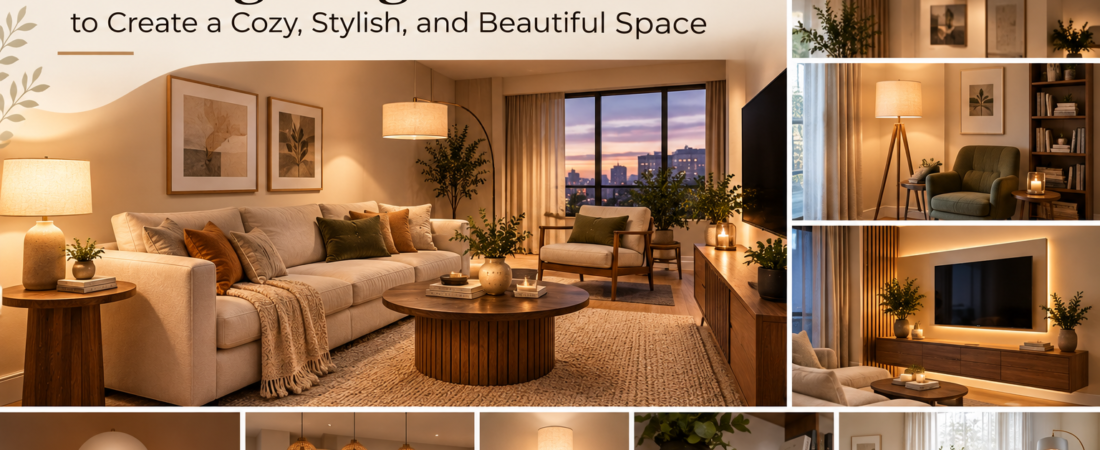
Lighting can completely change the personality of a living room. The same sofa, rug, wall color, and artwork can feel dramatically different under a harsh ceiling fixture compared with a combination of soft lamps, warm accent lights, and carefully positioned natural light. That is why living room lighting ideas deserve just as much attention as furniture and decor when you’re designing a comfortable home.
Good lighting isn’t simply about making a room bright enough to see. It creates atmosphere, highlights architectural details, makes colors look richer, and helps different areas of the room perform different functions. You might want bright light while reading or cleaning, softer illumination while watching a movie, and a warm glow when friends come over in the evening. Layered lighting gives you that flexibility.
The great thing about updating living room lighting is that you don’t necessarily need a major renovation. A statement floor lamp, a pair of table lamps, wall sconces, LED accent lighting, or even a better arrangement of existing fixtures can make a noticeable difference. Whether your style is modern, traditional, minimalist, Scandinavian, rustic, or cozy contemporary, there is a lighting approach that can work beautifully.
This guide explores 20 living room lighting ideas, from statement chandeliers and elegant pendant lights to practical reading lamps, wall sconces, recessed lighting, smart bulbs, and decorative accent lighting. You’ll also find ideas for small living rooms, apartments, low ceilings, and budget-friendly makeovers.
Understanding Living Room Lighting
The best living room lighting doesn’t come from one fixture hanging in the middle of the ceiling. Instead, it comes from a combination of light sources positioned at different heights and locations throughout the room. This creates depth and allows you to adjust the atmosphere depending on what you’re doing.
Think about your living room as a collection of zones rather than one large space. You might have a sofa where you relax, a chair where you read, a console where you display artwork, and a television area where you watch movies. Each zone can benefit from its own type of illumination.
Why Layered Lighting Matters
Layered lighting is one of the simplest ways to make an interior feel more sophisticated. Instead of relying entirely on an overhead fixture, combine ceiling lighting with floor lamps, table lamps, sconces, and accent lighting.
This approach prevents the room from feeling flat. A ceiling fixture can provide general illumination, while a floor lamp adds light beside the sofa and a small table lamp creates a warm pool of light in another corner.
Layered lighting is also practical. Imagine cleaning the living room in the afternoon. You may want plenty of illumination. Later that evening, you might prefer only a couple of lamps and subtle accent lighting. A layered scheme lets the room change with your routine.
The Three Main Types of Living Room Lighting
The three basic categories are ambient lighting, task lighting, and accent lighting.
Ambient lighting provides overall illumination. Ceiling fixtures, recessed lights, chandeliers, and some larger pendant lights can serve this purpose.
Task lighting is designed for specific activities. Reading lamps, desk lamps, and adjustable floor lamps are examples.
Accent lighting is primarily used to highlight something or create atmosphere. Picture lights, shelf lighting, decorative lamps, and lights aimed at artwork can all play this role.
You don’t have to use every possible fixture. The goal is to combine enough sources to make the room comfortable and adaptable without turning the ceiling into a collection of competing lights.
20 Living Room Lighting Ideas
1. Make a Statement With a Modern Chandelier
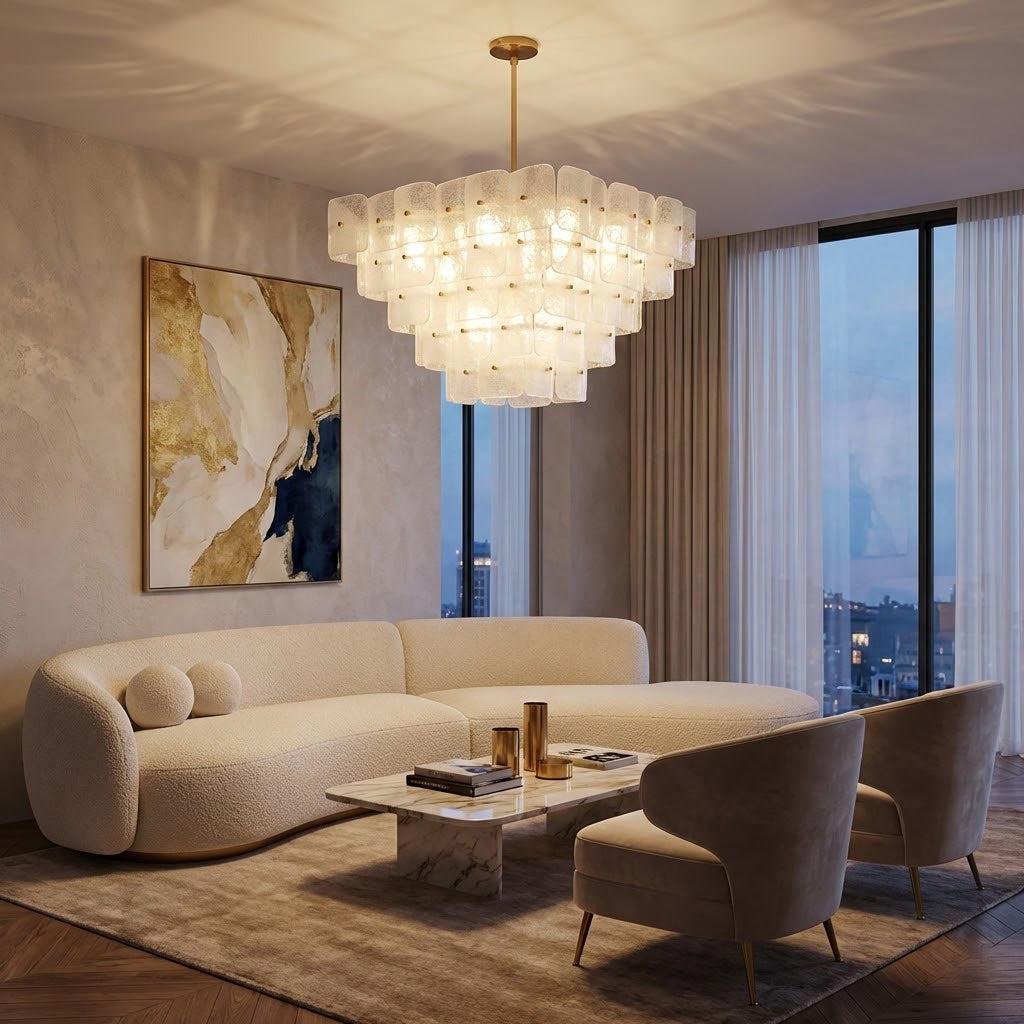
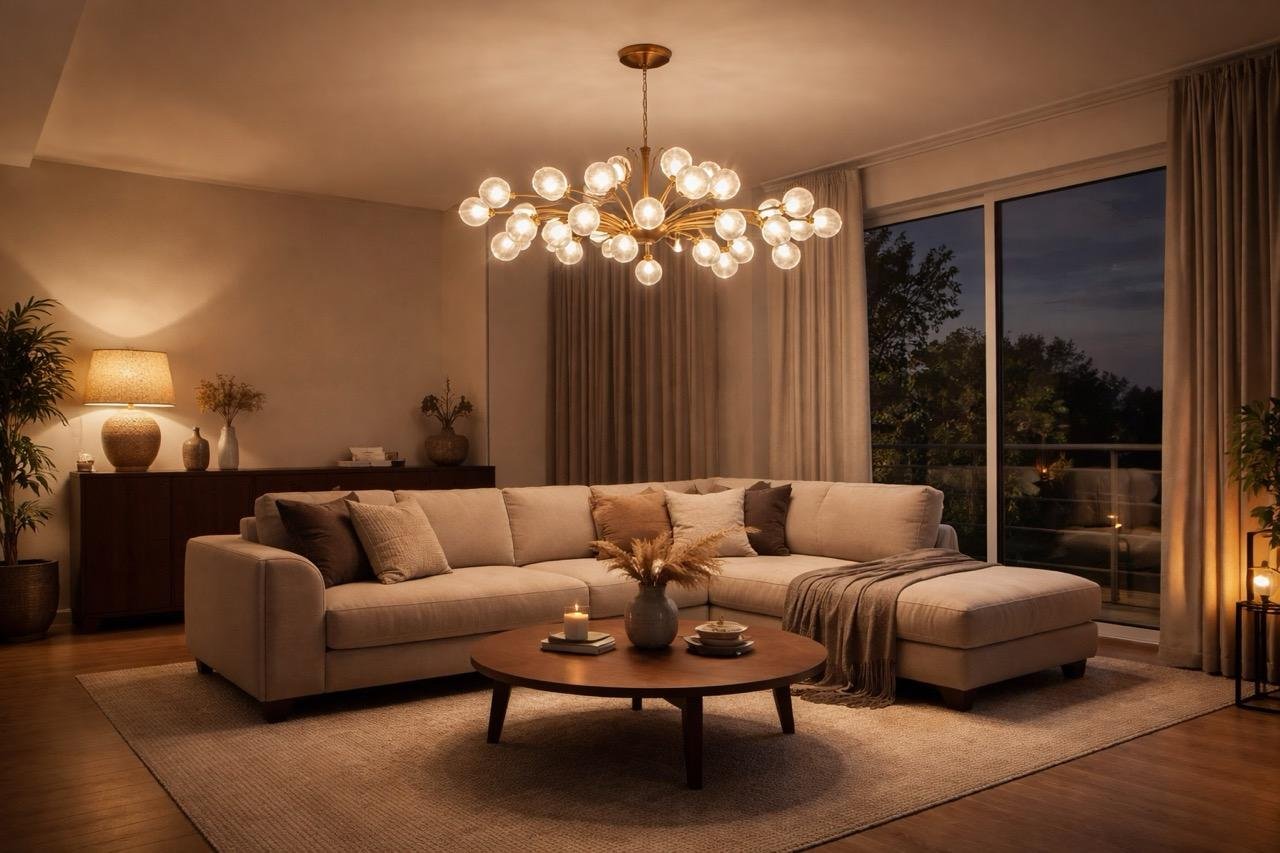
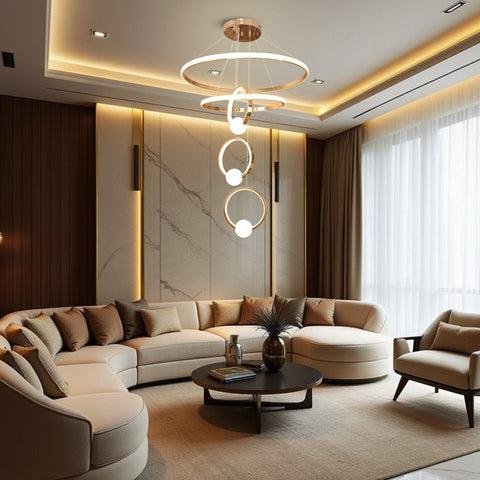
A statement chandelier can instantly become the focal point of a living room. Instead of treating the ceiling fixture as something purely functional, choose a design that contributes to the room’s overall personality. Sculptural chandeliers, contemporary globe fixtures, linear designs, and elegant multi-arm fixtures can all create very different moods.
The size of the chandelier should relate to the room. A tiny fixture can disappear above a large seating arrangement, while an oversized chandelier may dominate a compact living room. Look at the dimensions of the room and the furniture before choosing a fixture, and pay attention to ceiling height as well.
The style of the chandelier should complement rather than compete with the rest of the decor. A brass fixture can add warmth to a neutral interior, while matte black can provide contrast in a light room. A glass or globe design may feel lighter visually and work particularly well in contemporary interiors.
Think about the shape of the room, too. In a rectangular living room, a linear chandelier can echo the room’s proportions. In a square seating area, a round or centrally arranged fixture may feel more balanced.
A chandelier doesn’t have to be reserved for formal interiors. Even a casual living room can benefit from a sculptural ceiling fixture. Pair it with comfortable furniture, natural textures, and soft lamps to prevent the room from feeling overly formal.
Lighting tip: Choose a chandelier that can work with a dimmer when compatible with the fixture and electrical system. This allows the same statement light to provide brighter general illumination during the day and a softer atmosphere in the evening.
2. Add a Stylish Floor Lamp Beside the Sofa
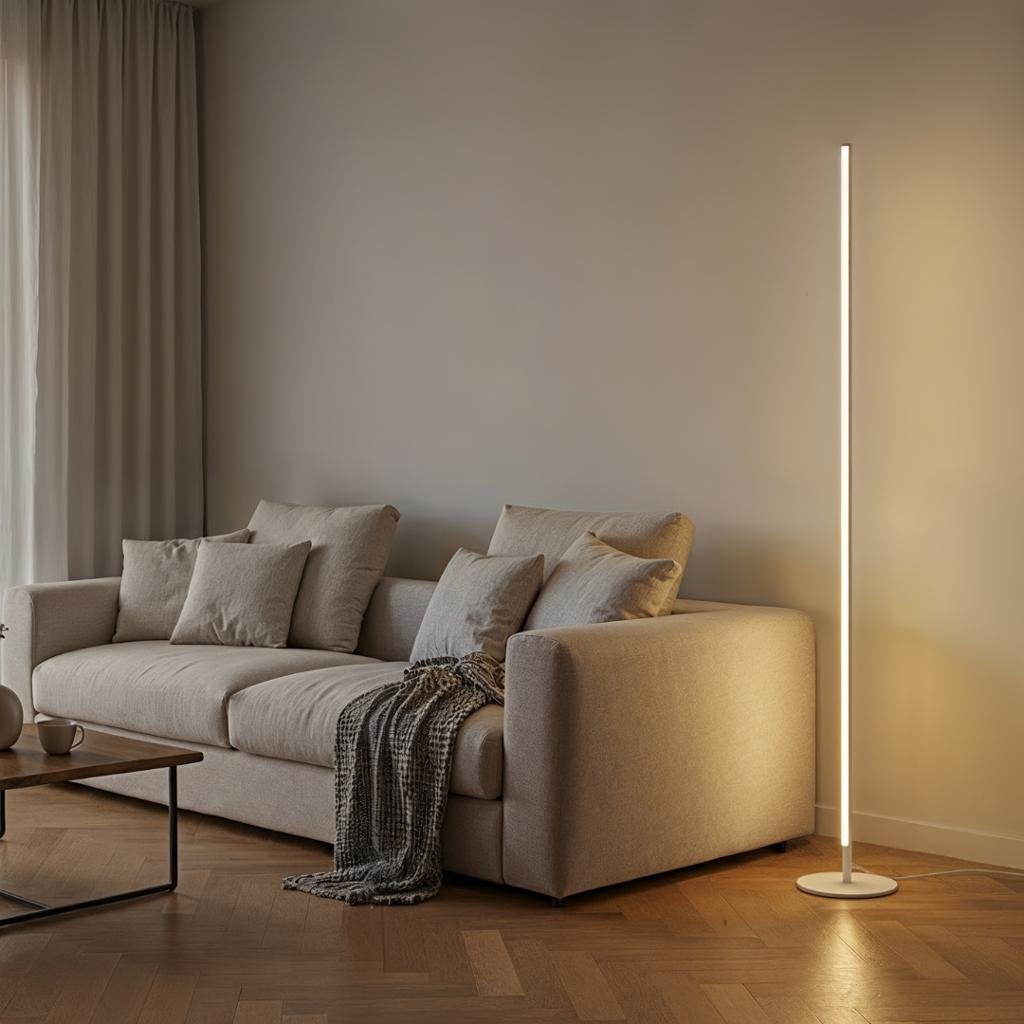
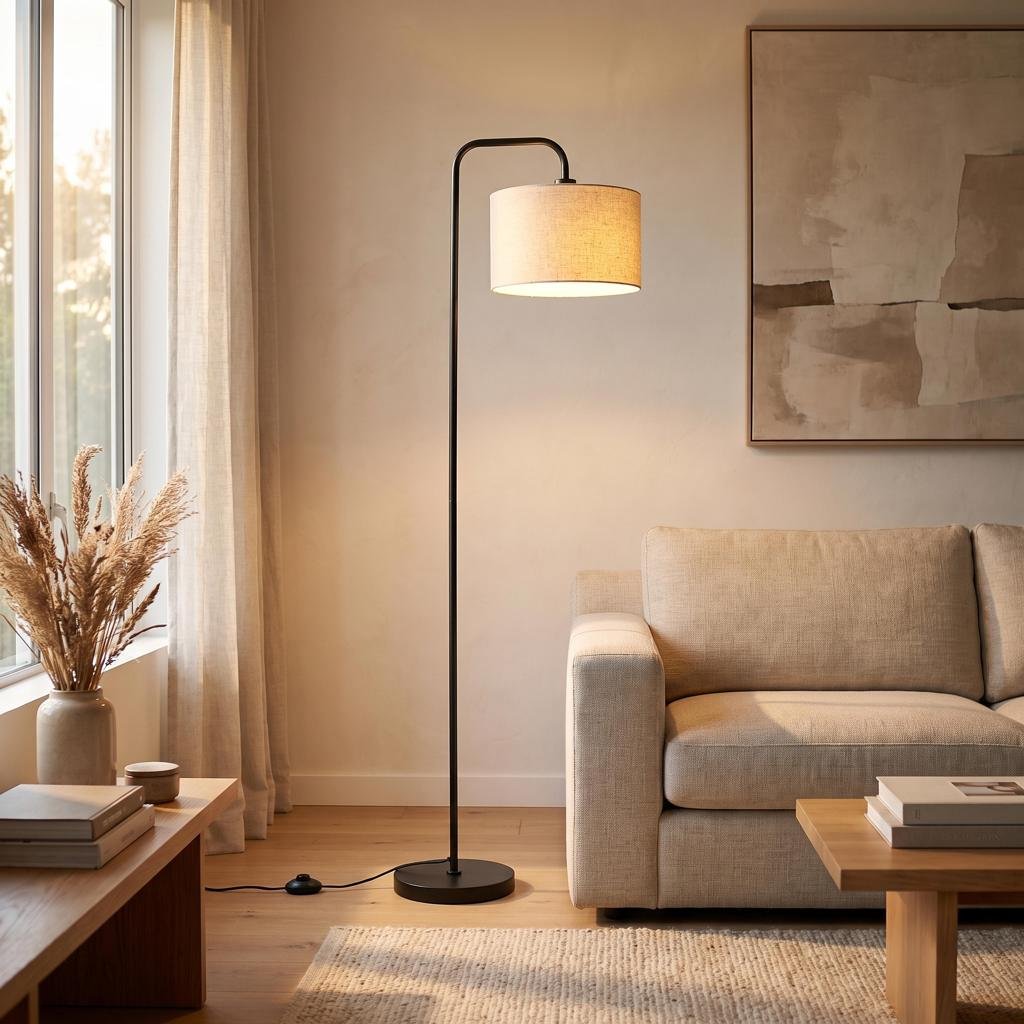
A floor lamp beside the sofa is one of the easiest living room lighting upgrades because it adds both function and visual height. A tall lamp can fill an empty corner, provide useful light for reading, and create a softer alternative to an overhead fixture.
Arc floor lamps are particularly useful when you want light over a coffee table without placing a lamp directly on the table. Their curved arms extend over the seating area and can become a decorative feature in their own right.
A slim tripod or straight floor lamp can work well in smaller rooms. Look for a narrow base if floor space is limited. Lamps with adjustable heads offer additional flexibility because you can direct the light toward a chair, book, or specific area.
The lampshade also affects the atmosphere. A fabric shade tends to diffuse light softly, while an exposed bulb or open metal shade can create a more direct and contemporary effect. Consider how much light you need before choosing purely based on appearance.
Place the lamp where it supports your daily routine. Beside the sofa is useful for reading, but a floor lamp can also illuminate a dark corner, highlight a plant, or create a visual balance with a cabinet on the opposite side of the room.
Lighting tip: Choose a floor lamp that is proportional to the sofa and ceiling height. A very short lamp can look lost beside a large sectional, while an extremely tall fixture can overwhelm a compact seating area.
3. Use Table Lamps for a Warm Evening Glow
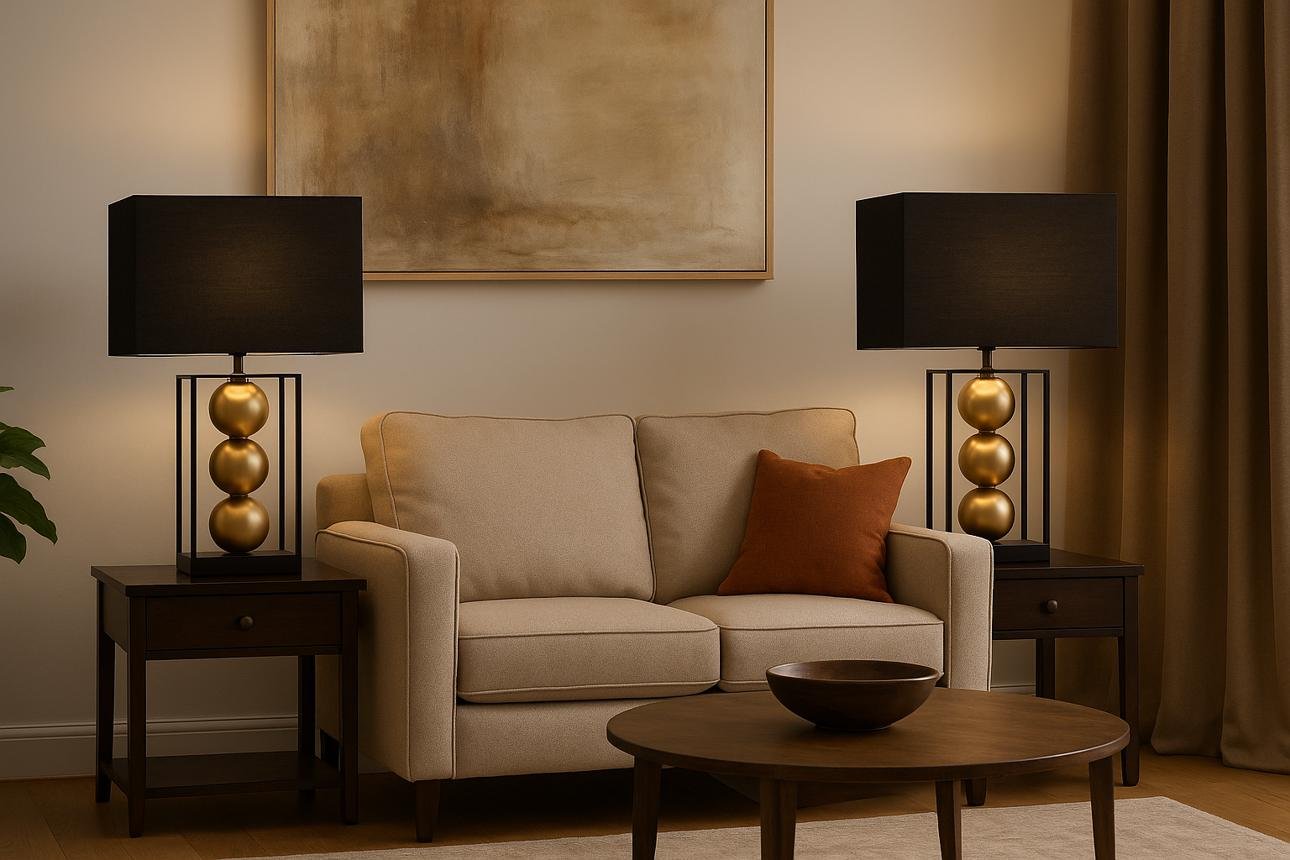
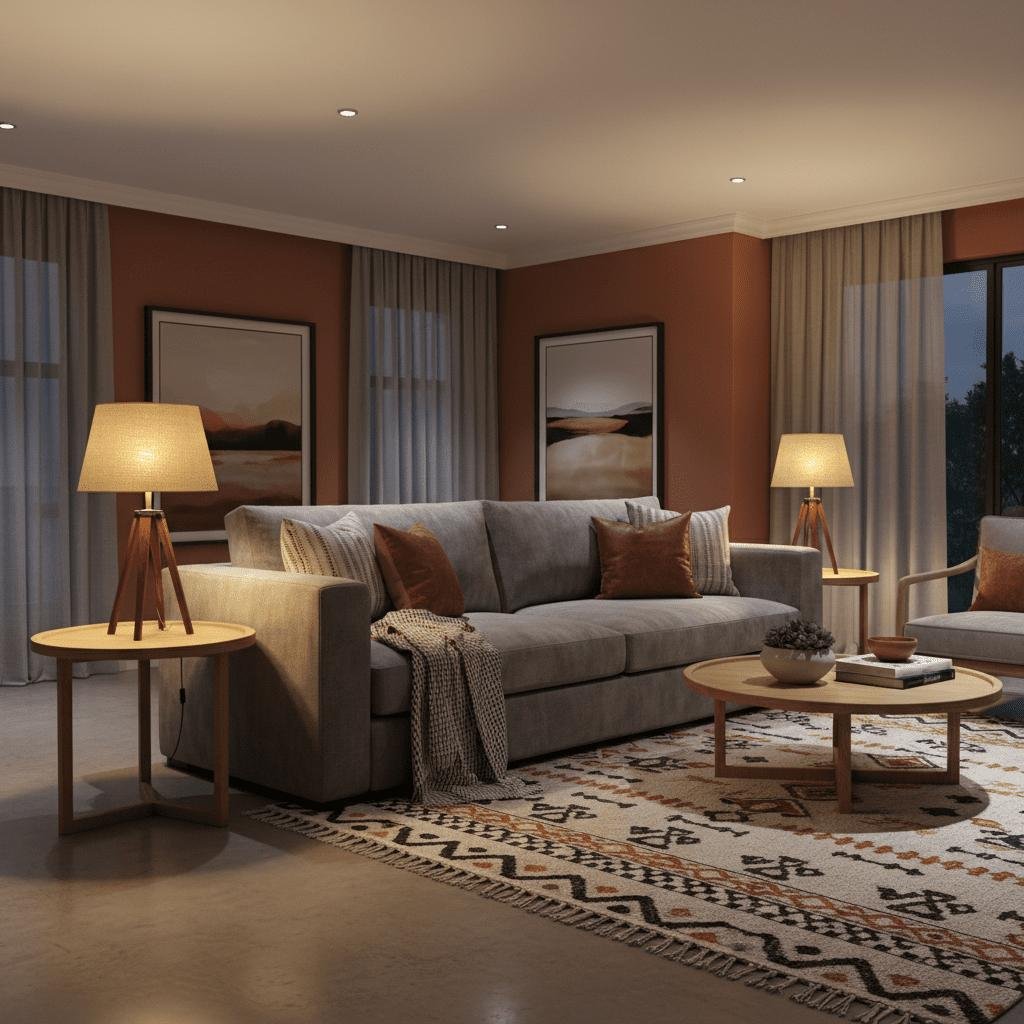
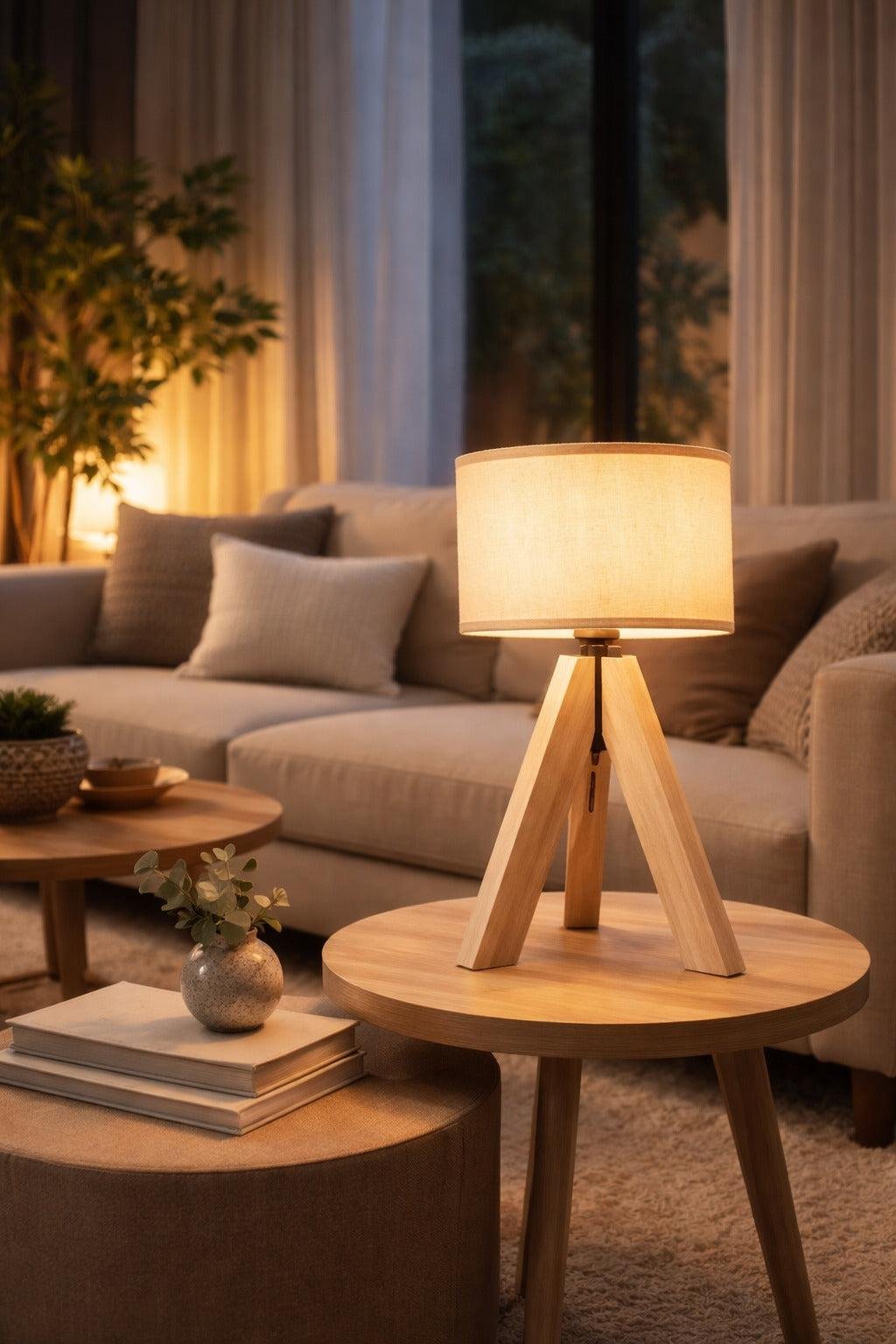
Table lamps are small, but they can have a surprisingly large impact on the atmosphere of a living room. Because they sit closer to eye level than ceiling fixtures, they create intimate pools of light that make the room feel more relaxed.
Place a lamp on a side table next to the sofa or armchair. If you have a console behind the sofa, a pair of lamps can create symmetry while adding another layer of illumination. In a larger room, several small lamps positioned throughout the space can create a balanced glow.
Don’t feel obligated to choose matching lamps. Matching pairs work beautifully in symmetrical rooms, but different lamps can create a more collected and personal look. If the shapes differ, keep something consistent, such as the color, material, or shade style.
The lamp itself can also function as decor. Ceramic bases, ribbed glass, stone finishes, wood, and metal can introduce texture and character. Choose a lamp that complements your existing furniture rather than treating it as an isolated object.
Shade color and material matter, too. A lighter shade generally creates a softer, more diffused appearance, while a darker shade can direct more light upward or downward depending on its construction.
Lighting tip: Use table lamps to create several smaller pools of light rather than placing all your lighting in one area. This makes the room feel more balanced after dark.
4. Install Elegant Wall Sconces
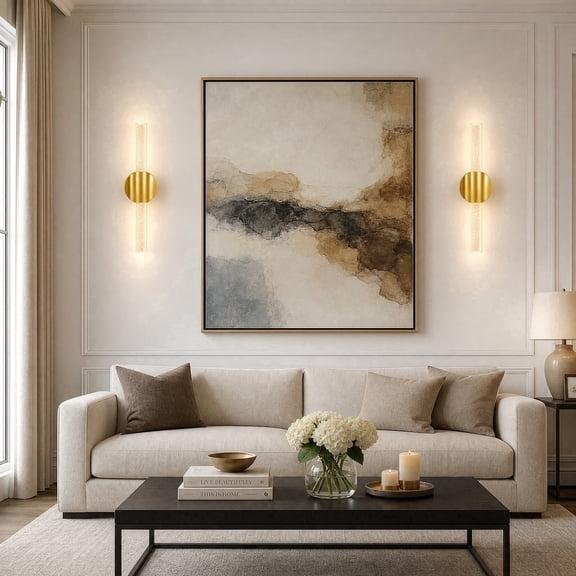
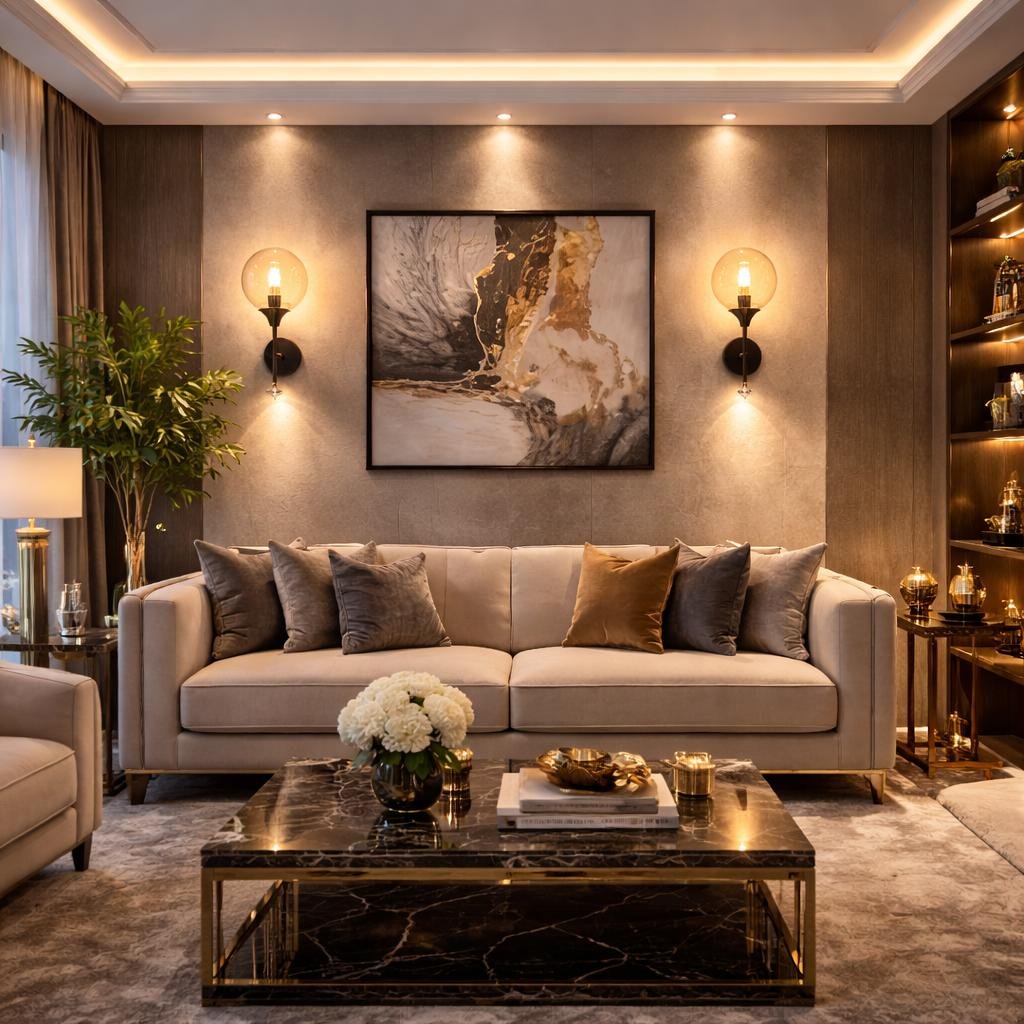
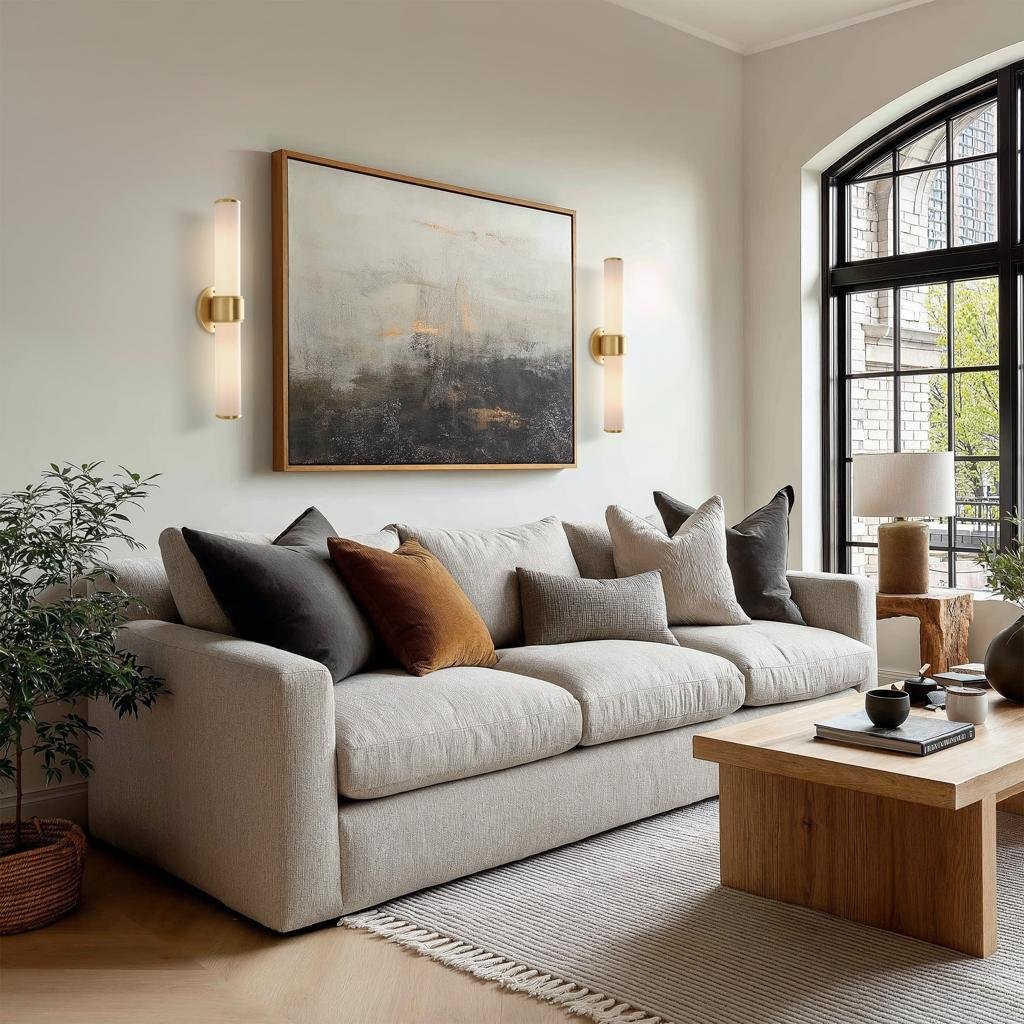
Wall sconces are an excellent option when you want attractive lighting without using valuable floor or table space. They can frame artwork, illuminate a reading chair, or provide gentle light around a fireplace or media area.
Sconces come in many styles, from minimalist cylindrical fixtures to traditional swing-arm designs and sculptural contemporary lights. Choose a style that supports the character of the room. A pair of brass sconces can add warmth to a classic interior, while black or white fixtures can look crisp in a modern space.
One advantage of wall lighting is that it can draw the eye upward and add another visual layer to the room. This can be especially useful when the living room has tall walls that otherwise feel empty.
If you’re installing wired sconces, consider their position carefully before work begins. The height should suit the furniture and the purpose of the light. For reading, the light should be positioned where it illuminates the page comfortably without creating glare. For decorative purposes, symmetrical placement may be more important.
Renters can look for plug-in sconces that don’t require permanent electrical changes. Cable management becomes part of the design in this situation, so use suitable clips or covers where appropriate.
Lighting tip: Don’t install sconces simply because you like their appearance. Decide what they are supposed to illuminate first, then select the fixture and placement around that purpose.
5. Create a Cozy Reading Corner
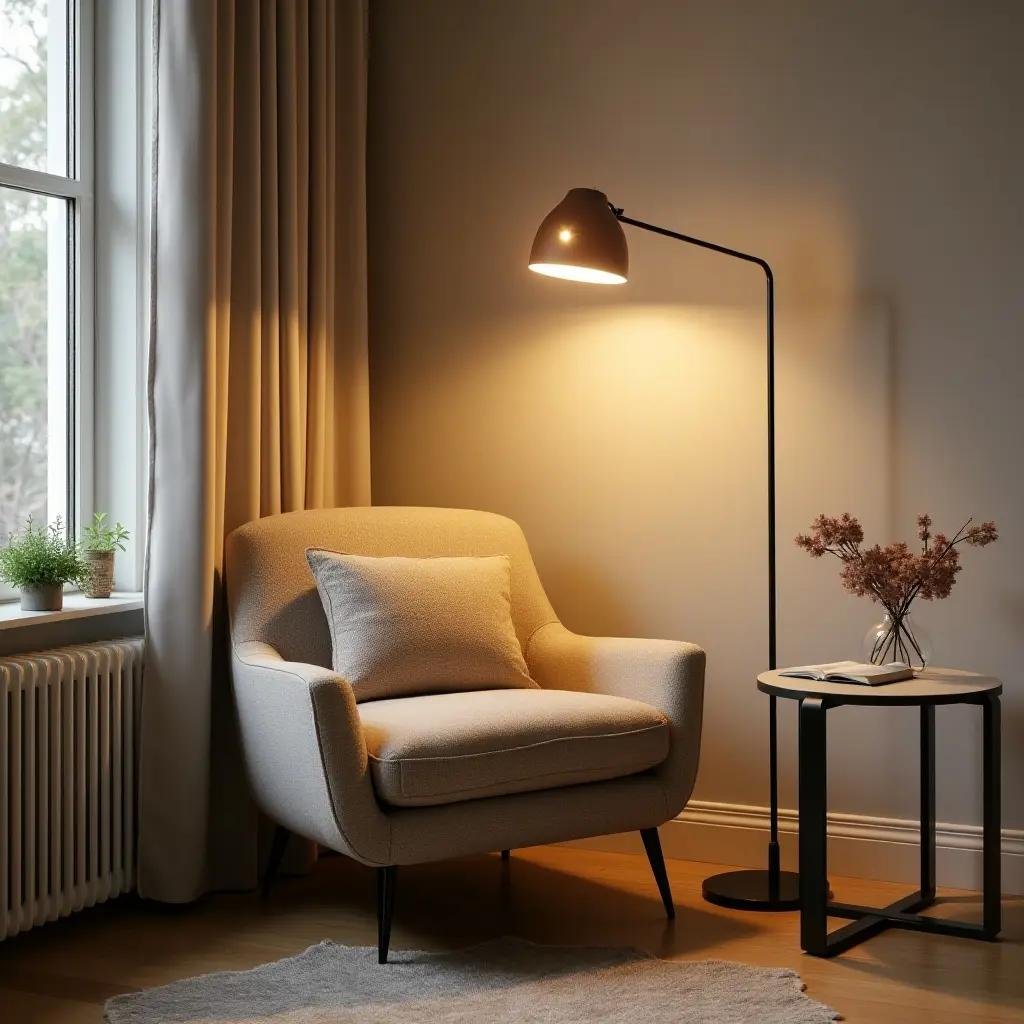
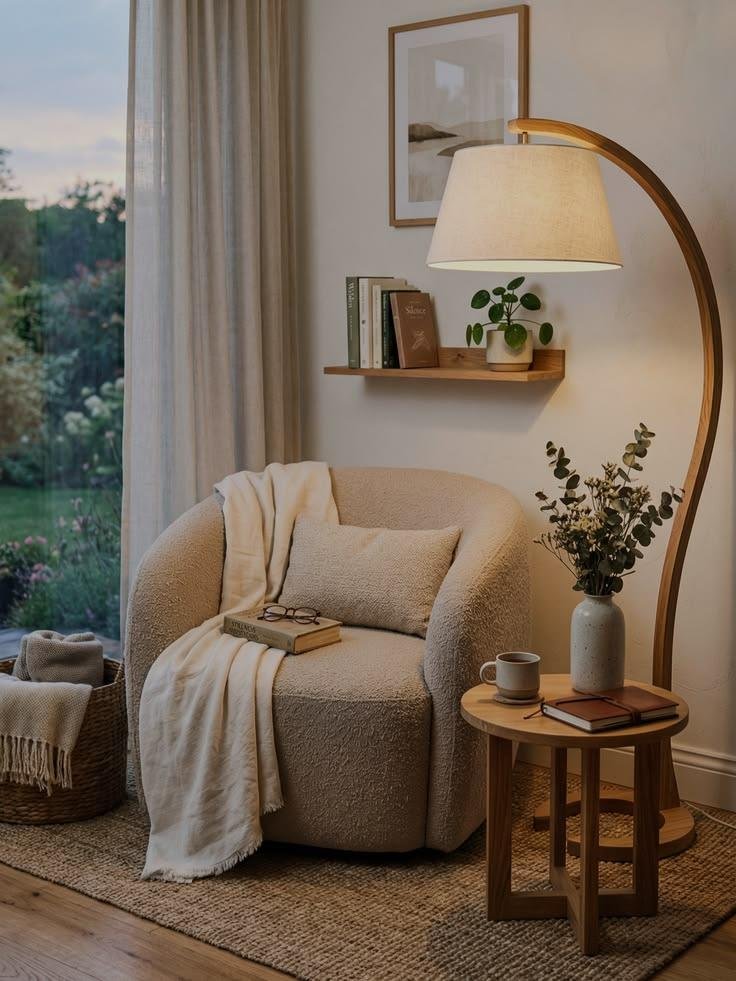
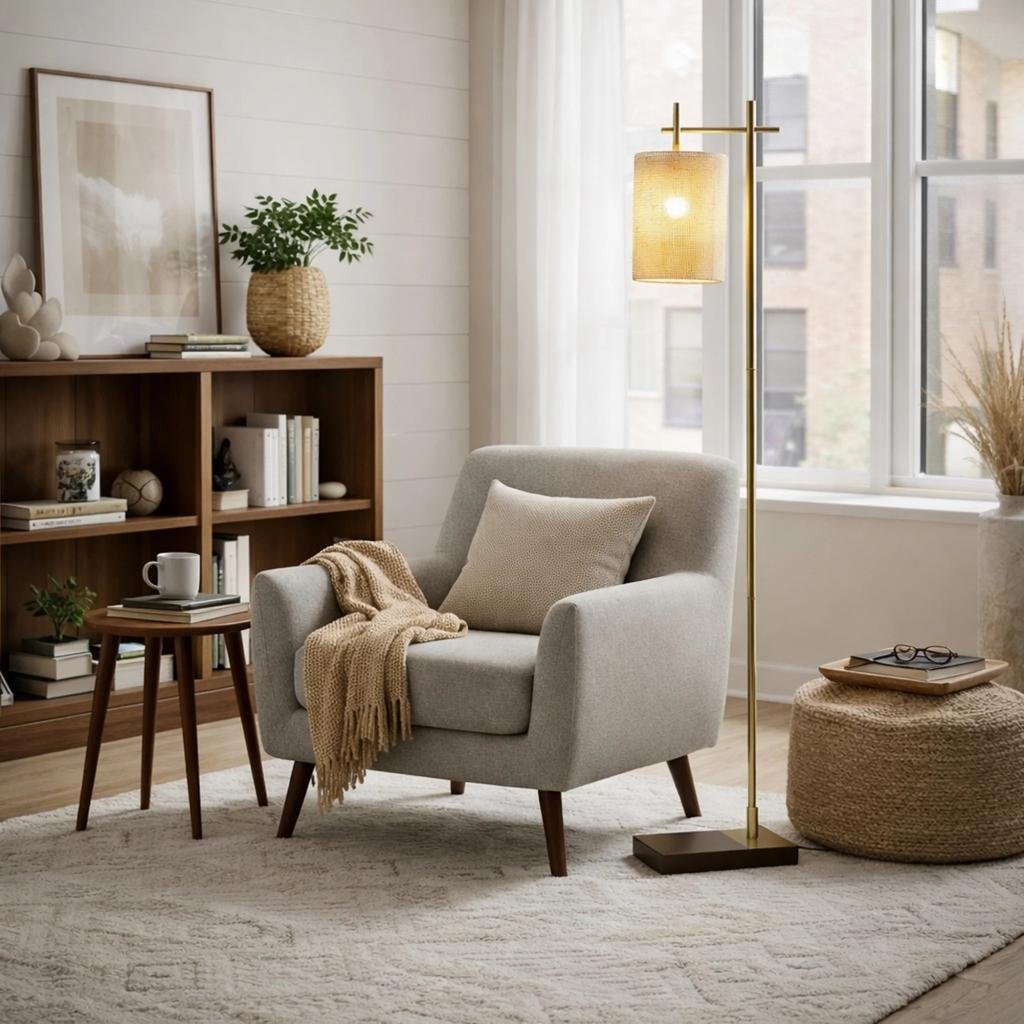
A reading corner can turn an unused section of your living room into one of its most inviting features. All you really need is a comfortable chair, a small side table, and appropriate task lighting.
An adjustable floor lamp is particularly useful because you can direct the light toward your book without illuminating the entire room. A swing-arm wall lamp can provide a similar function if your walls and installation options allow it.
Place the chair near a window when possible so you can benefit from natural light during the day. In the evening, use the task light rather than relying solely on the room’s main ceiling fixture.
Add a small table for a book, cup, or reading glasses. A footstool or compact ottoman can make the corner more comfortable, while a soft throw adds warmth and texture.
The reading corner doesn’t need to match the sofa perfectly. In fact, a contrasting accent chair can make the space more interesting. Connect it to the rest of the room through a shared color, fabric, wood tone, or metal finish.
Lighting tip: Choose a reading light that can be adjusted to your preferred position. The goal is to illuminate the reading surface while minimizing glare and harsh shadows.
6. Try Recessed Ceiling Lighting
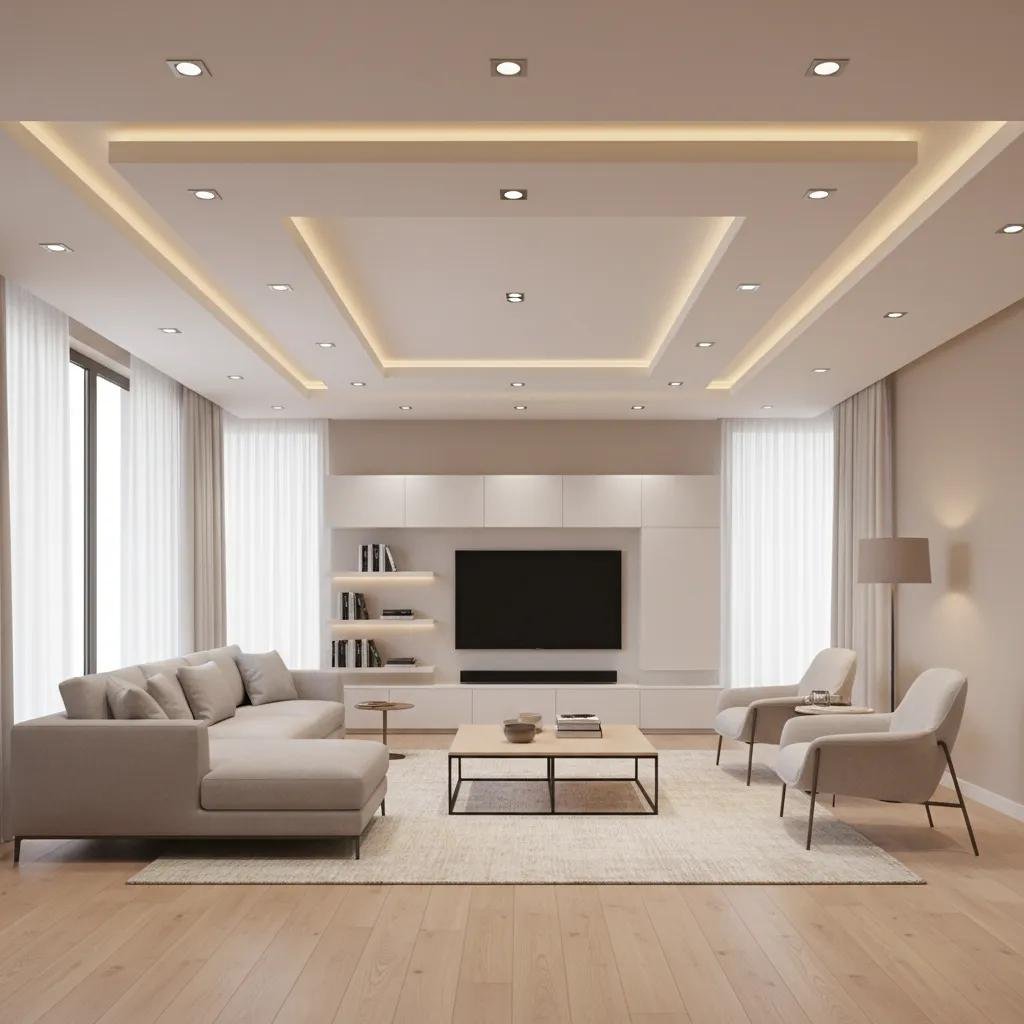
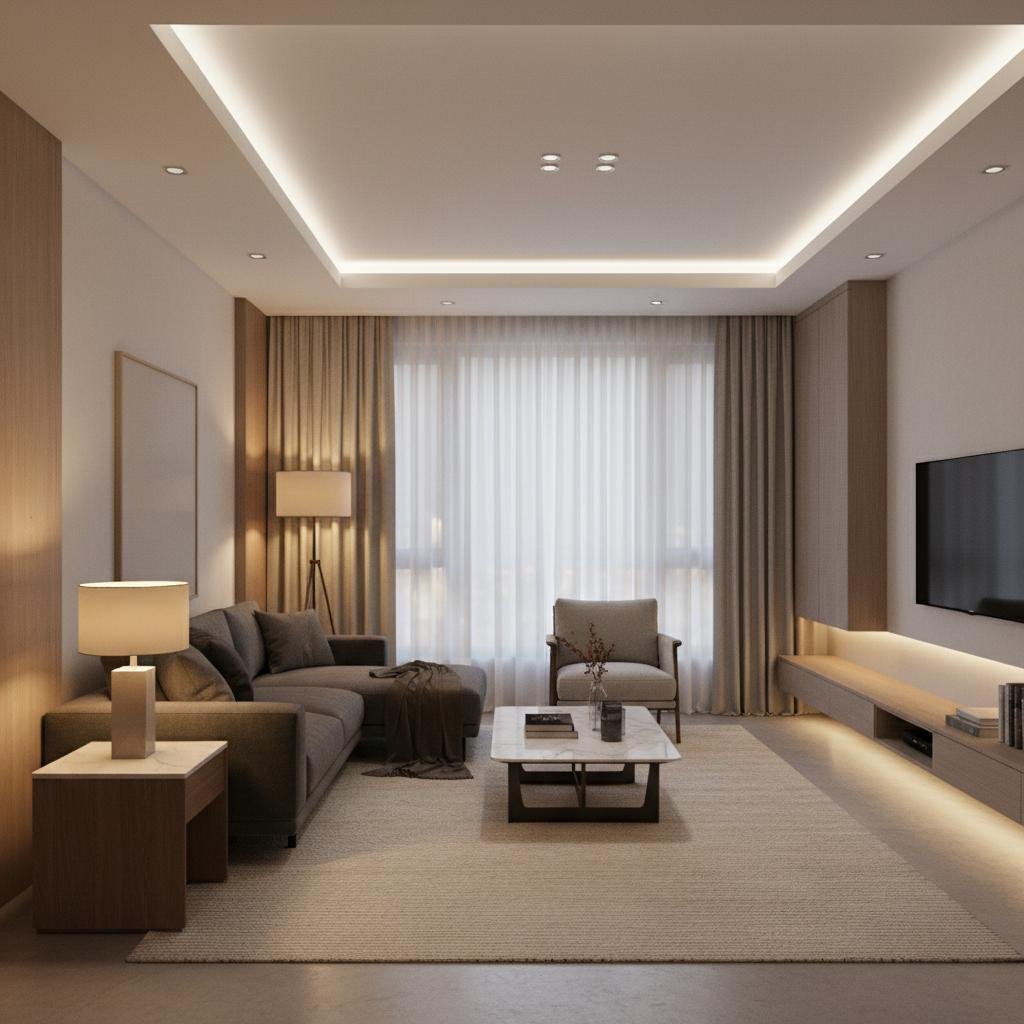
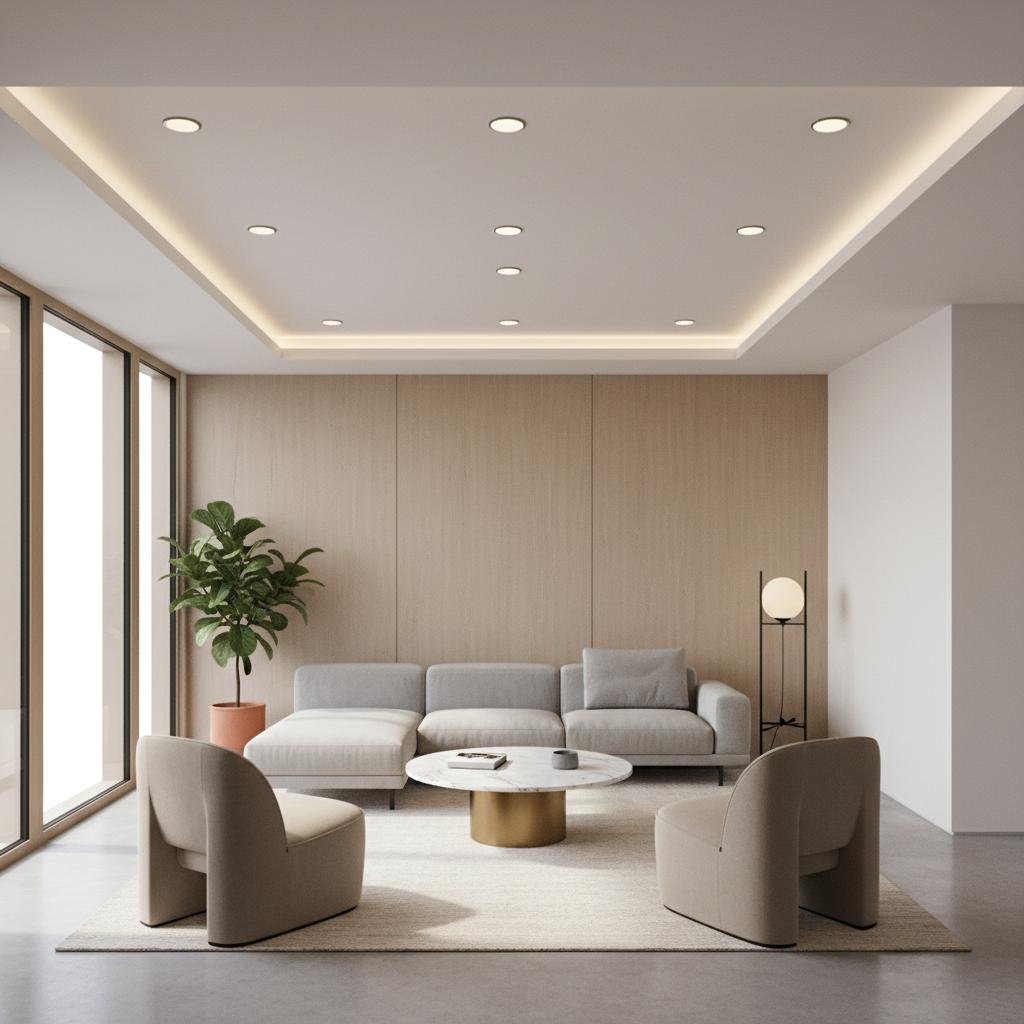
Recessed lighting provides a clean, understated way to illuminate a living room. Because the fixtures sit within the ceiling, they don’t occupy visual space in the same way as a chandelier or pendant.
This makes recessed lights especially useful in modern and minimalist interiors. They can provide general illumination without introducing another large decorative element.
However, recessed lighting works best as part of a broader lighting plan. A ceiling full of downlights can create a bright but somewhat flat atmosphere if there are no lower light sources.
Use recessed fixtures strategically. They can illuminate pathways, seating zones, shelving, artwork, or architectural features. Avoid placing them randomly simply to create an evenly spaced grid.
If you’re renovating, discuss the placement with a qualified electrician or lighting professional. Ceiling construction, wiring, insulation, ventilation, and local electrical requirements all affect installation.
Lighting tip: Think about what each recessed light is supposed to illuminate. A carefully positioned smaller number of fixtures can be more useful than covering the entire ceiling with lights.
7. Highlight Artwork With Accent Lighting
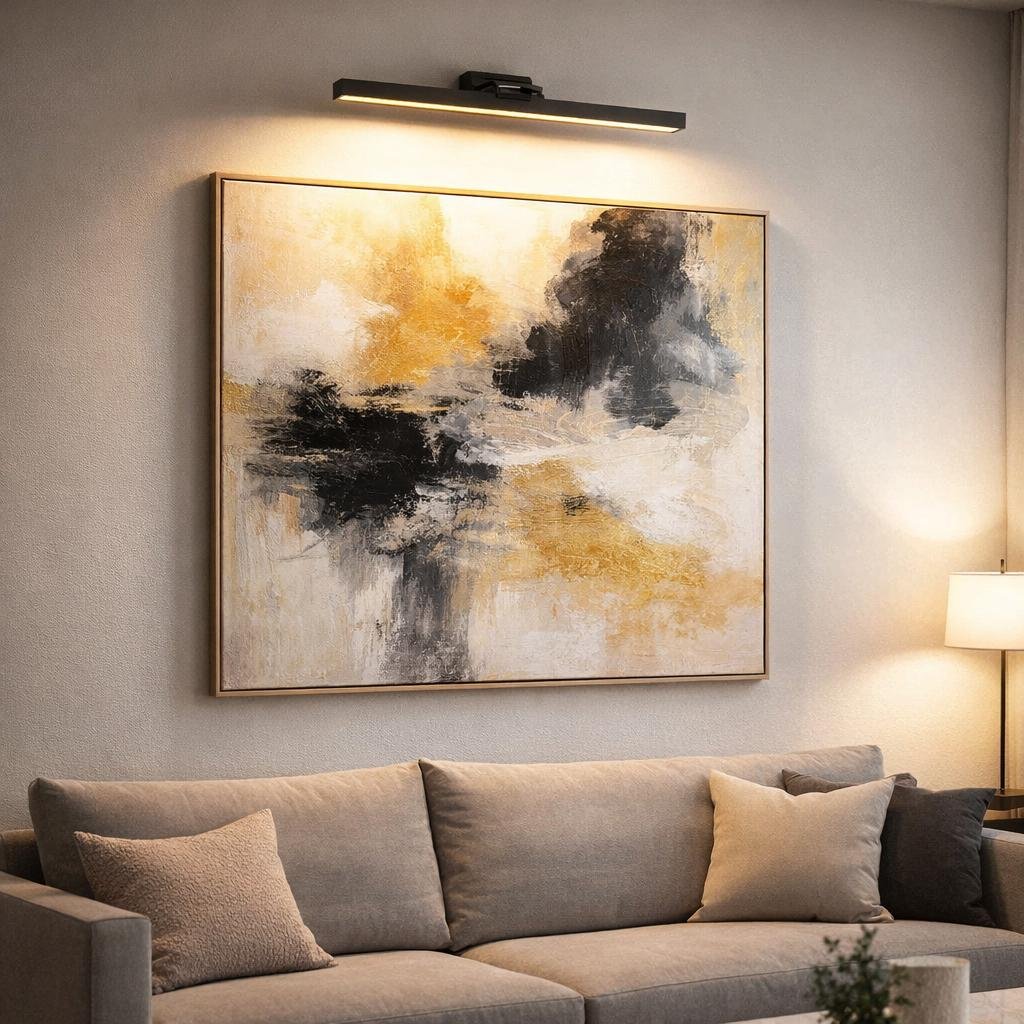
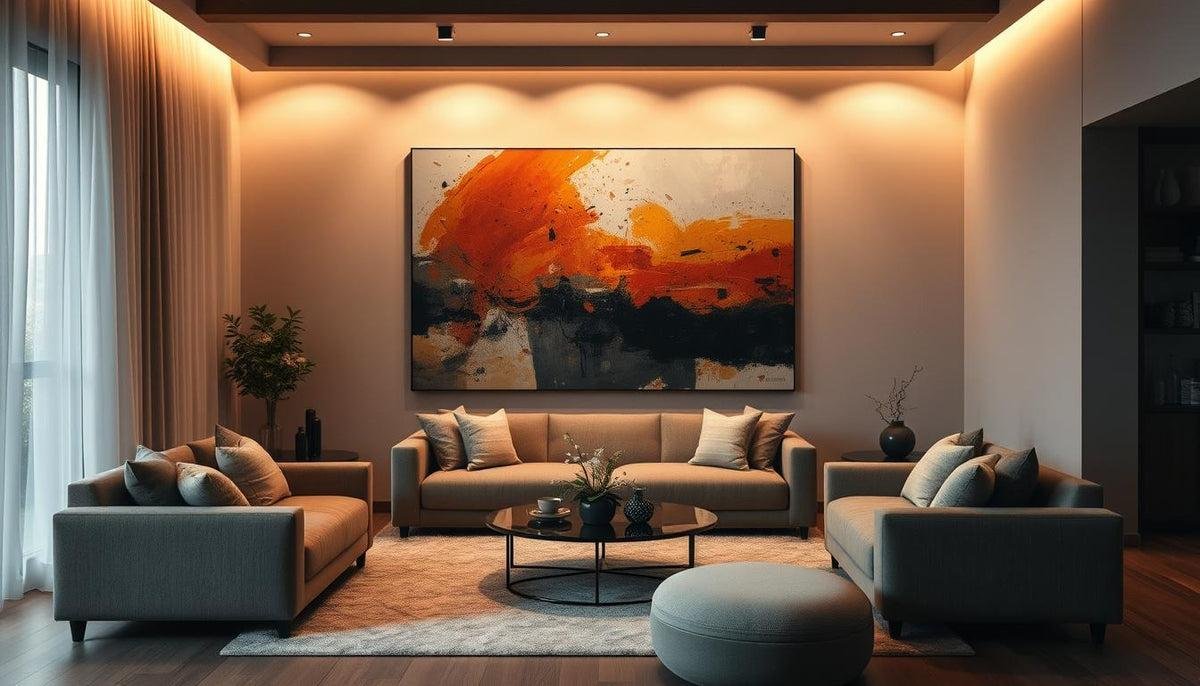
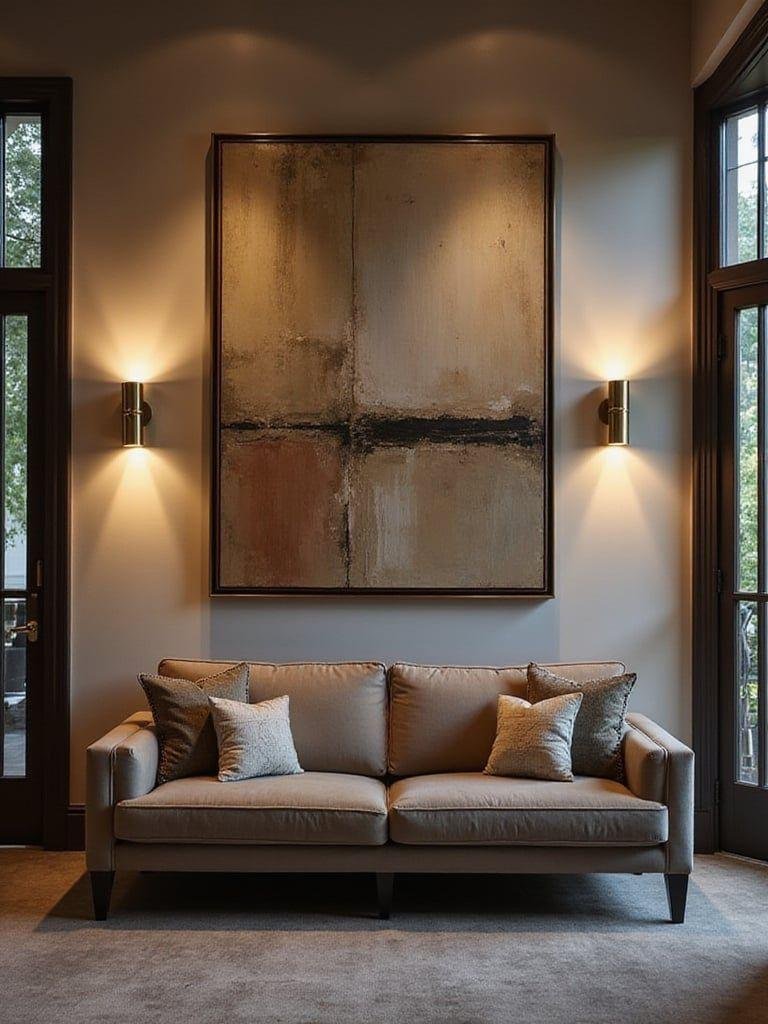
Artwork can become much more impactful when it’s properly illuminated. Accent lighting draws attention toward a painting, photograph, sculpture, or gallery wall and creates a focal point after dark.
Picture lights are one classic option. They sit above artwork and cast illumination downward across the piece. Adjustable spotlights can provide a more directional effect and may work well for larger artwork or multiple pieces.
Consider the type of artwork before selecting the lighting. Highly reflective surfaces can produce unwanted glare, while delicate artwork may require careful consideration of heat and light exposure. For valuable pieces, follow appropriate conservation guidance rather than simply maximizing brightness.
Accent lighting can also highlight architectural details. A textured wall, fireplace, built-in shelving unit, or decorative niche can become a feature with carefully directed light.
The goal is subtle emphasis rather than turning the artwork into a spotlight spectacle. The light should support the piece and the room as a whole.
Lighting tip: Test the angle of accent lighting at night. A light that looks perfectly positioned during daylight may produce reflections or distracting shadows once the rest of the room becomes dark.
8. Add LED Strip Lighting to Shelves
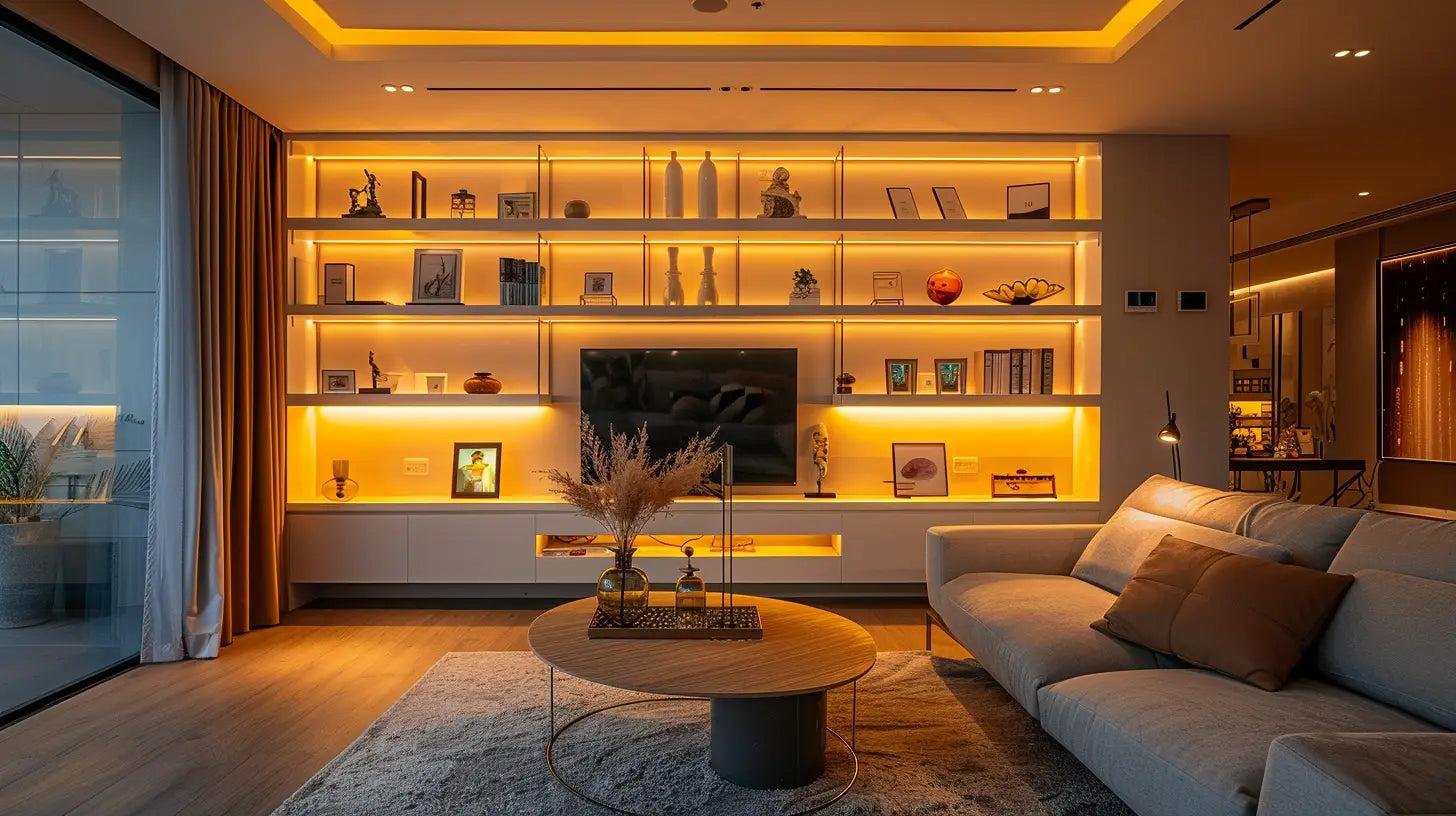
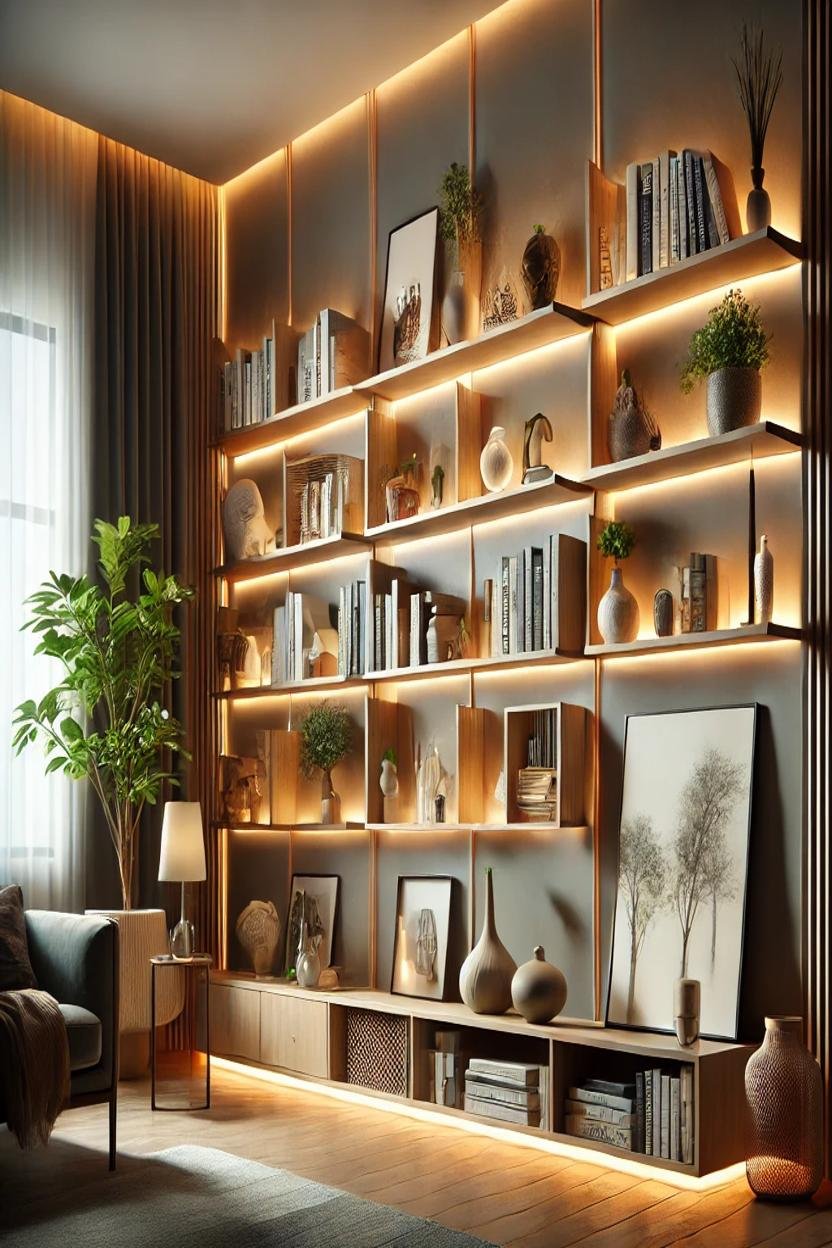
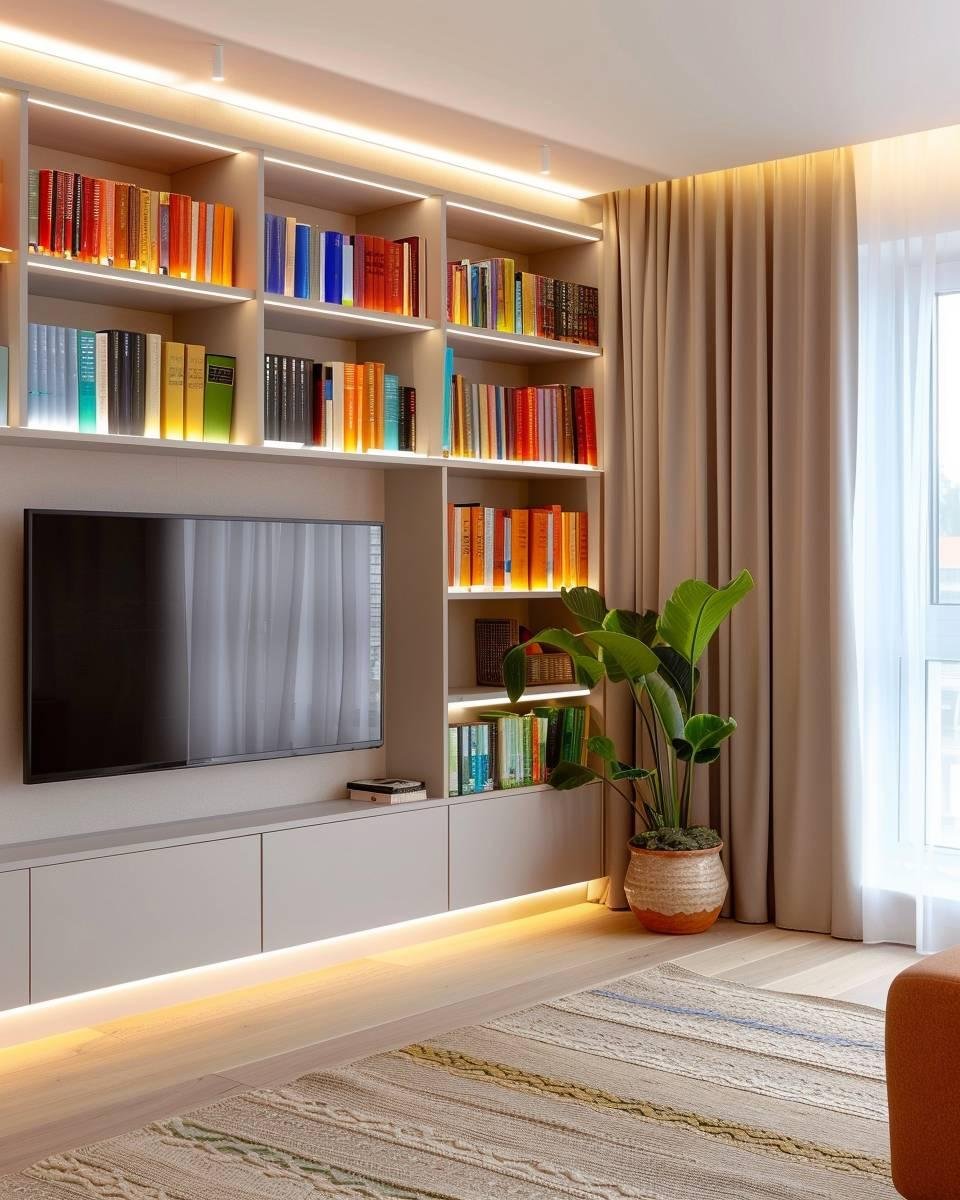
LED strip lighting can add a subtle modern glow to living room shelving, cabinets, and architectural details. It is particularly useful when you want to highlight decorative objects without adding bulky lamps.
Install suitable LED lighting beneath shelves or along the interior edges of built-ins to create a soft wash of light. This can make books, ceramics, artwork, and plants more visible in the evening.
The key is to hide the light source whenever possible. You want to see the illumination rather than the individual LED points. Appropriate channels, diffusers, or concealed placement can help create a smoother appearance.
Warm-toned LED lighting often works well in living spaces because it can complement wood, cream, beige, and other cozy materials. If you’re using smart LEDs, you may also have the ability to adjust brightness and color settings.
Don’t overdo it. Lighting every shelf at maximum brightness can make the room feel busy. Use accent lighting selectively on the shelves or objects you want to emphasize.
Lighting tip: Plan the power source and cable route before installing strip lighting. A beautiful illuminated shelf can quickly lose its appeal if cables are visibly dangling across the wall.
9. Choose an Oversized Statement Pendant
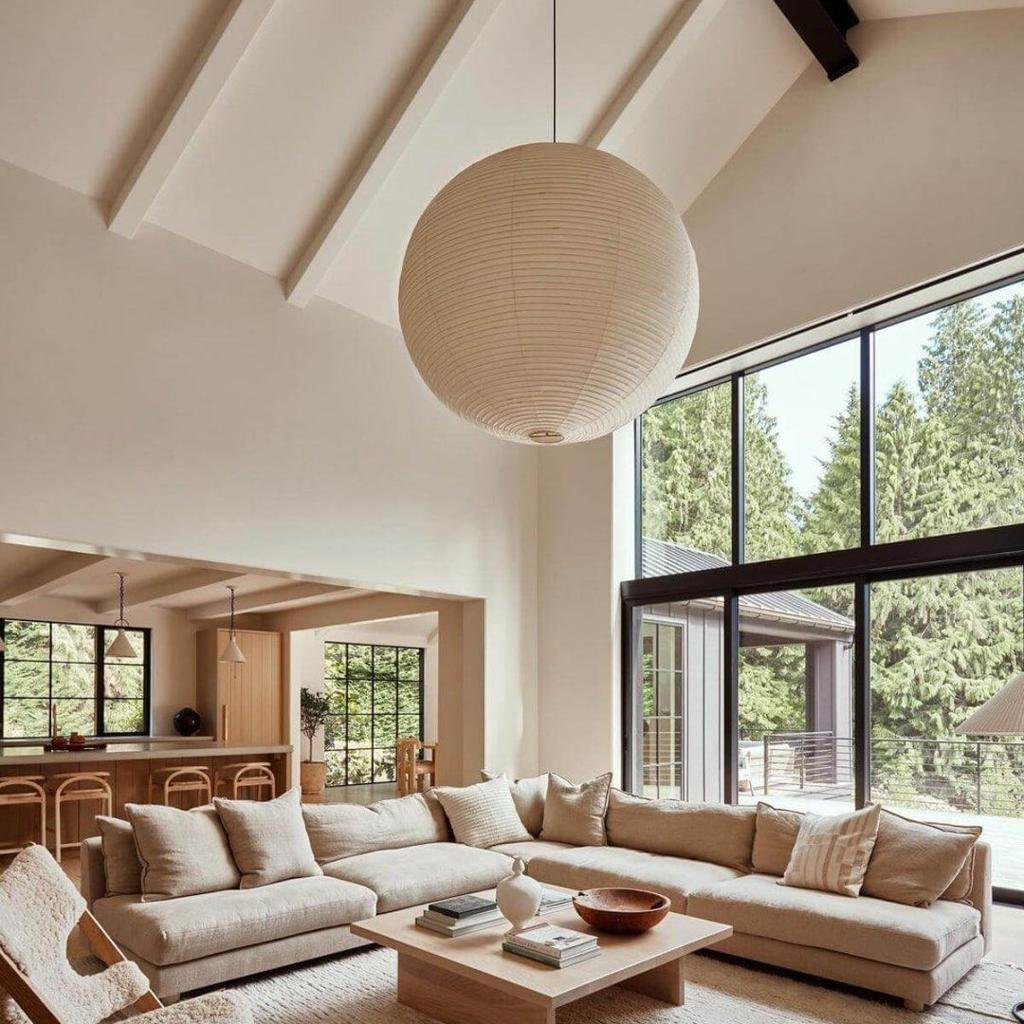
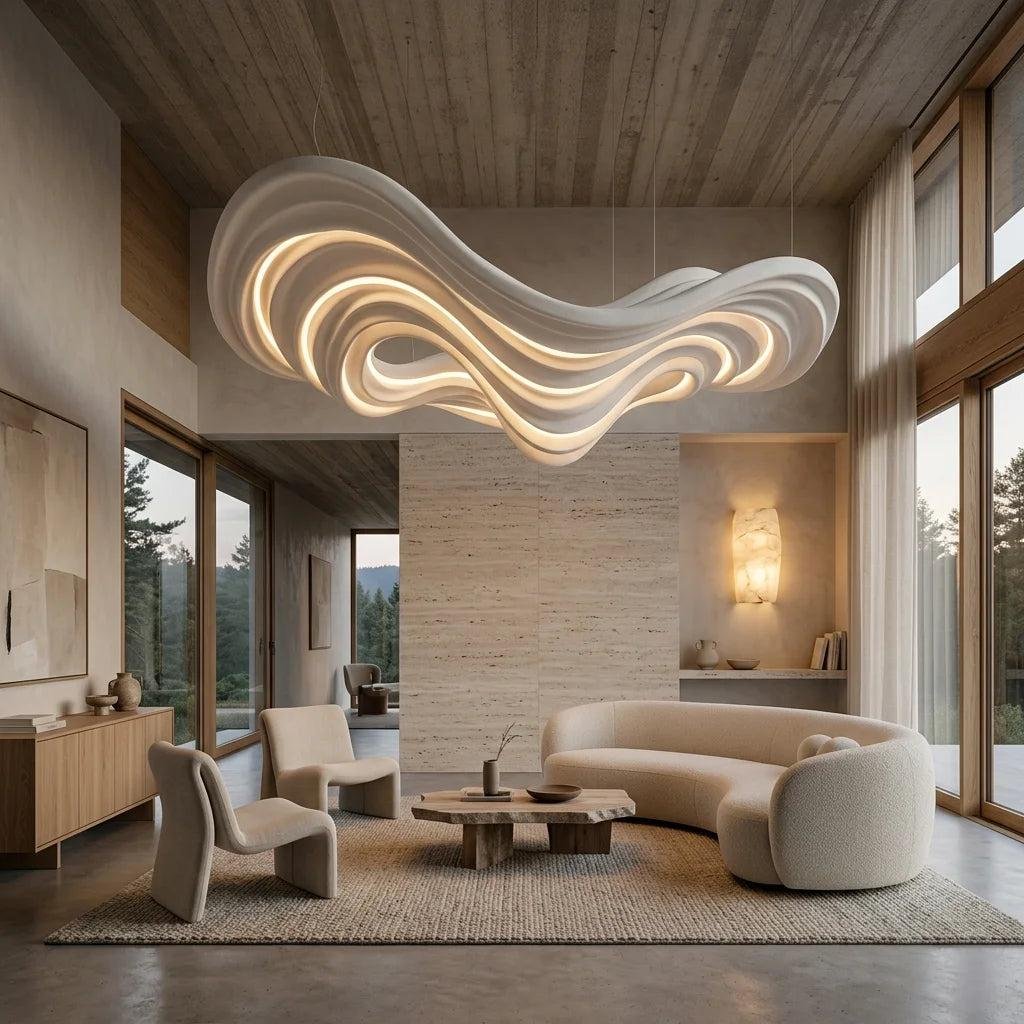
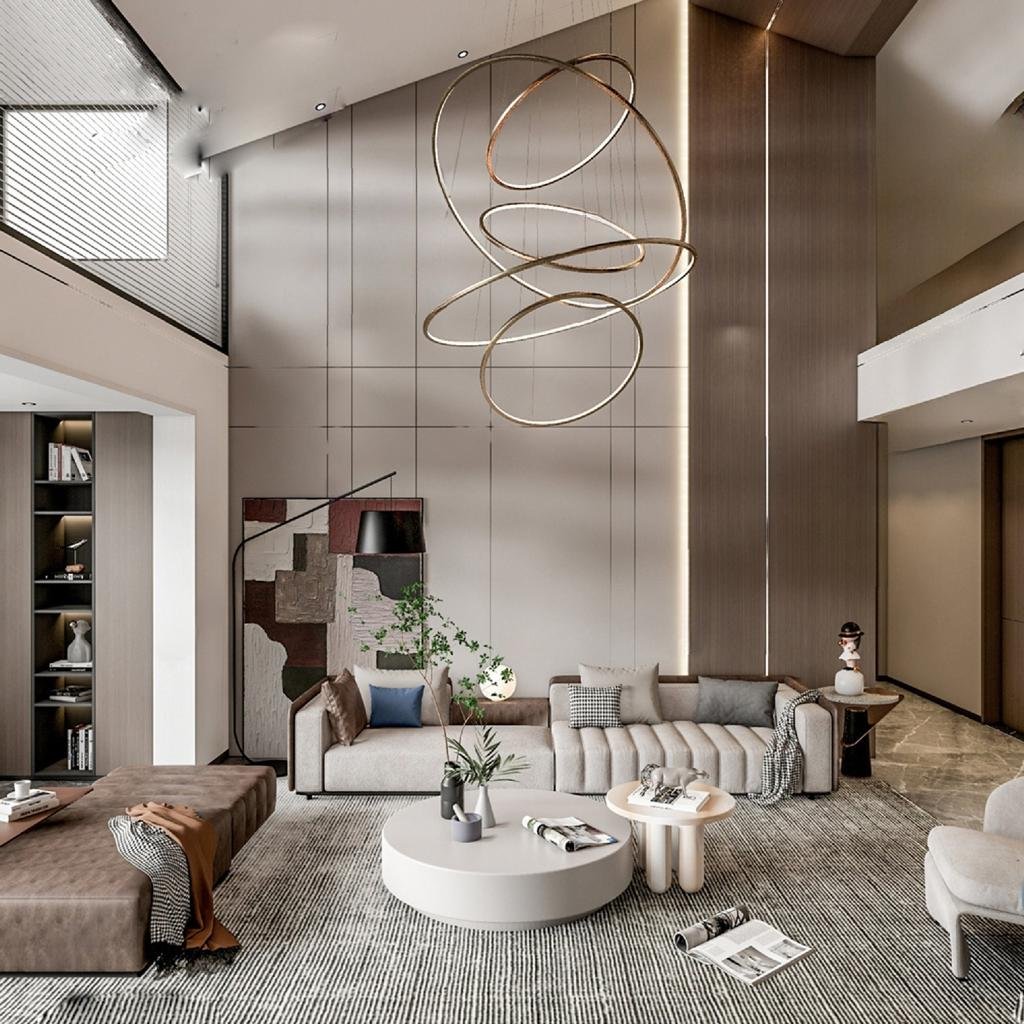
An oversized pendant can give a living room a strong designer feel without requiring lots of decorative objects. A large woven shade, sculptural globe, paper-style pendant, or contemporary metal design can become the centerpiece of the ceiling.
This approach works especially well in rooms with higher ceilings or open-plan layouts. The fixture helps define the living area and gives the eye something to focus on.
Scale remains important. Before buying an oversized pendant, use a temporary paper or cardboard shape to approximate its dimensions. This simple trick can help you visualize how large the fixture will feel in the actual room.
The shape should also complement the furniture below it. A round pendant can echo a circular coffee table, while a linear fixture can reinforce the proportions of a rectangular seating arrangement.
If the pendant hangs above a seating area, make sure its height allows people to move comfortably without creating a visual obstruction. The appropriate hanging height depends on the room and fixture, so follow the manufacturer’s guidance and installation requirements.
Lighting tip: Choose a statement fixture that you genuinely like rather than one selected purely because it is fashionable. Large fixtures are visually dominant, so their style has a significant effect on the entire room.
10. Use Warm Lighting for a Cozy Atmosphere
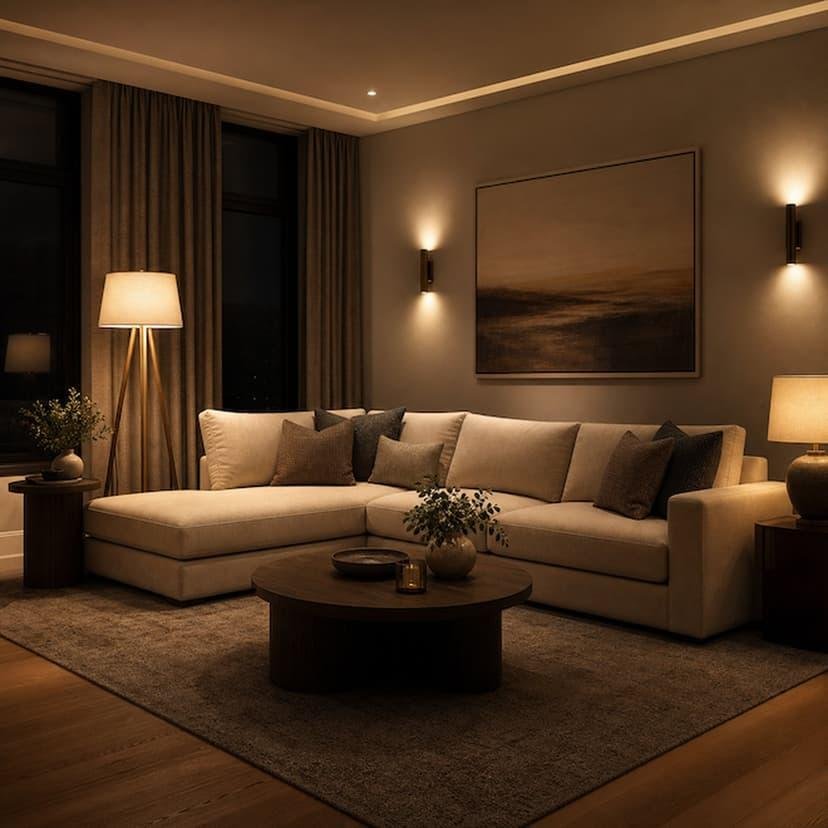
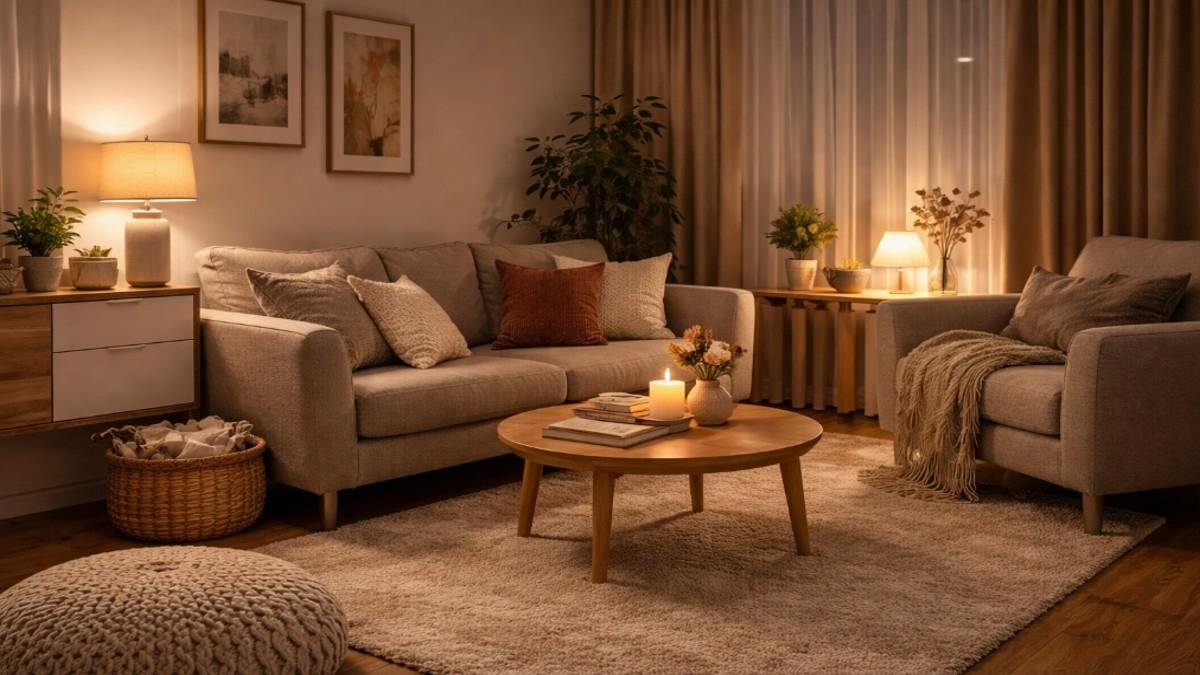
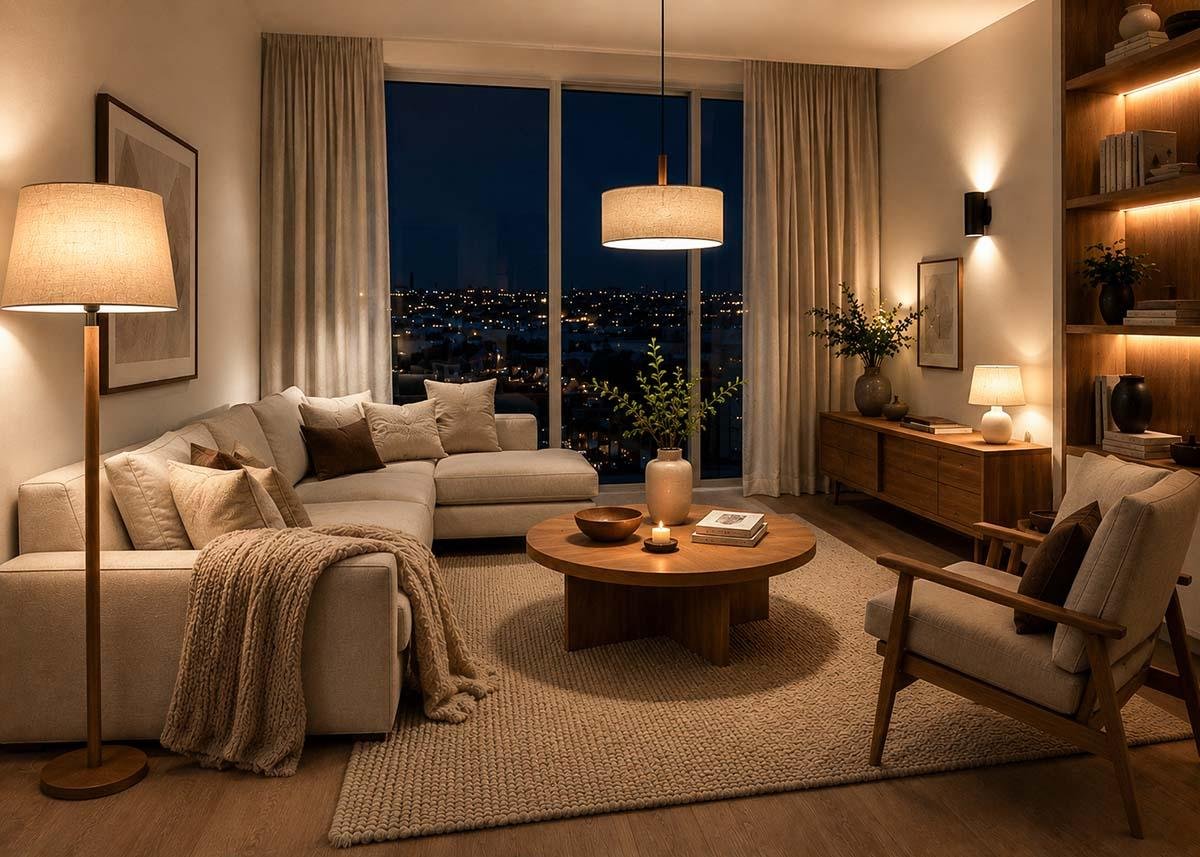
The color quality of your lighting can dramatically affect how a living room feels. Warm illumination generally creates a relaxed, intimate atmosphere, which is why it works particularly well in spaces designed for evening relaxation.
Rather than choosing bulbs solely based on brightness, pay attention to their color temperature and how they interact with your walls, furniture, and flooring. Warm light can complement wood, cream, beige, terracotta, and other earthy finishes beautifully.
The same room can feel completely different under different lighting. A cool, bright light may make a space feel energetic and functional, while a warmer light can make it feel calmer and more comfortable.
You don’t necessarily need every light source to produce exactly the same effect. Task areas may benefit from a different lighting approach than decorative corners. What matters is that the overall combination feels intentional and comfortable.
Use warm lamps in areas where you relax, such as beside the sofa or in reading corners. For tasks that require more visual clarity, select lighting appropriate to the activity rather than prioritizing atmosphere alone.
Lighting tip: If you’re unsure about a bulb, test it in the actual room before replacing every lamp. Wall color, daylight, shade material, and furniture finishes can all change how the light appears.
11. Layer Lighting Around the TV
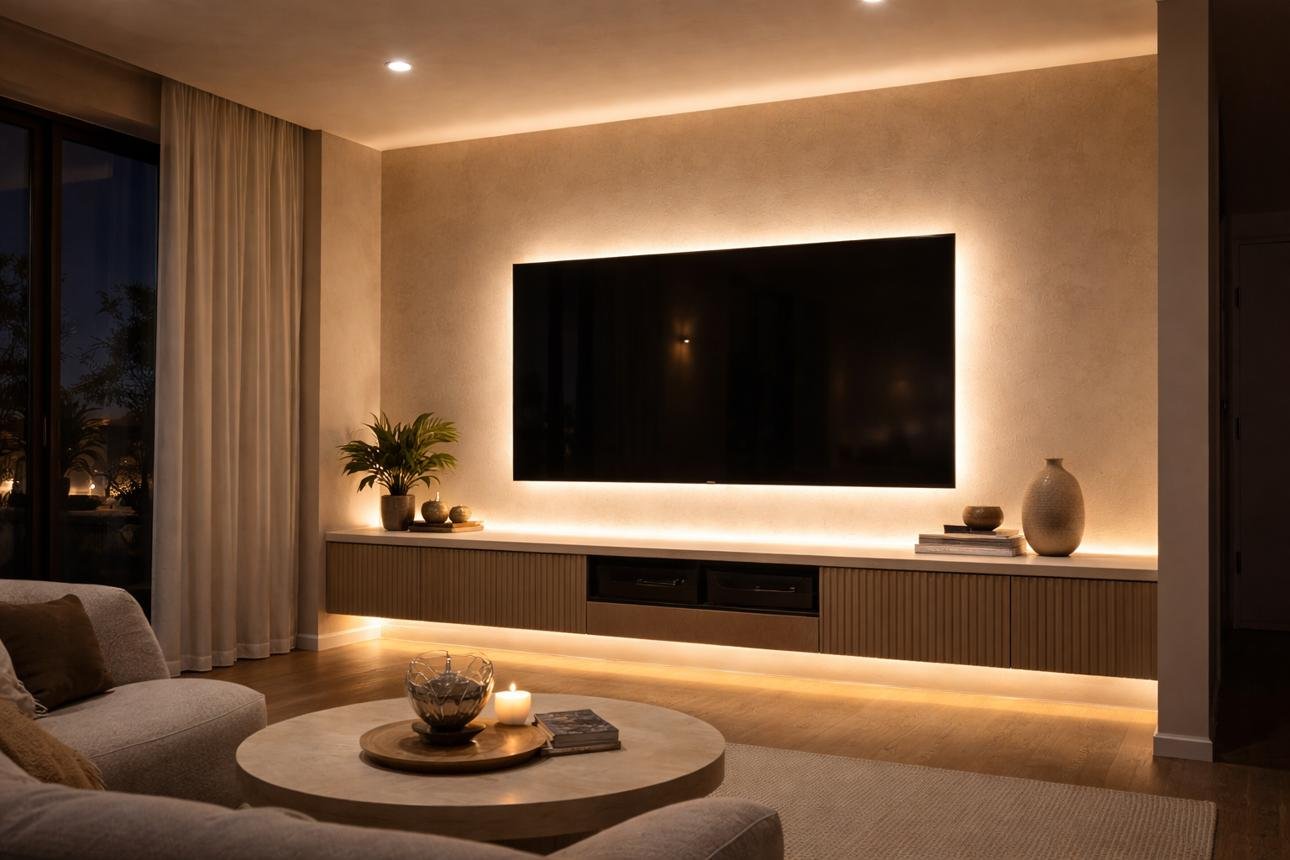
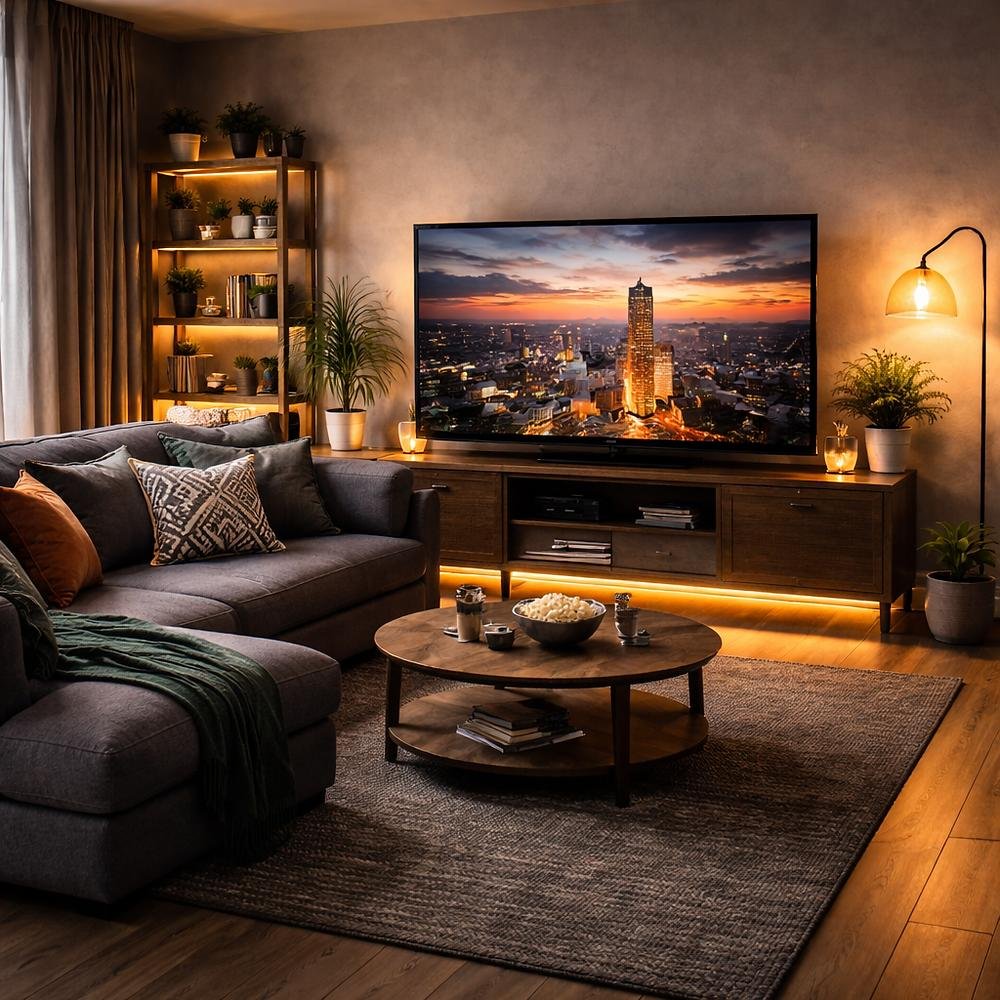
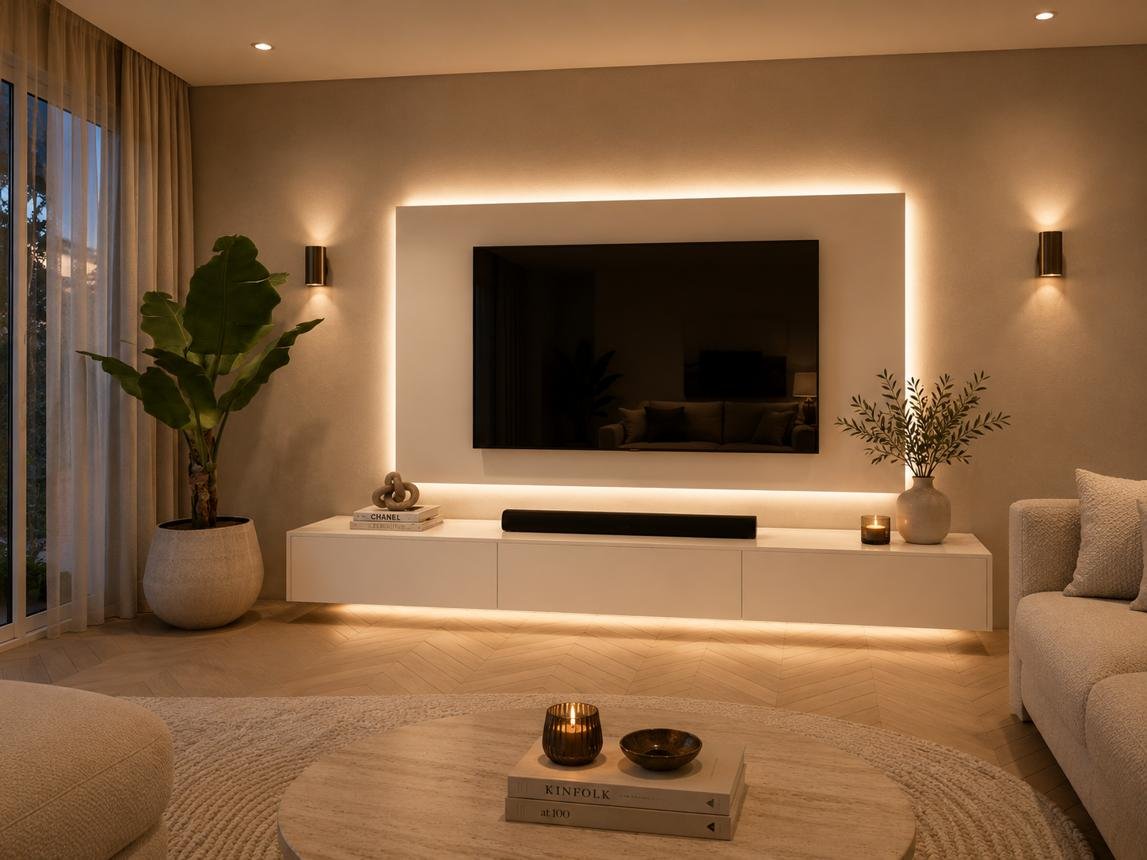
Television areas can be tricky to illuminate because overly bright or poorly positioned lights may create distracting reflections on the screen. At the same time, watching television in complete darkness can make the rest of the room feel disconnected.
A better approach is to create soft, indirect illumination around the TV area. A lamp positioned behind or beside the seating area can provide gentle ambient light without shining directly onto the screen.
Backlighting behind the television can also create a subtle glow around the screen. If using LED lighting, choose a setup that allows you to control the brightness so it doesn’t become more distracting than the television itself.
A low media console with concealed lighting can provide another layer. Keep decorative lamps slightly to the side rather than directly behind the screen, and avoid positioning bright bulbs where they appear as reflections.
If you regularly watch movies, consider dimmable lighting throughout the living room. You can lower the ambient illumination while keeping enough light to move around safely.
Lighting tip: Sit in your usual viewing position and look toward the screen before finalizing lamp placement. Check for reflections at different times of day and under different lighting conditions.
12. Use Natural Light as Part of the Design
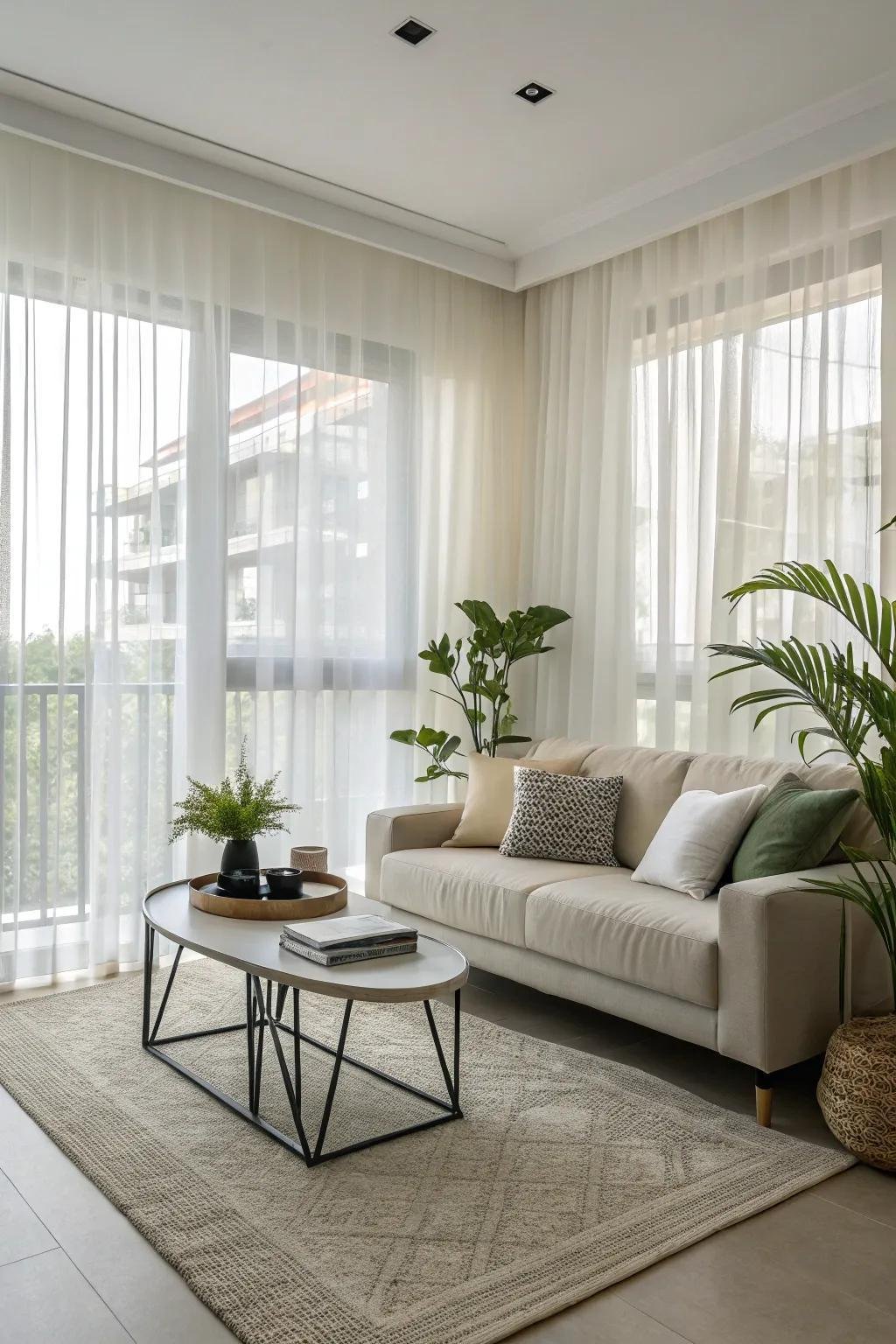
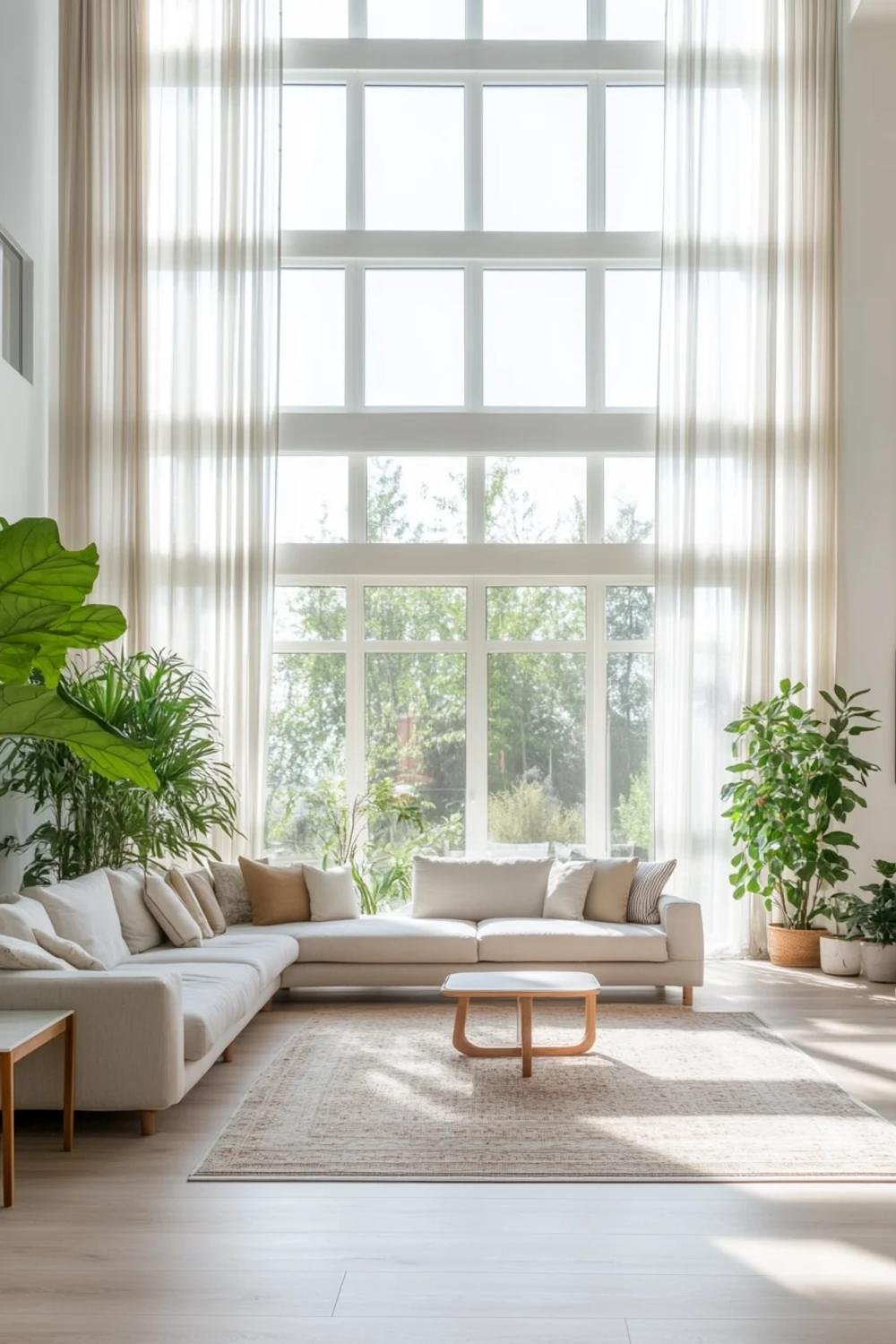
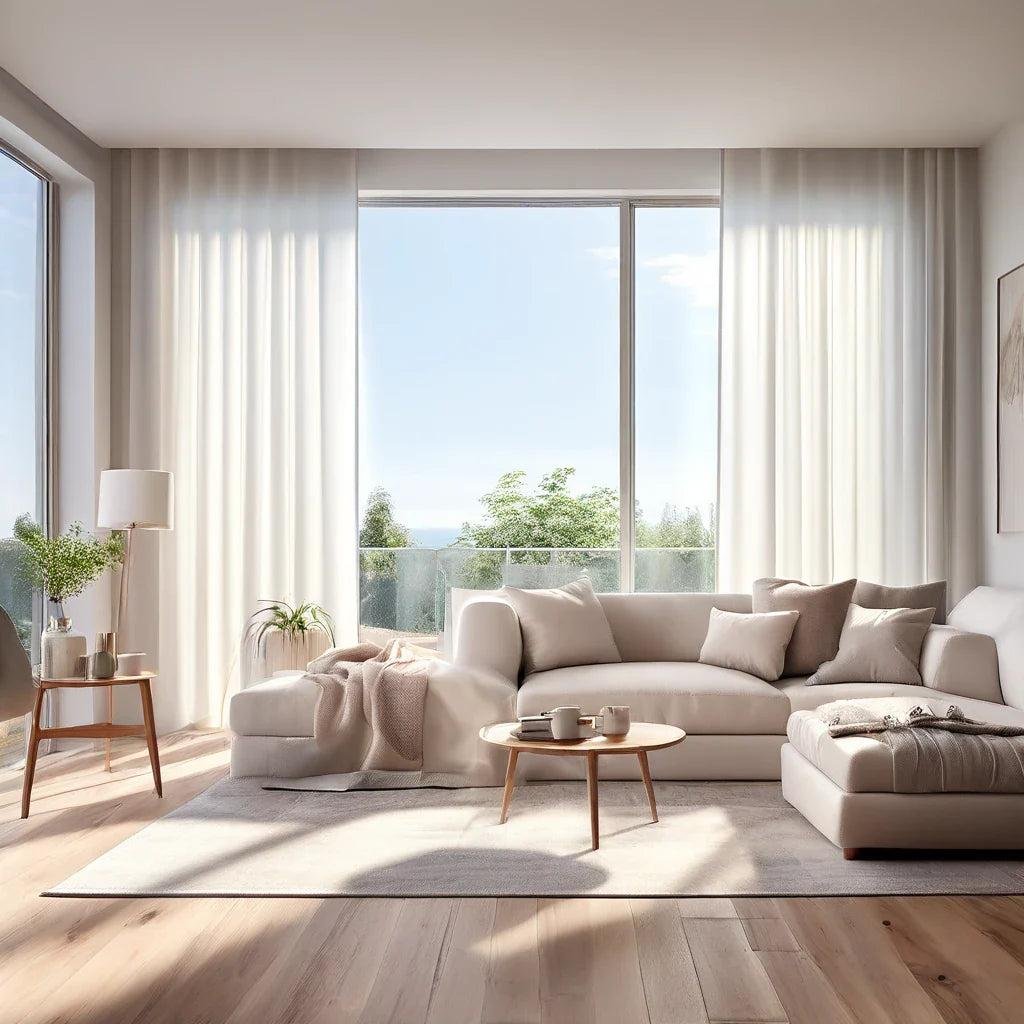
Artificial lighting gets most of the attention in lighting plans, but natural daylight is just as important. Windows can provide the brightest and most visually comfortable illumination during the day, while also influencing how your furniture, wall colors, and decorative elements appear.
Start by keeping windows as unobstructed as practical. Heavy furniture placed directly in front of a window can reduce the amount of daylight entering the room. Sheer curtains can provide privacy while still allowing light to filter through.
Mirrors can help distribute daylight by reflecting it into parts of the room that receive less direct illumination. Light-colored walls and ceilings can also help the room feel brighter.
Pay attention to how sunlight moves through the room. A living room that receives strong afternoon sun may need curtains or blinds for glare and temperature control, while a darker north-facing space may benefit from lighter finishes and carefully placed lamps.
Natural light changes throughout the day, so don’t judge your room’s lighting based on one moment. Observe it in the morning, afternoon, and evening before deciding where additional fixtures are needed.
Lighting tip: Use your furniture and decor to work with the daylight rather than fighting it. A well-positioned mirror, light rug, and carefully chosen curtains can improve the daytime atmosphere without adding another electrical fixture.
13. Add Picture Lights for a Classic Look
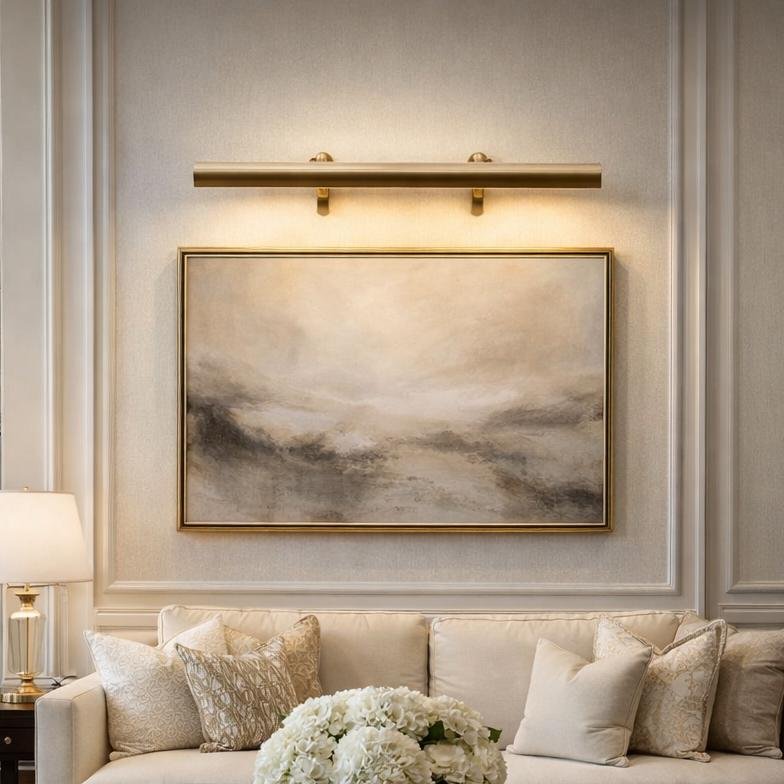
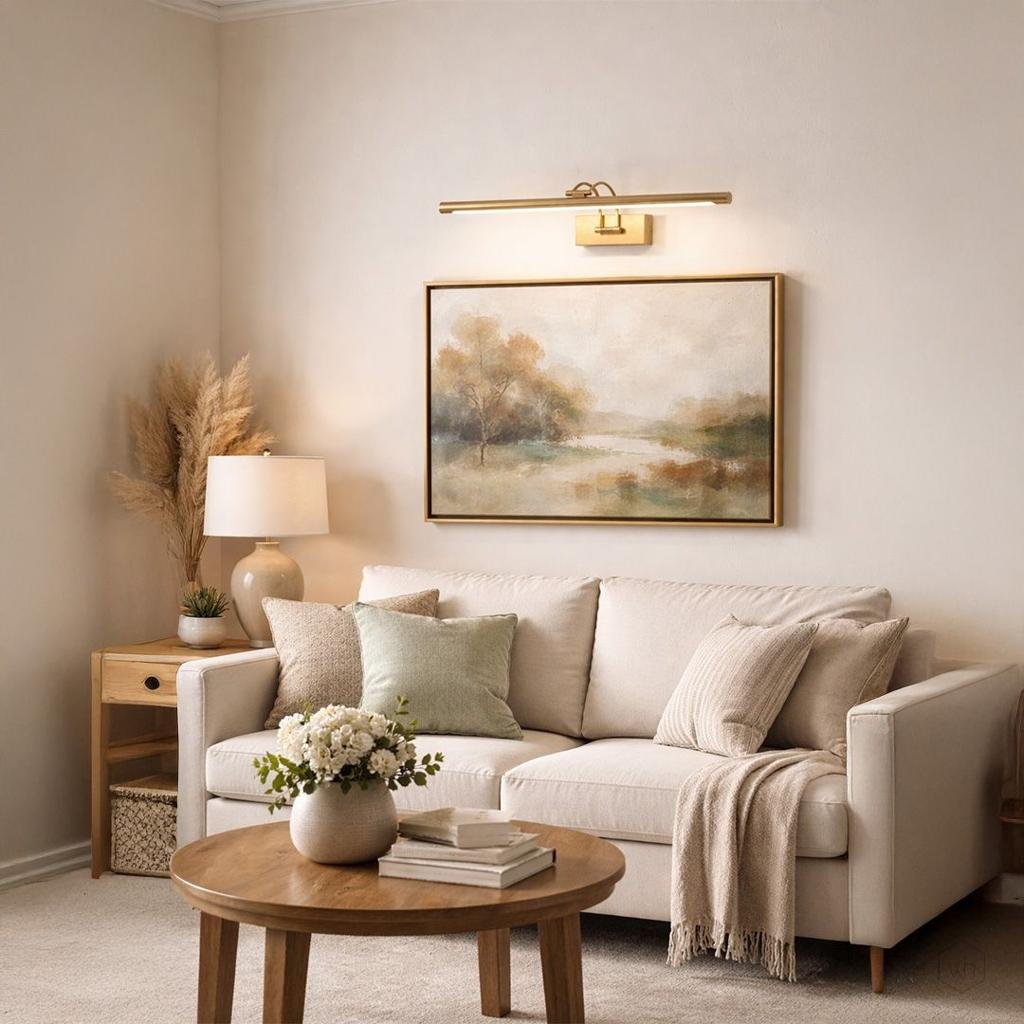
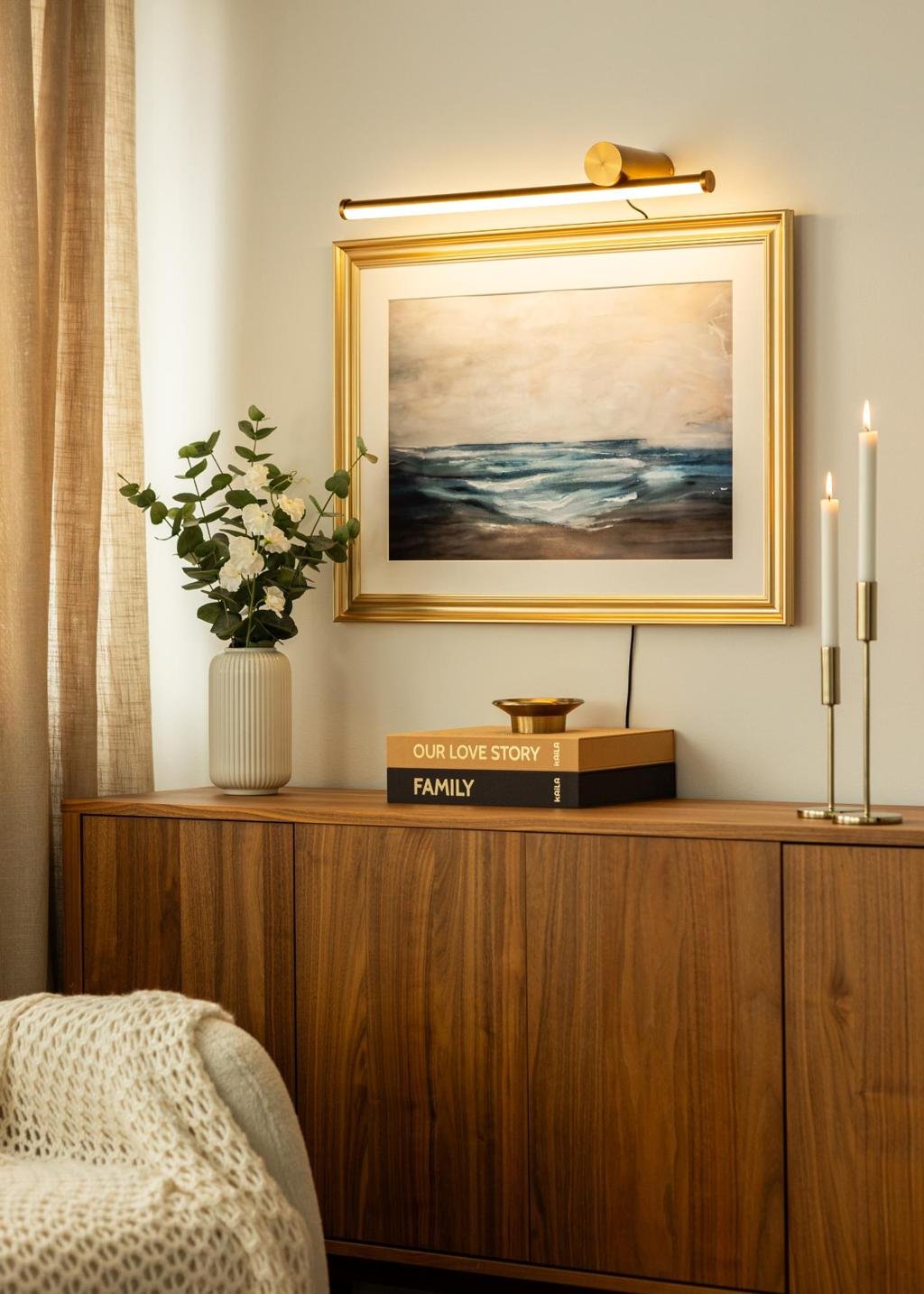
Picture lights bring a timeless decorative quality to living rooms. Traditionally associated with galleries and classic interiors, they can also work beautifully in modern homes when paired with simple artwork and contemporary furniture.
A picture light mounted above a large painting creates a focused pool of illumination and makes the artwork feel intentional. Brass fixtures can add warmth, while black or brushed metal designs offer a more contemporary appearance.
Picture lights don’t have to be reserved for expensive art. A favorite print, family photograph, textile, or collection of framed illustrations can benefit from the same treatment.
If you have several pieces arranged as a gallery wall, consider how the lighting will cover the entire composition. A single narrow fixture may illuminate only part of the arrangement, while several smaller lights can create a more balanced result.
As with any accent lighting, avoid excessive brightness. The purpose is to enhance the artwork without making it visually compete with the rest of the room.
Lighting tip: Position the fixture carefully to reduce glare, particularly when artwork is behind glass. Adjustable designs give you more control over the angle.
14. Use Smart Lighting for Flexible Ambiance
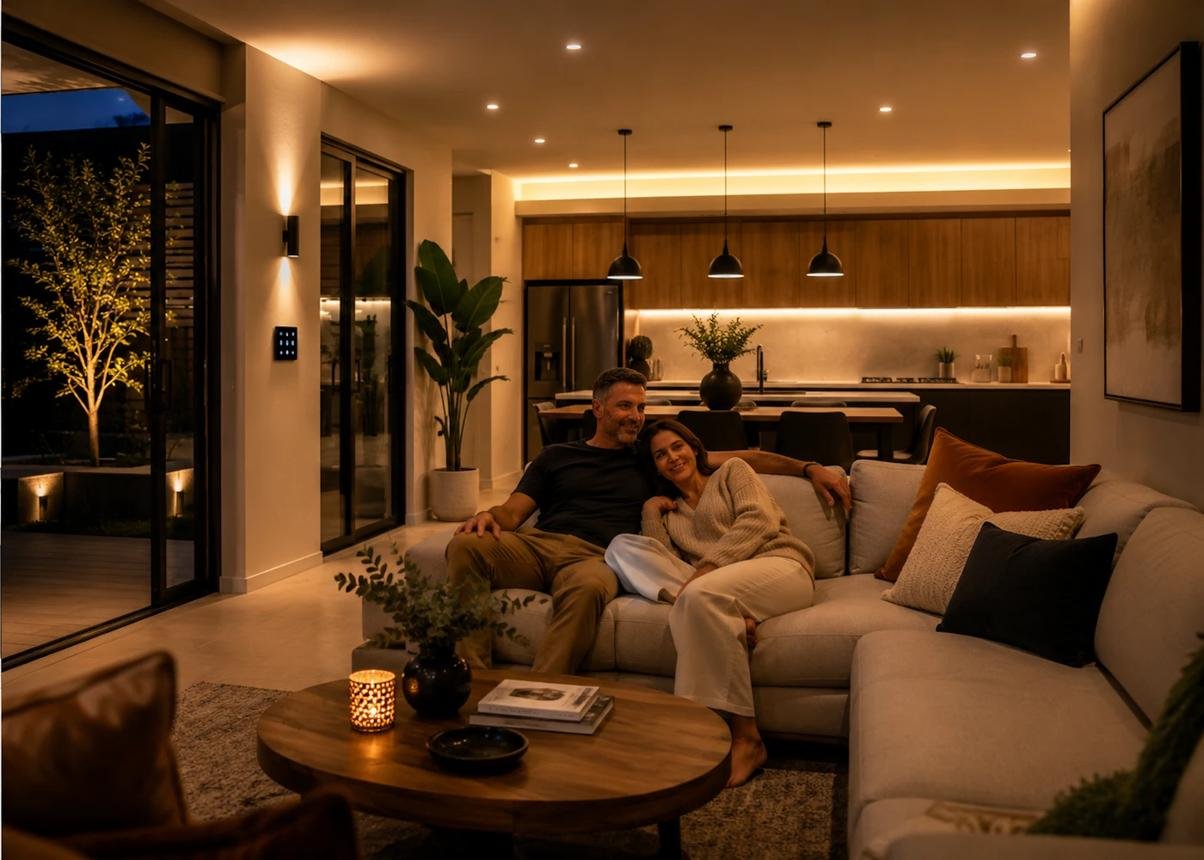
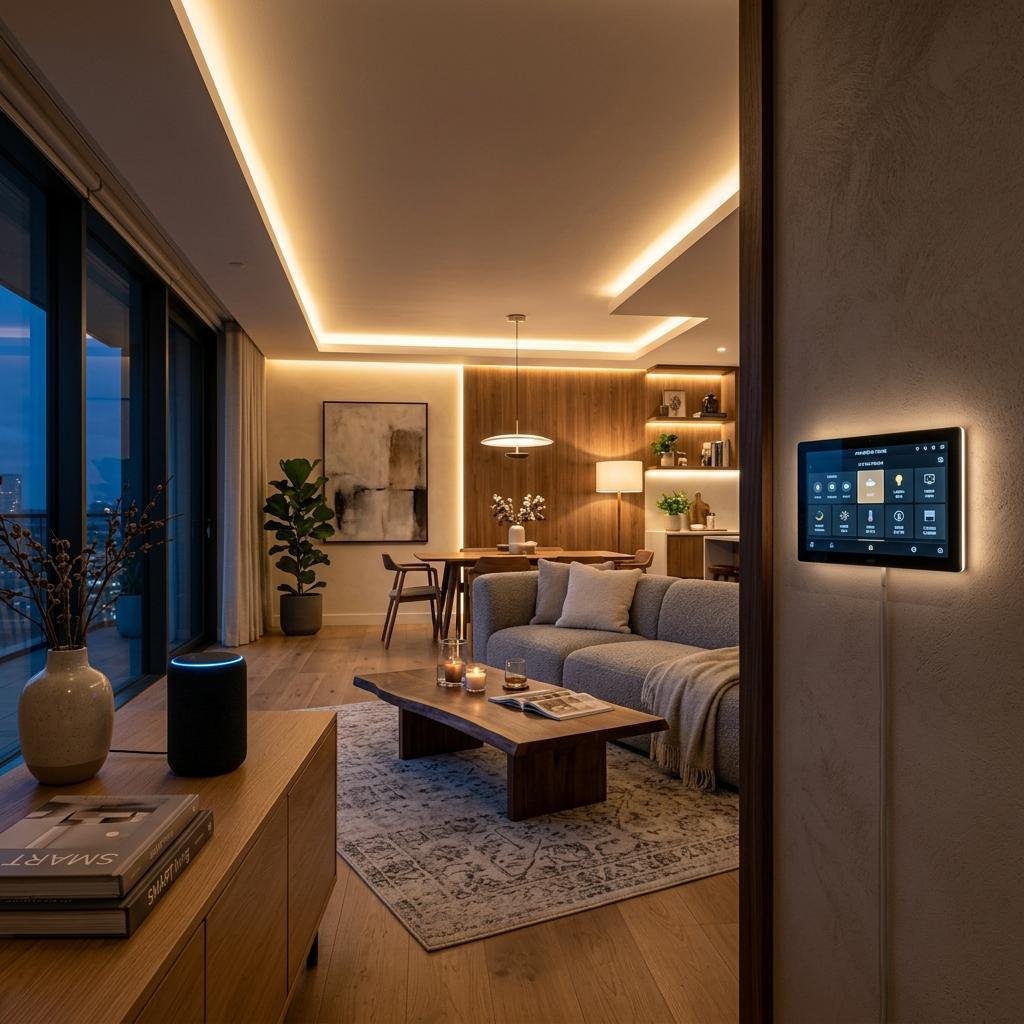
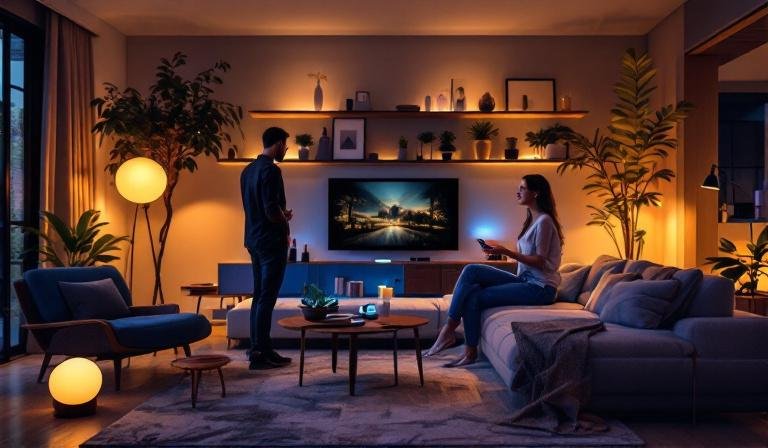
Smart lighting can make a living room more adaptable by allowing you to adjust brightness, schedules, and—in compatible systems—color settings. Instead of manually changing several lamps every evening, you can create lighting scenes that suit different activities.
For example, a relaxing evening setting might reduce the brightness of the ceiling fixture while keeping two table lamps and an accent light on. A cleaning setting could increase overall brightness. A movie setting could lower most of the room’s lighting while keeping a small amount of indirect illumination.
Smart bulbs can be particularly useful in existing lamps because they may allow you to upgrade your lighting without replacing the fixture itself. Compatibility varies, so check the bulb’s specifications and your home’s electrical setup before purchasing.
Smart lighting can also be helpful for routines. Lights can be scheduled to turn on or off at particular times, depending on the system. Some setups integrate with voice assistants or dedicated apps.
Don’t let technology become more complicated than your lifestyle requires. If you prefer physical switches, choose a system that maintains convenient manual control.
Lighting tip: Start with one or two smart bulbs in frequently used lamps before converting the entire room. This lets you determine whether the features are genuinely useful for your routine.
15. Choose Lighting for a Small Living Room
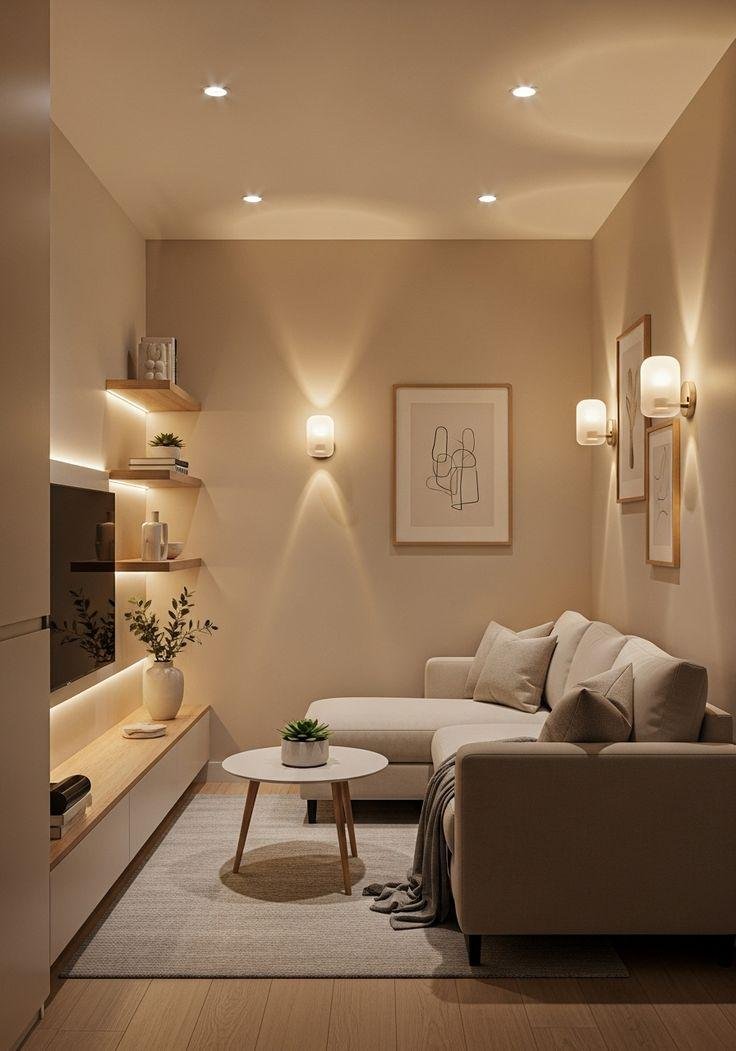
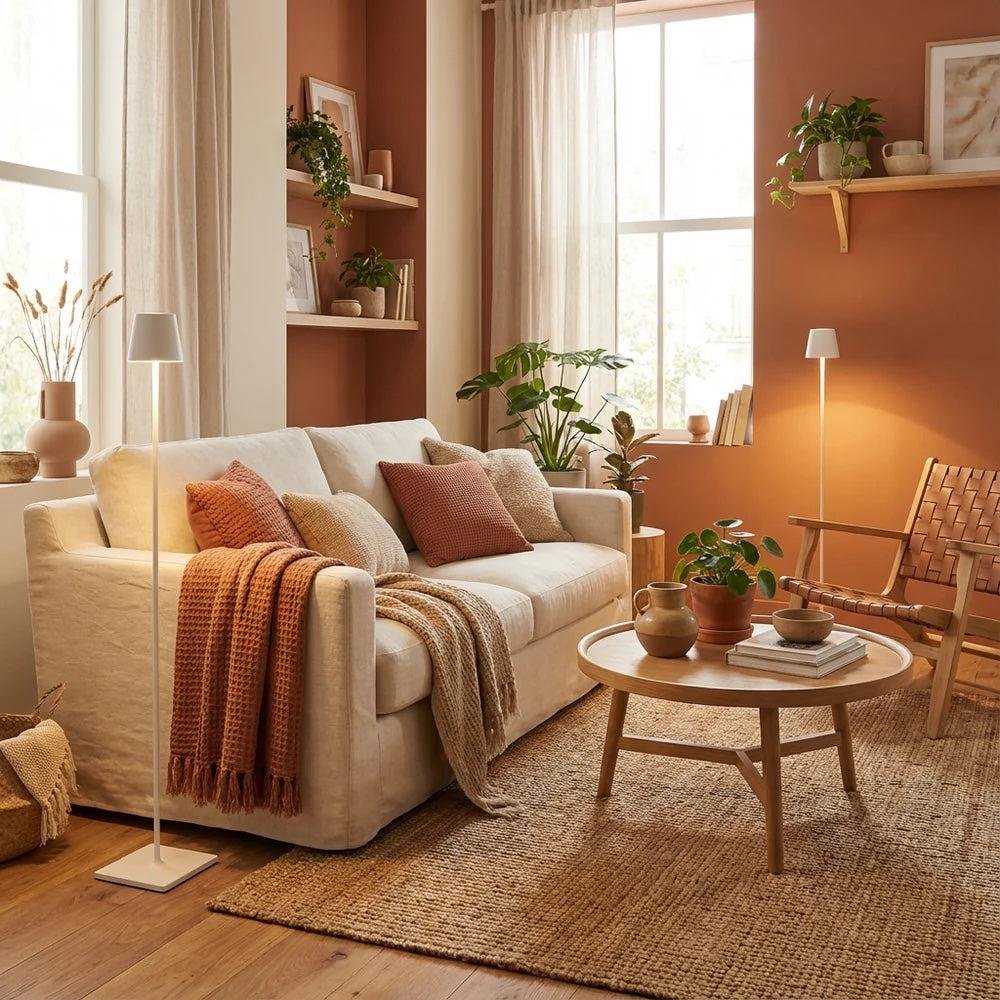
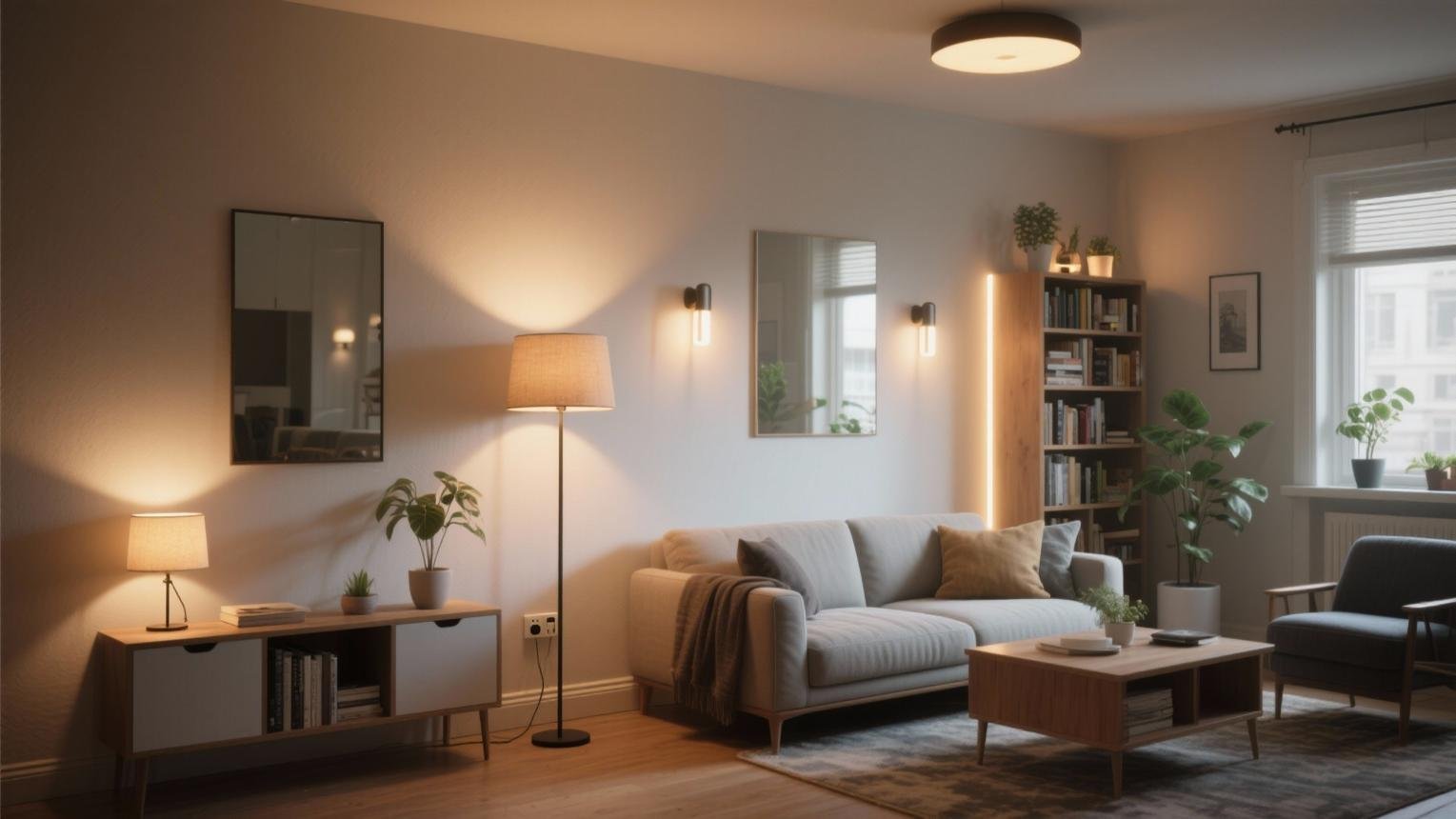
Small living rooms benefit from lighting that provides illumination without consuming valuable floor or surface space. Wall sconces, slim floor lamps, compact table lamps, and ceiling fixtures with relatively light visual profiles can all work well.
A narrow floor lamp can illuminate a dark corner without taking up much space. Wall-mounted fixtures can eliminate the need for side tables altogether, while a pendant can provide overhead lighting without making the room feel crowded.
Reflective surfaces can also help distribute light. A strategically positioned mirror can reflect daylight or lamp light, while pale walls and furniture can keep the room feeling bright.
Avoid filling a small room with oversized fixtures simply because they look impressive in photographs. Scale matters. A dramatic chandelier may work beautifully in a large open living room but overwhelm a compact apartment.
Layering is still important in a small room. You don’t need many fixtures; you simply need different sources at useful heights. One ceiling fixture, one floor lamp, and one small table or wall light may be enough.
Lighting tip: Prioritize fixtures that perform more than one role. A stylish floor lamp can provide task lighting, fill a dark corner, and act as a decorative feature at the same time.
16. Add Decorative Lamps to Shelving and Consoles
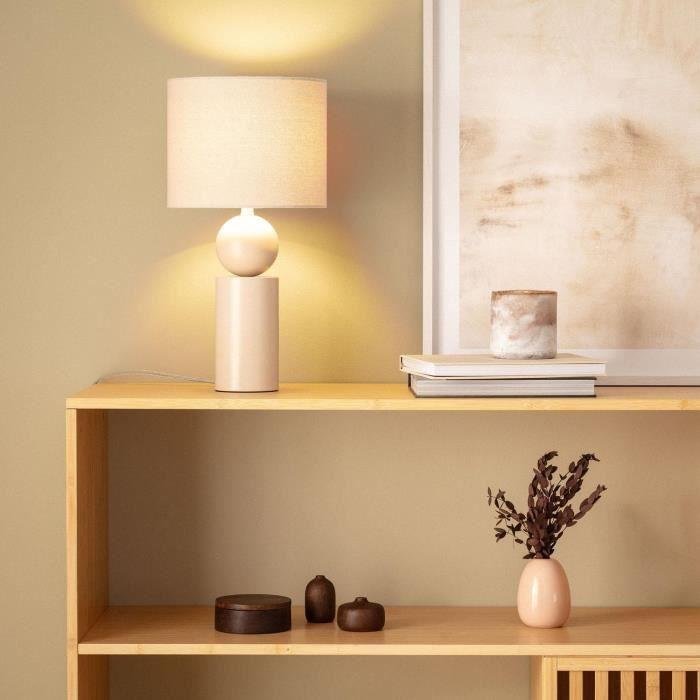
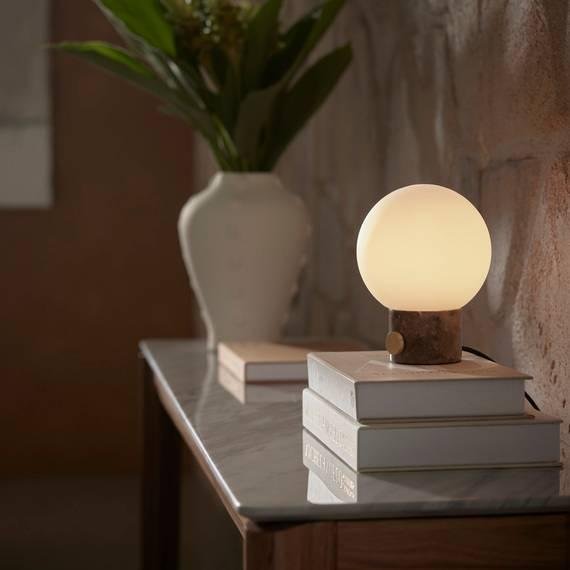
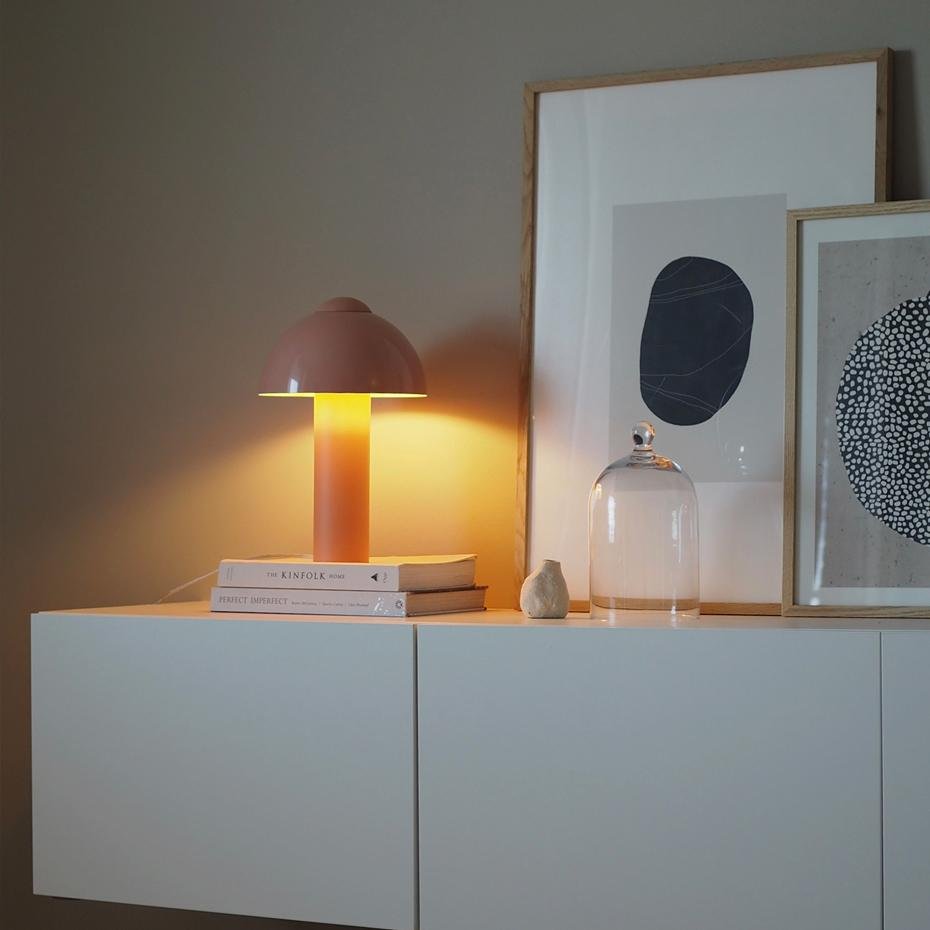
Small decorative lamps can add warmth to areas that might otherwise disappear into the background. A tiny lamp on a console, bookshelf, or built-in cabinet creates a low point of illumination that makes the room feel more layered.
This is particularly effective in the evening when the main ceiling light is turned down. The little pool of light around the lamp creates visual interest and gives the room a cozy character.
Choose lamps that relate to the objects around them. A ceramic lamp can complement pottery and natural materials, while a glass lamp can add a little reflection to a minimalist shelf.
Don’t overcrowd the surface. Leave enough room around the lamp for books, artwork, or decorative objects to remain visible. The lamp should be part of the composition rather than buried among accessories.
A small lamp can also help highlight a console table behind a sofa. Pair it with a framed photograph, vase, or stack of books for a simple arrangement.
Lighting tip: Look for compact lamps with shades that soften the light. The goal is usually atmosphere rather than maximum brightness.
17. Combine Black Fixtures With Warm Interiors
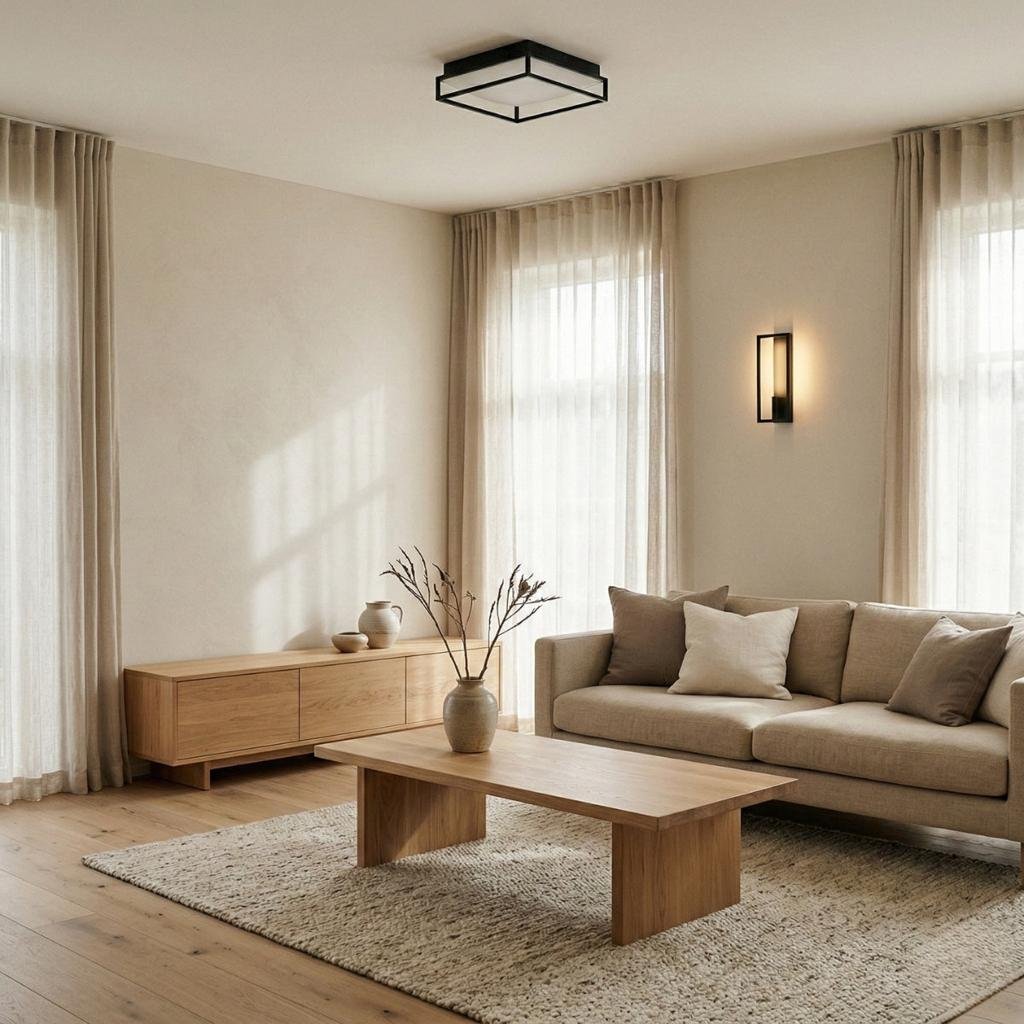
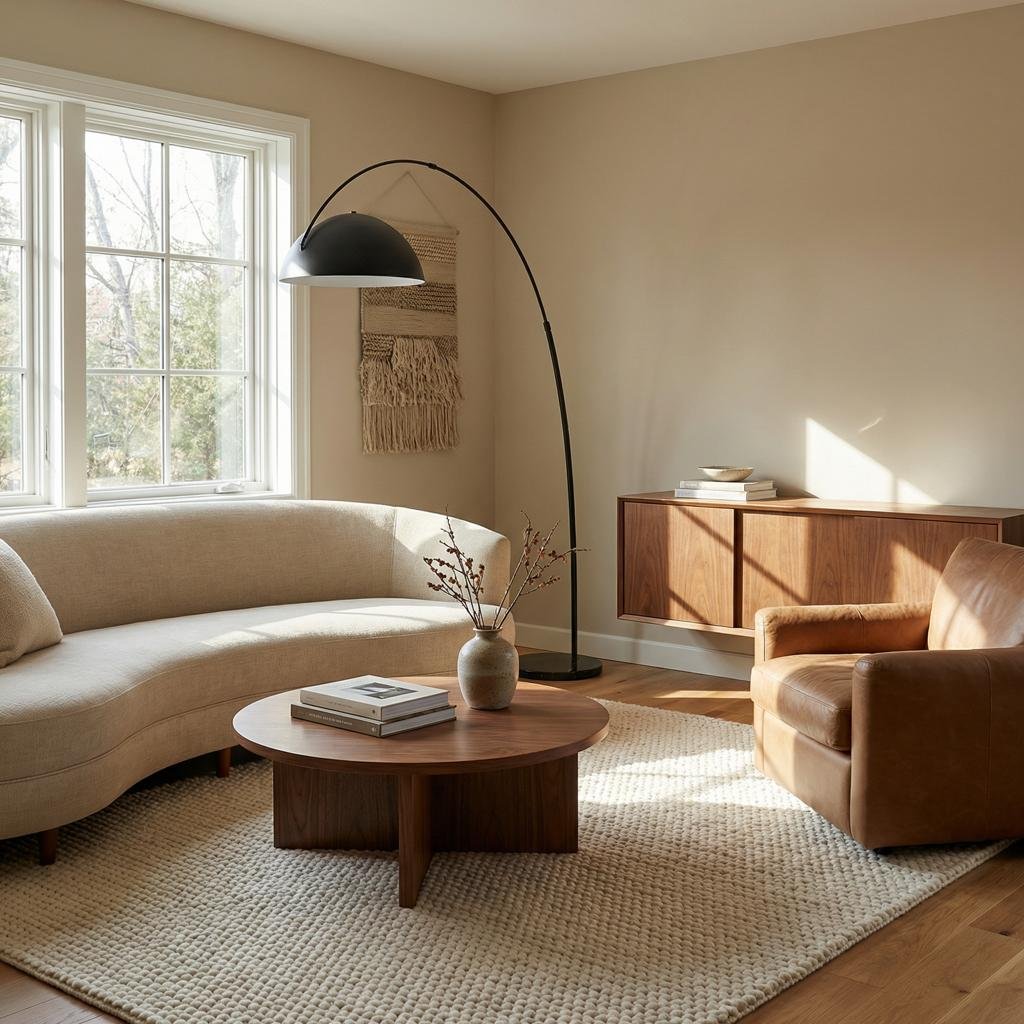
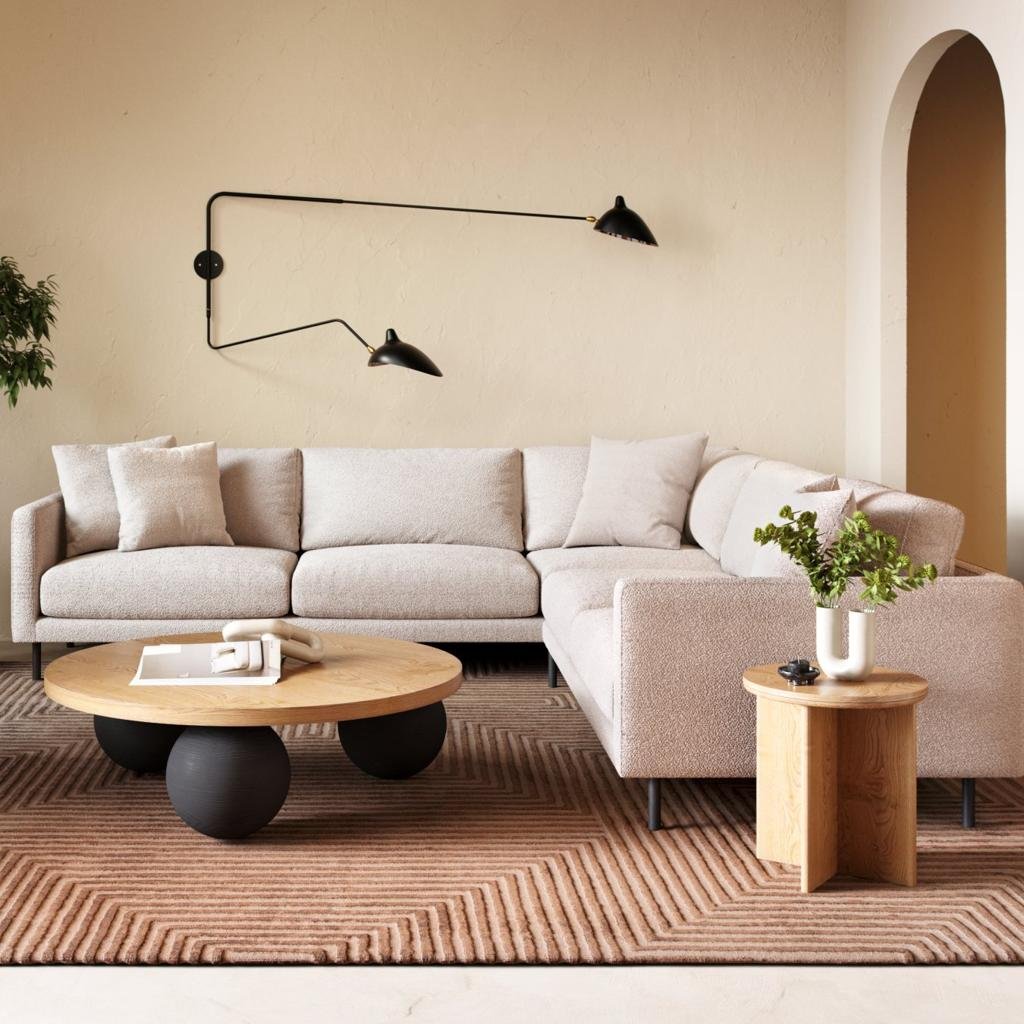
Black lighting fixtures can provide definition and contrast in a warm neutral living room. A matte black floor lamp, pendant, chandelier, or wall sconce can create a crisp visual line against cream walls and natural wood.
This approach works particularly well in modern interiors because the dark fixture acts almost like punctuation in the room. It gives the eye a point of contrast without requiring a large amount of dark furniture.
Balance is important. If the room already has black window frames, furniture legs, picture frames, or hardware, repeating black in the lighting can create continuity. If black is completely absent elsewhere, one carefully chosen fixture can serve as a deliberate focal point.
Pairing black with warm materials can prevent the room from feeling too stark. Think black metal with oak, walnut, linen, wool, cream upholstery, or warm stone.
You don’t need to use black everywhere. In fact, a few repeated details usually look more sophisticated than covering the room in the same dark finish.
Lighting tip: Repeat the fixture’s finish in at least one or two smaller details elsewhere in the room to create a visual relationship.
18. Use Multiple Light Sources in a Large Living Room
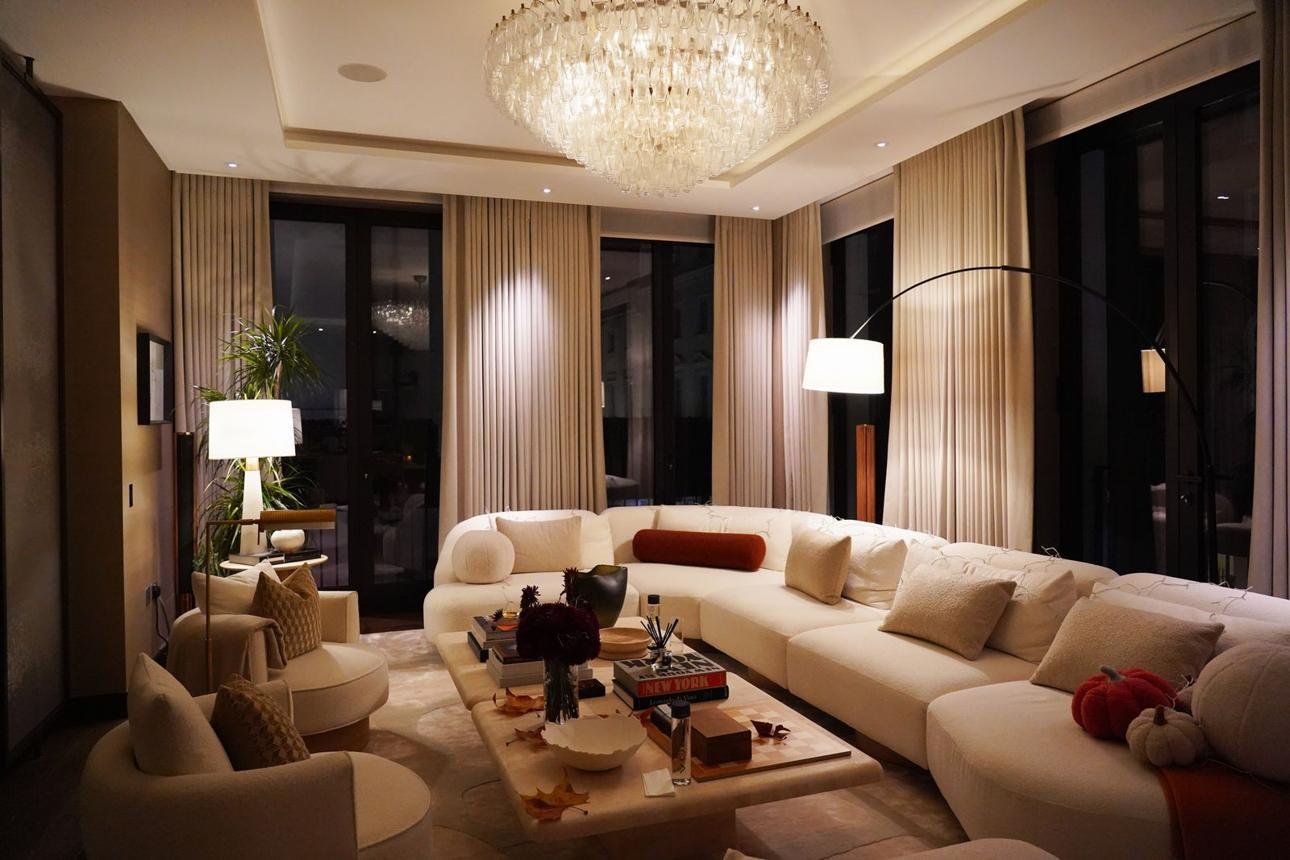
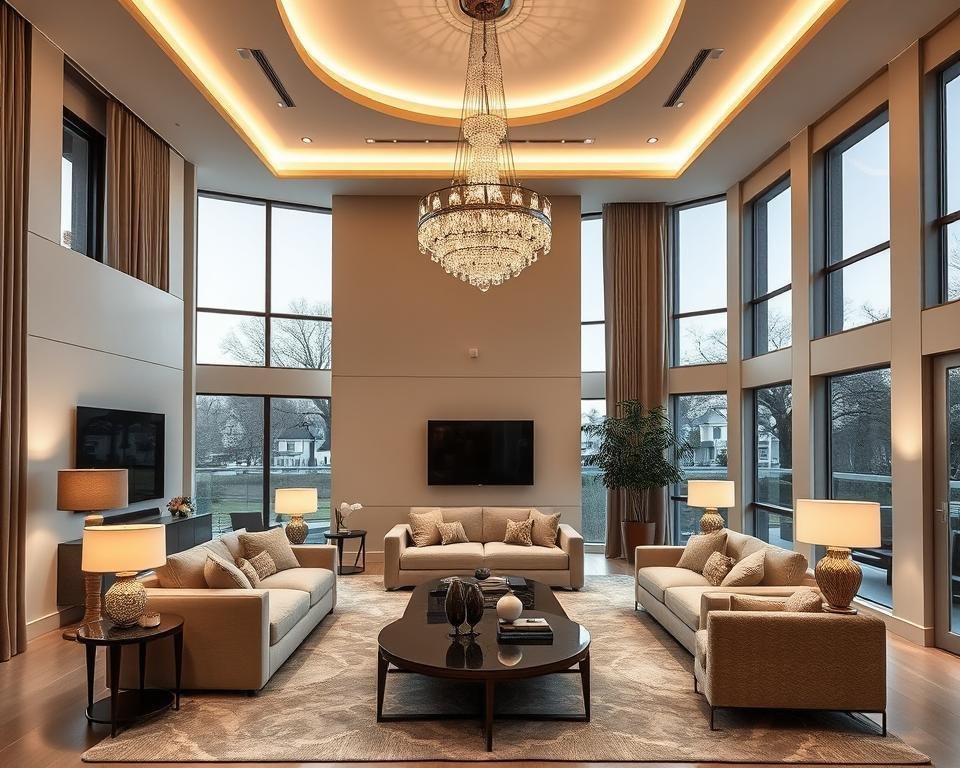
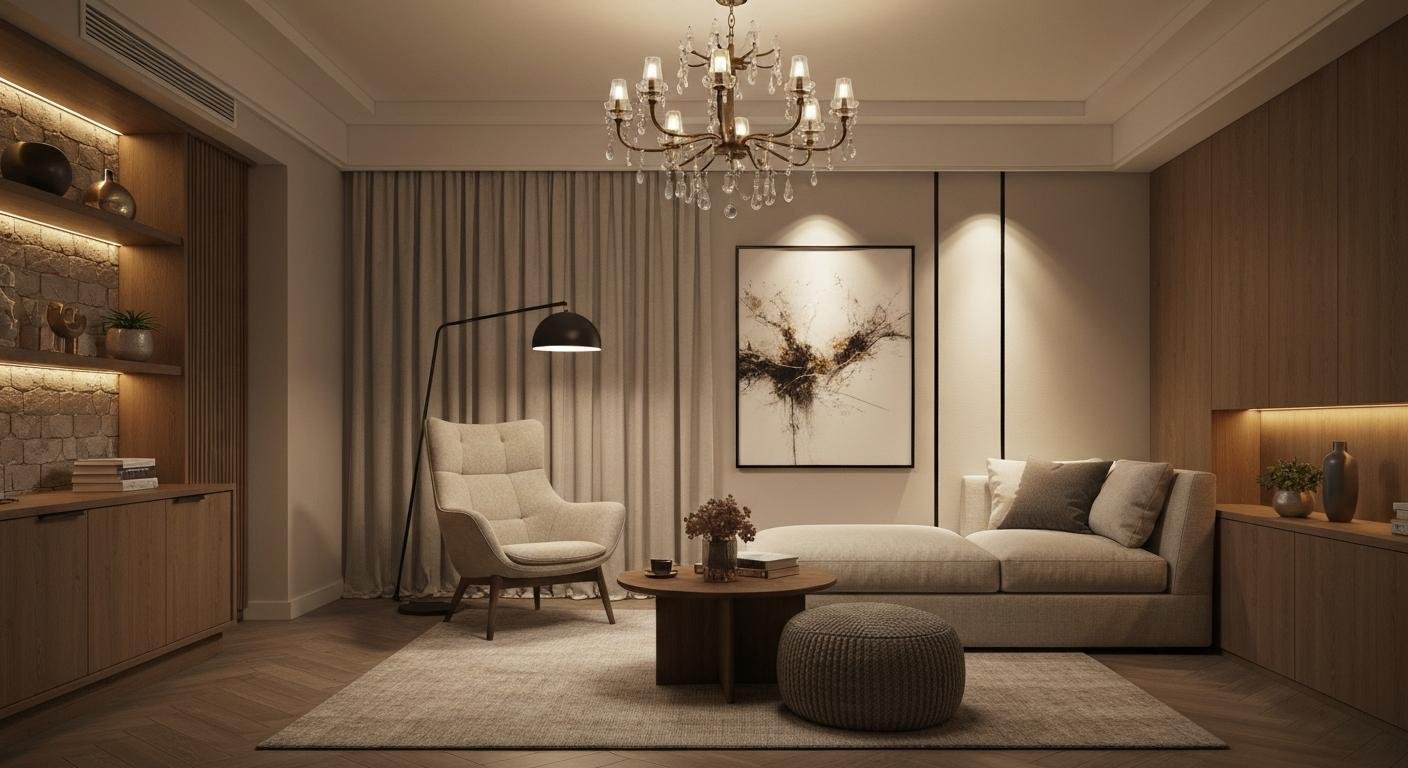
Large living rooms can present the opposite challenge of small spaces. Instead of trying to save every inch, you need to make sure the lighting reaches the entire room without making the space feel flat.
Multiple light sources are particularly useful in large rooms because they allow you to create separate zones. A chandelier or pendant can provide central illumination, while floor lamps and table lamps define seating areas around the edges.
If your living room includes a reading chair, add dedicated task lighting there. If there’s a console or artwork on another wall, consider accent lighting. This creates a series of visual points throughout the room.
The arrangement should feel balanced rather than perfectly symmetrical. You don’t necessarily need an identical lamp in every corner. Instead, distribute light according to how each part of the room is used.
Open-plan spaces benefit from this approach because lighting can visually define areas without physical walls. A pendant above the dining zone and lamps around the sofa can make the two areas feel distinct while maintaining an overall connection.
Lighting tip: Walk through the room at night and identify dark areas that feel disconnected. Those locations are often the best places to introduce another light source.
19. Create a Modern Minimalist Lighting Scheme
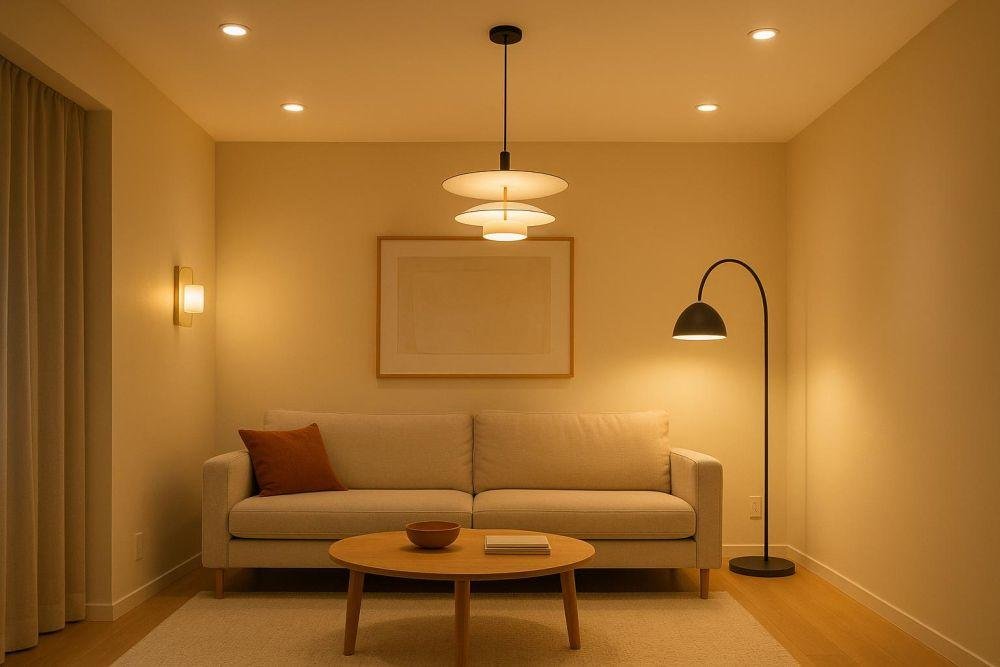
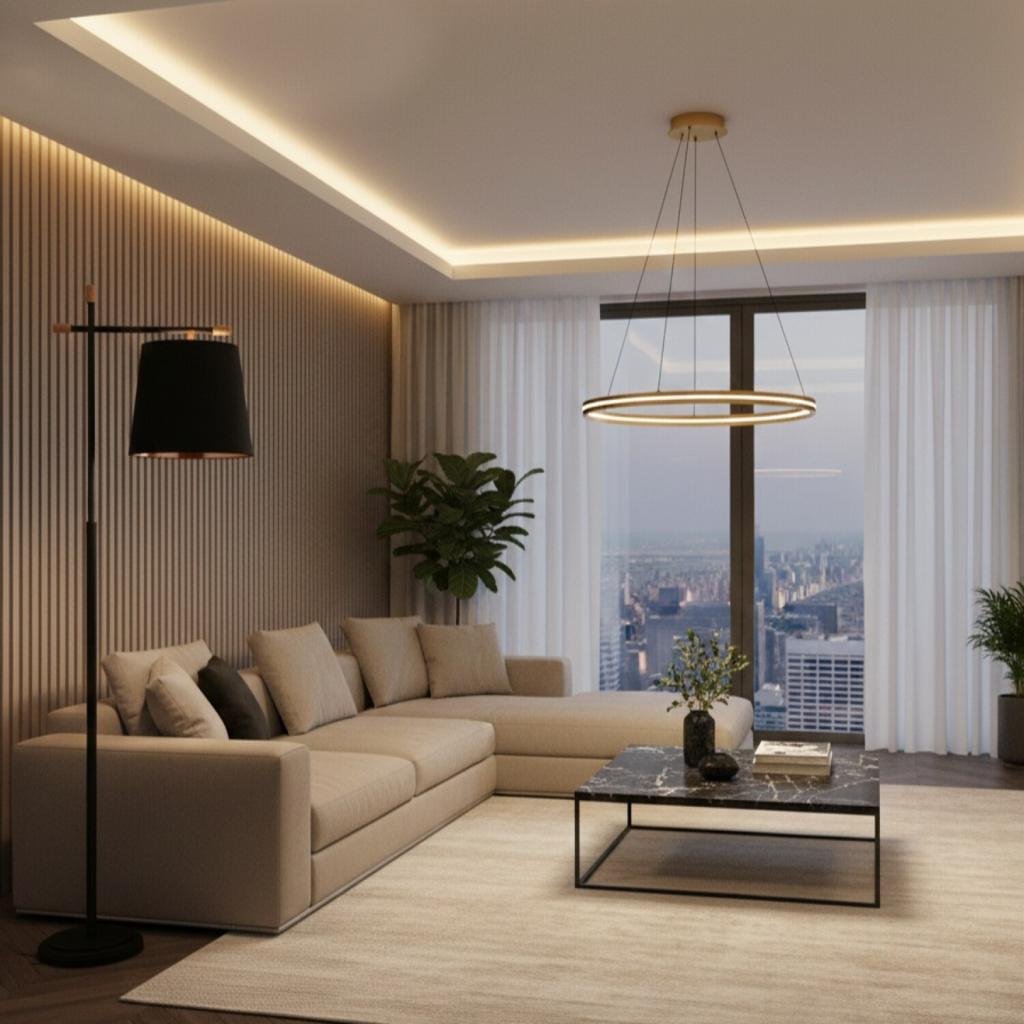
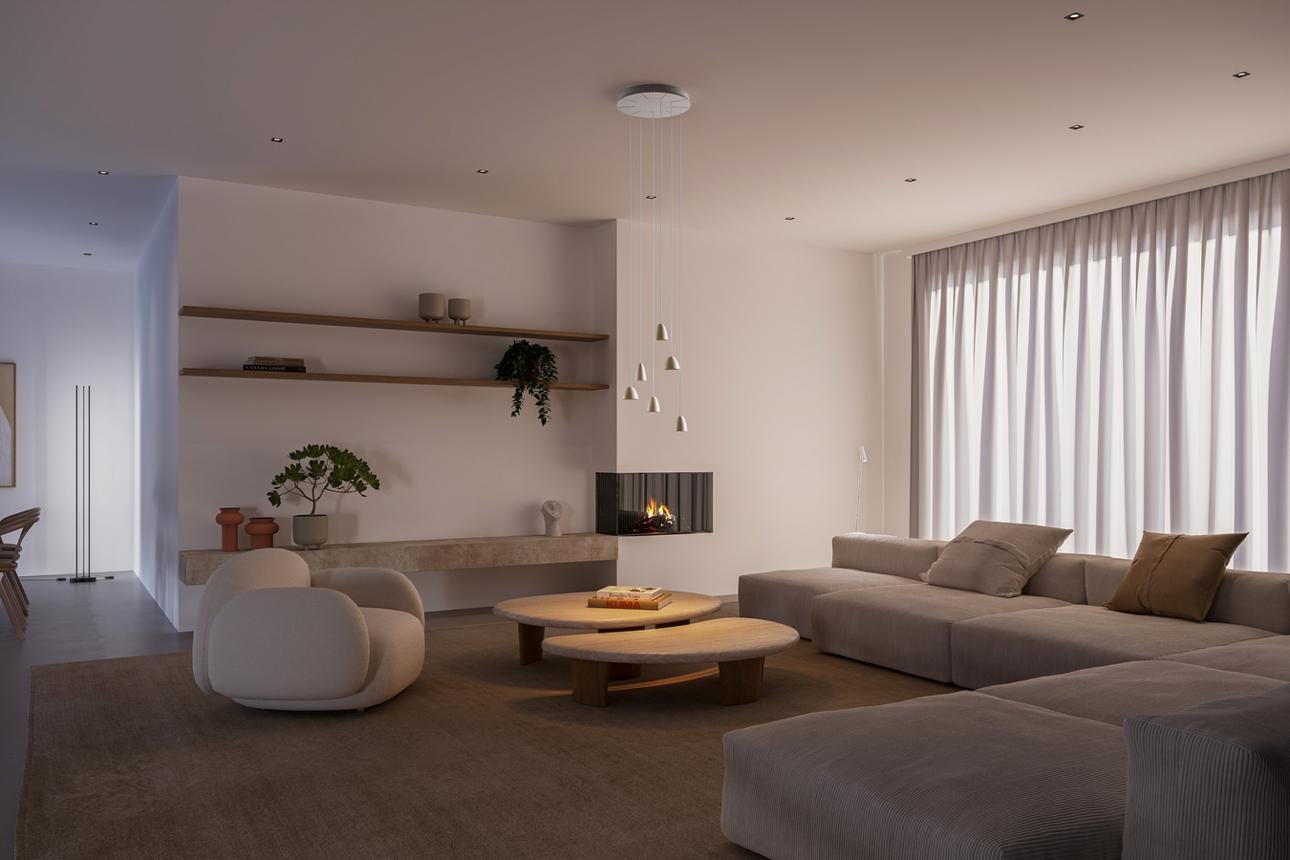
Minimalist interiors don’t need to be poorly lit just because they contain fewer decorative elements. In fact, lighting becomes even more important when there are fewer objects competing for attention.
Choose fixtures with clean silhouettes and simple finishes. A slim floor lamp, understated pendant, recessed ceiling lights, and one or two small table lamps may be enough to illuminate the room while maintaining a calm appearance.
Focus on quality and placement rather than quantity. Every fixture should have a purpose. If you don’t need another decorative lamp, don’t add one simply to fill an empty surface.
Hidden lighting can work especially well in minimalist rooms. LED lighting beneath shelving or inside cabinetry can create a subtle glow without introducing another visible fixture.
Keep the finishes coordinated. A few repeated materials, such as black metal, brushed brass, or warm wood, can make the lighting scheme feel cohesive.
Lighting tip: Minimalism doesn’t mean eliminating layers. It means making each layer purposeful and visually restrained.
20. Use Dimmers to Transform the Room
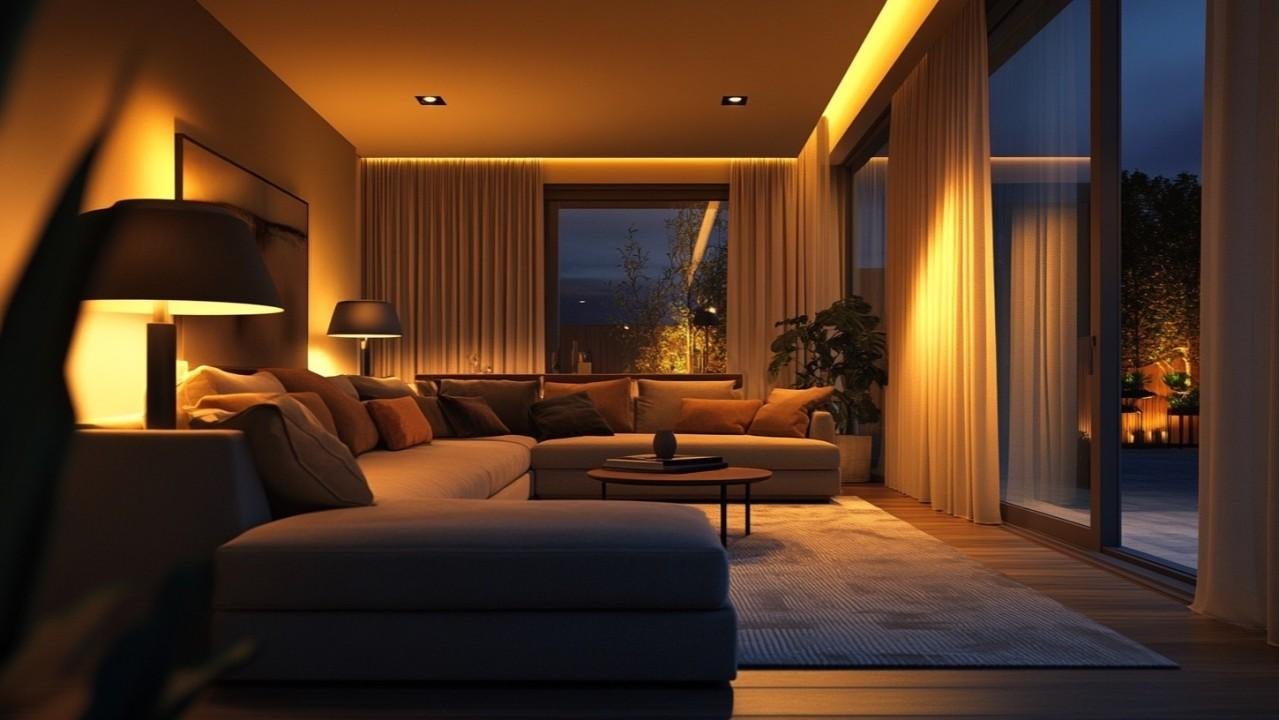
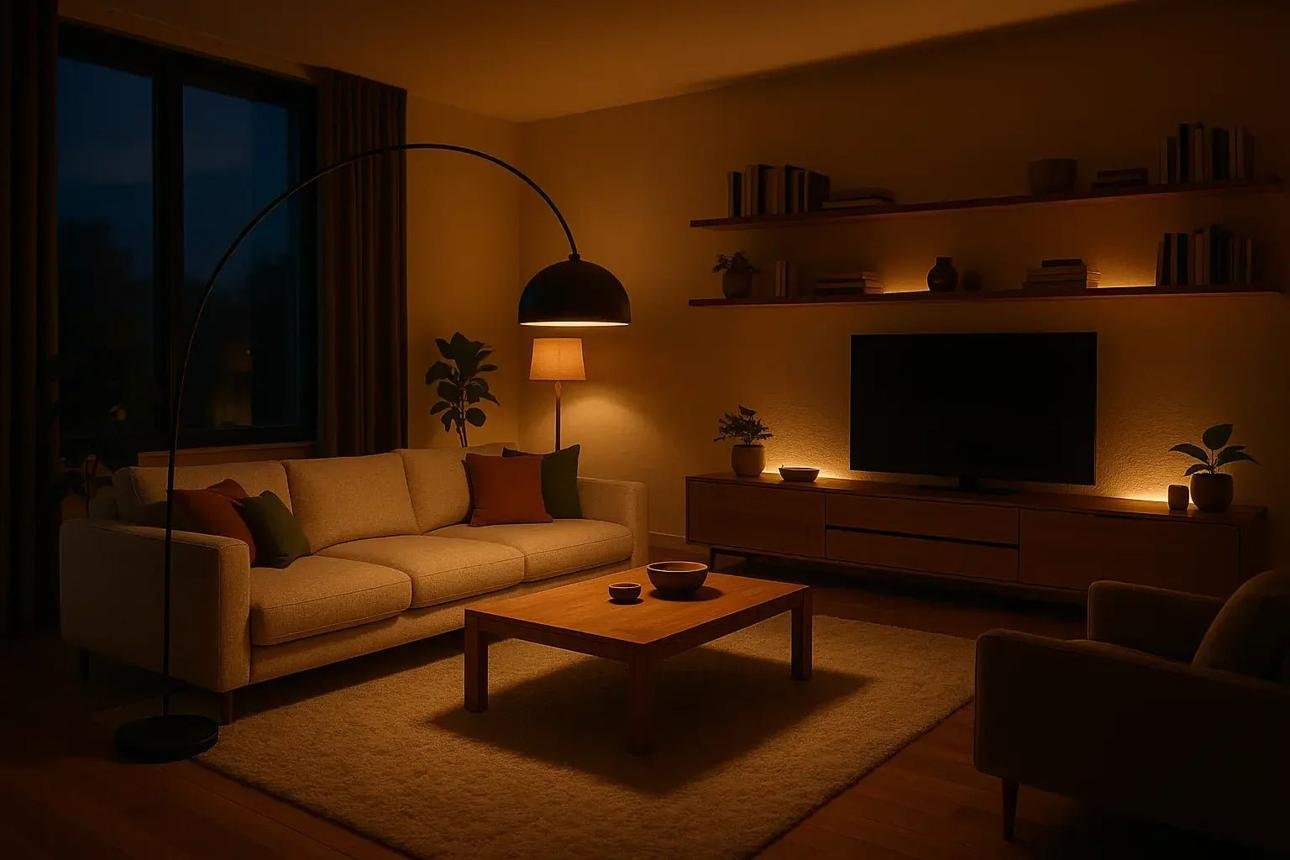
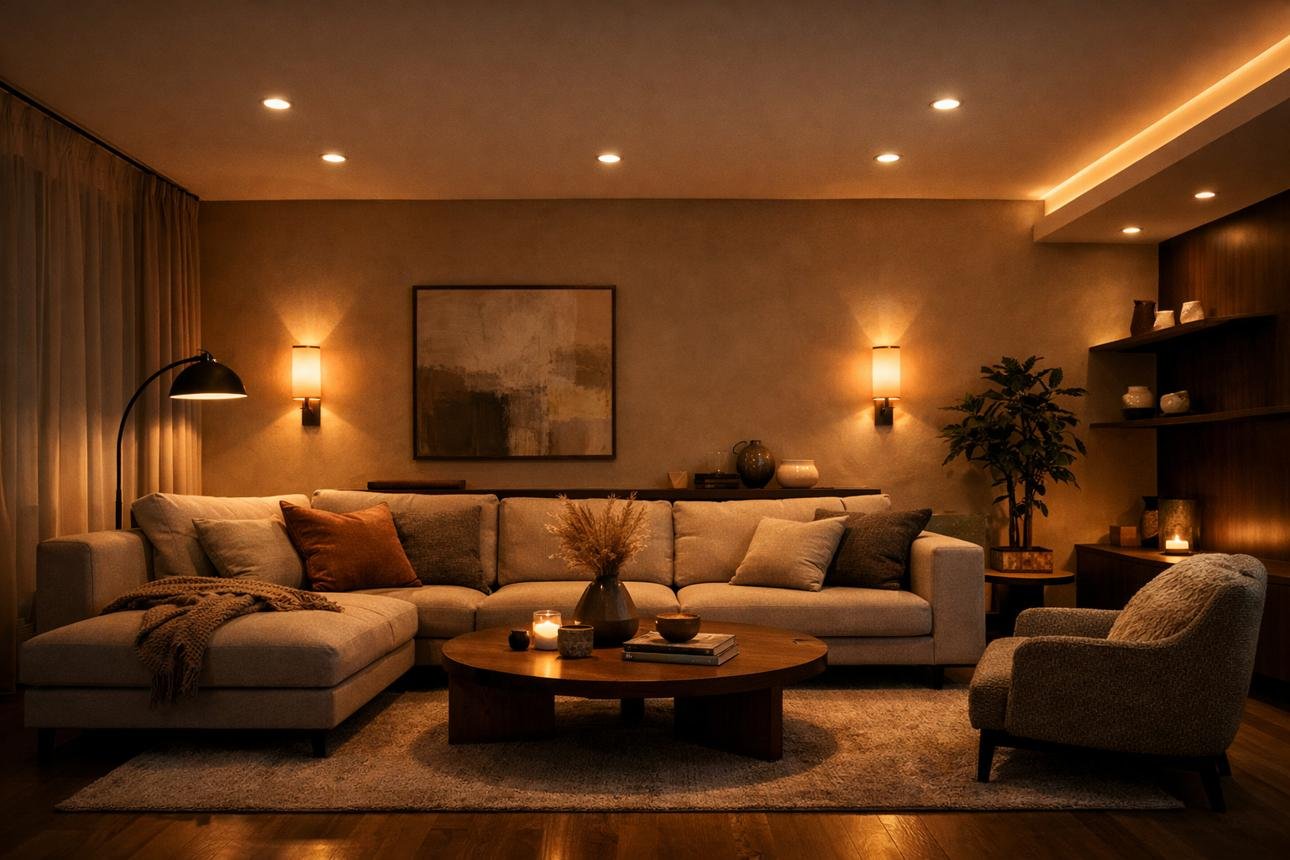
A dimmer can be one of the most useful additions to a living room lighting scheme because it gives you control over brightness without requiring different fixtures for every mood.
A bright setting may be useful when cleaning, organizing, or hosting during the daytime. Later, you can reduce the intensity to create a more relaxed atmosphere for watching television or chatting with friends.
Dimmers are particularly effective when combined with layered lighting. You can dim the ceiling fixture while leaving table lamps at a comfortable level, or reduce accent lighting when you want the room to feel more intimate.
Not every bulb or fixture is compatible with every dimmer. If you’re installing or replacing a dimmer, check compatibility carefully and follow local electrical requirements. When in doubt, consult a qualified electrician.
If permanent dimmer installation isn’t possible, smart bulbs or lamps with built-in brightness controls may provide an alternative, depending on the fixture and your preferences.
Lighting tip: Don’t think of brightness as an on/off choice. A room often feels much more sophisticated when you can gradually adjust the intensity to match the time of day and activity.
How to Choose the Right Living Room Lighting
Choosing living room lighting becomes much easier when you start with the way you actually use the space. Instead of shopping for fixtures first, think about what the room needs to accomplish. Do you read on the sofa? Watch television at night? Entertain guests? Work from home? Display artwork? Each activity suggests a different lighting requirement.
Next, consider the size and architecture of the room. A small apartment may need slim fixtures and wall-mounted lighting, while a large living room may benefit from several lighting zones. High ceilings create opportunities for dramatic pendants and chandeliers, whereas low ceilings often work better with flush mounts, recessed lighting, and shorter fixtures.
Your color palette matters as well. Warm wood and neutral upholstery can look especially inviting under warm illumination, while brighter task lighting may be useful around workspaces. Consider the appearance of the room both during the day and after sunset.
A useful starting point is to build your scheme around three layers:
| Lighting layer | Purpose | Examples |
|---|---|---|
| Ambient | General illumination | Ceiling lights, chandeliers, recessed lighting |
| Task | Focused activities | Reading lamps, desk lamps, adjustable floor lamps |
| Accent | Atmosphere and visual emphasis | Picture lights, shelf LEDs, decorative lamps |
You don’t need a fixture from every category. The goal is to create enough flexibility for your lifestyle.
Think about the room as a painting. Ambient lighting establishes the overall background, task lighting adds practical detail, and accent lighting is like the final brushstroke that directs attention toward the features you want people to notice.
Also consider maintenance. Choose bulbs and fixtures that are easy to clean and replace. If your ceiling is very high, a fixture that requires frequent bulb changes may be less practical than an alternative with a longer maintenance interval.
Most importantly, don’t underestimate the importance of comfortable light. A living room should feel good at night, not merely look attractive in a photograph. Test different bulbs and brightness levels before committing to a full lighting scheme.
Conclusion
The right lighting can completely transform a living room. It can make a compact space feel more open, add warmth to a minimalist interior, highlight beautiful artwork, define different zones, and create the perfect atmosphere for everything from quiet reading to entertaining friends.
The strongest living room lighting ideas usually involve layers rather than a single dramatic fixture. Combine ambient lighting with task and accent lighting, then adjust the balance according to how you use the room. A chandelier might provide the main focal point, while floor lamps, table lamps, wall sconces, and subtle LED lighting add depth around it.
You don’t have to redesign your entire electrical system to see a difference. Sometimes adding one well-placed floor lamp or changing the bulbs in your existing fixtures can dramatically improve the room. If you’re working with a small budget, prioritize lighting that solves a real problem while also contributing to the room’s style.
Whether you prefer a warm traditional interior, contemporary minimalism, modern organic decor, or a cozy apartment aesthetic, lighting gives you an opportunity to make the room feel uniquely yours.
Start with the areas that feel too dark, too harsh, or visually flat. Add light gradually, experiment with different heights and intensities, and pay attention to how the room changes throughout the day.
A beautifully lit living room isn’t necessarily the brightest one. It’s the one where every light has a purpose and the atmosphere feels right when you walk through the door.
Frequently Asked Questions
1. What type of lighting is best for a living room?
The best approach is usually a combination of ambient, task, and accent lighting. Ceiling fixtures provide general illumination, while floor lamps and table lamps support activities such as reading. Accent lighting can highlight artwork, shelving, or architectural details and add atmosphere in the evening.
2. How can I make my living room lighting feel cozy?
Use several smaller light sources instead of relying entirely on one bright ceiling fixture. Table lamps, floor lamps, wall sconces, and accent lighting can create softer pools of illumination throughout the room. Warm-toned bulbs and dimmable fixtures can also help create a more relaxed evening atmosphere.
3. How many lights should a living room have?
There isn’t one correct number because it depends on the room’s size, layout, ceiling height, natural light, and how the space is used. Instead of counting fixtures, think about lighting zones. A living room might need one main ambient source plus several smaller task and accent lights distributed around the seating and activity areas.
4. What color temperature is best for living room lighting?
Warm-toned lighting is commonly used in living rooms because it can create a comfortable, relaxed atmosphere. However, the appropriate choice depends on the activity and your personal preference. Task areas may require different lighting characteristics from decorative or ambient areas, so consider each zone individually.
5. How can I improve living room lighting without renovating?
Start with portable fixtures. Add a floor lamp beside the sofa, table lamps on side tables or consoles, and small accent lights around shelves or artwork. You can also improve natural light with suitable curtains and mirrors. Smart bulbs may provide additional brightness control without requiring changes to the existing wiring.

Leave a Reply