
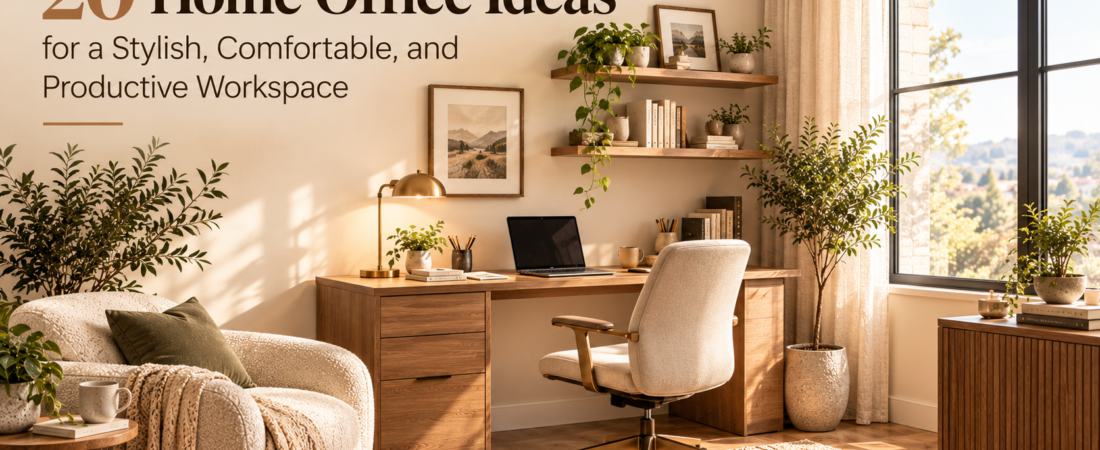
Working from home doesn’t mean your workspace has to be a boring desk squeezed into a corner. With the right furniture, colors, lighting, and thoughtful decorating, even a small spare room or unused nook can become a home office that feels comfortable, organized, and inspiring.
Whether you’re working remotely full-time, running a small business, studying, or simply need a dedicated place to manage everyday tasks, your home office should work for your lifestyle. A well-designed workspace can help you stay focused while still feeling like a natural part of your home. And you don’t need a huge budget or an entire spare room to make it happen.
In this article, we’ll explore 20 home office ideas, from cozy minimalist setups and built-in desks to stylish office corners, natural wood furniture, and space-saving storage solutions. You’ll also find practical decorating tips to help you create a workspace that’s functional, attractive, and easy to maintain.
1. Create a Cozy Minimalist Home Office
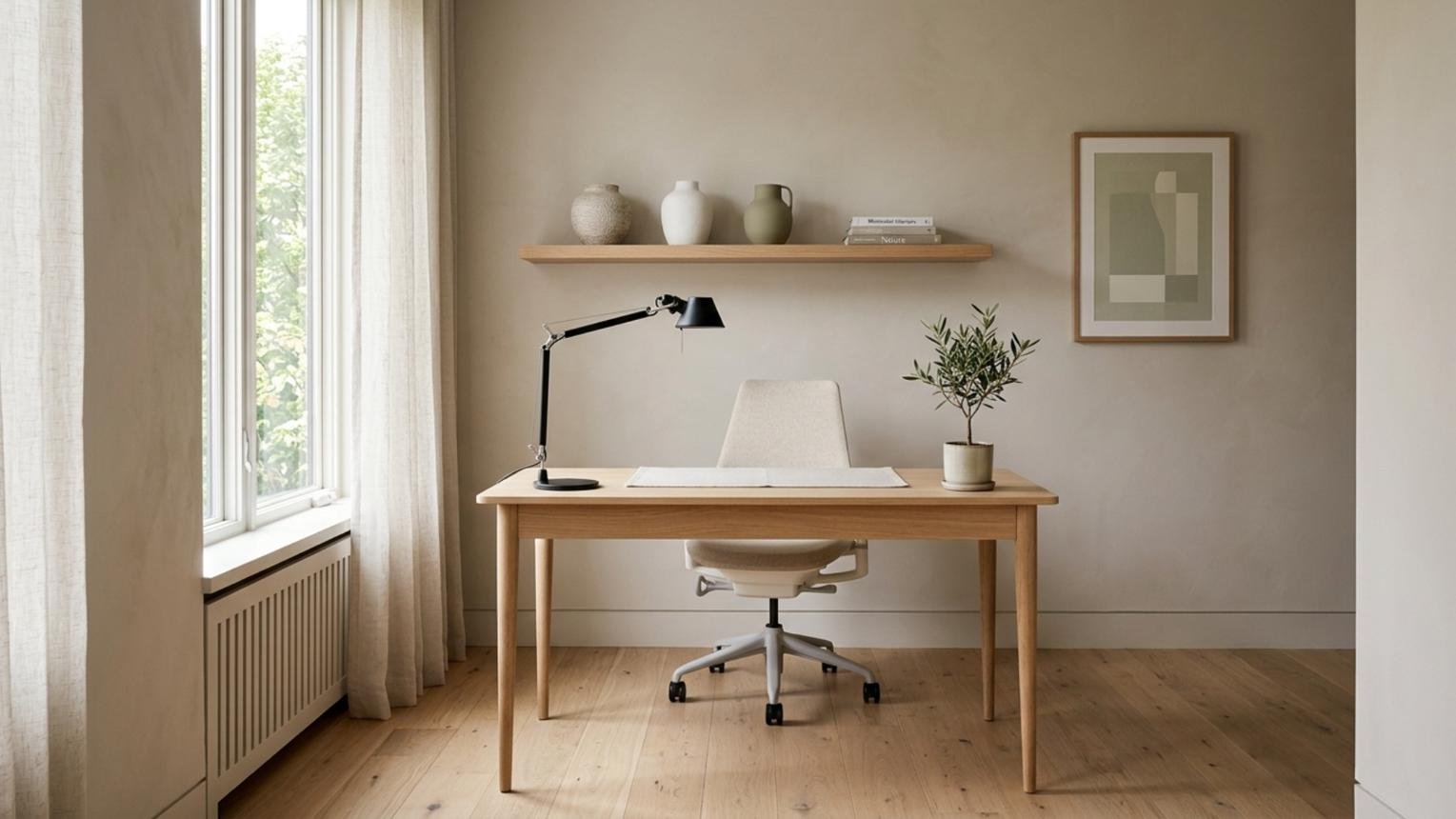
A cozy minimalist home office is perfect if you love a clean, peaceful workspace that doesn’t feel cold or overly formal. The idea is to keep the essentials within reach while making the room feel warm and comfortable. Instead of filling your desk with decorative objects, focus on a few beautiful, practical pieces that make working from home more enjoyable. A simple wooden desk, comfortable chair, soft lighting, and a carefully chosen color palette can completely transform even the smallest workspace.
Start with a neutral foundation. Cream, warm white, beige, and soft greige are all excellent choices for walls because they create a light background without making the room feel sterile. Add a natural oak desk, a supportive upholstered chair, and a small desk lamp with a warm finish. If you need storage, choose closed drawers or a compact cabinet so papers, cables, and office supplies don’t take over the room.
Minimalism doesn’t mean your office needs to feel empty. A framed print, a small plant, or a textured rug can introduce personality without creating visual clutter. You can also use linen curtains, woven baskets, and natural wood accessories to make the workspace feel connected to the rest of your home.
The most important part of a minimalist office is being intentional about what stays on your desk. Keep your computer, notebook, and everyday essentials accessible, while storing less frequently used items elsewhere. This makes it easier to reset your workspace at the end of the day and return to a tidy environment the next morning.
Shop the look: Check Out: Minimalist wooden desk | Ergonomic office chair
2. Design a Small Home Office in a Corner
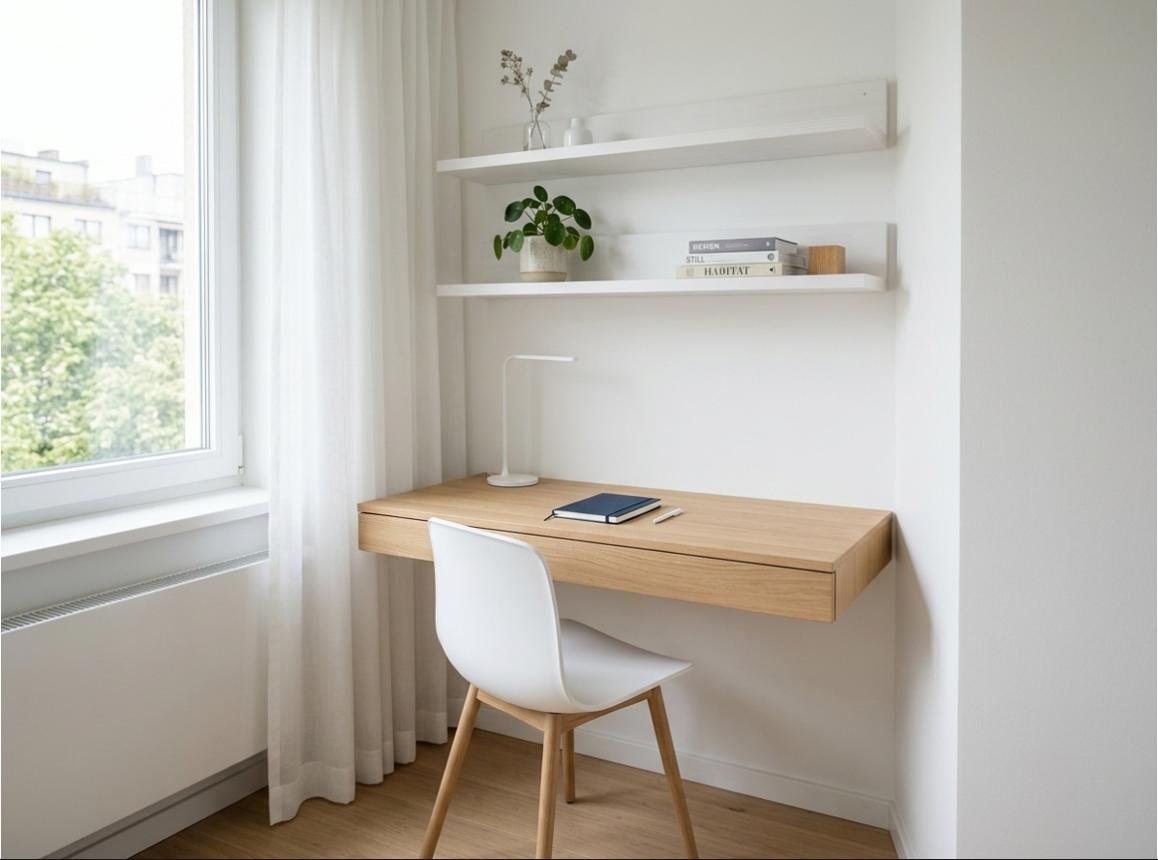
You don’t need an entire spare room to create a functional home office. An unused corner in your living room, bedroom, or hallway can become a practical workspace with just a few well-chosen pieces. The secret is to use vertical space, select furniture that fits the available area, and avoid making the office feel like an obstacle in the room.
Begin by measuring the corner and deciding how much desk space you actually need. A narrow writing desk or compact desk with drawers may be enough for a laptop, notebook, and desk lamp. If the corner is especially small, consider a wall-mounted desk or a slim console-style workspace. Choose a chair that can slide completely underneath the desk when you’re finished working.
The wall above the desk offers valuable storage potential. Install one or two floating shelves for books, small storage boxes, and a few decorative objects. A pinboard or wall-mounted organizer can keep reminders and important documents visible without covering the desk with papers.
Color can also help a corner office feel integrated into the room. Use furniture and accessories that complement the surrounding decor rather than introducing an entirely different style. A light oak desk, cream chair, and warm neutral accessories can blend naturally into a living room, while a darker desk may work better in a room with walnut furniture.
If your office is in a shared living space, a small rug or a different wall color can visually define the work area. This creates a sense of separation without requiring walls or expensive renovations.
Shop the look: Check Out: Compact corner desk | Floating wall shelves
3. Add a Beautiful Built-In Desk
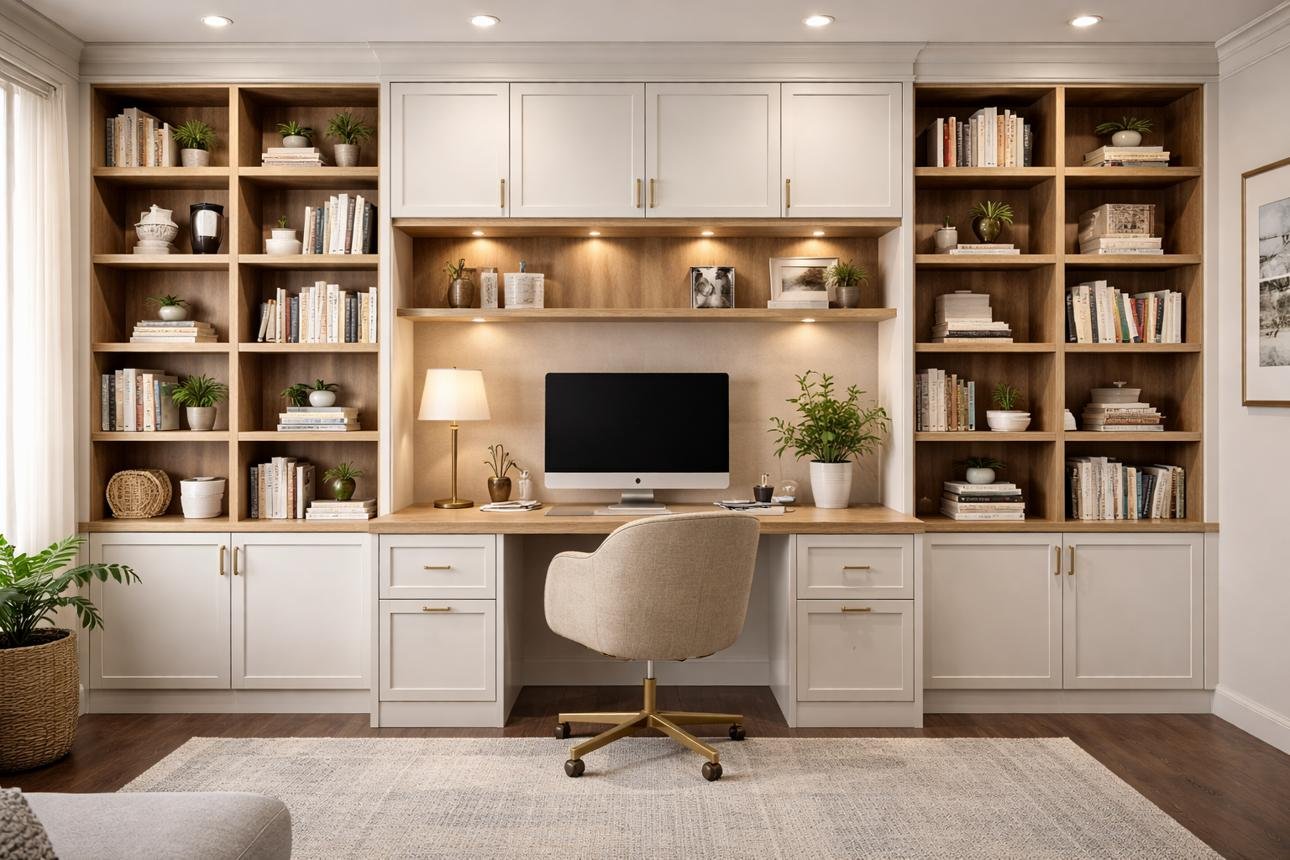
A built-in desk can make a home office feel polished, organized, and thoughtfully designed. Unlike a freestanding desk, built-in furniture uses the available wall space more efficiently and can be customized to suit the room’s dimensions. It’s especially useful in a dedicated office, an alcove, or a room with an awkward layout where standard furniture doesn’t quite fit.
One popular approach is to create a long desktop between two sets of cabinets or beneath a series of shelves. This provides generous working space while keeping storage close at hand. Lower cabinets can hold paperwork, technology accessories, and office supplies, while open shelves above the desk provide room for books and carefully selected decor.
For a timeless look, consider combining warm white cabinetry with a natural oak or walnut desktop. This pairing feels inviting without being overly decorative. If you prefer a more contemporary style, use flat-front cabinets, streamlined hardware, and a simple task chair. A darker built-in in deep olive, taupe, or charcoal can also create a dramatic office that feels distinct from the rest of the house.
Before designing a built-in desk, think about how you use your workspace. If you work with multiple monitors, allow enough depth for your equipment and comfortable positioning. Plan cable openings, power outlets, and storage for devices before the cabinetry is installed. A beautiful desk is much more useful when cables and chargers have a designated place.
Built-ins can be a larger investment than ready-made furniture, but a carefully planned design can make a room feel more cohesive and maximize every available inch. If a custom installation isn’t practical, modular cabinets and a separate desktop can create a similar effect.
Shop the look: Check Out: Home office storage cabinets | Wood desktop
4. Choose a Warm Neutral Home Office
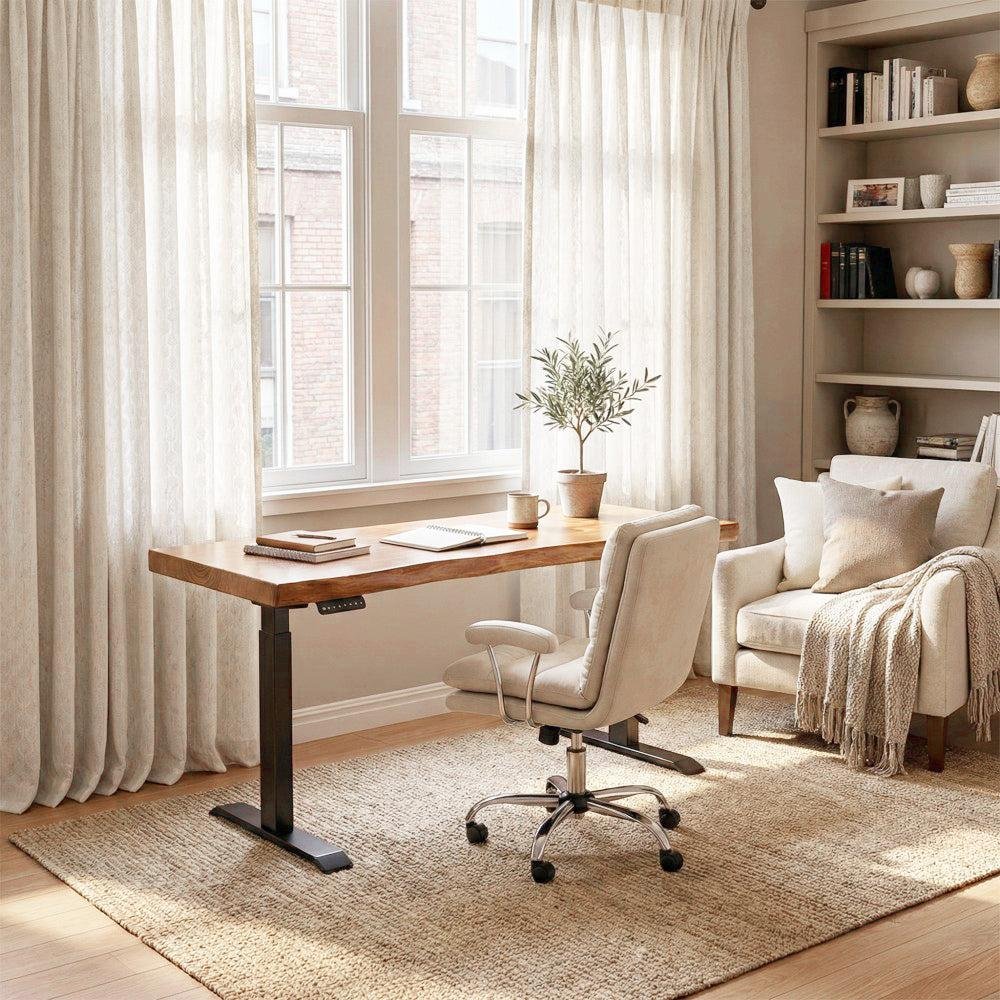
If you want a home office that feels calm and inviting, a warm neutral color palette is an excellent choice. Shades such as creamy white, oatmeal, beige, warm taupe, and soft brown create a comfortable atmosphere without distracting from the work you’re doing. This style is particularly useful when your office is part of a bedroom or living room because the colors can blend seamlessly with the rest of your home.
Start with a light neutral on the walls, then introduce two or three related shades through furniture and accessories. A beige wall can pair beautifully with an oak desk, an ivory chair, and a sandy-colored rug. For a little more depth, add a walnut picture frame, caramel storage boxes, or a warm brown desk lamp.
Texture is what makes this style interesting. Combine linen curtains, a woven basket, a wool rug, and a smooth wooden desktop to create contrast without relying on bold colors. A small ceramic vase or a framed landscape print can add personality while maintaining the peaceful look.
Lighting plays an important role in a warm neutral workspace. A desk lamp with a soft warm-white bulb can make the office feel comfortable during early mornings or late afternoons. However, if you regularly read detailed documents or work with color-sensitive designs, make sure your task lighting provides sufficient brightness and accurate color rendering.
You can also introduce muted green through a plant or an olive-colored cushion. The natural contrast adds life without interrupting the neutral palette.
Shop the look: Check Out: Beige office chair | Neutral desk accessories
5. Bring Nature into Your Workspace
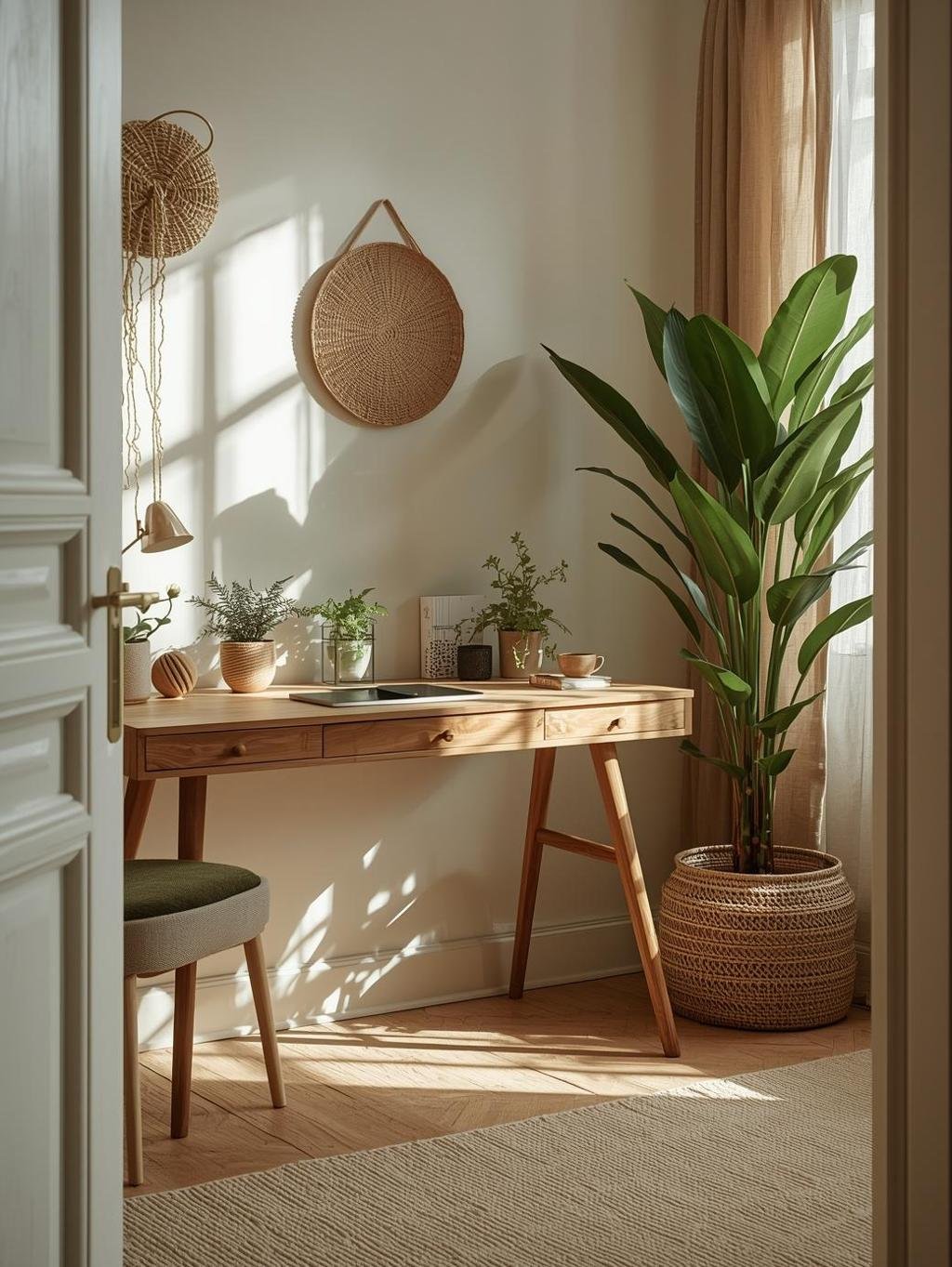
A nature-inspired home office can make your workspace feel fresh, relaxed, and connected to the outdoors. This style combines natural materials, greenery, sunlight, and earthy colors to create an environment that feels less like a traditional corporate office and more like a comfortable part of your home.
Plants are an easy place to begin. A larger floor plant can fill an empty corner, while smaller plants can sit on shelves or a windowsill. Choose varieties suited to the light available in your room, and avoid placing plants where they block your workspace or interfere with your equipment. If natural light is limited, a few well-made artificial plants can provide a similar decorative effect without ongoing care.
Natural materials help reinforce the look. A wooden desk, woven storage baskets, linen curtains, and a jute or wool rug can create a warm foundation. You can also introduce stone or ceramic accessories for a little variation. Keep the color palette grounded with cream, beige, muted green, and natural brown.
If your office has a window, arrange your desk to make the most of the daylight while avoiding uncomfortable screen glare. A view of trees or a garden can become a natural focal point, but even a small windowsill with plants can help make the space feel more connected to nature.
For a more cohesive design, repeat natural materials in several places. For example, a wooden desk, a wooden picture frame, and a woven basket create a visual connection throughout the room. The result is an office that feels thoughtfully decorated without becoming cluttered.
Shop the look: Check Out: Indoor office plants | Woven storage baskets
6. Create a Modern Home Office
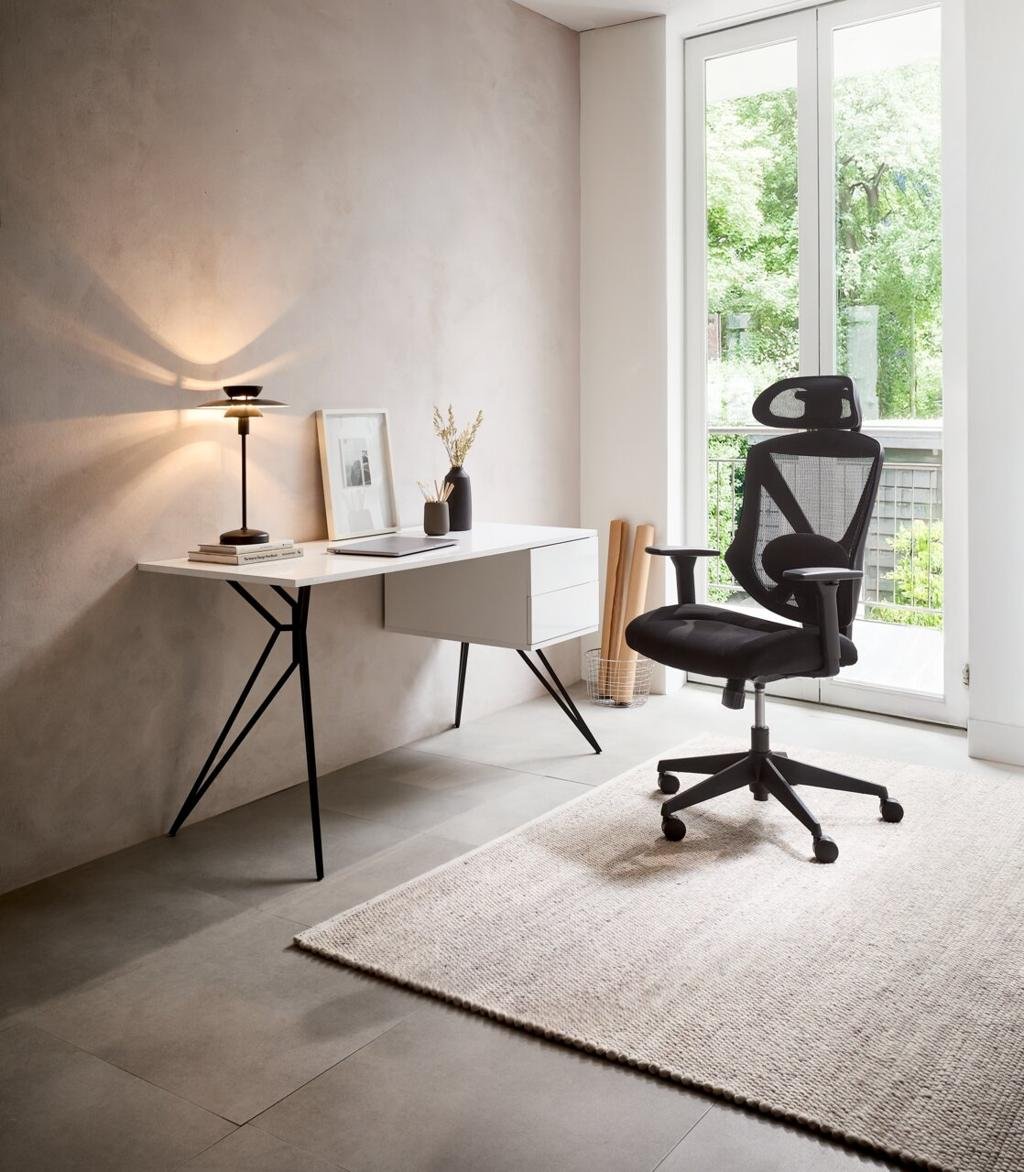
A modern home office is all about clean lines, practical furniture, and a streamlined appearance. It works especially well if you prefer contemporary interiors and want your workspace to feel organized without relying on lots of decorative details. The overall look can be simple, but thoughtful choices in furniture, lighting, and materials help keep it from feeling cold.
Choose a desk with a straightforward silhouette, such as a rectangular wood top with slim metal legs or a streamlined desk with integrated drawers. Pair it with an adjustable chair that offers suitable support for your working hours. If you use several monitors or other equipment, make sure the desk has enough surface area and that your layout leaves room for everyday tasks.
A modern palette can include warm white, greige, charcoal, and natural wood. For a softer approach, combine a pale oak desk with cream walls and black accents. For a more dramatic office, consider dark cabinetry, a warm wood desktop, and carefully placed lighting.
Cable management is particularly important in a modern workspace. Use cable trays, clips, or a desk with built-in cable openings to prevent cords from becoming the main visual feature. A monitor stand or adjustable monitor arm can also free up desk space and help you position your screen comfortably.
Decorative accessories should be purposeful. A simple clock, one framed artwork, or a small plant can add personality without competing with the clean design. Choose a few high-quality pieces rather than filling every available surface.
Shop the look: Check Out: Modern computer desk | Monitor stand
7. Make a Statement with a Gallery Wall
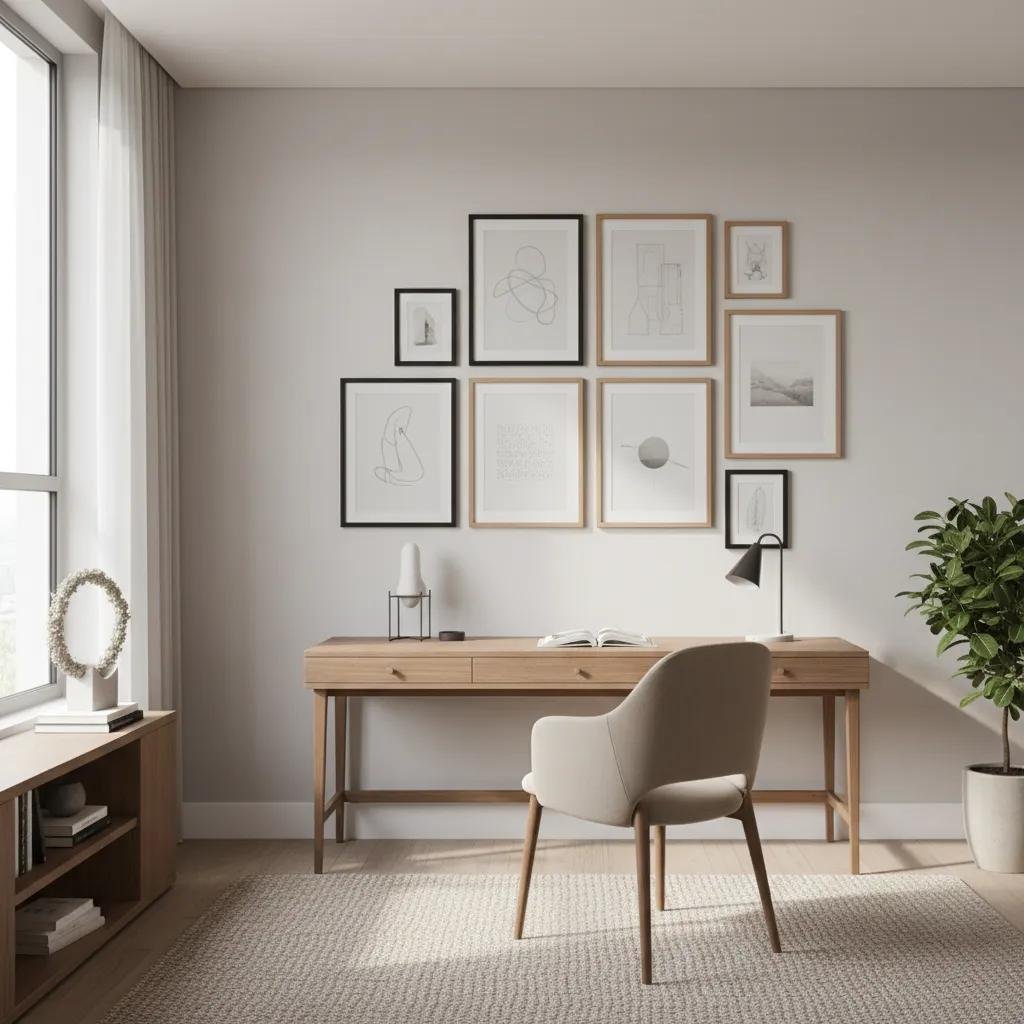
A gallery wall is a wonderful way to add character to a home office without taking up valuable floor space. If your desk sits against a blank wall, a thoughtfully arranged collection of artwork can turn that area into a visual focal point. It can also make a workspace feel more personal, especially if you spend many hours there.
Start by deciding on a general theme. You might choose abstract prints, black-and-white photography, botanical illustrations, architectural sketches, or a mixture of personal photographs and artwork. Keeping a common color palette helps different pieces feel connected, even when the frames and subjects vary.
For a coordinated appearance, use matching frames in black, natural wood, or warm brass. If you prefer a more collected style, mix frame sizes and finishes while keeping a consistent amount of spacing between pieces. Before hanging anything, lay the frames out on the floor or use paper templates to test the arrangement on the wall.
The gallery wall should complement your desk rather than overwhelm it. Leave enough space between the desktop and the artwork so the arrangement feels connected but not crowded. If you use a monitor, position the artwork so it doesn’t create unnecessary visual competition directly behind the screen.
You can also combine framed artwork with a small wall shelf or pinboard. This adds practical space for notes and inspiration while maintaining the decorative look.
Shop the look: Check Out: Gallery wall frames | Abstract wall art prints
8. Use Floating Shelves for Storage
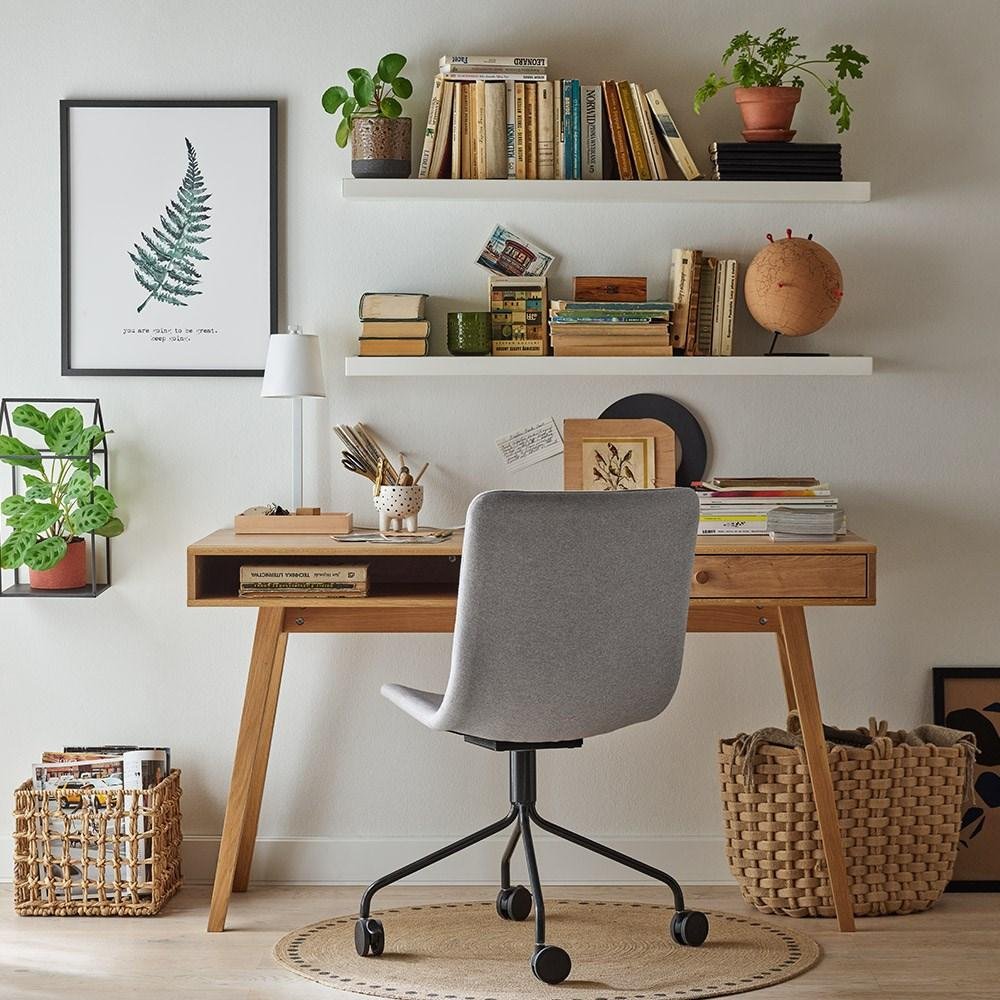
Floating shelves are an excellent solution when you need extra storage but don’t have enough room for a large bookcase. They use vertical wall space, keep important items within reach, and can make a small office feel more organized. With the right styling, they also become part of the room’s decor.
Install shelves above or beside your desk, making sure they’re securely attached and positioned so they won’t interfere with your work. Use them for books, labeled storage boxes, notebooks, and a few decorative objects. Heavier items should be placed on shelves designed and installed to support their weight, and frequently used supplies should remain easy to reach.
To keep the shelves from looking cluttered, group similar items together. A row of books can sit beside a woven basket, while a small plant or framed print adds a little variety. Leaving some open space between objects gives the arrangement room to breathe.
Choose shelf finishes that complement your desk and other furniture. Natural wood shelves work well with warm neutral interiors, while white shelves can blend into a light wall and create a more understated appearance. Black metal brackets or darker wood can add contrast in a modern office.
Floating shelves are especially helpful in compact rooms because they provide storage without taking up floor space. Just avoid placing them so low that they interfere with your monitor or so high that everyday supplies become difficult to access.
Shop the look: Check Out: Floating office shelves | Decorative storage boxes
9. Design a Home Office with Natural Wood
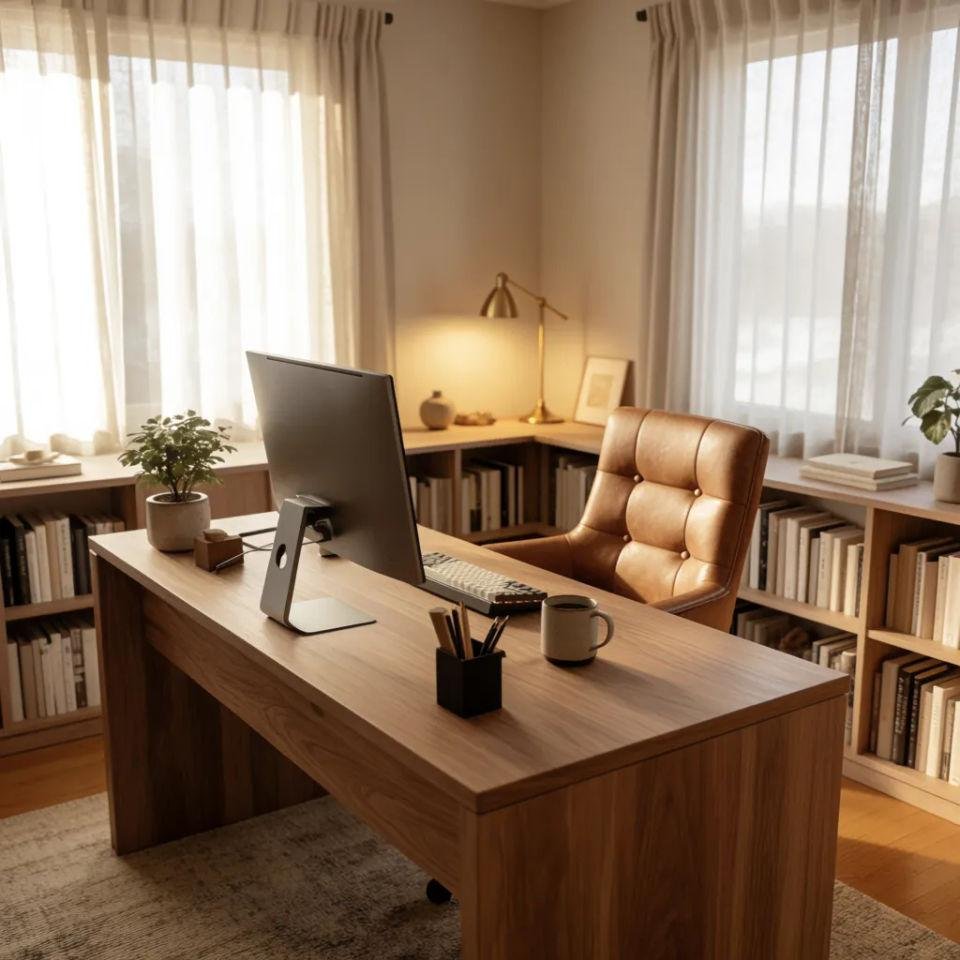
Natural wood is one of the easiest ways to make a home office feel warm, timeless, and connected to the rest of your home. Whether you choose pale oak, honey-toned wood, or deeper walnut, wood furniture introduces texture and variation that can soften the appearance of computers and other office equipment.
A wooden desk can serve as the main feature of the room. Pair it with a comfortable chair, simple storage, and a few accessories in complementary colors. Light oak works beautifully with cream, beige, and soft gray, while walnut can create a richer atmosphere when paired with ivory, caramel, or muted green.
You don’t need every wooden piece to match perfectly. Different wood tones can look natural together as long as they have compatible undertones and are repeated thoughtfully. For instance, a walnut desk can work alongside oak shelves if the rest of the room includes a few elements that connect the two finishes.
Natural wood also offers flexibility when your decorating preferences change. A simple wooden desk can work with minimalist, Scandinavian, farmhouse, or contemporary decor, making it a practical long-term investment.
Finish the space with a textured rug, linen curtains, and a warm desk lamp. These materials balance the hard surfaces of office equipment and make the workspace feel comfortable enough to spend a full day in.
Shop the look: Check Out: Natural wood office desk | Wooden desk organizer
10. Turn a Closet into a Home Office
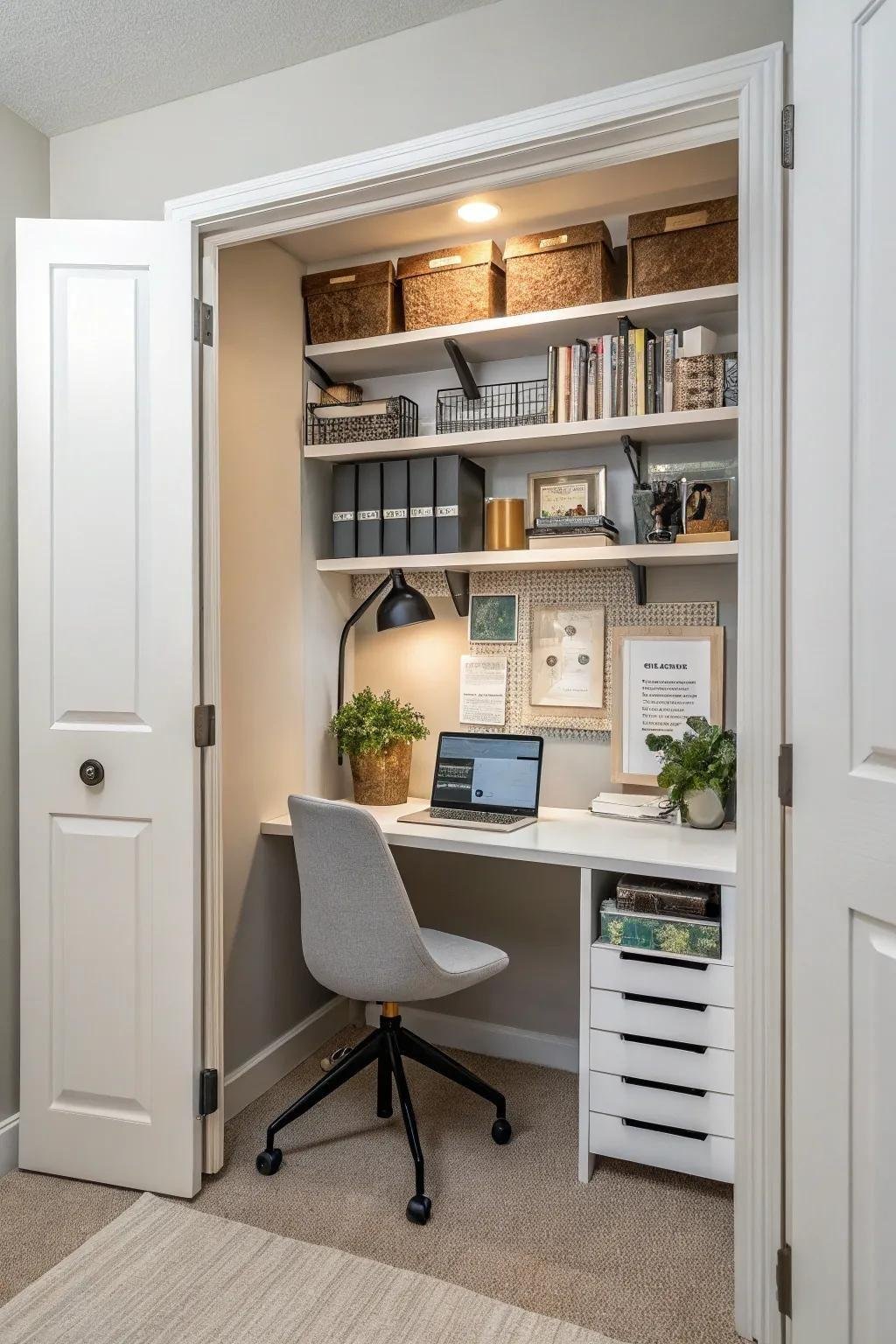
If your home doesn’t have a spare room, a closet can become a surprisingly useful workspace. Often called a cloffice, this setup transforms an existing closet or recessed storage area into a compact office. It’s especially practical for small apartments, shared homes, and rooms where a full-size desk would take up too much space.
Begin by measuring the closet’s width, depth, and height. Remove clothing rails or unnecessary shelving, then determine whether a wall-mounted desktop or a compact freestanding desk will fit. Make sure there’s enough space for your chair and that you can sit comfortably without feeling cramped.
Use the vertical space for storage. Shelves above the desk can hold books, small boxes, and office supplies, while drawers or baskets beneath the desktop can keep less attractive items out of sight. A wall-mounted task light can be useful when the closet doesn’t have enough natural light, provided the electrical installation is safe and appropriate.
Color can make a significant difference in a small closet office. Painting the interior a warm white or pale beige can create a light, cohesive appearance. Alternatively, a muted green or soft taupe interior can make the nook feel like a deliberate design feature.
When you’re finished working, you can close the closet doors or use a curtain to conceal the workspace. This makes it easier to separate work from home life, especially when the office is located in a bedroom or living area.
Shop the look: Check Out: Wall-mounted folding desk | Compact desk lamp
11. Create a Cozy Reading and Work Nook
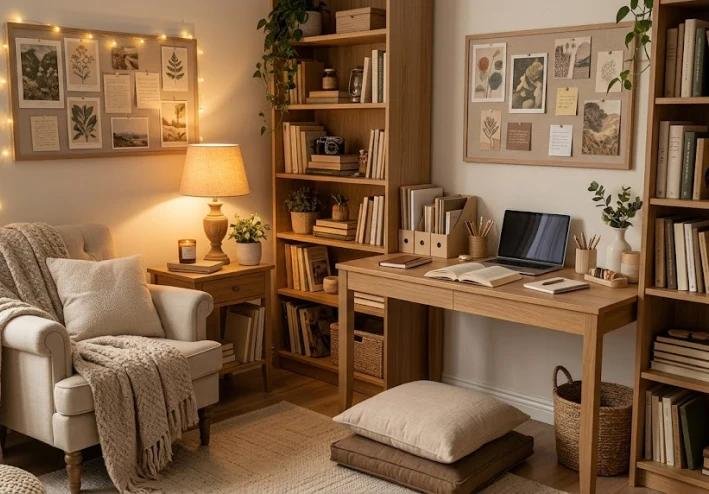
A home office that doubles as a reading nook can make a spare room feel more versatile and inviting. Instead of dedicating the entire space to a desk and computer, create a small area where you can read, brainstorm, review documents, or take a break from screen-based work.
Start with a comfortable desk and chair for your main work area. If the room allows, add a compact armchair near a window or bookshelf. A small side table and a floor lamp can make the reading corner feel separate from the desk without requiring a physical divider.
Choose materials and colors that connect both areas. A warm neutral palette, natural wood furniture, and soft textiles can help the room feel cohesive. A cream armchair, oatmeal throw, and textured rug can create a comfortable reading spot, while a wooden desk and simple shelves keep the working area practical.
Lighting is particularly important when a room serves multiple purposes. Use focused task lighting at the desk and a separate reading lamp beside the chair. This allows you to adjust the light according to the activity rather than relying on one overhead fixture.
If space is limited, consider a compact accent chair or a cushioned bench with storage. Even a small seating area can make the office feel more welcoming and provide a useful alternative to sitting at your desk throughout the day.
Shop the look: Check Out: Cozy reading chair | Floor reading lamp
12. Try a Scandinavian Home Office
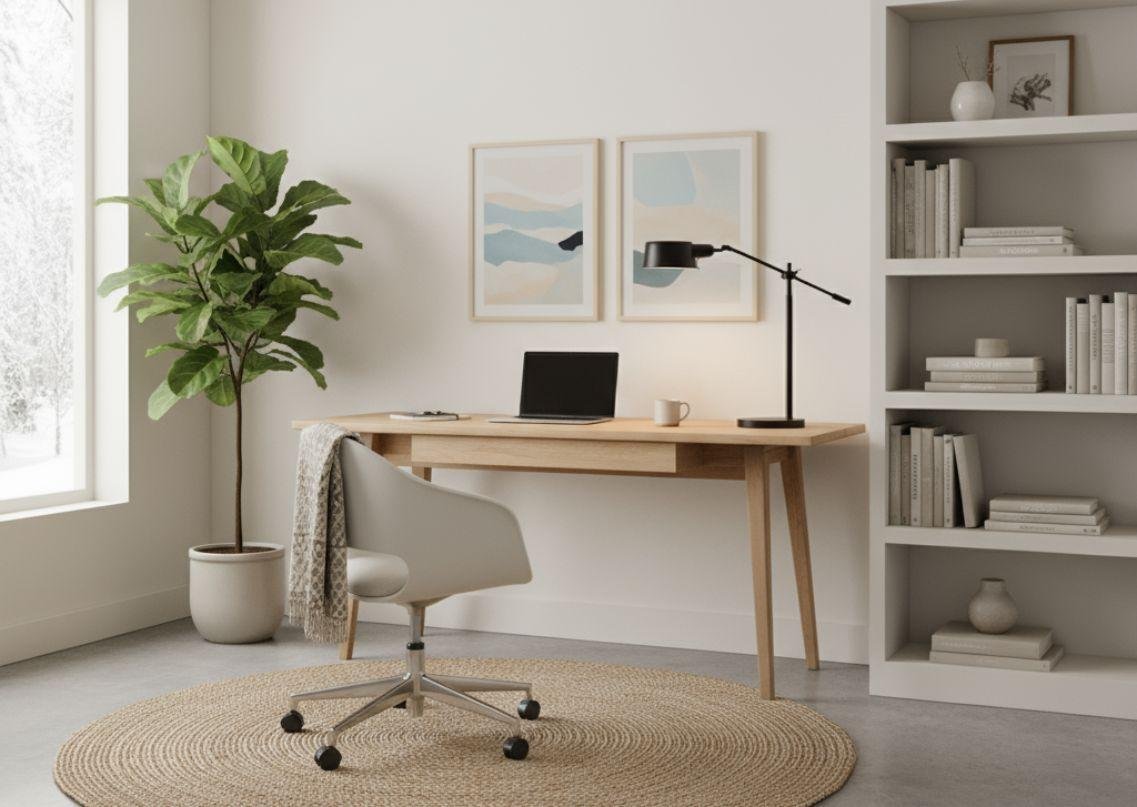
Scandinavian design is a natural fit for home offices because it combines simplicity, practical furniture, natural materials, and comfortable details. The style often features light wood, neutral colors, clean lines, and plenty of daylight. It’s a good option if you want a workspace that feels bright and organized without looking overly formal.
Begin with a simple desk in pale oak or another light wood finish. Pair it with a comfortable chair in white, gray, or beige. Keep the furniture streamlined, but make sure it provides the support and storage you need for everyday work.
For the walls, choose warm white or a very light neutral. Add soft textiles through a small rug, a fabric chair, or linen curtains. A few black accents can provide contrast, while plants and natural wood keep the space from feeling too stark.
Scandinavian interiors often make practical storage part of the design. A simple shelf, a compact drawer unit, or a small cabinet can hold supplies while maintaining the uncluttered appearance. Use matching storage containers to keep everyday items organized and easy to find.
The style also works well in small spaces because it avoids bulky furniture and unnecessary decoration. A compact desk, wall-mounted shelves, and a chair that fits neatly underneath can help a small office feel open.
Shop the look: Check Out: Scandinavian desk | Minimalist storage unit
13. Add Stylish and Functional Desk Lighting
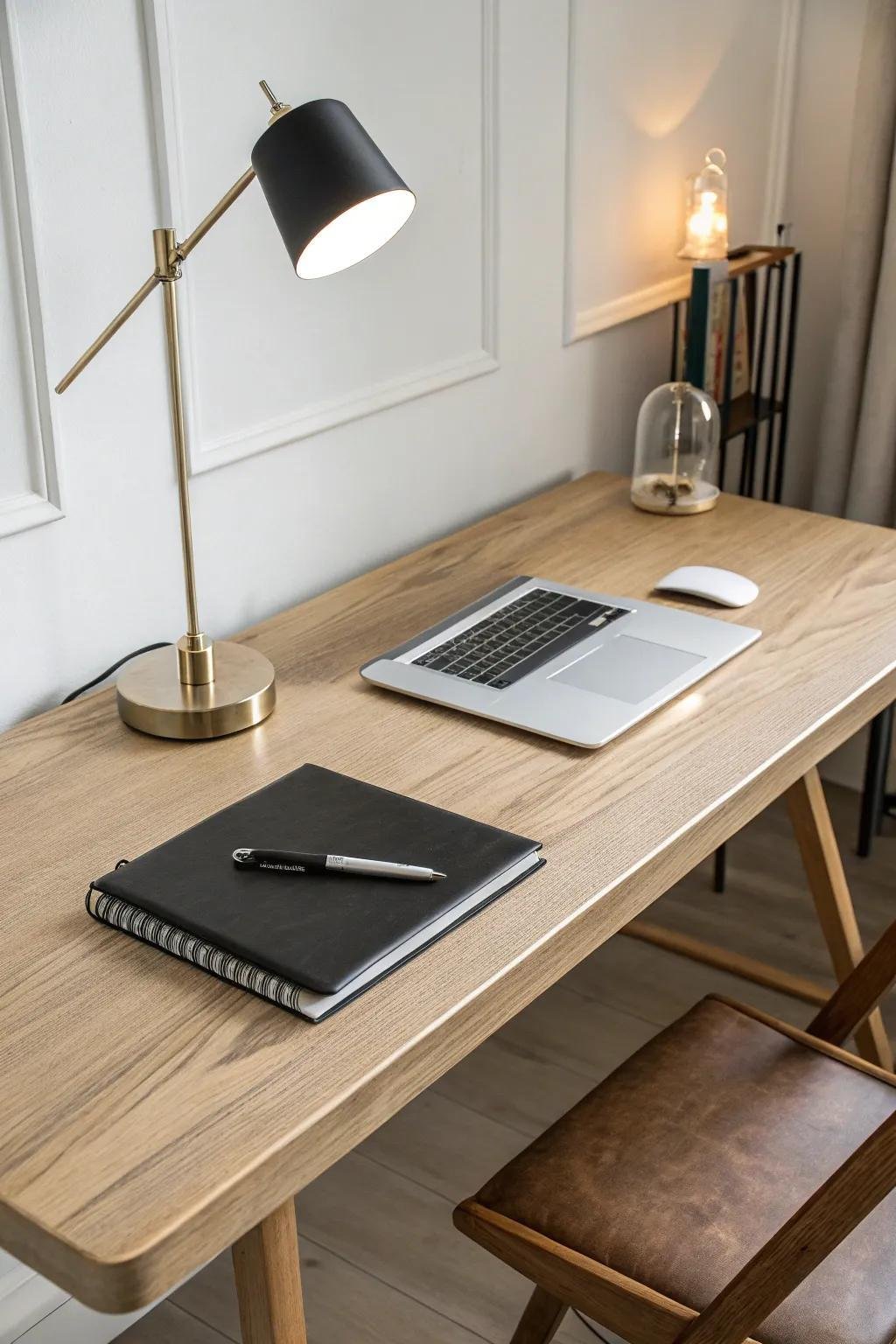
Good lighting can make a home office feel more comfortable and improve the usability of your workspace. Natural light is helpful, but it changes throughout the day, so a dedicated desk lamp is useful for reading, writing, and detailed tasks. The best approach is to combine ambient lighting with focused task lighting rather than relying on a single overhead fixture.
Choose a desk lamp that suits the size of your workspace. An adjustable arm can help direct light where you need it, while a compact lamp is useful on a smaller desk. Brass, matte black, ceramic, and natural wood finishes can complement a wide range of home office styles.
Position the lamp to reduce shadows and screen glare. If you’re right-handed, placing the light on your left side may help reduce shadows when writing, while left-handed users may prefer the opposite arrangement. Adjust the setup based on your monitor position, windows, and working habits.
For computer work, avoid lighting that creates distracting reflections on the screen. A combination of indirect ambient light and appropriately positioned task lighting can be more comfortable than a very bright lamp aimed directly at your monitor.
Don’t forget the overall atmosphere. A floor lamp or table lamp in another part of the room can soften the space in the evening and make the office feel more like a natural extension of your home.
Shop the look: Check Out: Adjustable LED desk lamp | Brass desk lamp
14. Design a Chic Black and White Office
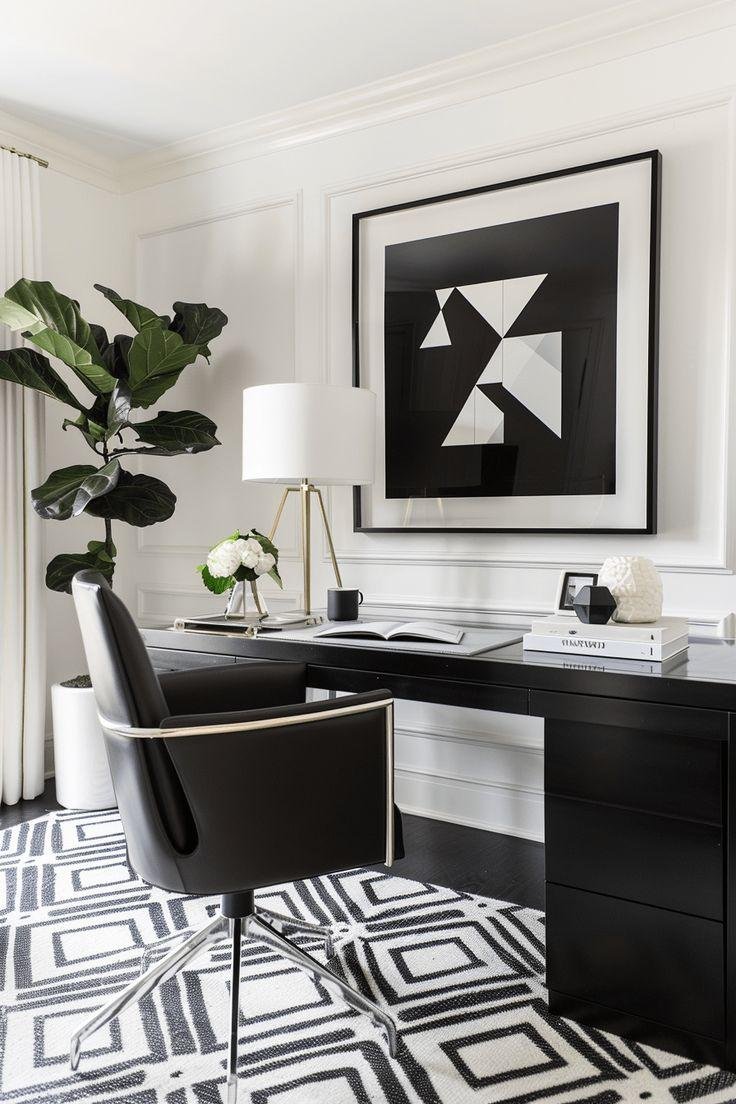
A black-and-white home office offers a clean, graphic look that feels modern and sophisticated. This color combination is especially appealing if you prefer a workspace with strong visual definition and simple decorative details. The key is to balance the contrast so the room feels comfortable rather than harsh.
For a light and airy office, use white or warm white as the main wall color and introduce black through the desk, chair, frames, or lighting. A black desk against a pale wall creates a clear focal point, while white shelves and a light rug help keep the room feeling open.
If you prefer a more dramatic style, consider darker walls with a white desktop or lighter artwork. Just remember that darker colors can make a small or poorly lit room feel more enclosed, so use them thoughtfully and provide sufficient lighting.
Texture is particularly useful in a monochrome space. A wool rug, linen curtains, a wooden accessory, or a textured chair can soften the contrast between black and white. You can also introduce small amounts of beige or natural wood to make the palette feel warmer without losing its clean appearance.
Keep the desk organized so the simple color scheme remains visible. A few coordinated accessories, such as black organizers, white storage boxes, and matching frames, can help create a polished look.
Shop the look: Check Out: Black office desk | Black and white wall art
15. Make a Shared Home Office Work
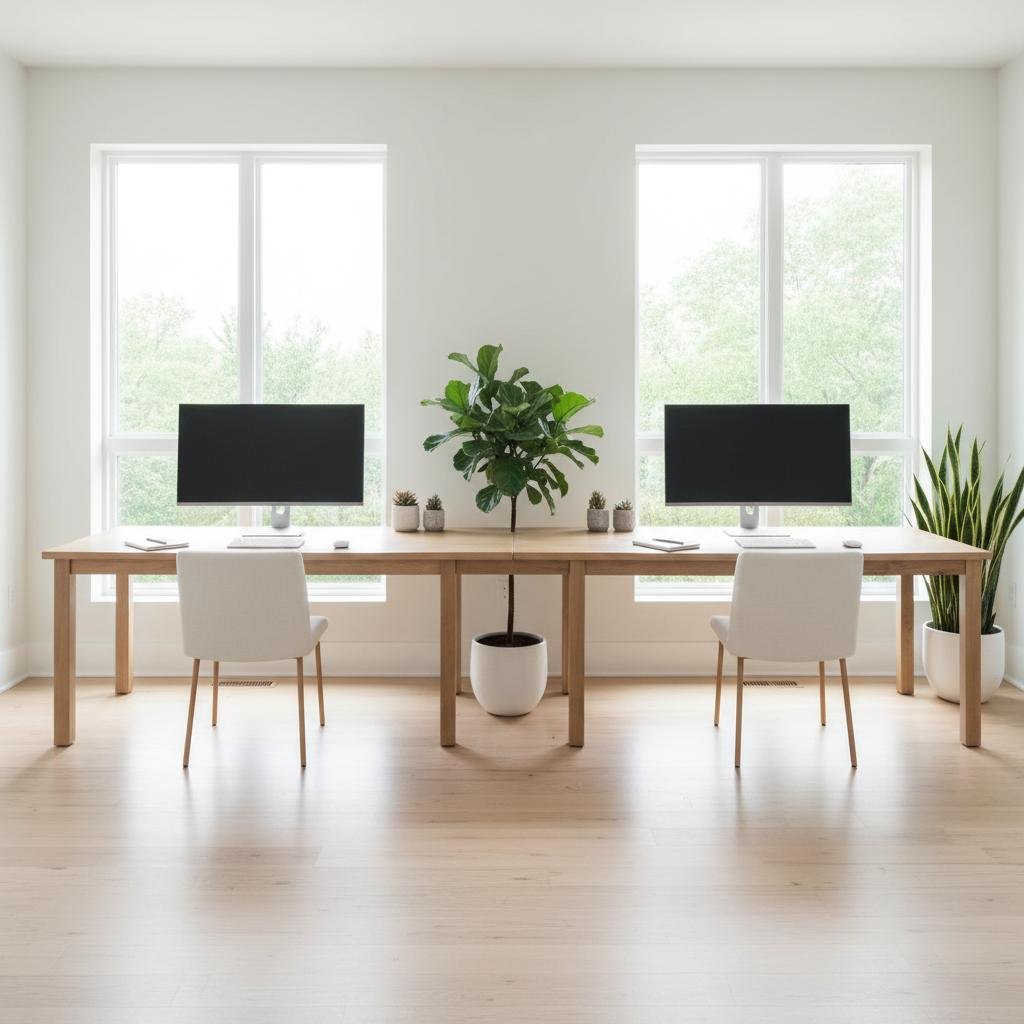
When two people work from home, a shared office needs to accommodate different routines, equipment, and storage needs without feeling overcrowded. The most practical solution is to create two clearly defined workstations while maintaining a consistent design throughout the room.
If space allows, use a long desk with separate seating areas. Each person should have enough room for their computer, notebook, and everyday essentials. If the room is narrow, two compact desks placed along opposite walls may work better than one long workstation.
Storage should be divided according to how each person works. Individual drawers, labeled boxes, or separate shelf sections help prevent supplies and paperwork from getting mixed together. Shared items, such as a printer or office supplies, can be placed in a central storage area that both people can access.
Consider sound and privacy, especially if both people attend video calls. A bookshelf, curtain, or carefully positioned storage unit may help define separate zones, although these additions won’t provide complete sound isolation. Headphones and agreed-upon quiet periods can also make a shared office more comfortable.
For the decor, use a common color palette and matching desk finishes to create visual consistency. Each person can personalize their own area with artwork, plants, or accessories, allowing the office to reflect both personalities without becoming disorganized.
Shop the look: Check Out: Double workstation desk | Office desk drawer organizers
16. Use a Window View to Your Advantage
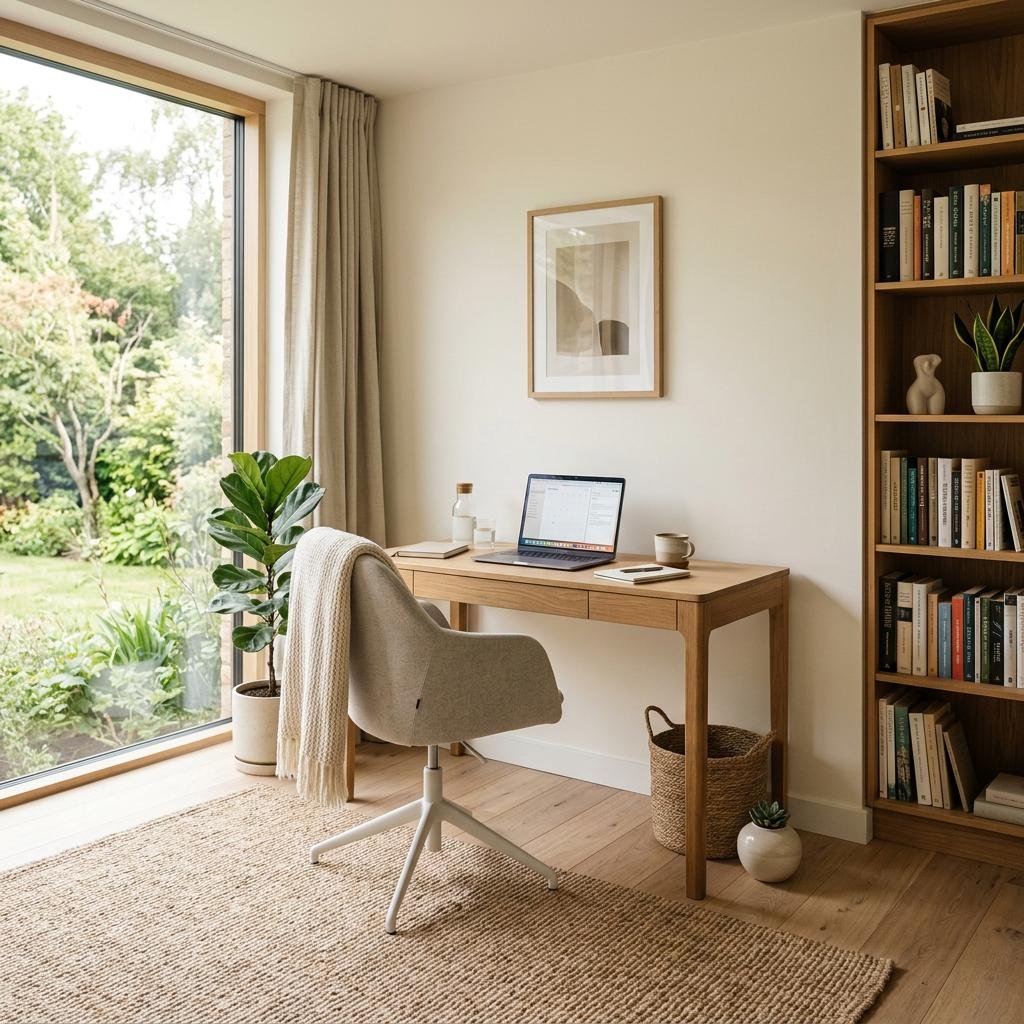
A window can become one of the most attractive features of a home office. Natural light helps make the space feel open, and a view of trees, a garden, or the surrounding neighborhood can provide a pleasant visual break from your computer screen. Even a small window can contribute to a workspace that feels brighter and more connected to the outdoors.
If possible, position your desk near the window so you can enjoy the daylight without facing direct glare. Placing the monitor perpendicular to the window is often a useful starting point, although the best arrangement depends on the direction of the sunlight and the layout of the room. Adjustable blinds or curtains can help control brightness throughout the day.
Keep the window area relatively uncluttered. A few plants on the sill, simple linen curtains, or a small decorative object can enhance the view without blocking natural light. If your desk faces the window, make sure the monitor brightness and position remain comfortable as daylight changes.
The furniture and color palette should complement the natural setting. Pale wood, warm white, beige, and soft green can create a seamless connection between the interior and the outdoors. If you have a particularly beautiful view, keep the decor simple so the window remains the focal point.
A window-facing office may not be practical for every task, especially if screen glare becomes a problem. In that case, position the desk beside the window and use the view as a secondary feature.
Shop the look: Check Out: Light-filtering office curtains | Adjustable window blinds
17. Create a Feminine and Elegant Workspace
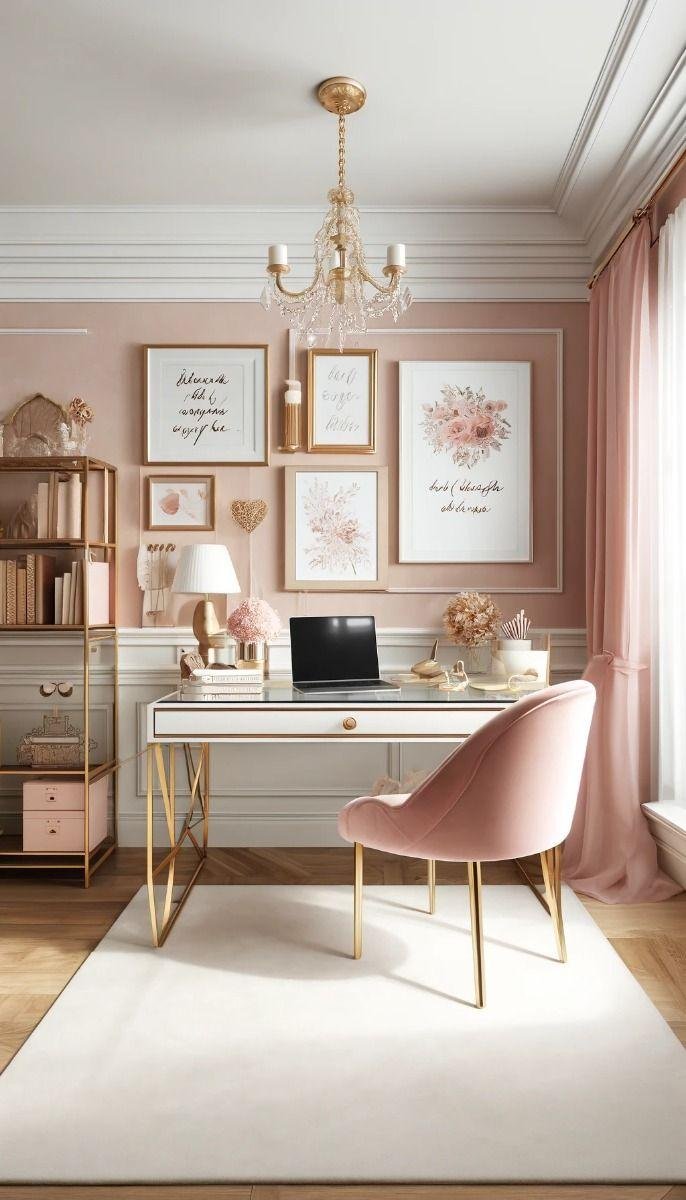
A feminine home office can feel elegant, personal, and comfortable without relying on excessive decoration. Soft colors, refined furniture, delicate finishes, and a few meaningful accessories can create a workspace that feels polished while remaining practical for everyday work.
Start with a palette of warm ivory, blush beige, dusty rose, or soft taupe. These shades can be used on the walls, upholstery, or smaller decorative elements. Pair them with a light wood or cream desk, then introduce brass hardware, a sculptural lamp, or a framed botanical print for a more refined appearance.
The chair deserves particular attention. Choose one that complements the style of the room while providing suitable support for the amount of time you spend working. An upholstered chair can look beautiful, but adjustability and comfort should remain important considerations.
Decorative accessories can make the office feel more personal. A small vase, framed photographs, a fabric-covered storage box, or a favorite piece of artwork can add character. Keep the desktop practical by reserving space for your computer and everyday tasks, and use drawers or shelves to store less frequently used items.
If the office shares space with a bedroom, use similar colors and materials to create a cohesive look. The result can feel like a natural extension of the home rather than a separate corporate-style workspace.
Shop the look: Check Out: Elegant upholstered office chair | Brass desk accessories
18. Add Smart Storage and Organization
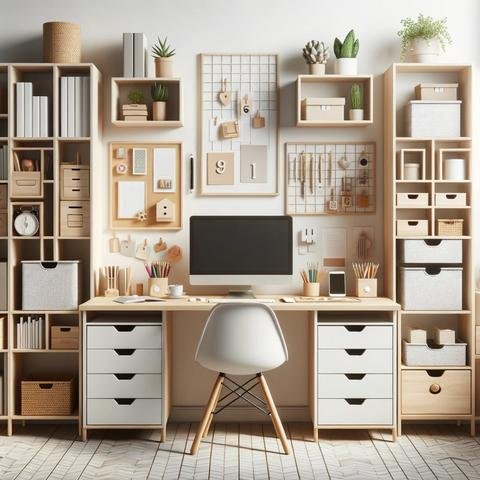
A beautiful home office is much easier to maintain when everything has a designated place. Smart storage helps keep the desktop clear, protects important documents, and makes everyday tasks less frustrating. You don’t need a large filing cabinet or a complete built-in system to get organized; a few practical solutions can make a noticeable difference.
Start by identifying what you actually need to store. Everyday supplies, such as pens, notebooks, and chargers, should remain within easy reach. Documents, spare cables, and equipment you use less frequently can be placed in drawers, labeled boxes, or a nearby cabinet.
Vertical storage is particularly useful in small offices. Wall shelves, pegboards, and hanging organizers can hold accessories without taking up valuable desk space. Use drawer dividers to separate smaller items, and consider a compact filing system if you regularly work with paperwork.
Cable management is another important part of keeping the workspace organized. Cable clips, under-desk trays, and cable sleeves can help keep cords from tangling around your feet or collecting behind the desk. Make sure any cable arrangement allows adequate ventilation for equipment and doesn’t create a tripping hazard.
Try to end each workday with a quick reset. Return supplies to their designated places, clear unnecessary items from the desktop, and prepare the essentials you’ll need the following morning. A simple routine can help keep the office functional without requiring a major cleaning session every week.
Shop the look: Check Out: Desk drawer organizers | Under-desk cable management tray
19. Design a Small Apartment Home Office
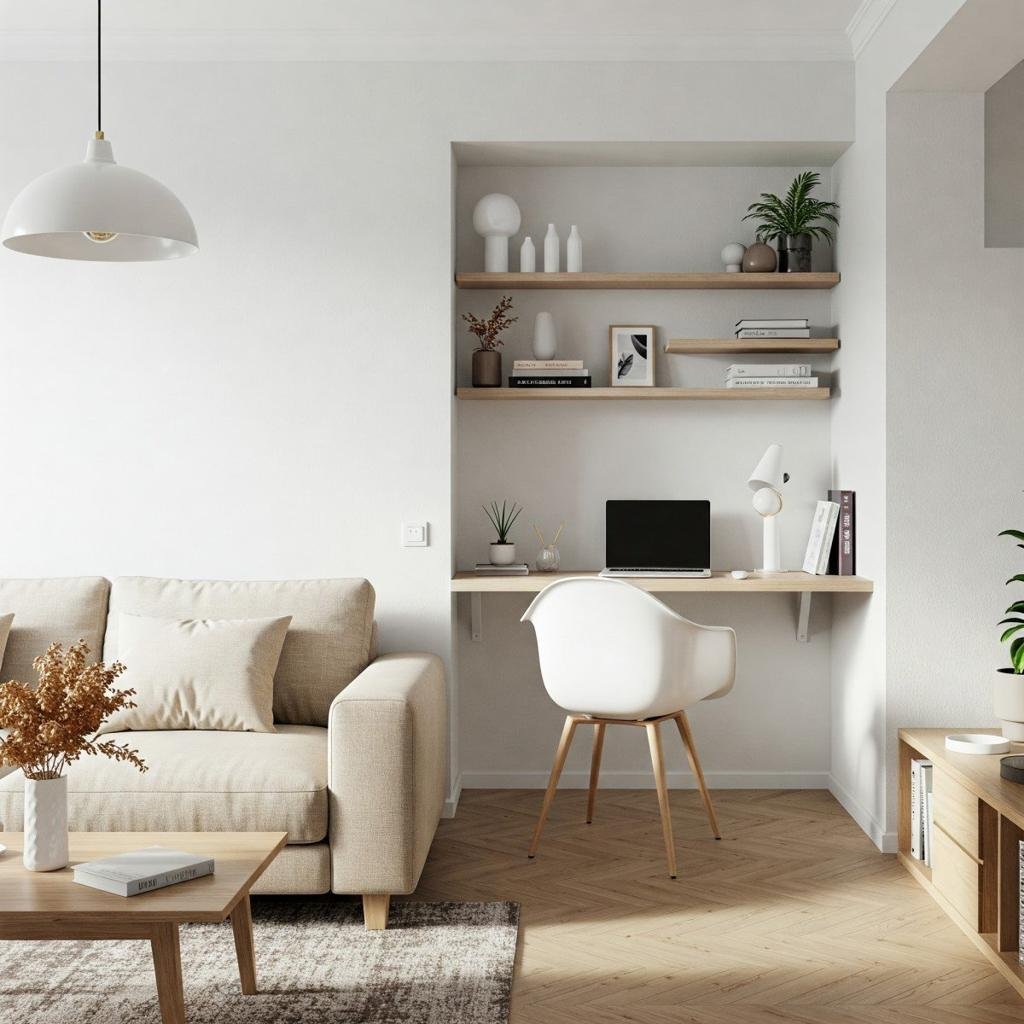
Creating a home office in a small apartment requires thoughtful planning, but you don’t have to sacrifice style or comfort. The goal is to use the available space efficiently while making the workspace feel like a natural part of the apartment. A compact desk, smart storage, and a cohesive color palette can make even a small corner feel intentional.
Look for furniture that serves more than one purpose. A desk with drawers can replace a separate storage cabinet, while a wall-mounted folding desk can be tucked away when it’s not in use. If your apartment has a dining table that doubles as a workspace, use a portable organizer or storage box to keep work materials together and clear the table at the end of the day.
Vertical space is especially valuable in apartments. Floating shelves, wall-mounted organizers, and tall narrow cabinets can provide storage without taking up much floor area. Choose furniture with slim legs or open bases to maintain a sense of visual openness.
Use color to connect the office with the rest of the apartment. If your living room features warm beige, oak, and cream, carry those shades into the workspace. Matching finishes help the office blend in, while a small rug or framed artwork can define the area.
Lighting and ergonomics still matter in a compact setup. Choose a chair that fits the desk properly and can be moved easily, and make sure your monitor is positioned at a comfortable height. Even a small workspace should support the way you actually work.
Shop the look: Check Out: Small apartment desk | Space-saving office storage
20. Create a Cozy Home Office with Personal Touches
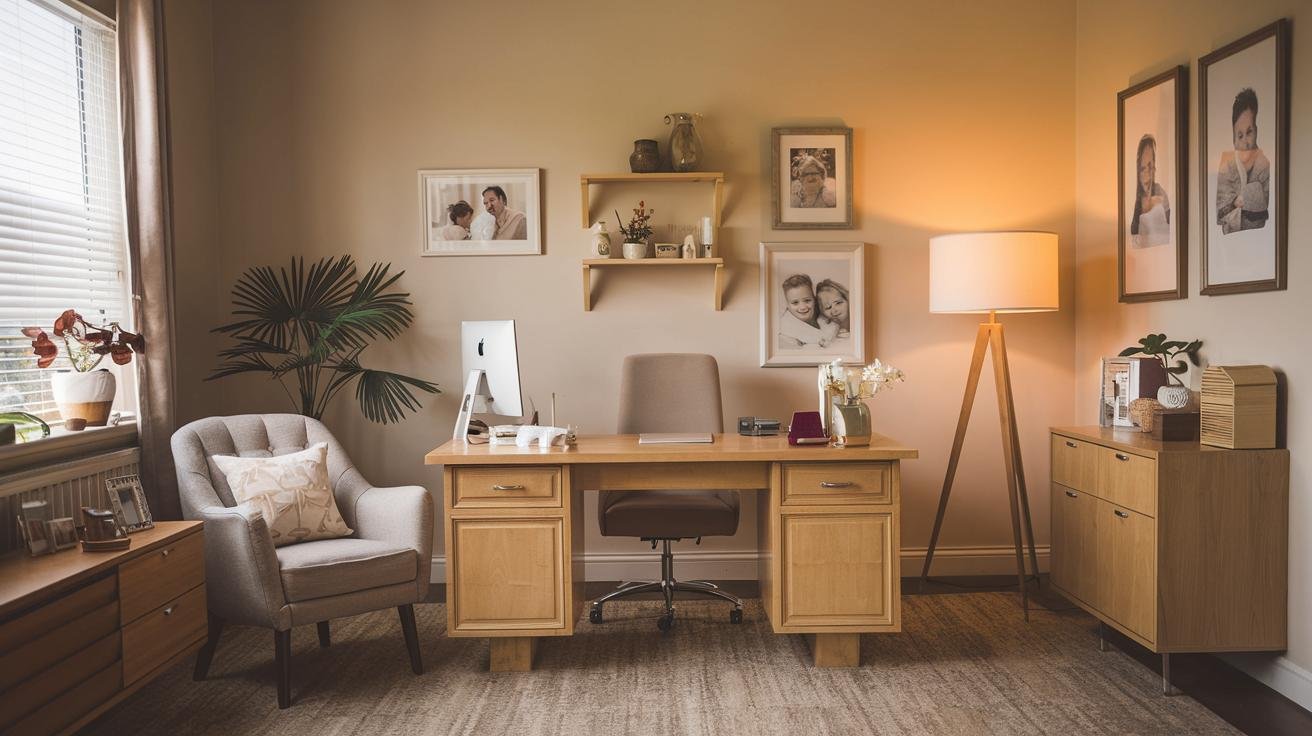
Your home office should reflect your personality just as much as the rest of your home. A workspace filled with a few meaningful objects can feel more inviting than one that looks like a generic office showroom. The trick is to add personal details thoughtfully so the room remains comfortable and practical.
Start with items that genuinely matter to you. Framed photographs, favorite artwork, travel souvenirs, or books you enjoy can make the office feel more connected to your life. Arrange these objects on shelves, a gallery wall, or a small side table rather than allowing them to crowd the main work surface.
Comfortable textiles can make a big difference, too. A soft rug, a cushion for your chair if appropriate, or a warm throw on a nearby reading chair can make the space feel more welcoming. Choose fabrics that complement the overall palette and are easy to clean.
Lighting can also contribute to the cozy atmosphere. A desk lamp provides focused illumination, while a floor lamp or wall sconce can create softer light around the room. If you work late, adjust the lighting to suit your tasks and avoid relying entirely on dim decorative lighting when you need to read or work on a screen.
Finally, allow your office to evolve. You don’t need to buy every accessory at once. Start with the essentials, live with the arrangement for a while, and add pieces as you discover what makes the space more useful and enjoyable.
A personal home office doesn’t have to be perfect. It should feel like a place where you can concentrate, express yourself, and comfortably spend time doing the work that matters to you.
Shop the look: Check Out: Personalized desk accessories | Cozy office rug
Practical Tips for Designing Your Home Office
A beautiful home office should look good in photos, but it also needs to work for your everyday routine. Before buying furniture or choosing paint, think about how you work, how much equipment you use, and what makes you comfortable during a typical day.
Prioritize comfort and ergonomics
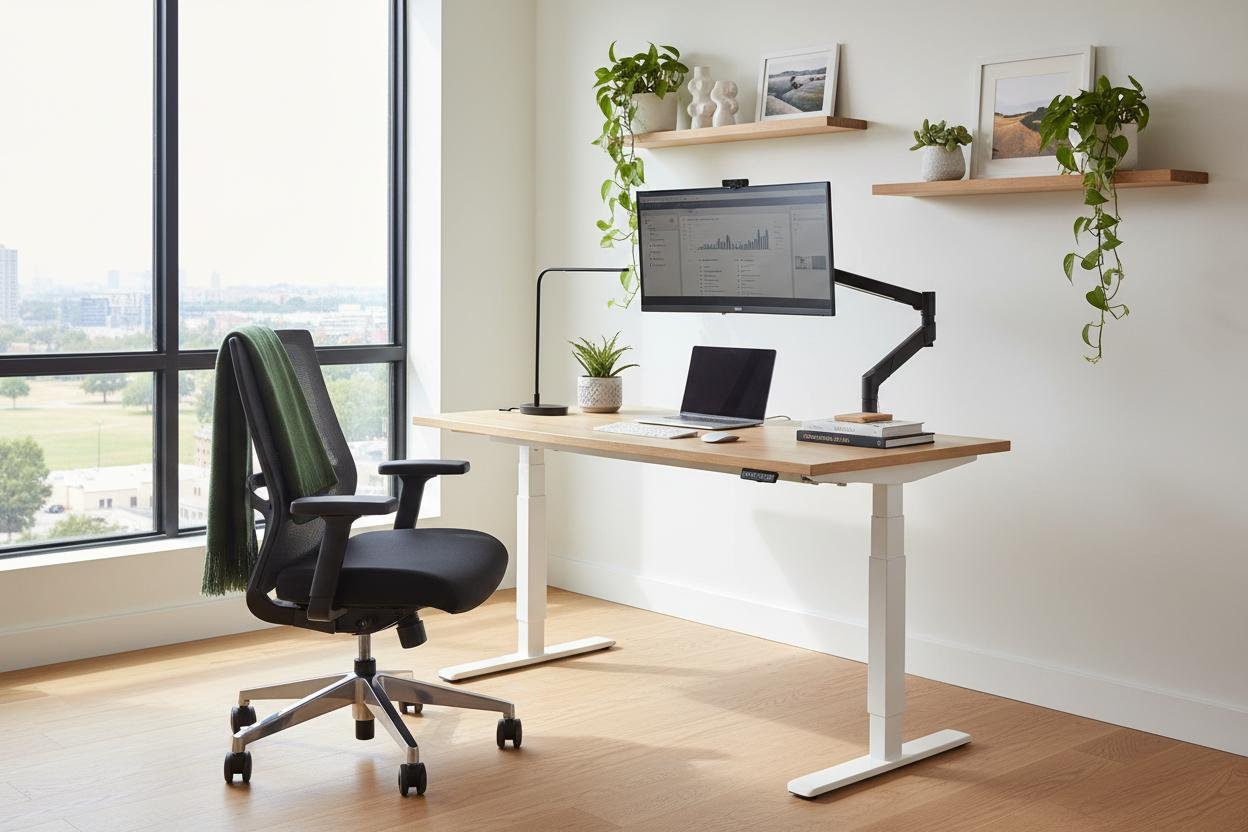
Your desk and chair are the foundation of your workspace. Choose a chair that provides suitable back support and allows you to sit with your feet supported and shoulders relaxed. Your desk should provide enough room for your computer, keyboard, and everyday tasks without forcing you into an uncomfortable position.
Position your monitor so the top of the screen is around eye level or slightly below, adjusting it to your comfort. Keep your keyboard and mouse close enough that your elbows can remain near your sides. If you work for long periods, take regular movement breaks and change positions throughout the day.
A beautiful chair is a bonus, but comfort should come first. If you’re choosing between a decorative chair and one that offers the adjustments you need, prioritize the one that supports your working routine.
Plan your storage before decorating
Think about what you need to keep nearby and what can be stored elsewhere. If you work with physical documents, allow space for folders or a filing drawer. If you work mostly on a laptop, a compact desk and a small organizer may be enough.
Choose storage that suits your actual habits. Open shelves are useful for books and attractive accessories, while closed cabinets help conceal items that create visual clutter. A combination of both usually provides flexibility without overwhelming the room.
Make the workspace feel separate from home life
When your office is located in a bedroom or living room, establishing a visual boundary can help you distinguish work time from personal time. A small rug, a different lighting arrangement, or a screen can define the office area without requiring a separate room.
If possible, create a routine for ending the workday. Close your laptop, put away paperwork, and switch off your task lighting. In a compact apartment, a folding desk or storage cabinet can help conceal work materials when the workday is over.
Choose a color palette that suits your home
The office doesn’t have to look completely different from the rest of your interior. In fact, repeating colors and materials can make the workspace feel more intentional.
For a cozy office, consider warm neutrals such as cream, beige, oatmeal, and natural wood. For a contemporary look, combine white, black, and walnut. If you enjoy color, muted olive, dusty blue, or soft terracotta can add personality while remaining easy to coordinate.
Test paint samples and fabric swatches in your actual room before making larger purchases. Natural light, flooring, and existing furniture can influence how colors appear.
Don’t overlook electrical outlets and technology
Plan where your computer, monitor, printer, chargers, and other equipment will be placed before arranging the furniture. Make sure you have convenient access to suitable power outlets and a reliable internet connection.
Use appropriate cable management to keep cords organized, and avoid overloading electrical outlets or hiding power equipment where it cannot ventilate properly. If you need additional outlets or permanent electrical changes, consult a qualified professional.
Conclusion
The best home office ideas combine comfort, practical organization, and a decorating style that makes you happy to spend time in your workspace. Whether you prefer a cozy minimalist desk, a beautiful built-in office, a nature-inspired setup, or a compact corner in your apartment, there’s a way to create a workspace that suits your home and your daily routine.
You don’t need a dedicated room or a large decorating budget to get started. Sometimes, a comfortable chair, a small wooden desk, better lighting, and a few shelves are all it takes to transform an unused corner into a functional office.
Start with the essentials, choose colors and materials that complement your home, and add personal touches gradually. Pay attention to comfort, keep storage practical, and make sure the space supports the way you work.
Most importantly, remember that your home office is there to serve you. It can be stylish without being complicated, organized without feeling sterile, and comfortable without sacrificing functionality. With a little planning, you can create a workspace that feels like a natural extension of your home and makes working from home a more enjoyable part of everyday life.
Frequently Asked Questions
1. How do I create a home office in a small space?
Choose a compact desk, a chair that fits underneath it, and vertical storage such as floating shelves. Unused corners, closets, and wall spaces can all become functional work areas. Light colors and coordinated furniture can help the office blend into a small apartment or shared room.
2. What colors are best for a home office?
Warm white, beige, greige, and soft gray are versatile options for a calm, welcoming workspace. Natural wood adds warmth, while muted green or blue can introduce a subtle accent. Choose colors that complement your existing furniture and the amount of natural light in the room.
3. How can I make my home office look expensive on a budget?
Focus on a cohesive color palette, attractive lighting, and a few quality-looking materials. A simple wooden desk, matching storage boxes, framed artwork, and neatly managed cables can make a workspace look more polished. You can also refresh existing furniture with new hardware or a coordinated arrangement of accessories.
4. What furniture do I need for a home office?
The essentials are a suitable desk, a comfortable chair, and appropriate lighting. Depending on your work, you may also need a monitor stand, drawers, shelves, or a filing cabinet. Choose furniture based on your equipment and working habits rather than filling the room with unnecessary pieces.
5. How do I make my home office cozy and productive?
Use comfortable seating, layered lighting, natural materials, and a color palette that feels inviting. Keep everyday supplies organized and your desk clear enough for your tasks. Add personal details such as artwork, plants, or photographs, and make room for movement and regular breaks throughout the day.


Leave a Reply