

Moving into a college dorm is exciting until you realize how much stuff you actually own. Between clothes, shoes, textbooks, snacks, bedding, electronics, toiletries, laundry supplies, and all those little things you thought you could live without, a small dorm room can become crowded surprisingly quickly.
The challenge is that most dorm rooms weren’t designed with generous storage in mind. You might have one small closet, a compact dresser, a desk, and a bed that takes up a significant part of the floor. If you’re sharing the space with a roommate, finding room for your belongings becomes even more complicated.
But here’s the good news: you don’t need a bigger dorm room to create a more organized one. You need smarter storage. The secret is to use overlooked areas, take advantage of vertical space, choose furniture that serves more than one purpose, and give every category of belongings a proper home.
These 15 dorm room storage ideas are practical for students who want to fit more into a small space without making their room look like a storage closet. Whether you’re preparing for freshman move-in day or trying to fix a room that has gradually become messy, you’ll find solutions you can actually use.
Why Smart Dorm Room Storage Makes Such a Difference
A dorm room has to work much harder than an ordinary bedroom. It’s your sleeping area, study space, dressing room, snack station, and sometimes your social space, all squeezed into a relatively small footprint. When everything competes for the same limited floor area, clutter can build up before you even notice it.
The problem isn’t always owning too many things. Sometimes, it’s simply that your belongings don’t have designated places. Your backpack ends up on the floor because there’s nowhere to hang it. Shoes collect beside the bed because the closet is already full. Chargers, notebooks, and stationery spread across your desk because the drawers are disorganized. Each item seems harmless on its own, but together they make the room feel smaller and harder to manage.
Good dorm room organization helps solve these everyday frustrations. When frequently used items are easy to reach and less frequently used belongings are stored out of the way, you spend less time searching for things. You also make it easier to clean your room, prepare for classes, and keep shared areas comfortable for your roommate.
Before buying storage products, think about the space you already have. Look underneath your bed, above your desk, inside your closet, behind your door, and along unused wall areas. These overlooked spots can often provide more useful storage than another bulky piece of furniture.
A successful dorm storage setup should follow three simple principles:
- Use vertical space: Move storage upward instead of allowing everything to spread across the floor.
- Make hidden areas useful: Under-bed space, closet doors, and the backs of doors can hold plenty of belongings.
- Keep everyday items accessible: Store things you use daily where you can reach them without moving five other objects.
The goal isn’t to squeeze every possible item into your room. It’s to make the belongings you genuinely need fit comfortably into the space you have.
15 Dorm Room Storage Ideas That Make Every Inch Count
The best dorm room storage ideas combine practicality with flexibility. You want solutions that work in a small room, don’t require permanent changes, and can move with you when the semester ends. The following ideas focus on affordable, space-conscious ways to organize your belongings without sacrificing comfort.
1. Use Under-Bed Storage Bins for Bulky Belongings
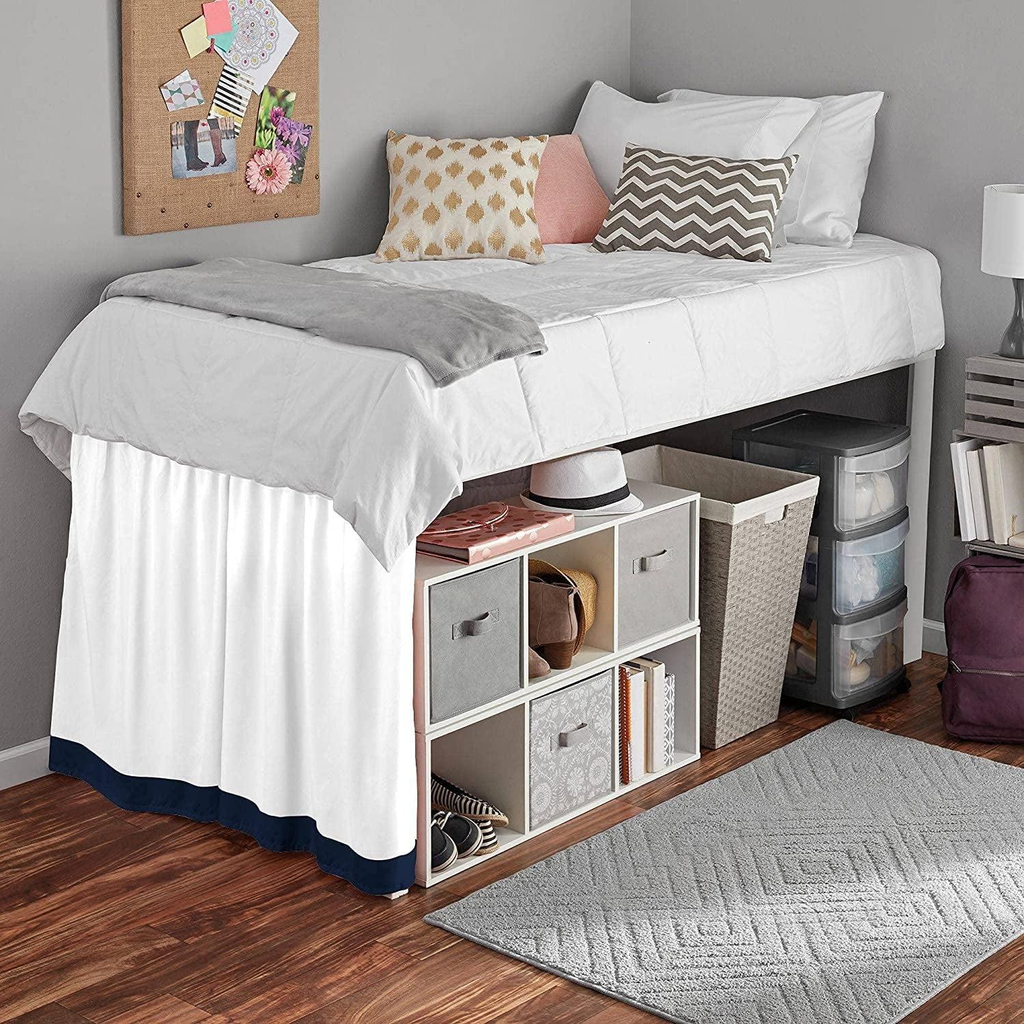
The area underneath your bed is one of the most valuable storage spaces in a dorm room. Unfortunately, it’s also one of the easiest places to waste. Instead of allowing that space to collect dust, turn it into an organized storage zone with shallow bins, rolling containers, or fabric storage bags.
Under-bed storage works especially well for belongings you don’t need every day. Think extra blankets, spare towels, seasonal clothing, shoes, additional bedding, and luggage accessories. You can keep everyday essentials in a separate, easily accessible drawer while using the space farther underneath the bed for less frequently used items.
Choose containers based on the actual clearance underneath your bed. Measure the height before purchasing anything, especially if your dorm bed cannot be adjusted. Low-profile containers are often more useful than tall bins because they slide underneath without getting stuck. If you have limited space, look for models with wheels or handles so you can pull them out without lifting the mattress.
Clear containers make it easier to identify what’s inside, while fabric bins can give the room a softer, more coordinated appearance. Either option works as long as you label the contents clearly.
What to store underneath your dorm bed:
- Extra sheets, pillowcases, and blankets
- Off-season clothing
- Shoes you don’t wear regularly
- Travel bags and spare backpacks
- Towels and additional toiletries
Small-space tip: Divide your under-bed storage into categories instead of putting everything into one oversized container. You’ll find things faster and avoid creating a hidden mess.
2. Add Bed Risers to Create More Storage Space
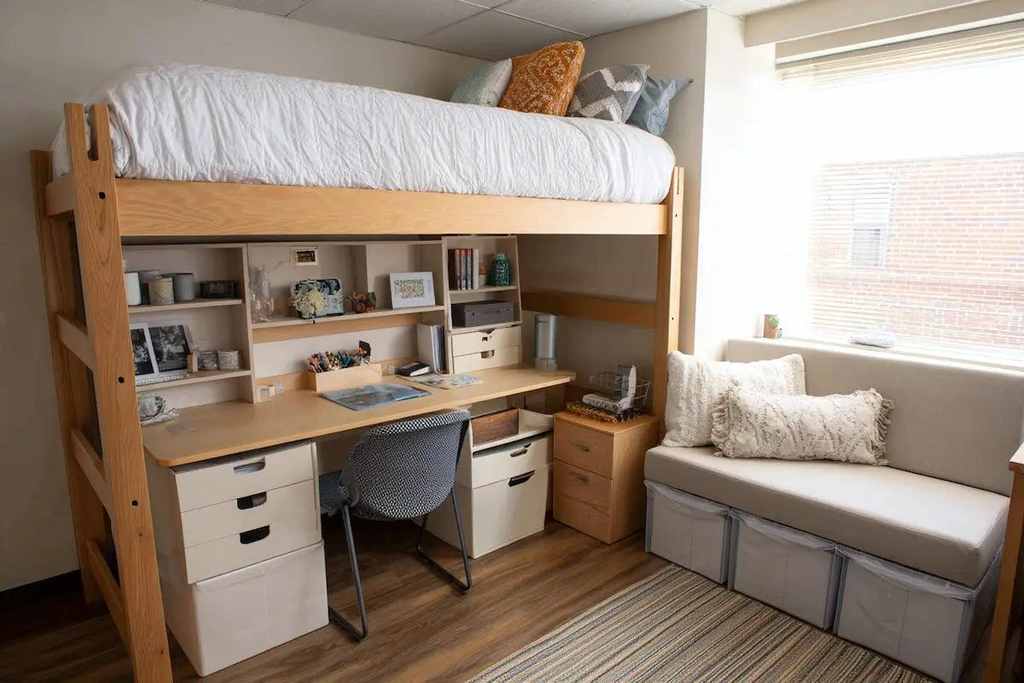
If your dorm bed sits too close to the floor, bed risers may help you create additional clearance for storage containers. They lift the bed frame, allowing you to fit taller bins, drawers, or larger luggage underneath.
This can be especially useful if you own bulky winter clothing, sports equipment, extra bedding, or items that take up too much room in a small closet. Rather than stacking belongings in visible corners, you can move them underneath the bed and keep the main walking area open.
However, don’t purchase bed risers before checking your dorm’s furniture rules. Some colleges provide adjustable bed frames, while others restrict modifications or require specific safety standards. Ask your residence hall staff whether risers are permitted and whether the bed frame has a maximum approved height.
Stability matters, too. Choose products designed for the weight and shape of your bed legs, and make sure the frame sits securely before using the space underneath. Avoid improvising with unstable household objects.
If bed risers aren’t allowed, consider low-profile rolling storage boxes or soft zippered bags instead. You can still make the existing space useful without changing the bed height.
Best for: Students with limited closet space, bulky belongings, and a bed frame that allows approved adjustments.
3. Make the Most of Vertical Wall Space
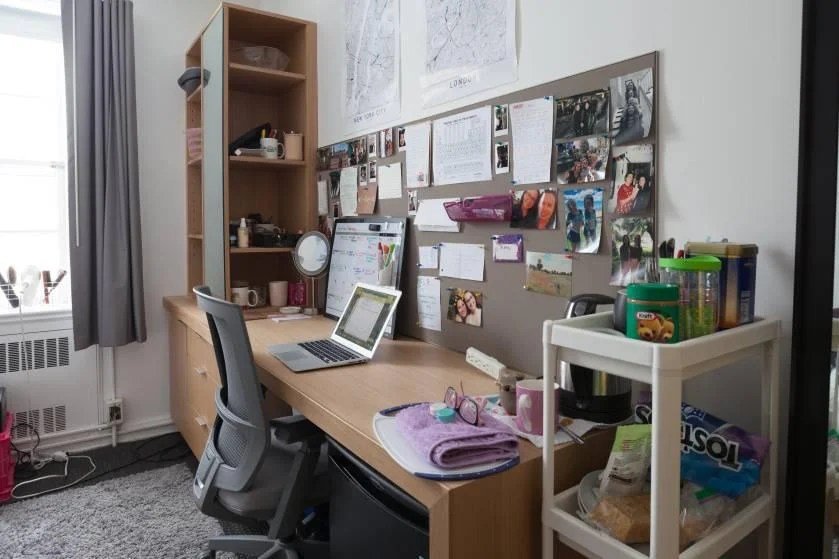
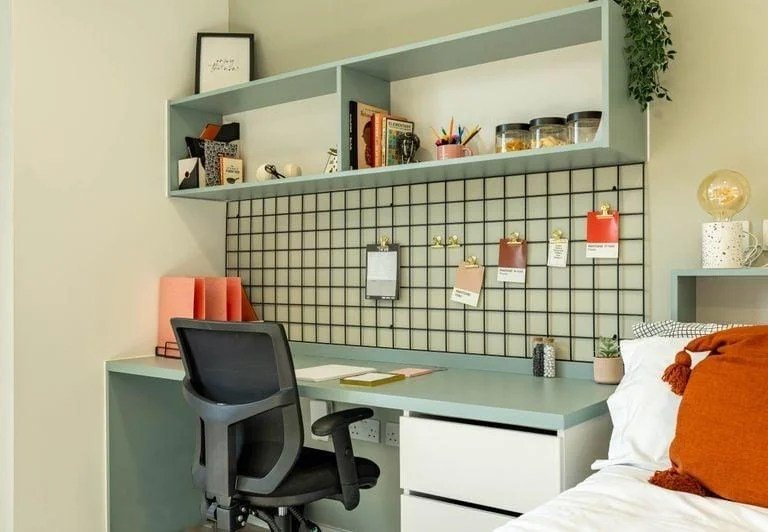
When floor space is limited, look upward. Walls provide valuable storage opportunities, especially around your desk, bed, and closet. Instead of adding another cabinet that takes up walking space, consider removable wall hooks, approved adhesive organizers, compact shelves, or a freestanding vertical storage unit.
A small shelf above a desk can hold notebooks, decorative boxes, stationery, and everyday essentials. Hooks near the entrance can keep backpacks, jackets, and tote bags off the floor. A narrow wall organizer can also create a convenient place for keys, headphones, and other small belongings.
Before installing anything, check your dorm’s decorating policy. Some residence halls prohibit nails, screws, or certain adhesive products because they can damage painted walls. Even removable hooks may have weight limits and surface restrictions.
Try to organize wall storage by purpose. Keep study supplies close to your desk, accessories near your dressing area, and frequently used bags near the entrance. This makes the room feel more intentional instead of turning every available wall into a random collection of objects.
A useful combination: One compact shelf, a few removable hooks, and a small hanging organizer can make a noticeable difference without requiring a major furniture purchase.
4. Organize Your Closet With Hanging Shelves
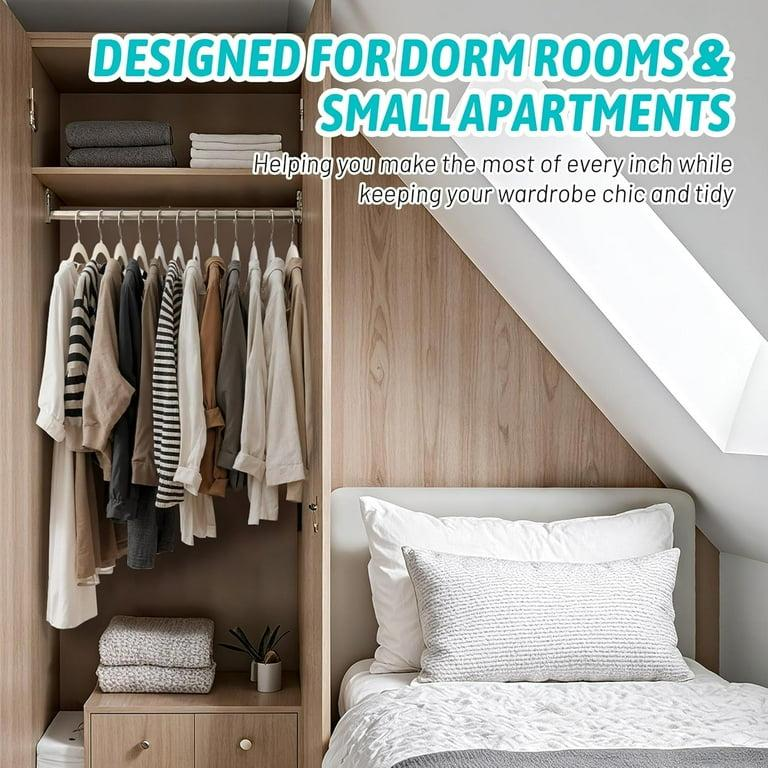
A dorm closet often looks spacious until you start filling it with clothes. Once your jackets, shirts, trousers, and formal outfits are hanging, there may be very little room left for folded clothing, shoes, or accessories.
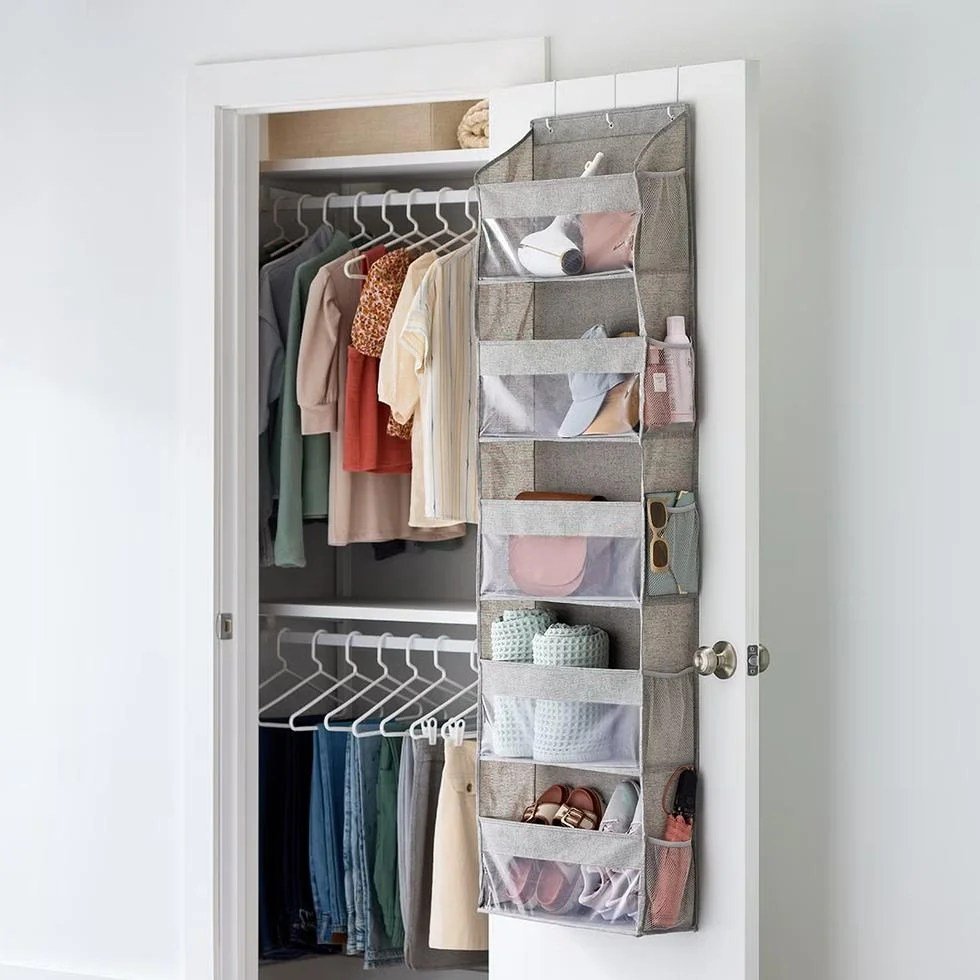
A hanging closet organizer helps you use the vertical space beneath the clothing rail. These fabric units usually have several compartments where you can store sweaters, jeans, workout clothes, towels, or folded T-shirts. Some designs also include side pockets for smaller accessories.
The biggest advantage is that you don’t need to install a permanent shelving system. Most hanging organizers attach directly to the closet rod, making them suitable for temporary student accommodation.
For better results, assign each compartment a specific category. One section can hold everyday tops, another can store gym clothes, and another can hold pajamas. Avoid stuffing every compartment until it becomes difficult to pull items out.
You can also combine hanging shelves with slim hangers to save space on the clothing rail. Matching hangers create a more consistent look and help prevent bulky plastic hangers from taking over the closet.
Organization tip: Keep the clothes you wear most often at eye level. Store special-occasion outfits and less frequently used items toward the back.
5. Use Over-the-Door Organizers
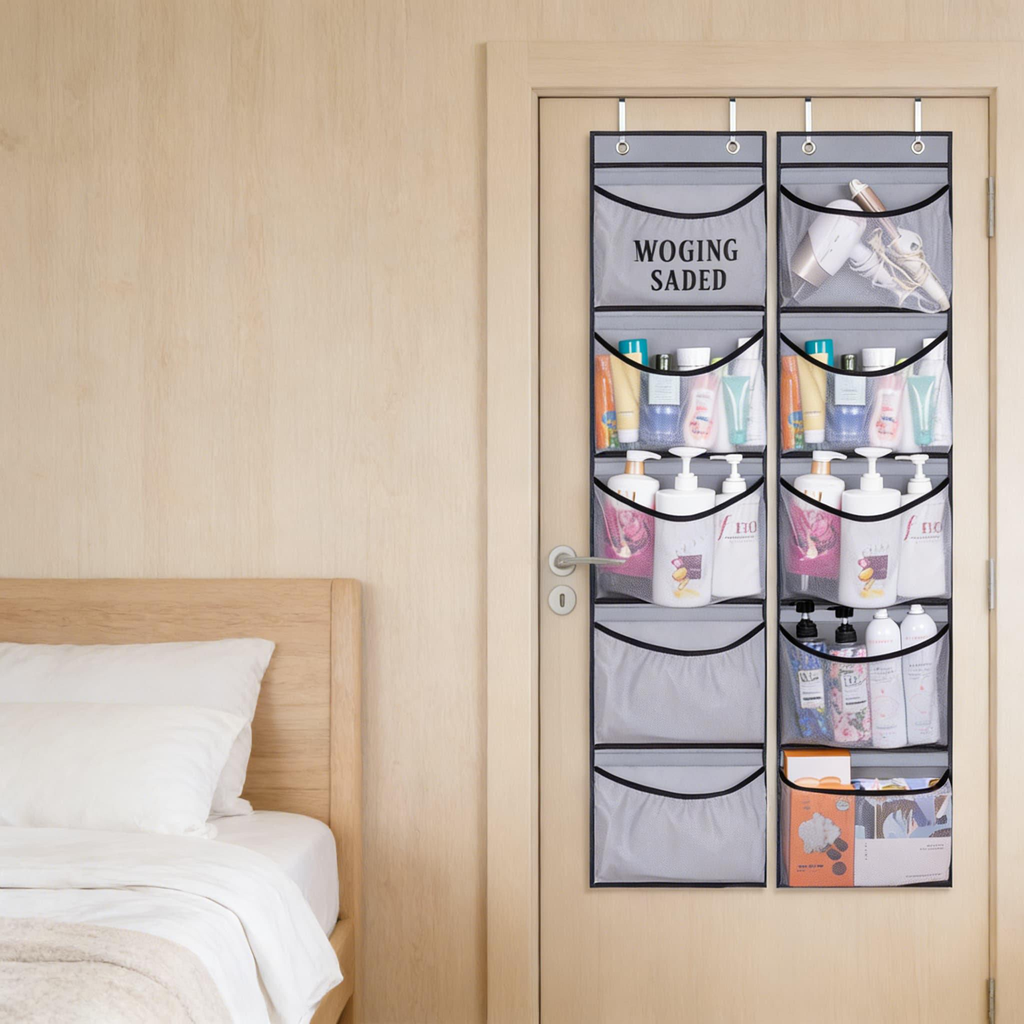
The back of a door is one of the easiest places to add storage without taking up floor space. Over-the-door organizers can hold toiletries, cleaning products, snacks, accessories, stationery, and other small belongings.
For example, a pocket organizer on a closet door can keep hair accessories, socks, scarves, and personal care products together. A sturdier rack may work for shoes or bags, depending on its design and weight capacity. Some organizers have clear pockets, which are especially useful when you want to see what’s inside without opening every compartment.
Before buying one, measure the door and check whether the organizer will interfere with closing it. Some dorm doors have unusual frames, closers, or limited clearance. You should also avoid placing heavy objects on a lightweight organizer that isn’t designed to support them.
If you share a room, consider using the inside of your closet door for personal storage. It keeps your belongings accessible while avoiding unnecessary clutter in shared areas.
Best uses for an over-the-door organizer:
- Hairbrushes and personal care products
- Socks and small accessories
- Cleaning supplies
- Shoes and slippers
- Packets of snacks and everyday essentials
6. Choose a Bedside Caddy Instead of a Nightstand
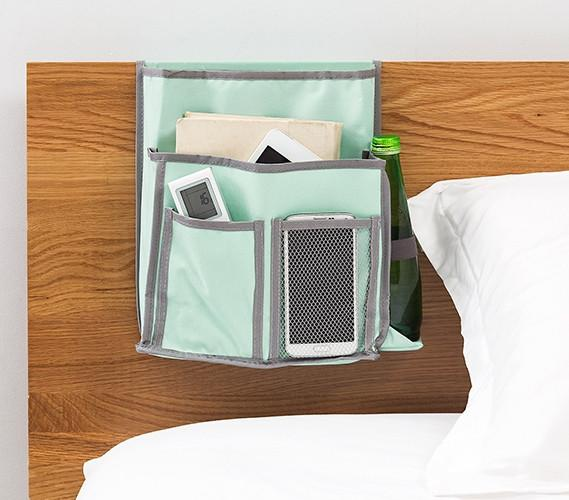
Traditional nightstands can be useful, but many dorm rooms don’t have enough space for another piece of furniture. A bedside caddy offers a compact alternative by attaching to the side of your bed or fitting between the mattress and bed frame.
It usually includes pockets for a phone, tablet, book, glasses, charger, headphones, and other small essentials. This means you don’t need to place everything on the floor or crowd your desk with bedtime belongings.
A bedside caddy is particularly helpful when your bed is pushed against a wall or positioned in a tight corner. You can reach the items you need without getting up or searching through a drawer.
Look for a design with reinforced pockets and a secure attachment system. If you plan to store a tablet or heavier book, check the product’s weight recommendations. A loose caddy that constantly slips out of place will quickly become frustrating.
Choose a neutral color if you want it to blend into your bedding, or select a fabric that complements your room’s color scheme.
Space-saving idea: Use a bedside caddy for nighttime essentials and keep your desk drawer for study supplies. Separating these categories prevents small items from becoming mixed together.
7. Store School Supplies in a Rolling Cart

A rolling utility cart can serve as a portable storage station for students who need their study materials close at hand. It offers several levels of storage without occupying the same amount of space as a traditional cabinet.
Use the top shelf for frequently used supplies such as pens, notebooks, sticky notes, chargers, and headphones. The middle shelf can hold textbooks, folders, and stationery boxes. The bottom shelf works well for heavier items or supplies you don’t need throughout the day.
One advantage of a rolling cart is flexibility. You can keep it beside your desk while studying, move it out of the way when friends visit, or position it near your bed when you need a little extra surface space.
Choose a narrow model that fits comfortably beside your desk or closet. Check the wheel quality and overall dimensions before purchasing, especially if your dorm has limited walking space.
You can also use a cart for something other than school supplies. A beauty cart, snack cart, or small cleaning station can work just as well, provided you don’t overload it.
Styling tip: Use matching baskets or small containers on each level to prevent the cart from looking cluttered. A simple label on each basket makes it easier to return things to the right place.
8. Divide Drawers With Adjustable Organizers
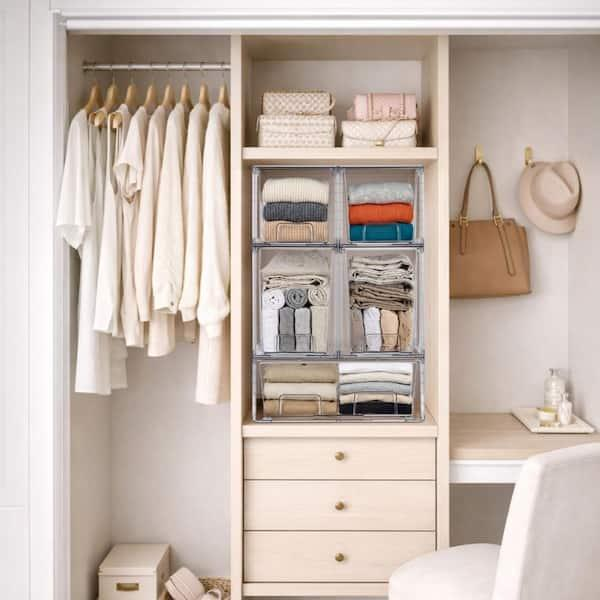
A drawer may look like a generous storage space, but without organization, it can quickly become a pile of unrelated belongings. Socks get mixed with accessories, stationery disappears beneath random items, and small products become difficult to find.
Adjustable drawer dividers help create separate sections for different categories. You can use them in your dresser, desk drawers, or even a bathroom storage container.
For clothing, create sections for socks, underwear, pajamas, and workout accessories. In a desk drawer, separate writing tools, charging cables, sticky notes, and small electronic accessories. If you have a drawer dedicated to personal care, keep hair products and skincare items in separate compartments.
The advantage of adjustable organizers is that they can fit different drawer sizes. You don’t have to purchase a large set of fixed dividers that may not match your furniture.
Before buying them, measure the inside of your drawers. Pay attention to depth as well as width, because tall dividers may prevent the drawer from closing properly.
Simple rule: Don’t divide a drawer into more sections than you actually need. Too many compartments can make storage feel complicated instead of convenient.
9. Use Stackable Clear Storage Containers
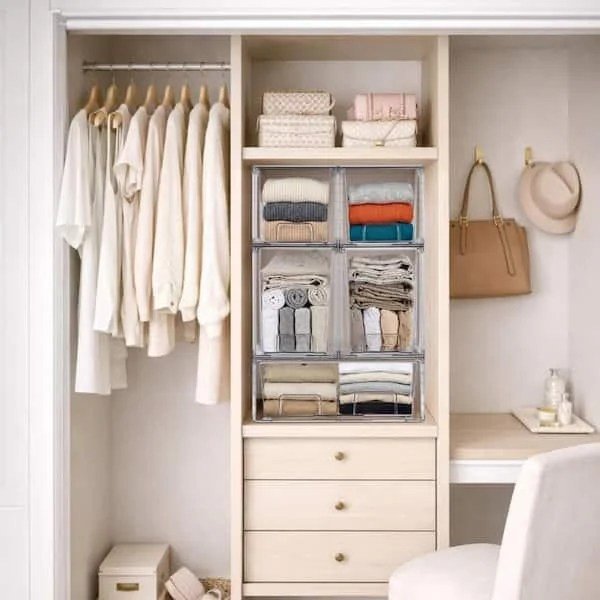
Stackable containers help you make better use of shelves, closets, and unused corners. Rather than spreading belongings across multiple surfaces, you can organize similar items into containers and stack them neatly.
Clear containers are especially practical because you can identify the contents without opening every lid. This is useful for snacks, stationery, toiletries, cleaning products, and small accessories.
Choose containers that are similar in shape and designed to stack securely. Mixing random sizes can leave awkward gaps and make the storage arrangement unstable. If you’re storing heavier items, place them in lower containers and avoid building a tall stack that could tip over.
You can also use small labeled containers inside larger bins. For example, a single storage box might hold stationery, while smaller compartments separate pens, sticky notes, cables, and spare batteries.
If you prefer a softer appearance, use fabric cubes in a similar size and color. They work well on open shelves and can hide visual clutter.
Helpful labels: Instead of writing vague labels such as “stuff,” use specific descriptions like “charging cables,” “extra toiletries,” or “winter accessories.” Specific labels save time when you’re in a hurry.
10. Create a Laundry Station That Stays Tidy
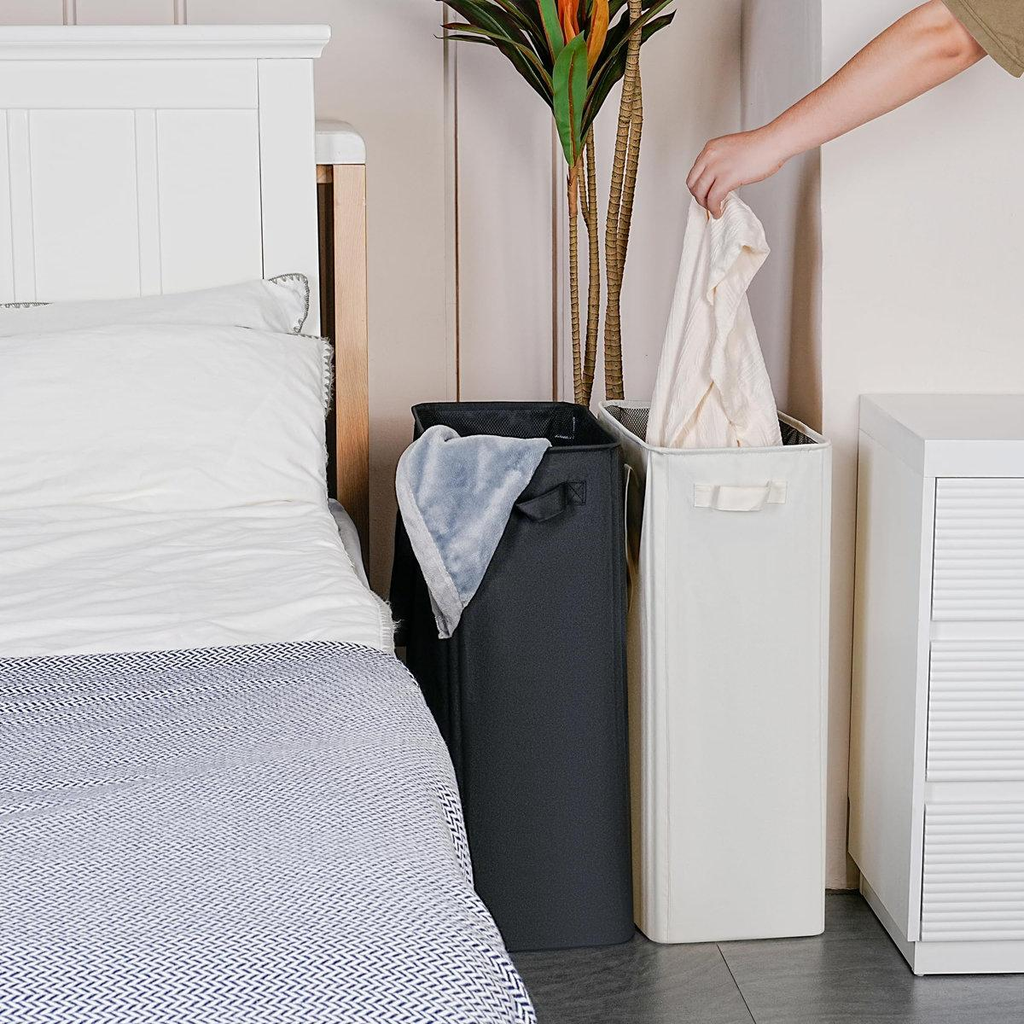
Laundry can become a major source of dorm room clutter. A pile of worn clothes near the bed, clean clothes waiting to be folded, and towels hanging over chairs can make even a tidy room feel messy.
A designated laundry station helps prevent this. Start with a hamper that fits your available floor or closet space. If you have limited room, choose a tall, narrow design or a collapsible hamper that can be folded when empty.
A divided hamper can be helpful if you prefer separating lights and darks before laundry day. You can also use a small laundry bag for delicate clothing or items that need special care.
Keep detergent, dryer sheets, stain remover, and other laundry supplies together in a compact basket. If your residence hall has shared laundry facilities, a portable laundry bag or basket can make carrying everything easier.
Don’t forget to plan where clean clothes will go. A small folding basket or designated shelf can prevent freshly washed items from sitting on your desk for several days.
A practical laundry routine: Put dirty clothes directly into the hamper, return clean clothes to drawers promptly, and keep laundry products in one easy-to-reach location.
11. Hang Accessories on Hooks and Pegboards
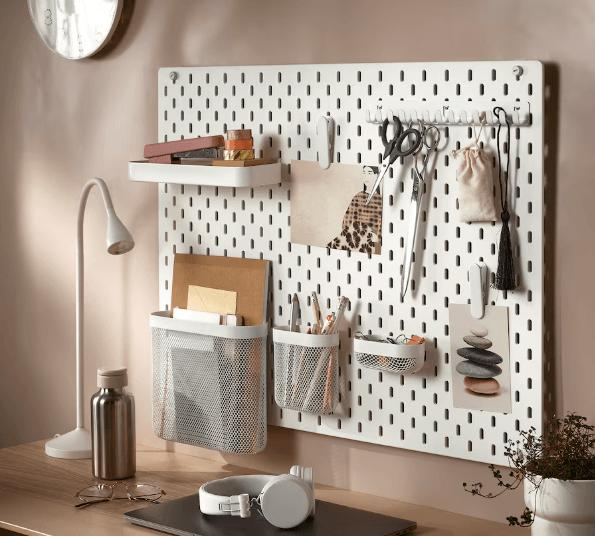
Small accessories are surprisingly good at creating clutter. Hats, headphones, jewelry, bags, belts, keys, and charging cables often end up scattered across desks and chairs because they don’t have a proper storage location.
Hooks and pegboards can solve this problem by turning an unused wall or approved vertical surface into an accessory station.
A small pegboard can hold hooks, baskets, and holders for different items. Use it near your desk for headphones and cables, or near your closet for hats, jewelry, and bags. If your residence hall doesn’t allow wall-mounted fixtures, look for freestanding pegboards or removable organizers that comply with its rules.
The key is to avoid hanging too many things in one area. A pegboard should make your belongings easier to access, not become a decorative version of a clutter pile.
Group similar items together. Keep everyday accessories at the most convenient height, and move occasional-use items toward the edges or upper sections.
Design idea: Choose a simple pegboard color that matches your desk or storage furniture. Add a few matching containers to make the arrangement look coordinated.
12. Store Shoes in a Slim Vertical Organizer

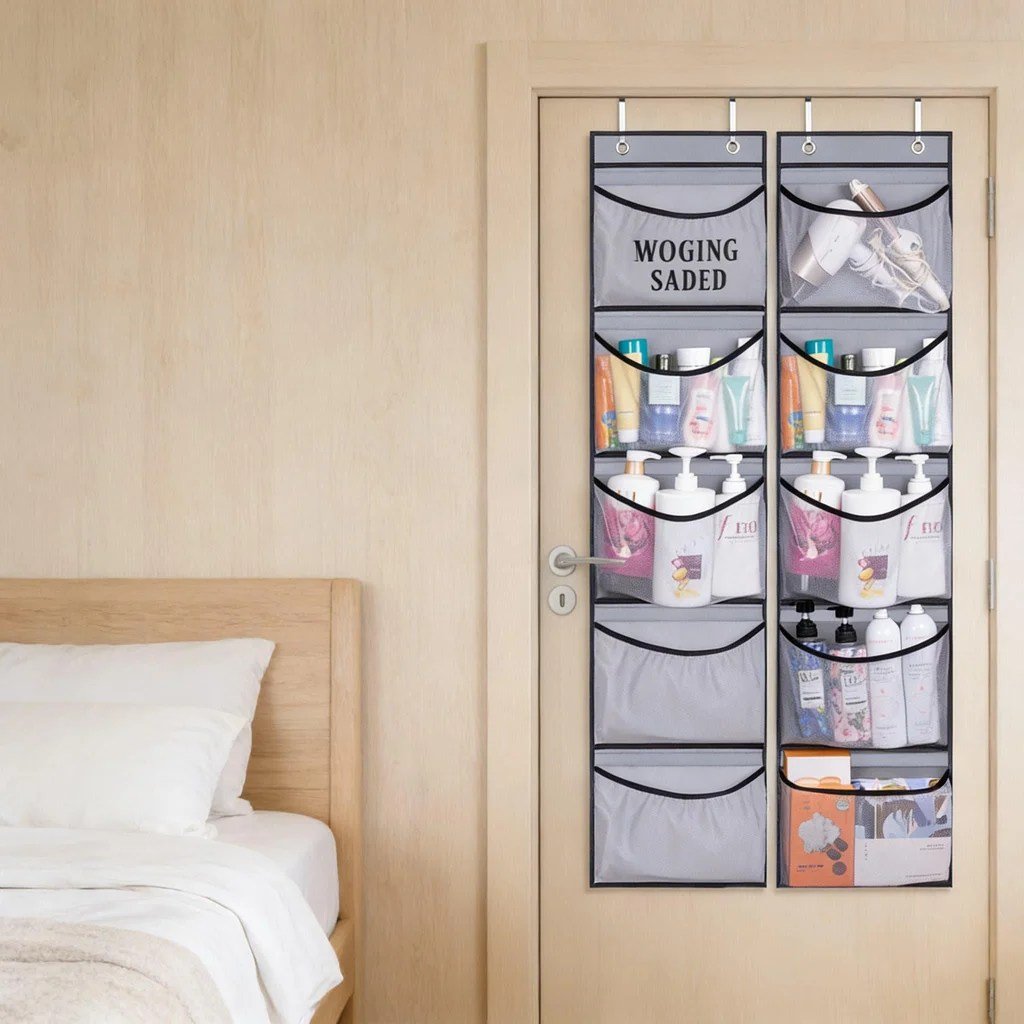
Shoes take up more room than many students expect. Sneakers, sandals, slippers, boots, and formal shoes can quickly fill the bottom of a dorm closet or spread across the floor near the entrance.
A slim vertical shoe organizer helps keep footwear in one place while using height rather than width. Depending on the design, you can choose a hanging organizer, a narrow shoe rack, or stackable shoe boxes.
If you have a small closet, a hanging shoe organizer may be the most practical choice because it uses the vertical space behind the closet door or along the clothing rail. A compact rack can work better if you prefer to keep shoes near the entrance.
Consider how many pairs you genuinely need. College life often involves walking across campus, so comfortable everyday shoes usually deserve the easiest access. Formal shoes and occasional-use footwear can be stored higher up or in less accessible compartments.
Make sure shoes are dry before storing them in enclosed containers. This helps prevent unpleasant odors and keeps your storage area fresher.
Space-saving tip: Store shoes heel-to-toe when using open shelves. This can help you fit more pairs into a narrow area.
13. Use Multi-Functional Furniture
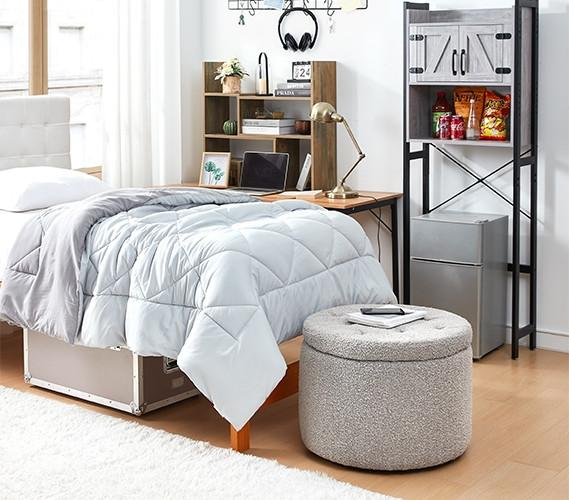
When every square foot matters, furniture that performs more than one job can be a smart investment. Instead of buying several separate pieces, look for items that combine seating, storage, and useful surfaces.
A storage ottoman, for example, can provide a place to sit while holding blankets, extra pillows, or accessories inside. A small storage bench may offer seating and a place for shoes. A desk organizer with built-in drawers can provide extra storage without requiring another cabinet.
However, dorm rooms often come with furniture already supplied by the college. Before purchasing anything, find out what is included and measure the remaining floor space. You don’t want to buy a storage ottoman only to discover that it blocks the closet or makes it difficult to open a drawer.
Foldable furniture can also help. A folding laundry rack, collapsible storage box, or stackable stool can be put away when not in use.
The best multi-functional furniture is useful every day. Don’t choose an item simply because it offers several features. Think about whether those features solve an actual problem in your room.
Best choices for compact dorm rooms: Storage ottomans, folding stools, narrow drawer units, and compact organizers with built-in compartments.
14. Make Your Desk Storage Work Harder
Your desk needs to support studying, writing, charging devices, and sometimes eating a quick meal between classes. When papers, cables, books, and stationery spread across the surface, it becomes difficult to focus.
Start by separating the items you use daily from those you only need occasionally. Keep your laptop, notebook, and a small selection of stationery within reach. Move extra paper, reference books, spare cables, and supplies into drawers or containers.
A monitor stand with storage underneath can create additional room for small items, provided it fits your equipment and is safe to use. Desktop organizers, vertical file holders, and compact drawer units can also help you use the available surface more efficiently.
Cable management is another important part of desk organization. Use approved cable clips, reusable ties, or a cable box to keep charging cords from tangling. Make sure electrical outlets and power strips remain accessible and are not covered by fabric or overloaded.
Try to leave a clear section of your desk for actual work. Storage should support your study routine rather than take over the entire surface.
Quick desk reset: At the end of each study session, return stationery to its container, put loose papers into a folder, and remove anything that doesn’t belong on the desk.
15. Keep Seasonal Items in Labeled Containers
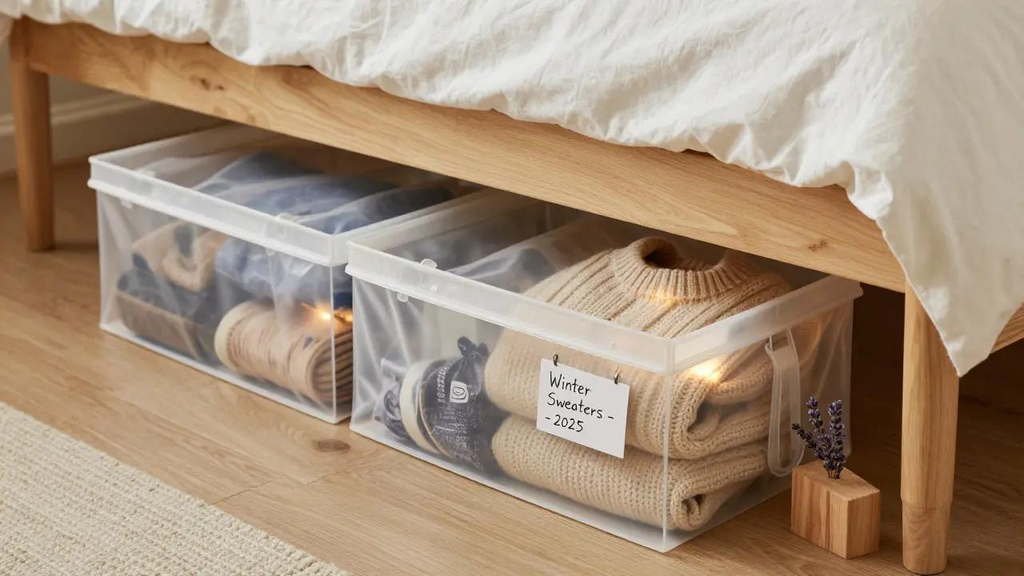
Not everything you bring to college needs to be available every day. Heavy winter clothing, extra blankets, seasonal decorations, special-occasion outfits, and certain sports accessories may only be needed during particular parts of the year.
Keeping these belongings in your main closet or dresser can waste valuable space. Instead, place them in labeled containers and store them in an approved under-bed area, on a suitable closet shelf, or in another designated storage space.
Vacuum storage bags can reduce the volume of suitable soft items such as bulky clothing and bedding. However, check the care instructions before compressing delicate fabrics or items that may lose their shape. Don’t use compression bags for belongings that need ventilation or special storage conditions.
Labels are particularly important when you have several similar containers. Write clear descriptions on the front and keep an inventory on your phone if you store a large number of items.
At the beginning of each season, switch the items you need most into accessible storage. You can move out-of-season belongings into the less convenient spaces.
Smart storage habit: Review your seasonal items before packing them away. If you haven’t used something for a long time and don’t expect to need it, consider leaving it at home rather than carrying it through another semester.
How to Organize a Tiny Dorm Room Without Making It Feel Cluttered
Adding storage products doesn’t automatically make a room more organized. In fact, too many bins, shelves, baskets, and organizers can create another layer of clutter. The trick is to choose storage that fits your room and supports the way you actually live.
Start by dividing your dorm room into functional zones. Your bed area should hold sleeping essentials, your desk should support studying, and your closet should handle clothing and personal belongings. Even if these areas are close together, giving each one a clear purpose makes the room easier to maintain.
Think about the items you reach for every day. Your backpack, keys, headphones, water bottle, and charger should have convenient homes. If you use something daily, it shouldn’t be buried beneath seasonal clothing or hidden at the back of a closet.
Next, pay attention to visual clutter. Open shelves can look attractive, but they may become messy when filled with unrelated objects. Use matching baskets or containers to group smaller items together. Keep a little empty space on shelves rather than filling every available inch.
A useful way to plan your room is to compare storage options by the space they use and the belongings they hold.
| Storage solution | Best for | Main advantage | What to check |
|---|---|---|---|
| Under-bed bins | Bedding, clothing, shoes | Uses hidden floor space | Bed clearance |
| Hanging closet shelves | Folded clothes and towels | Adds compartments without furniture | Closet rod strength |
| Over-door organizer | Accessories and toiletries | Uses unused door space | Door clearance |
| Rolling cart | School supplies and snacks | Easy to move | Width and wheel stability |
| Drawer dividers | Small clothing and accessories | Prevents mixed-up belongings | Drawer dimensions |
| Storage ottoman | Blankets and small items | Combines seating and storage | Available floor space |
| Vertical shoe rack | Footwear | Keeps shoes off the floor | Height and capacity |
Another important step is to avoid buying organizers before measuring. A storage solution that looks perfect online may be too wide for your closet or too tall for your under-bed space. Measure the areas you plan to use, then compare those measurements with the product dimensions.
Finally, remember that your dorm room is shared living space. Discuss larger storage arrangements with your roommate before moving furniture or adding items to shared areas. Agreeing on closet space, shared shelves, and floor arrangements can prevent frustration later.
Dorm Room Storage Mistakes That Waste Valuable Space
Even well-intentioned organization can go wrong. Some students buy storage products because they look useful without considering whether those products fit their rooms or daily routines. The result is often more clutter, not less.
One common mistake is buying too many storage containers. Containers are helpful when they hold specific categories of belongings, but random empty boxes don’t solve an organization problem. Start with what you own, identify where it needs to go, and purchase only the storage products that fill a genuine gap.
Another mistake is ignoring vertical space. Students often focus on the floor and closet shelves while leaving walls, doors, and hanging areas unused. A few carefully chosen hooks or organizers may be more useful than another plastic drawer unit.
It’s also easy to store everyday items in inconvenient places. If your charger is underneath a pile of bedding or your backpack is at the back of a closet, you’ll probably leave those items lying around instead. Keep frequently used belongings close to where you need them.
Be careful with overloading shelves and hanging organizers. Every storage product has a weight limit, and placing too many heavy items in one area can create safety problems. Follow manufacturer instructions and dormitory rules.
Here are a few more mistakes worth avoiding:
- Buying furniture before checking the room’s measurements.
- Using oversized organizers that block drawers or doorways.
- Keeping unused belongings simply because you brought them to college.
- Filling every shelf until there is no room for new items.
- Storing damp towels or shoes in closed containers.
- Ignoring your roommate’s need for shared space.
- Using adhesives or mounting hardware that violate residence hall rules.
The most effective dorm room storage system isn’t the one with the most products. It’s the one that makes everyday life easier while keeping the room comfortable and safe.
A Simple Dorm Room Organization Plan for Move-In Day
Move-in day can feel chaotic. You’re carrying bags, unpacking boxes, arranging bedding, meeting your roommate, and trying to remember where everything belongs. Instead of unpacking randomly, use a simple plan to organize your dorm room from the beginning.
Step 1: Check the room before unpacking.
Look at the closet, drawers, desk, bed, and available floor space. Measure the areas where you plan to place storage products. Check the residence hall’s rules for furniture adjustments, adhesive hooks, shelves, and other accessories.
Step 2: Separate belongings into categories.
Group clothing, bedding, school supplies, electronics, toiletries, laundry products, food, and accessories. This makes it easier to identify what needs a drawer, shelf, container, or hanging organizer.
Step 3: Put away less frequently used belongings first.
Store seasonal clothing, extra bedding, and occasional-use items in under-bed containers or higher closet shelves. Keep everyday essentials accessible.
Step 4: Set up your main functional zones.
Arrange your sleeping area, study space, clothing storage, and laundry station. Make sure doors, drawers, and walking paths remain clear.
Step 5: Organize small items.
Use drawer dividers, baskets, desk organizers, and labeled containers for things that otherwise tend to get scattered.
Step 6: Keep the room flexible.
You may discover after a week that your original setup doesn’t work as well as expected. That’s normal. Move storage products around until you find an arrangement that matches your daily routine.
Dorm Room Storage Checklist
Use this checklist while preparing for move-in day:
- Measure under-bed clearance and closet dimensions.
- Check residence hall rules before buying bed risers or wall organizers.
- Choose under-bed containers for bulky belongings.
- Organize clothing with hanging shelves or slim hangers.
- Set up a laundry hamper.
- Add a desk organizer for school supplies.
- Use hooks or a suitable organizer for bags and accessories.
- Create a convenient place for shoes.
- Label containers holding seasonal belongings.
- Leave enough clear floor space for comfortable movement.
- Coordinate shared storage areas with your roommate.
- Review your setup after the first week.
You don’t need to complete every storage project on your first day. Start with the essentials, then add organizers as you learn how you use the room.
Conclusion
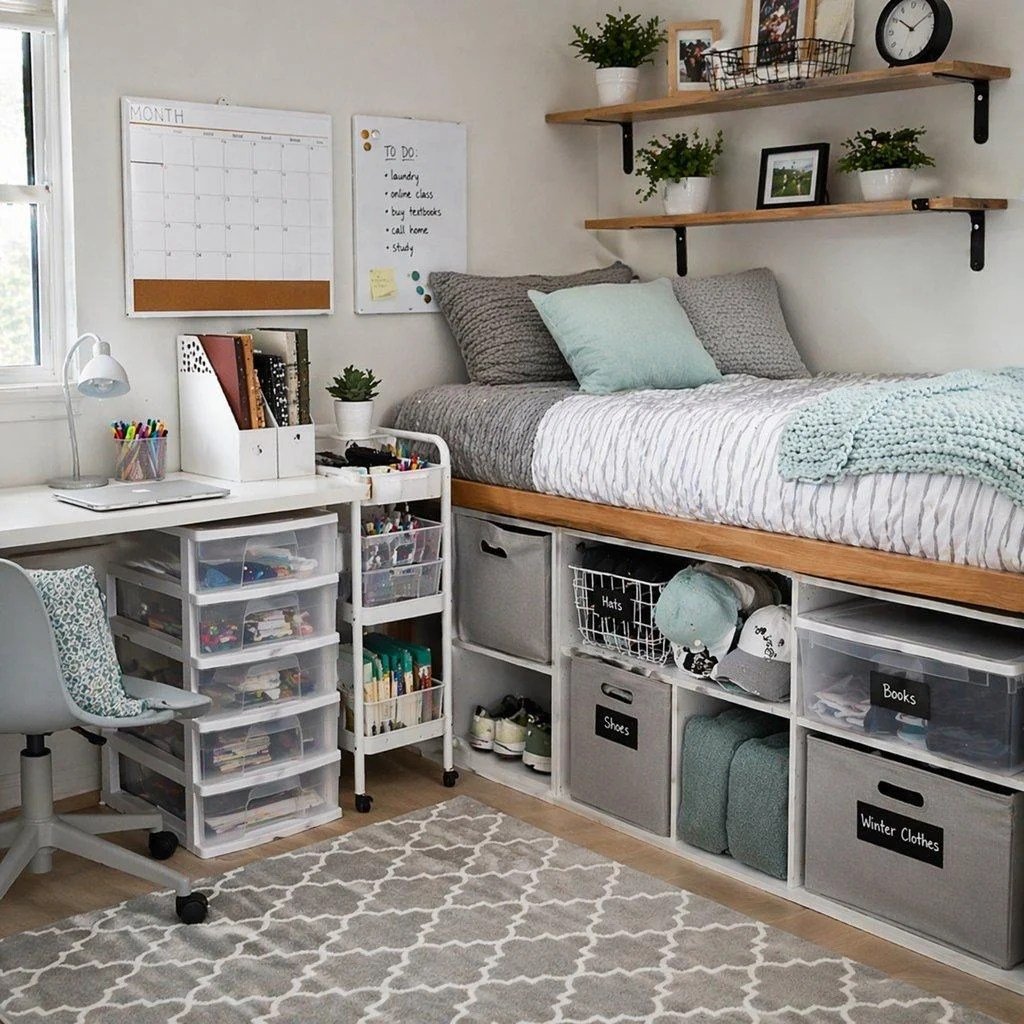
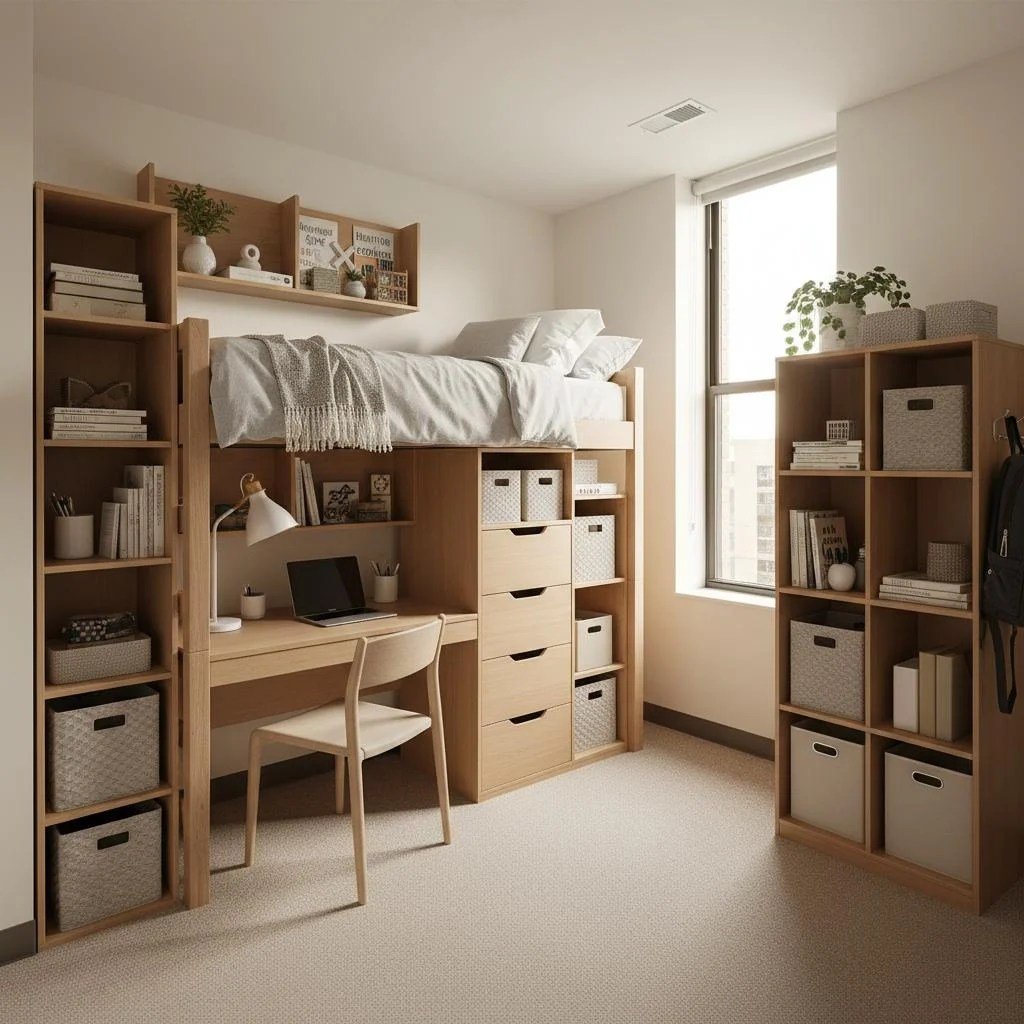
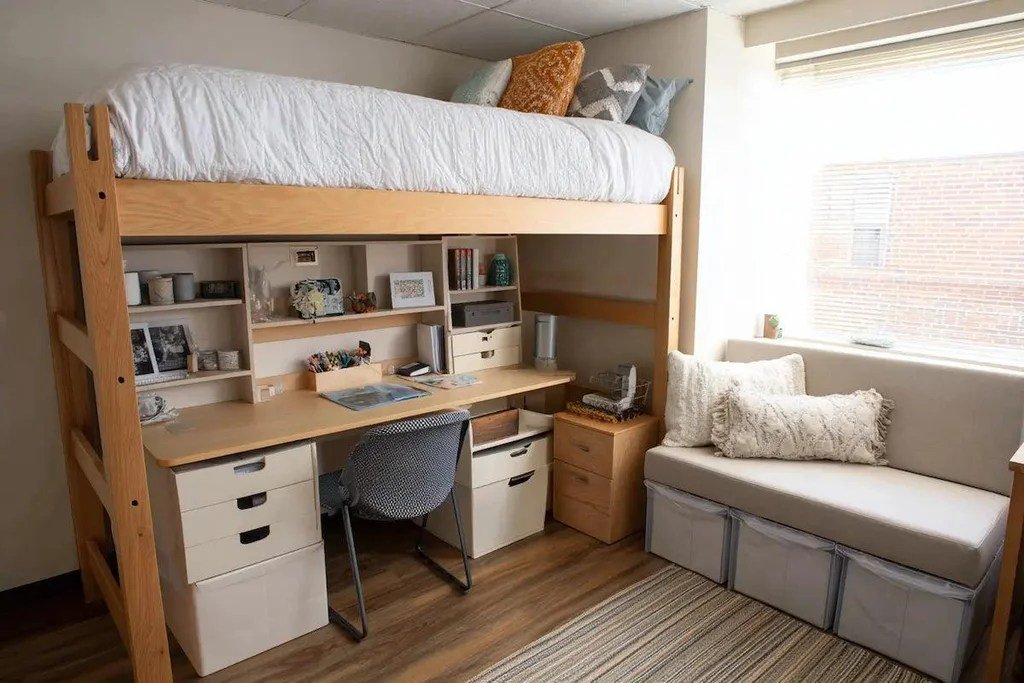
Living in a small dorm room doesn’t mean you have to live with constant clutter. With a little planning, you can turn overlooked spaces into useful storage areas and make your room feel more comfortable without filling it with bulky furniture.
Start with the biggest problem areas. If your floor is covered with shoes and bags, try vertical organizers and hooks. If your closet is overflowing, add hanging shelves and slim hangers. If your desk is crowded, use drawer dividers, desktop organizers, and a rolling cart. Under-bed bins and seasonal containers can take care of belongings you don’t need every day.
The most important thing is to choose dorm room storage ideas that match your actual habits, not simply the products that look attractive online. Measure before buying, keep everyday essentials accessible, and make sure your storage setup follows your college’s rules.
A well-organized dorm room doesn’t need to look perfect. It simply needs to make studying, sleeping, getting dressed, and relaxing easier. When every item has a sensible place, even a tiny college dorm can feel like a space you genuinely enjoy coming back to.
Frequently Asked Questions
1. What are the best storage ideas for a small dorm room?
The best storage ideas for a small dorm room include under-bed storage bins, hanging closet shelves, over-the-door organizers, drawer dividers, vertical shoe racks, and rolling carts. These solutions use overlooked spaces instead of taking up more floor area. Start with the areas that currently create the most clutter, then choose organizers that fit your room’s measurements.
2. How can I maximize storage in a college dorm room?
To maximize storage in a college dorm room, use vertical space, organize the area underneath your bed, and make your closet work more efficiently. Store seasonal belongings in labeled containers and keep everyday essentials within easy reach. Multi-functional furniture and compact rolling carts can also provide useful storage without adding several bulky pieces of furniture.
3. What should I store under my dorm bed?
Under your dorm bed, you can store extra bedding, blankets, towels, seasonal clothing, shoes, luggage accessories, and other belongings you don’t use every day. Choose shallow bins or rolling containers that fit the available clearance. Measure the space first and make sure the containers can slide out easily.
4. How do I organize a dorm room with no closet space?
If your dorm room has limited or no closet space, use a freestanding clothing rack if permitted, hanging organizers, stackable drawers, and under-bed storage. Over-the-door hooks can hold bags and jackets, while vertical shoe organizers help keep footwear off the floor. Keep frequently worn clothing accessible and store occasional-use items in labeled containers.
5. How can I keep my dorm room organized throughout the semester?
The easiest way to maintain an organized dorm room is to build a few simple habits. Put belongings back in their designated places, empty your laundry hamper regularly, clear your desk after studying, and remove items you no longer need. A short weekly reset can prevent small messes from turning into a room-wide clutter problem.


Leave a Reply