

Bedroom curtains do much more than cover a window. The right pair can make your room feel quieter, softer, warmer, and more private while helping you control the daylight that enters each morning. They can also pull together your bedding, wall color, furniture, and lighting in a way that makes the entire room feel intentionally designed. On the other hand, curtains that are too short, too thin, or the wrong shade can leave even a beautifully decorated bedroom feeling unfinished.
The good news? You don’t need expensive custom window treatments to get a polished result. A few thoughtful choices about fabric, color, length, and layering can make a noticeable difference. Whether you’re decorating a small apartment bedroom, refreshing a neutral retreat, or trying to block early morning sunlight, there is a curtain style that can work for your space.
In this guide, you’ll discover 15 bedroom curtain ideas for privacy, better sleep, and a finished look, along with practical advice on choosing fabrics, measuring your windows, and avoiding common styling mistakes.
Why Bedroom Curtains Matter More Than You Think
Imagine a bedroom with a beautiful bed, carefully chosen cushions, warm bedside lighting, and a lovely rug. Now imagine the same room with bare windows or curtains that stop awkwardly halfway down the wall. Something feels incomplete, doesn’t it? Curtains add the soft vertical lines that balance a room’s harder surfaces, such as walls, wardrobes, flooring, and window frames. They can make a low ceiling appear taller, a narrow window feel wider, and a simple bedroom feel more inviting.
Privacy is another important reason to choose bedroom curtains carefully. If your windows face a neighboring home, a busy street, or a shared courtyard, the right fabric can help you feel comfortable without keeping the room dark all day. Light control matters, too. Streetlights, early sunrise, and bright afternoon sunshine can interfere with rest, particularly if you work night shifts or prefer a dark sleeping environment.
Curtains can also contribute to comfort by reducing drafts and limiting some heat transfer around windows. Heavier, well-fitted curtains may help in certain conditions, although their performance depends on the fabric, lining, fit, and window itself. They can soften echoes slightly as well, but they should not be mistaken for soundproofing.
Think of curtains as the finishing layer of your bedroom design. They don’t need to be the star of the room, but they should support the mood you want to create.
Before choosing a style, decide what matters most to you:
- Privacy: Preventing outside views into the room.
- Sleep: Reducing unwanted light during rest.
- Style: Connecting the curtains with your existing decor.
- Comfort: Adding softness and potentially improving insulation.
- Convenience: Choosing a system that’s easy to open, close, and clean.
The best bedroom curtains balance several of these needs instead of solving only one.
How to Choose Bedroom Curtains That Work for You
A curtain can look gorgeous in a product photo and still disappoint once it’s hanging in your bedroom. That’s why it’s worth thinking beyond color. Consider how much daylight you want, whether you need privacy during the evening, how often you’ll open the curtains, and whether the fabric suits your daily routine.
For example, a person who sleeps late may benefit from blackout curtains, while someone who enjoys waking with natural daylight might prefer light-filtering fabric. A bedroom facing nearby buildings may need a more private window treatment than one overlooking a secluded garden. Your decision should reflect the way you actually use the room.
Consider Privacy, Light, Fabric, and Length
Start by checking your window’s position. If people can see directly inside after dark, remember that sheer curtains alone usually offer limited privacy when the room is illuminated. A second, opaque layer or a suitable privacy lining gives you more control.
Next, consider fabric weight. Lightweight cotton and linen blends can create an airy appearance, while velvet and lined woven fabrics feel richer and may block more light. The fabric’s appearance isn’t a reliable indicator of blackout performance, however, so check whether a lining is included and how effectively it blocks light.
Length changes the whole impression. Curtains that reach the floor generally look more deliberate than panels that end several inches above it. Measure from the intended rod position to the floor rather than guessing from the window frame. If you want a crisp, contemporary finish, let the hem sit just above the floor. If you prefer a softer, more romantic look, you can allow a little fabric to rest on the floor, provided the material and cleaning routine make that practical.
Choose the Right Curtain Heading and Hardware
The heading is the top part of the curtain that attaches to the rod or track. It influences how the fabric hangs and how formal the room feels. Eyelet curtains are simple to slide and create broad, relaxed folds. Pinch pleats feel more tailored, while pencil pleats offer a classic look that suits many traditional and transitional bedrooms.
A ceiling-mounted track can create a clean, almost seamless appearance. A decorative rod, by contrast, can become part of the room’s design. Choose hardware that can support the weight of the curtains, especially when using lined or velvet panels.
One practical detail often gets overlooked: extend the rod beyond the window frame where space allows. This lets the panels sit farther to the sides when open, helping preserve daylight and making the window appear wider.
15 Bedroom Curtain Ideas
1. Floor-to-Ceiling Curtains for an Elegant Look

Floor-to-ceiling curtains are one of the easiest ways to make a bedroom feel taller and more finished. Instead of placing the rod just above the window frame, mount it closer to the ceiling or at a height that visually connects with the room’s architecture. Let the fabric fall nearly to the floor for a long, uninterrupted line.
This approach works particularly well in contemporary, classic, and minimalist bedrooms. Choose warm white, soft beige, taupe, or muted gray if you want the curtains to blend quietly with the walls. If you prefer a stronger statement, a deeper shade can create a beautiful frame around the window.
The secret is getting the measurements right. Curtains that are too short can make the room feel visually compressed, while an excessive puddle of fabric may collect dust and become inconvenient. For everyday bedrooms, a hem that just grazes the floor is usually a practical choice.
Try this styling formula: ceiling-height rod + full-length panels + a color close to the wall shade.
This combination creates a calm, cohesive look without requiring decorative patterns or expensive fabric.
2. Blackout Curtains for Deeper, More Restful Sleep
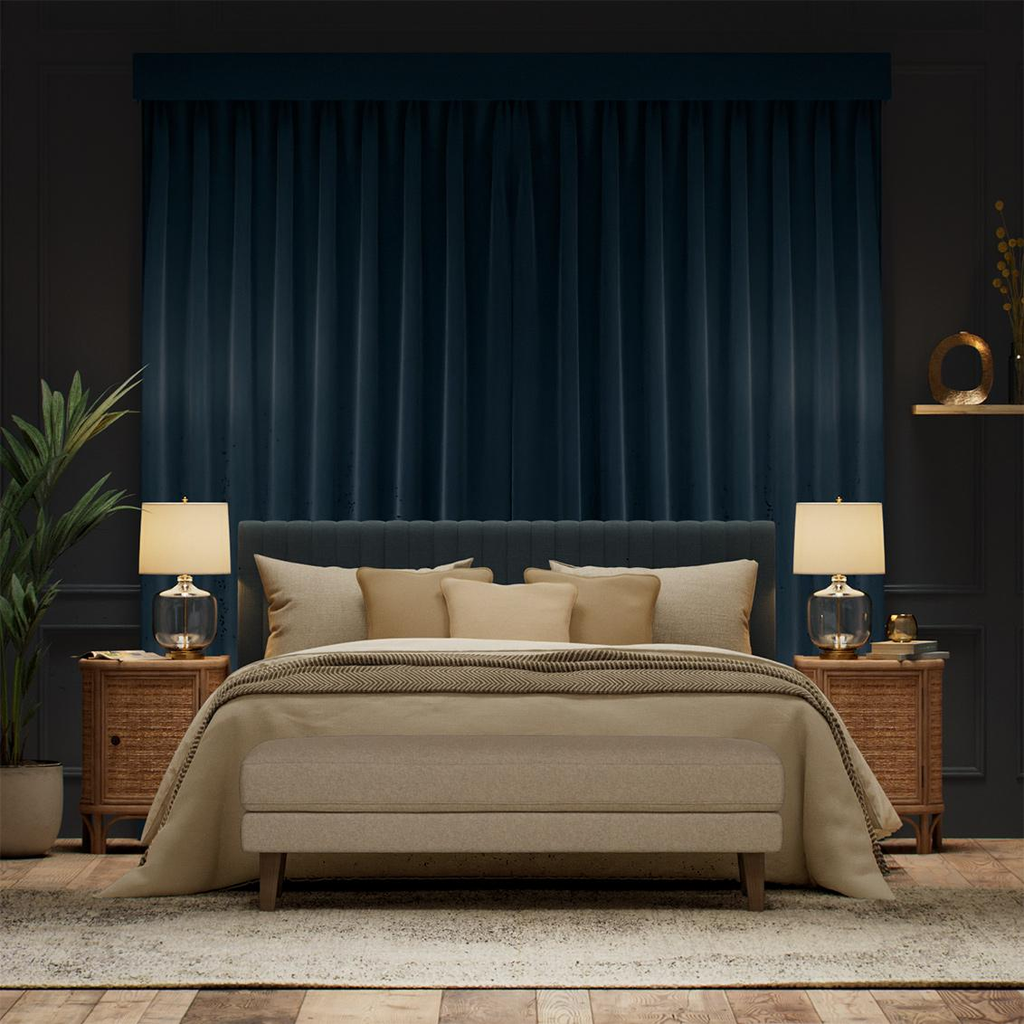
If sunlight wakes you before your alarm, blackout curtains may be worth considering. They are designed to block most or nearly all light through the fabric, depending on the product. They’re especially useful for bedrooms facing bright streets, rooms with strong morning sun, and spaces used by people who sleep during the day.
Choose a color that suits your room rather than assuming blackout curtains must be dark. Blackout options are available in pale neutrals, muted pastels, and deeper shades. The lining and construction matter more than the surface color alone.
Pay attention to light escaping around the edges. Even effective blackout fabric may leave bright gaps if the panels are too narrow or the rod sits too close to the wall. Wider panels, a wraparound rod, or a well-fitted track can help reduce those gaps.
Blackout curtains can support a darker sleep environment, but they aren’t a cure for every sleep problem. Room temperature, noise, routines, and other factors still matter.
Best for: light-sensitive sleepers, shift workers, nurseries, and bedrooms exposed to streetlights.
3. Sheer Curtains for Soft Daylight and Privacy
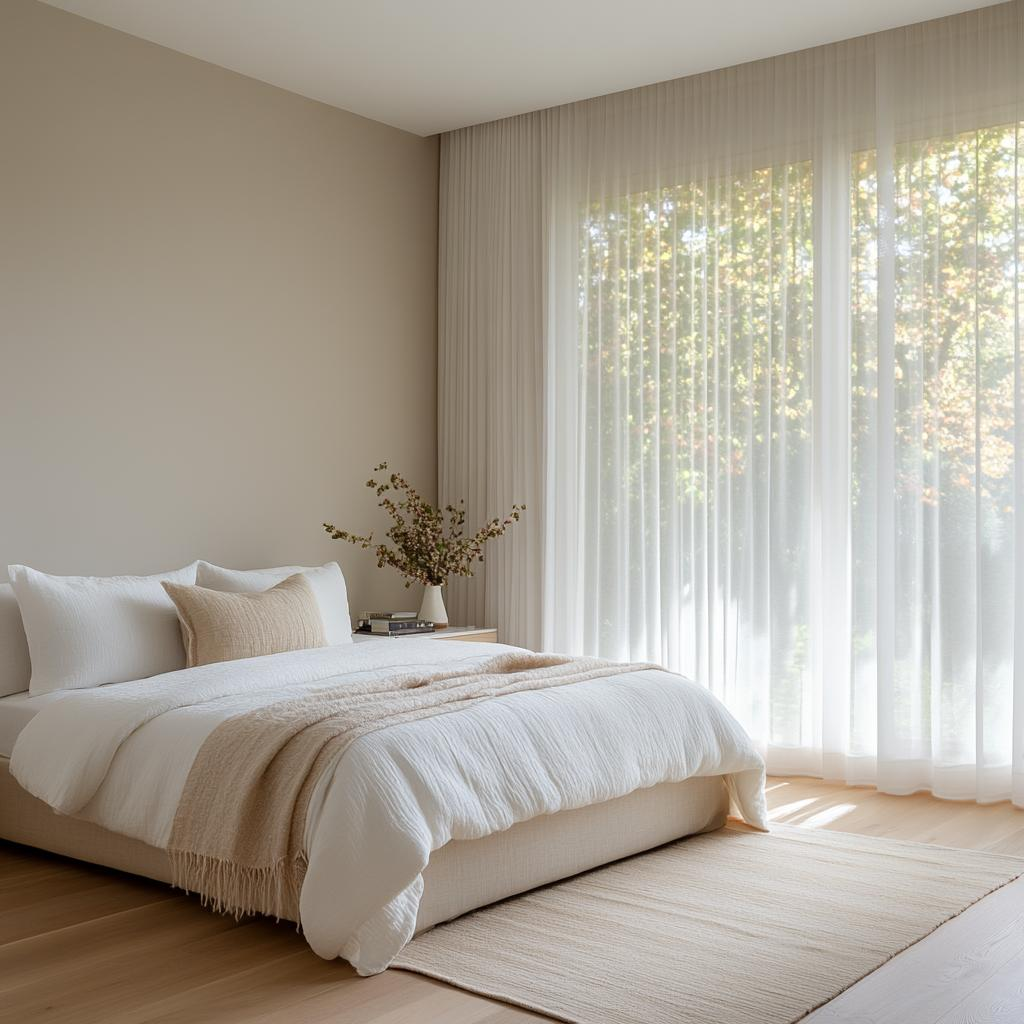
Sheer curtains give a bedroom a light, graceful appearance. They soften direct sunlight, reduce harsh glare, and create gentle movement when a breeze passes through an open window. White and ivory sheers work beautifully in Scandinavian-inspired spaces, coastal bedrooms, and relaxed neutral interiors.
They’re particularly useful when you want to keep a room bright without leaving the window completely bare. During daylight, sheer fabric can provide some privacy depending on the light levels and what lies outside. At night, however, an illuminated room may still be visible from outside, so sheers alone are rarely the best choice where privacy is essential.
For a fuller appearance, use enough fabric to create relaxed folds rather than stretching one narrow panel across the entire window. A ceiling-mounted track can make sheers appear to flow directly from the ceiling, creating a soft, architectural effect.
Pair them with natural textures such as linen bedding, a woven rug, wooden bedside tables, or a rattan pendant. The overall effect feels airy rather than overly decorated.
4. Layered Sheers and Blackout Curtains
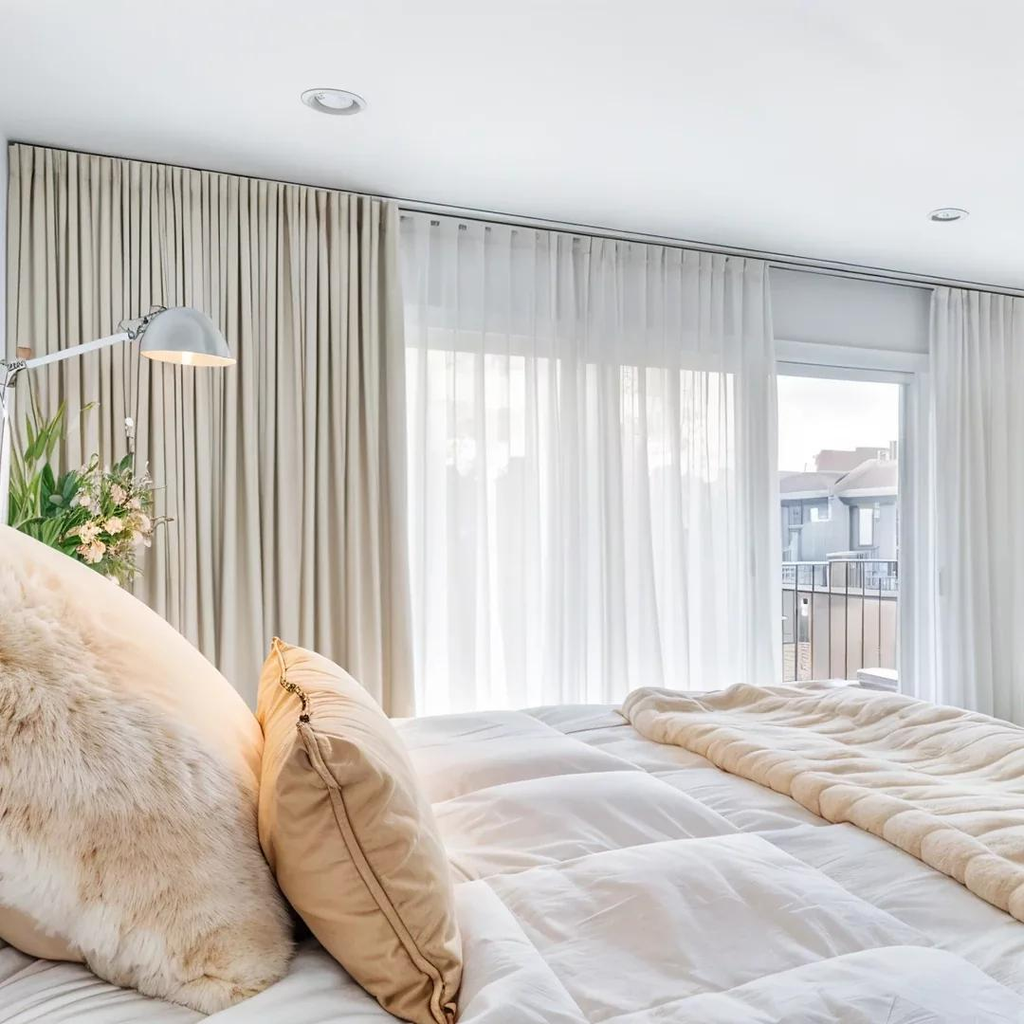
Can’t decide between bright mornings and a dark sleeping space? Use both. Layered curtains combine a sheer inner layer with a heavier outer curtain, allowing you to adjust the room throughout the day.
In the morning, pull back the heavier panels and let daylight filter through the sheers. In the evening, close the outer curtains for greater privacy and light control. This setup also adds depth, making a simple window look more carefully styled.
A double rod or a dual curtain track is usually the easiest way to hang the two layers. Put the sheer fabric closer to the window and the heavier panels toward the room. Keep the colors related: ivory with oatmeal, white with warm gray, or pale beige with deep olive.
| Sheer layer | Outer curtain | Overall effect |
|---|---|---|
| White | Warm beige | Bright and understated |
| Ivory | Forest green | Natural and sophisticated |
| Soft gray | Charcoal | Modern and dramatic |
| Cream | Terracotta | Warm and welcoming |
Layering is especially practical in bedrooms that need different levels of light at different times. Just make sure the rod or track can support the combined weight of both sets of curtains.
5. Warm Neutral Curtains for a Calm Bedroom

Warm neutral curtains are a reliable choice when you want a bedroom that feels comfortable, timeless, and easy to update. Shades such as oatmeal, sand, mushroom, warm taupe, and creamy beige sit naturally alongside wood furniture, white bedding, and soft accent colors.
The key is to avoid making every surface exactly the same shade. If the walls are cream and the bedding is beige, choose curtains with a slightly different undertone or texture. A nubby weave, subtle stripe, or linen-like finish adds dimension without disrupting the quiet palette.
Warm neutrals are also forgiving when you change other parts of the room. You can introduce green cushions, rust-colored throws, black hardware, or a new rug without needing to replace the curtains.
For a coordinated bedroom, repeat the curtain color in one or two smaller details, such as a cushion, lampshade, or upholstered bench. That repetition helps the room feel connected, while leaving enough variation to keep it interesting.
Palette idea: warm white walls + oatmeal curtains + natural oak + muted green accents.
6. White Linen Curtains for an Airy Feel
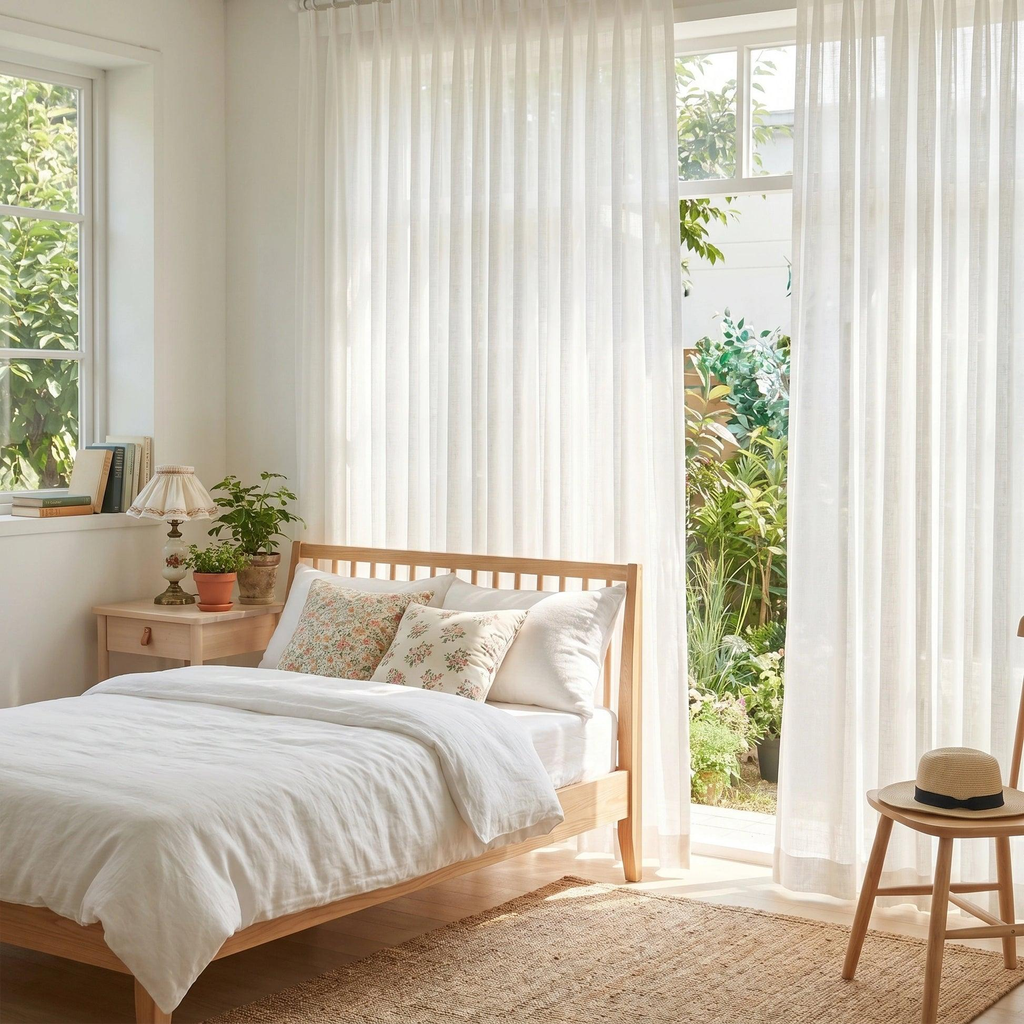
White linen or linen-look curtains are ideal when you want a bedroom to feel fresh, bright, and relaxed. Their slightly irregular texture keeps white fabric from looking flat, and their natural drape suits coastal, modern organic, cottage, and minimalist interiors.
Real linen tends to wrinkle, which is part of its relaxed character. If you prefer a neater appearance or need an easier-care option, consider a linen blend or a textured polyester alternative. Check the care instructions before buying, since some fabrics shrink or require special washing.
White curtains can also help visually connect a room with pale bedding and light-colored walls. To stop the space from feeling sterile, introduce warmer materials: wood, wool, woven baskets, ceramic lamps, or a textured bedspread.
If your bedroom receives intense sunlight, check the fabric’s light-filtering properties and consider a lining. Very lightweight white fabric may glow beautifully during the day but offer little privacy after dark.
This look works best when the rest of the room doesn’t compete with it. Keep the palette simple and let the fabric, natural light, and subtle textures do the work.
7. Earthy Green and Terracotta Curtains
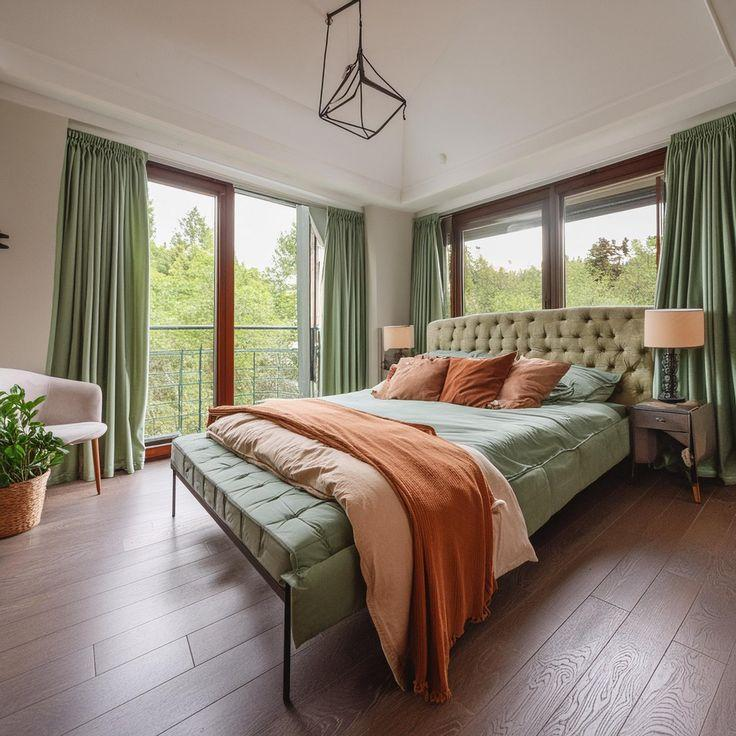
Want color without turning the bedroom into a visual overload? Earthy curtains offer a middle ground between neutral decor and a bold statement. Olive, sage, moss, clay, cinnamon, and muted terracotta bring warmth and a natural feel to the room.
Green curtains pair especially well with cream walls, walnut furniture, and botanical prints. Terracotta looks lovely beside sandy neutrals, warm white bedding, and brushed brass details. In a room with cool gray walls, a deeper olive or muted rust can provide a welcome contrast.
Before choosing a shade, look at the room’s natural light. A deep green may appear rich and dramatic in a sunny bedroom but nearly black in a darker one. If possible, compare fabric samples at different times of day rather than relying on a small online color swatch.
Keep the other major elements relatively simple if the curtains are saturated. A neutral duvet, understated rug, and clean-lined furniture allow the fabric to stand out without making the room feel crowded.
8. Velvet Curtains for a Luxurious Finish
Velvet curtains add depth, softness, and a sense of luxury. Their surface catches light differently across the folds, creating visual richness even when the color is simple. Deep navy, forest green, burgundy, and chocolate brown can make a bedroom feel intimate, while dusty rose and warm taupe offer a softer interpretation.
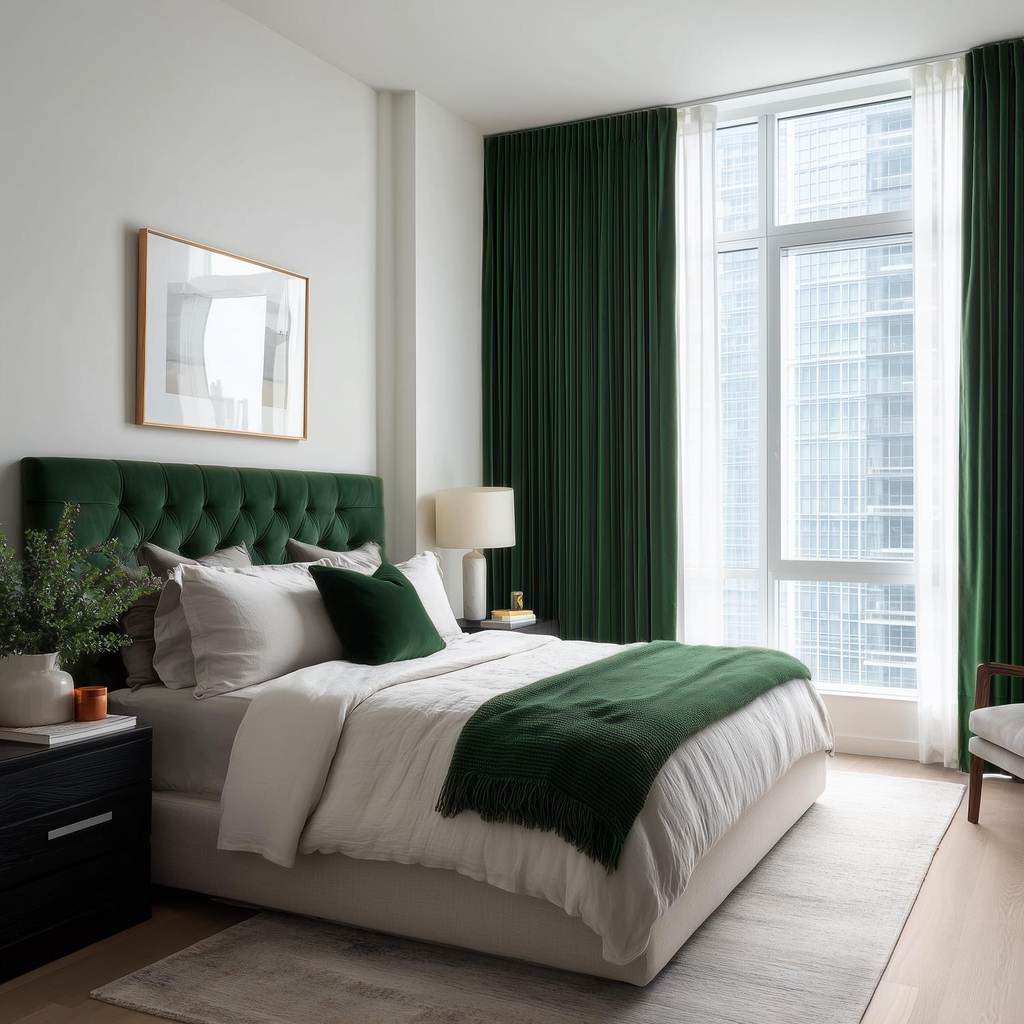
Velvet is a strong option for larger bedrooms, traditional interiors, and spaces with upholstered headboards or layered bedding. It can also complement modern furniture by introducing a contrasting texture.
Keep proportion in mind. Thick velvet panels can dominate a small window or overwhelm a room with low ceilings. If your bedroom is compact, use a lighter velvet shade, a simpler curtain heading, and minimal decorative trim.
Lined velvet curtains may help reduce light and drafts, but performance varies by construction. Check the specifications if light blocking or thermal comfort is a priority. Also check the care instructions, since some velvet fabrics need specialist cleaning.
For a polished look, combine velvet curtains with restrained hardware, crisp bedding, and one or two metallic accents rather than filling the room with ornate details.
9. Patterned Curtains That Add Personality
Patterned curtains are a good way to bring character into a bedroom without repainting the walls or replacing the furniture. Florals feel romantic, stripes can look tailored, geometric prints suit contemporary spaces, and small botanical patterns create a relaxed, nature-inspired mood.
The trick is choosing a pattern that works with the other prints in the room. If your bedding already has a bold design, consider curtains with a smaller-scale motif or a subtle stripe. If the bedding is plain, the curtains can carry more visual interest.
Scale matters as much as color. Large patterns can make a dramatic statement on wide windows, while delicate prints often suit smaller bedrooms. Before buying, imagine the pattern repeated across the full curtain width; a tiny sample may not show how busy or calm it will look at full size.
Choose one or two colors from the curtain pattern and repeat them elsewhere in the room. A cushion, throw, artwork detail, or bedside accessory can make the combination feel intentional.
10. Textured Curtains for a Subtle Designer Look
Sometimes the best curtain choice isn’t a new color or a bold pattern. It’s a fabric with enough texture to make a neutral bedroom feel layered and considered. Slubbed weaves, subtle herringbone, woven stripes, and linen-look finishes create interest without becoming the main attraction.
Textured curtains are especially useful in rooms that rely on a restrained palette. When the walls, bedding, and furniture are all neutral, texture provides the contrast that color might otherwise supply. Pair a woven beige curtain with smooth cotton bedding, a chunky knit throw, and a wool rug for a room that feels rich but relaxed.
You can also combine textures in a more modern way. Think smooth white walls, a boucle chair, matte-black lighting, and soft gray curtains with a visible weave. Each element feels different, but the overall palette stays controlled.
When shopping, look at the fabric both close up and from a distance. Some textures disappear across a large window, while others create a strong pattern once repeated in deep folds.
11. Curtains for Small Bedrooms
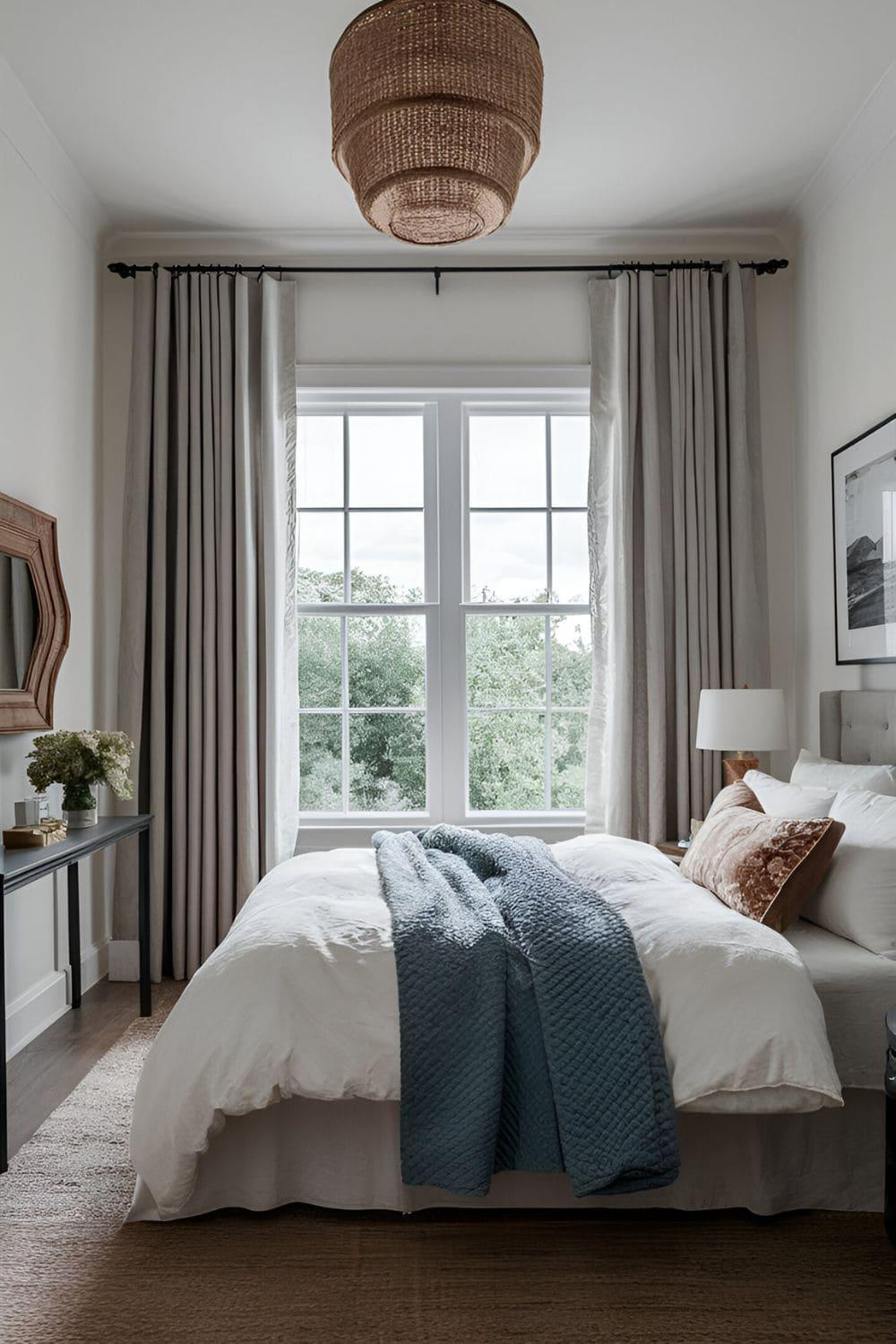
In a small bedroom, curtains should make the space feel more open rather than heavier. A useful starting point is to choose a color close to the wall shade. This reduces strong visual breaks and helps the window treatment blend into the room.
Hang the rod higher than the top of the window where the room allows, and extend it beyond the frame so the panels can sit mostly to the sides when open. These simple adjustments can make the window appear larger without changing the architecture.
Avoid overly bulky fabrics if the room already feels cramped. Lightweight woven curtains, simple pleats, and streamlined tracks usually create a cleaner result than elaborate swags or heavy decorative trims. If you need blackout performance, choose a lined fabric with a relatively simple profile.
Don’t automatically rule out darker curtains. A deep color can look beautiful in a small bedroom when repeated in bedding or artwork. The aim isn’t to follow a strict rule that small rooms must be white; it’s to create balance and avoid crowding the window with unnecessary visual detail.
12. Curtains for Large Windows and Sliding Doors

Large windows and sliding glass doors need curtains with enough width and weight to look proportional. Narrow panels stretched across a wide opening tend to look sparse, even if the fabric itself is attractive. Choose full-width panels that create generous folds when closed and can stack neatly at the sides when open.
A ceiling-mounted track is particularly useful for broad windows because it creates a continuous line and can span a long distance. For very wide openings, check the track’s support requirements and whether a center support will interfere with the curtain movement.
For sliding doors, think about everyday use. The curtains should move easily without blocking access or getting trapped behind furniture. If the doors are used frequently, a smooth gliding track or motorized option may be worth the investment.
Lightweight curtains can keep a large room airy, while lined or heavier panels provide more privacy and darkness. A layered arrangement gives you both options without forcing you to choose one.
13. Double-Rod Curtains for Flexible Light Control
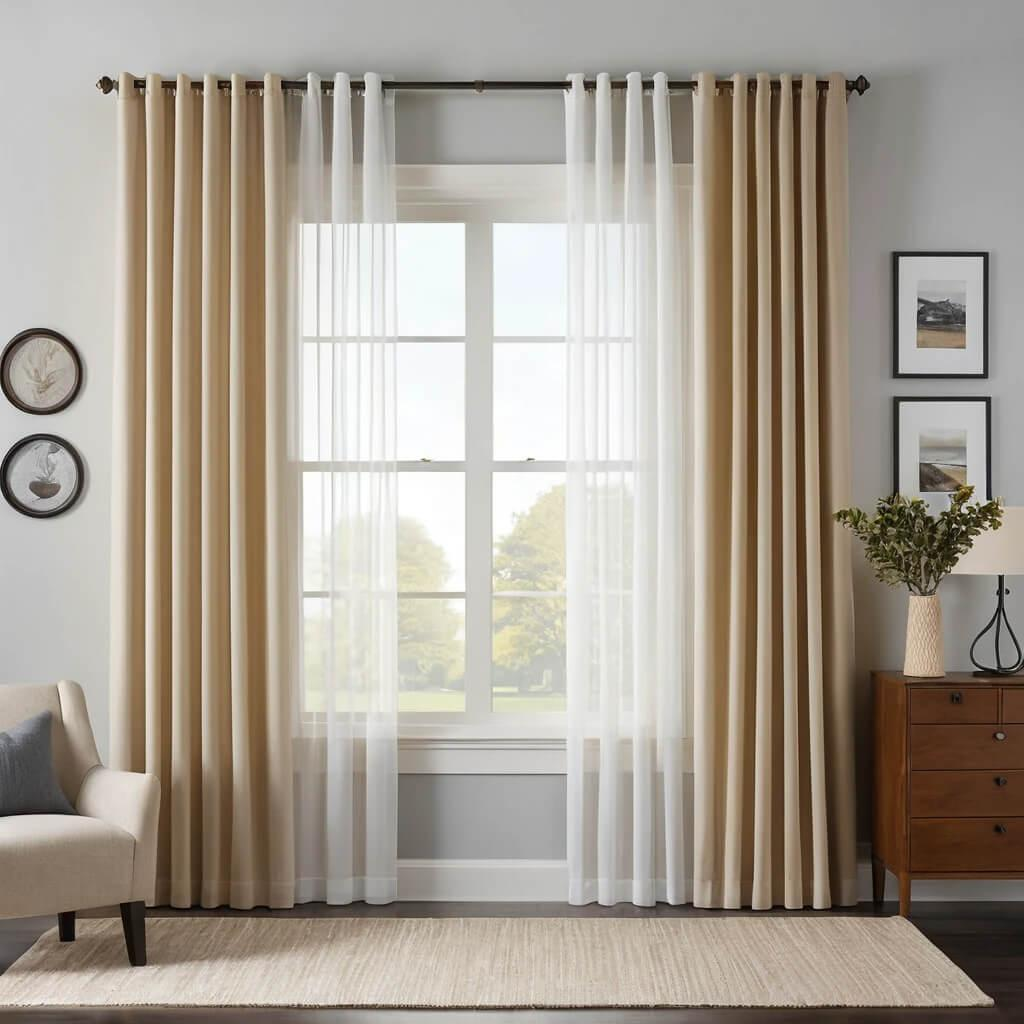
Double-rod curtains are a practical solution when your bedroom needs to change throughout the day. One rod holds sheers, while the other supports the heavier panels. The result is flexible light control without sacrificing the finished appearance of layered fabric.
This setup works well in bedrooms with street-facing windows, shared boundaries, or strong morning sunshine. Open the outer curtains to brighten the room, keep the sheers drawn for a softer view, and close both layers when you want more darkness and privacy.
For the best result, choose fabrics that work together visually. They don’t need to match exactly, but they should share a compatible undertone. Cream sheers and oatmeal panels feel warm and natural; white sheers and slate curtains create a cooler, contemporary combination.
Before installing the rods, check the clearance between the window, wall, and furniture. Thick curtains need enough room to stack without obstructing bedside tables, radiators, or door handles.
14. Thermal Curtains for Comfort and Energy Efficiency
Thermal curtains are designed to help reduce heat transfer through windows. Depending on their construction and how closely they fit, they may help keep a bedroom more comfortable in cold weather and reduce unwanted solar heat in some conditions.
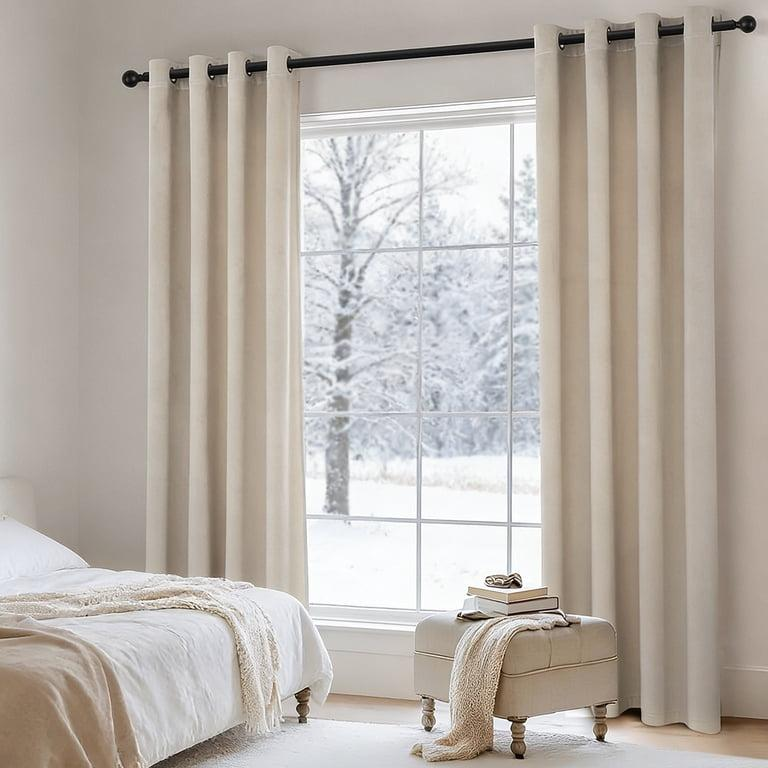
They can be especially useful when a bed sits near a drafty window or when the room becomes noticeably colder at night. Look for a thermal lining or a product with clear performance information rather than relying on the word “thermal” alone.
Installation affects the result. Curtains that fit closely around the window area can perform differently from panels that leave large gaps at the top and sides. However, curtains won’t solve every insulation problem, and they are not a replacement for addressing damaged seals or poorly insulated windows.
Choose a fabric that complements the room so the functional upgrade still looks attractive. Neutral lined curtains, for example, can provide a tailored appearance without making the bedroom feel overly formal.
15. Smart, Motorized, and Easy-Care Curtains

If you like convenience, motorized curtains can make your bedroom easier to manage. With a compatible system, you can open or close the curtains using a remote, wall control, or smart-home setup. Some systems support schedules, allowing curtains to open in the morning or close in the evening without requiring you to remember.
Motorized options can be useful for high windows, wide glass doors, or anyone who finds manual curtains difficult to reach. They can also help establish a consistent daily light routine, although the ideal schedule depends on your preferences and sleeping habits.
For a more affordable approach, focus on easy-care fabrics and hardware that slides smoothly. Machine-washable curtains, removable linings, and sturdy tracks can make routine maintenance much simpler. Always follow the product’s cleaning instructions, since some fabrics can shrink, fade, or lose their shape if washed incorrectly.
When choosing smart curtains, check power requirements, compatibility, noise levels, and whether the system still works manually if needed. The most useful upgrade is one that makes your routine easier rather than adding another complicated device to manage.
Common Bedroom Curtain Mistakes to Avoid
Even beautiful fabric can look wrong if the measurements or installation are off. Fortunately, most curtain problems are easy to prevent once you know what to look for.
| Common mistake | Why it causes problems | A better approach |
|---|---|---|
| Curtains that are too short | The window can look disconnected from the room | Measure from the rod or track to the floor |
| Panels that are too narrow | Curtains look stretched and skimpy | Allow enough width for full folds |
| Sheers used as the only nighttime privacy layer | Interior lighting may reveal silhouettes | Add a lined or opaque layer where needed |
| Rod mounted too low | Can make the wall feel shorter | Mount higher when the room allows |
| Fabric chosen only by color | Light control and care may disappoint | Check lining, opacity, and cleaning requirements |
| Heavy curtains on weak hardware | The rod may sag or pull loose | Match brackets and fixings to the curtain weight |
| Too many competing patterns | The window can feel visually busy | Balance patterned curtains with simpler bedding |
One more detail: don’t forget to account for radiators, heaters, outlets, and window handles. Curtains should not cover anything that creates a safety concern, and the fabric should hang without interfering with doors or windows.
How to Make Bedroom Curtains Look Professionally Styled
You don’t need a designer’s budget to make curtains look considered. The difference often comes down to proportion, fabric fullness, and how the curtains relate to the rest of the bedroom.
1. Measure before you shop. Measure the window width, the planned rod width, and the distance from the mounting point to the floor. Check the manufacturer’s guidance on panel width because fullness varies by fabric and heading.
2. Give the fabric room to fold. Curtains usually look more luxurious when they have enough width to create soft, regular folds. Very narrow panels can look flat when closed and may fail to cover the window adequately.
3. Coordinate undertones. Warm white curtains tend to work naturally with cream, beige, and honey-toned wood. Cooler whites and grays may suit blue-gray walls, black accents, and cooler flooring. You don’t need an exact match; you need colors that feel related.
4. Think about what happens when the curtains are open. Panels should stack neatly without covering too much glass. Extending the rod beyond the window frame can help preserve daylight and make the opening appear wider.
5. Repeat one curtain color elsewhere. Echo the shade in a cushion, throw, lampshade, or piece of artwork. This creates a connection between the window and the rest of the room without making everything match.
6. Keep maintenance realistic. If dust, pets, or allergies are concerns, check whether the fabric can be washed or vacuumed safely. Curtains that are beautiful but difficult to maintain may not be the right choice for your everyday bedroom.
For more inspiration, explore these related PaletteDiary guides: warm neutral color ideas, living room lighting ideas, and modern interior design ideas. Although these guides cover broader decorating themes, their color and lighting principles can help you create a bedroom that feels cohesive from the window to the bed.
Conclusion
The best bedroom curtain ideas combine good looks with the way you live. Floor-to-ceiling panels can make the room feel taller, blackout curtains can help reduce unwanted light, and sheers can soften daylight while keeping the space bright. Layered curtains offer flexibility, while textured fabrics, earthy colors, velvet, and subtle patterns give you plenty of ways to express your personal style.
Before making a purchase, think about privacy, sleep, light, fabric care, and the proportions of your window. Measure carefully, choose hardware that can support the fabric, and consider how the curtains will look when they’re both open and closed. Small decisions—such as raising the rod, adding enough width, or coordinating the fabric with your bedding—can make a surprisingly big difference.
Ultimately, your bedroom should feel comfortable at the end of a long day and welcoming when morning arrives. Choose curtains that support that feeling, and your windows will become a thoughtful part of the room rather than an afterthought.
Frequently Asked Questions
1. What type of curtains are best for a bedroom?
The best curtains depend on your needs. Blackout curtains suit people who want a darker room, sheers work well for soft daylight, and layered curtains offer both options. For a balanced choice, look for a fabric and lining that provide the privacy and light control your bedroom requires.
2. Should bedroom curtains touch the floor?
Floor-length curtains usually create a more polished appearance than panels that stop well above the floor. For a clean, practical finish, let the hem sit just above or lightly graze the floor. A small fabric puddle can suit a decorative bedroom, but it may collect dust and make cleaning more difficult.
3. Are sheer curtains enough for bedroom privacy?
Sheer curtains can provide some daytime privacy, depending on the lighting and the view from outside. At night, when the bedroom lights are on, people outside may be able to see through them. If nighttime privacy matters, combine sheers with opaque or lined curtains.
4. What curtain color makes a bedroom look bigger?
Curtains close to the wall color can help a small bedroom feel more spacious because they create fewer strong visual breaks. Light neutrals such as warm white, cream, and pale beige are popular options, but darker curtains can also work when coordinated with the room’s other elements.
5. How wide should bedroom curtains be?
The combined width of the curtain panels should generally exceed the width of the area they cover so the fabric can form attractive folds. The exact amount depends on the curtain heading, fabric thickness, and desired fullness. Follow the manufacturer’s measuring guide, and allow enough width for the curtains to cover the window when closed.


Leave a Reply