
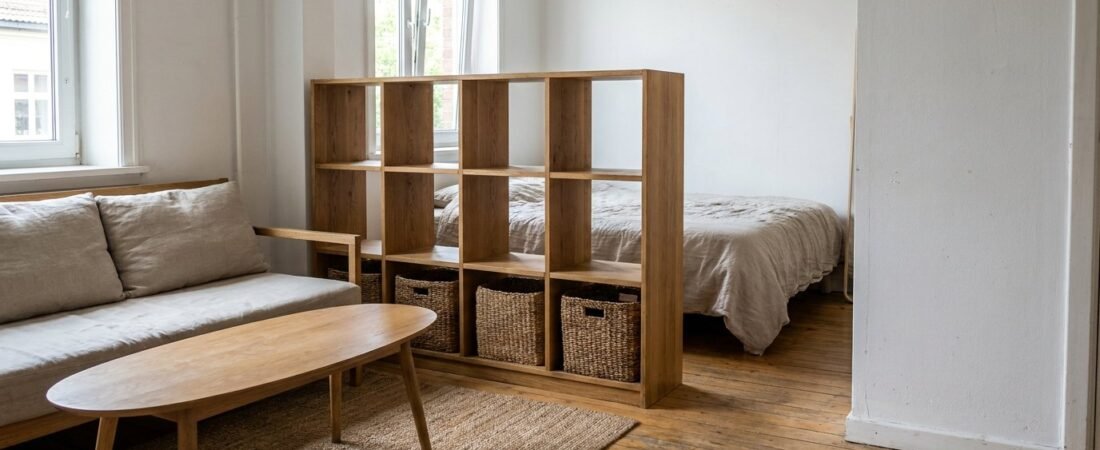
A small room doesn’t need to feel crowded or bare. Small space decorating ideas work best when they make everyday movement easier, give belongings a place to go, and keep visual details in balance. A slim coffee table, thoughtful storage, and a subtle division between living and sleeping areas can help a room feel calmer and more open.
Less furniture isn’t the only way to make a compact home feel spacious. Comfort and character matter, too. With a few considered choices, you can create an orderly room that still feels warm. Make better use of your layout, choose pieces with more than one purpose, and use colour, textiles, and focal points to bring the space together.
Key Takeaways
- Choose pieces that support easy movement and adapt to how you use each room, so limited floor space feels less crowded.
- Create distinct living, sleeping, or work areas with thoughtful placement rather than letting one room feel like several competing spaces.
- Balance practical storage with colour, textiles, and a clear focal point to bring warmth and visual calm to a compact home.
- Turn to Palette Diary’s home and interior design inspiration articles for more ideas when you’re ready to refresh your space.
Small space decorating ideas
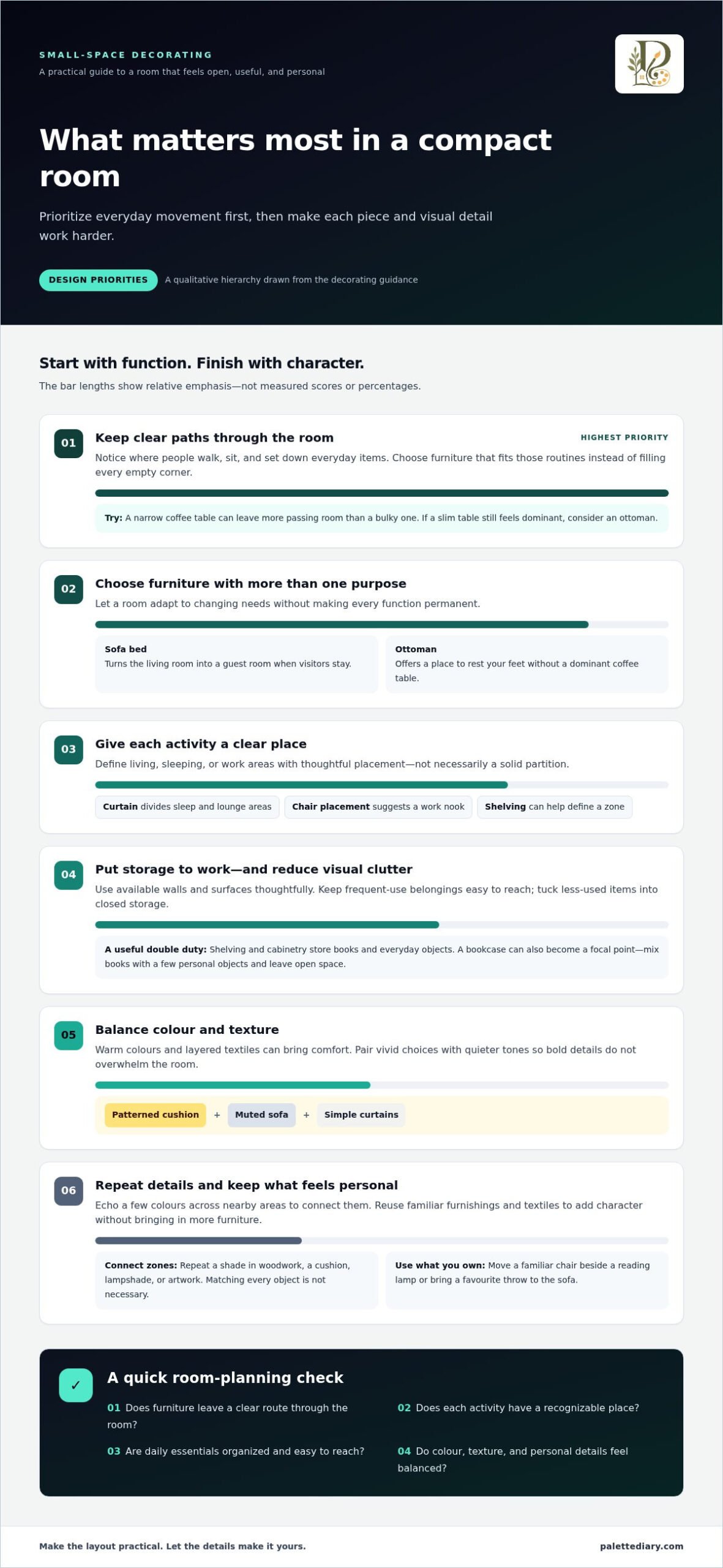
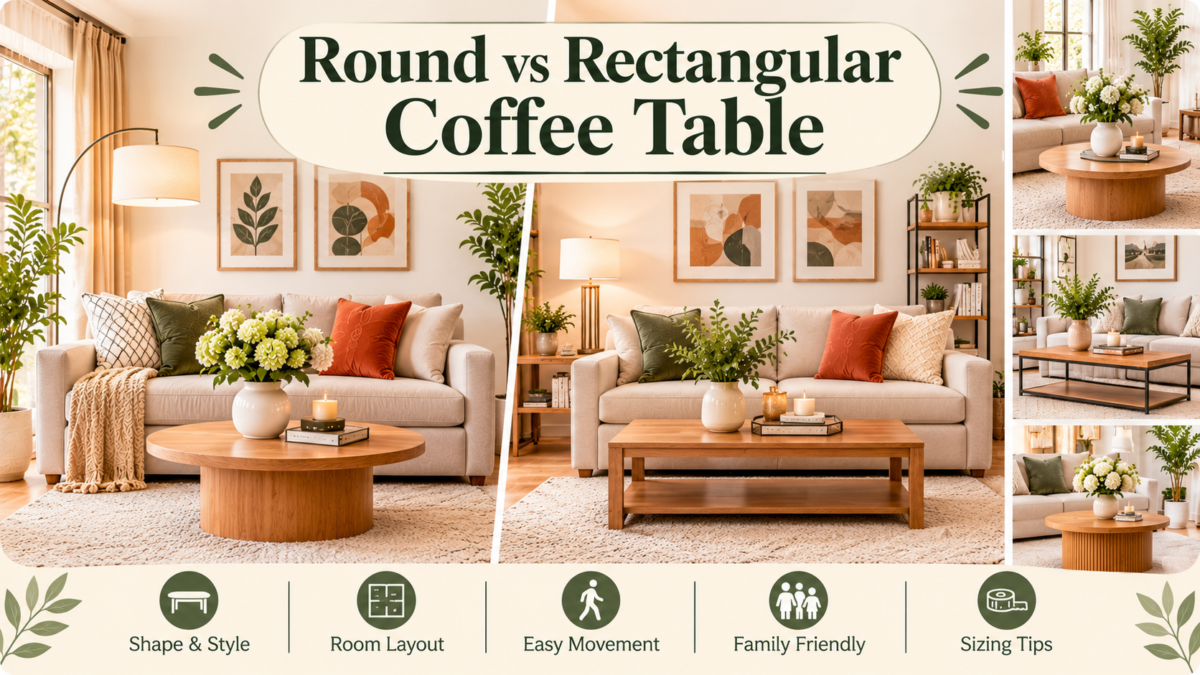
A compact living room is easier to use when furniture leaves clear paths between its main areas. Start by noticing where people walk, sit, and put down everyday items. Choose pieces that suit those routines instead of filling every empty corner. A narrow coffee table can leave more room to pass the sofa than a wide, bulky design. If even a slim table feels dominant, try an ottoman as a softer place to rest your feet.
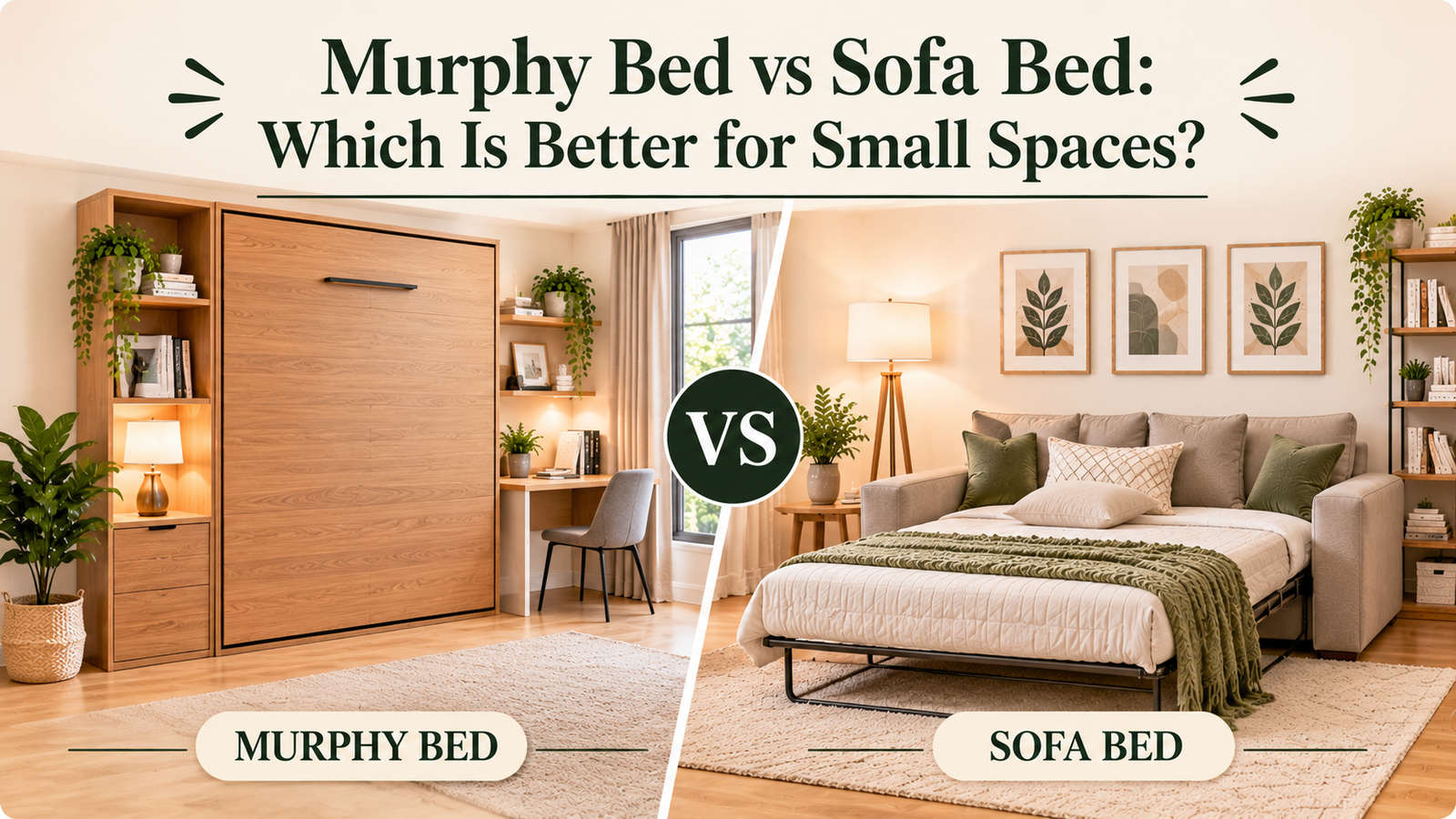
Think about how one room can serve different needs throughout the day. A sofa bed can turn a living room into a guest room when visitors stay, without taking up space with a permanent bed. A curtain can softly divide the sleeping area from the lounge, then draw aside to reconnect the spaces. To define a small work nook, place a chair between the study area and living space. Its position can suggest separate functions without a solid partition.
Make thoughtful use of the room’s available surfaces for storage. A wall of shelving and cabinetry can hold books, useful objects, and items that might otherwise collect on tables. Keep frequently used belongings within easy reach and tuck less-used items into closed storage to reduce visual clutter. A bookcase can also become the living room’s focal point when there’s no fireplace. Arrange books with a few personal objects, leaving open space so the shelves look composed rather than crowded.
Colour and texture can make a small room feel considered rather than plain. In a living room with large sash windows, a sunny wall colour can complement the natural light. Warm colours and layered textiles, such as cushions and throws, can make the room feel cosy and comfortable. To keep bold choices from overwhelming the space, pair them with quieter tones nearby. For example, a patterned cushion can stand out against a muted sofa and simple curtains.
Repeating a few details helps a compact room feel visually connected. Painting woodwork the same colour used elsewhere in the flat can unify separate areas, especially where door frames or trim catch the eye. In an open-plan home, echo a shade in a cushion, lampshade, or piece of art. There’s no need to match every object. A few related colours can guide the eye calmly from one zone to another.
A small room can feel personal without new furnishings. Reusing existing furniture and textiles gives a living room an authentic, lived-in feel. Move a familiar chair beside a reading lamp, or bring a favourite throw from another room to the sofa. If a television interrupts a carefully arranged focal wall, a painting can conceal it when it’s not in use. Let practical needs guide the layout, then add decorative touches that feel meaningful and comfortable.
- Measure how furniture affects the route through the room before settling on its position.
- Give each activity a clear place, using curtains, seating, or shelving to define zones.
- Balance vivid accents with muted surroundings, and repeat colour to connect nearby areas.
- Use existing furnishings and textiles to add character while keeping daily essentials organized.
The U.S. Bureau of Labor Statistics describes interior designers as making indoor spaces functional and beautiful by determining space requirements and selecting decorative items. Apply that practical balance to your own decisions: consider how you move through the room, what needs storing, and which details make it feel like home. A slim table, a bookcase focal point, and familiar textiles each meet a different need. Together, they can make a compact living room feel more orderly, warm, and suited to everyday life.
A narrow coffee table can leave more room to move through a small living room, while an ottoman can replace a large coffee table without dominating the space. A sofa bed lets the room double as a guest room, and a curtain can divide the bedroom from the living area. A wall of shelving and cabinetry provides practical storage. Balance bold decorative elements with muted tones to keep them from overwhelming the room.
Palette Diary: Home and interior design inspiration articles
Palette Diary shares home and interior design inspiration for readers turning practical ideas into a home that feels personal. Explore its articles when considering how colour, texture, storage, and layout can work together, or when you want fresh ideas before making changes. Looking at ways to create a focal point or bring warmth to a compact room can help you choose details that suit your routines and taste.
Use these ideas as a starting point, adapting them to the furniture you already own, the light in your rooms, and how you move through your home. A calmer space doesn’t need to follow a strict style. It can take shape through small, considered choices that suit everyday life.
Explore more home and interior design inspiration with Palette Diary.
Let Your Home Grow With You
A more comfortable home doesn’t require a complete redesign. Choose one part of your routine that feels awkward, then make a small change to support how you live. Notice whether the room becomes easier to settle into, move through, or return to at the end of the day. That response can guide your next choice, keeping the process personal rather than tied to a fixed idea of perfection.
The most useful small space decorating ideas leave room for change. As your habits shift, a reading corner might become a work nook, or a quiet colour accent might inspire a new arrangement. Let your home evolve at a manageable pace, with comfort guiding each decision.
For another source of inspiration as you shape your space, contact Palette Diary. Start with one thoughtful adjustment, and let a calmer home take shape in its own time.

Leave a Reply