
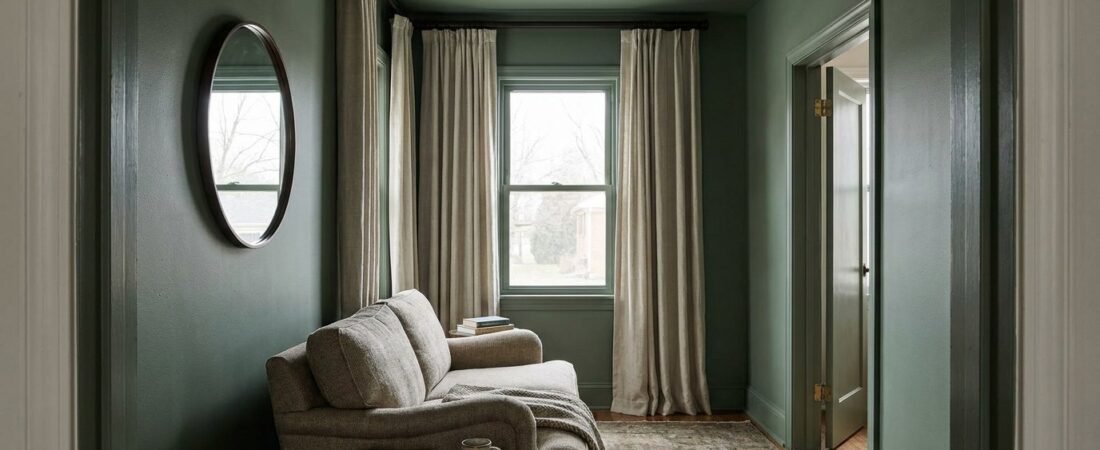
White can make a small room feel airy, but it isn’t the only color that creates a sense of space. To make a small room feel bigger, choose lighter paint when natural light is plentiful, and consider deeper shades in dimmer rooms. Keep furniture and sightlines from feeling crowded. Color works best alongside appropriately scaled furniture, open views, and curtains hung high and wide.
A compact room should feel comfortable, not stripped bare or staged for show. Help light travel and the eye move easily while leaving enough room for everyday life. These practical ideas show how to choose wall colors, arrange furniture, create visual depth, and position curtains to make the room feel more open and inviting.
Key Takeaways
- Let the room’s natural light guide your color choice, and use thoughtful contrast or a continuous ceiling color to add visual depth.
- Choose furniture that suits the room’s proportions, then preserve clear pathways so the layout feels open and comfortable.
- Use a well-placed mirror, an interior glass opening, or a landscape image to give the eye somewhere to travel.
- Hang curtain rods above and beyond the window frame to draw the eye upward and make the walls feel taller.
1. Choosing wall color based on natural light
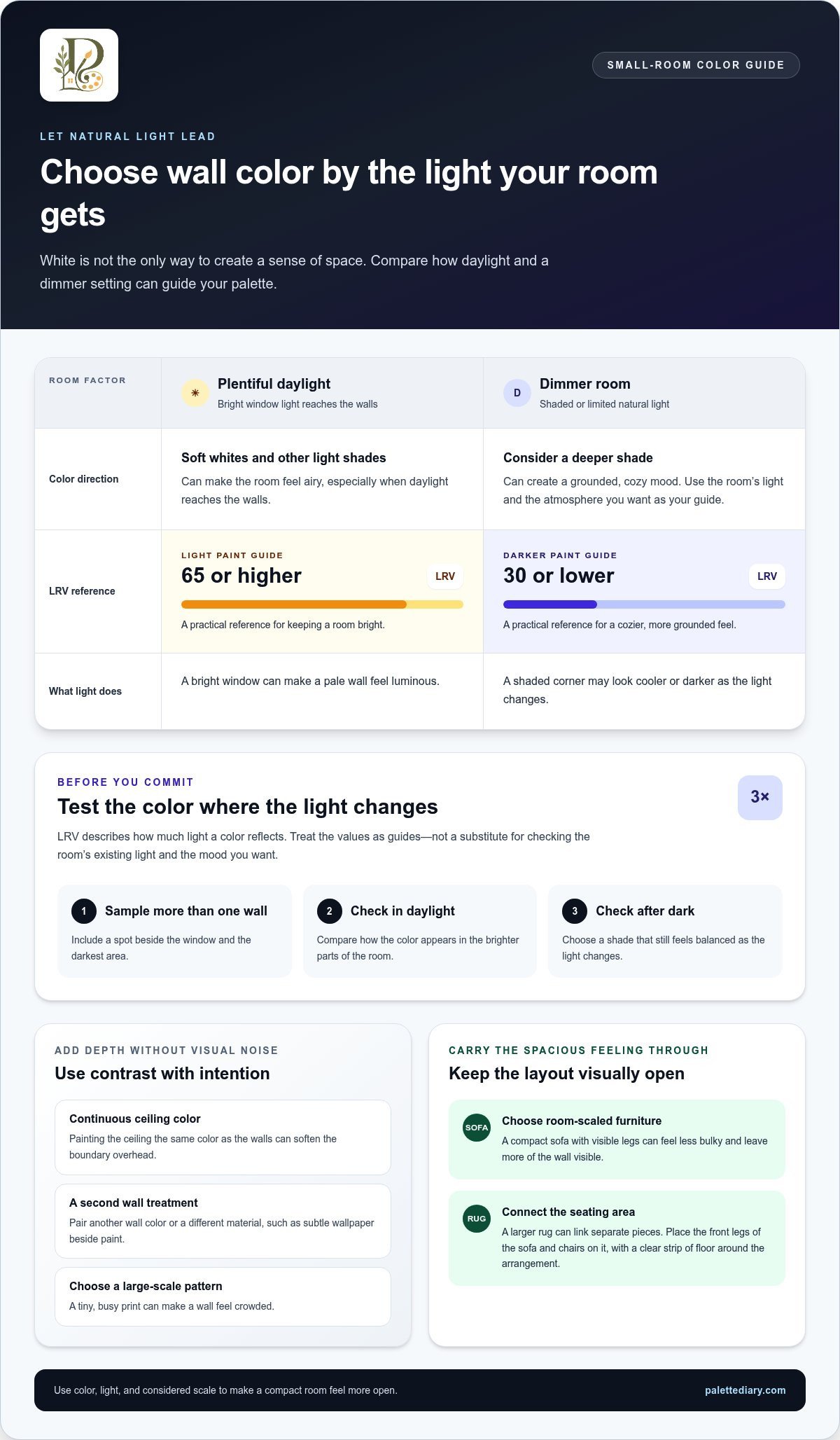
What paint colors make a small room look bigger? Soft whites and other light shades can make a room feel airy, especially when daylight reaches the walls. In a dim room, a deeper color can create a grounded, cozy mood. Let natural light guide your palette instead of choosing white automatically.
Lighting changes how wall color appears and how much depth you notice. A bright window can make a pale wall feel luminous, while a shaded corner may look cooler or darker. Before painting, compare samples on more than one wall, including beside the window and in the darkest area. Observe them in daylight and after dark to find a shade that feels balanced as the light changes.
For a practical color reference, consider a light paint with an LRV of 65 or higher to keep a room bright. A darker paint with an LRV of 30 or lower can make a space feel cozier and more grounded. LRV describes how much light a color reflects, so it can help narrow choices. These values are guides, not a reason to ignore the room’s existing light or the atmosphere you want.
White can open up a room, but it isn’t the only way to create a sense of space. Painting the ceiling the same color as the walls can soften the boundary overhead. For depth, introduce a second wall color or a different material, such as subtle wallpaper beside a painted wall. Choose a large-scale pattern rather than a tiny, busy print, which can make the wall feel crowded.
Extend the calm, spacious feeling to the floor. Choose furniture scaled to the room, such as a compact sofa with visible legs instead of a bulky piece that blocks the wall. A larger rug can define the seating area and connect separate pieces. Place the front legs of the sofa and chairs on the rug, leaving a clear strip of floor around the arrangement. This grouping helps the palette and layout feel intentional.
2. Selecting appropriately scaled furniture
What are affordable ways to make a small room feel bigger? Rearrange what you already own, clear crowded surfaces, and open up walkways before buying anything. Decluttering reduces competing visual details, while visible floor and clear routes make the layout easier to understand.
Measure the room and furniture, including the clearance needed to open doors and drawers. A broad sofa or deep armchair can interrupt movement even when it fits against a wall. Sketch the main route from the doorway to the window, then choose pieces that keep it clear. If a dining area feels tight, a table for four may be more comfortable than squeezing in a table for six. For a compact home with several zones to arrange, these studio apartment layout ideas offer guidance on keeping daily activities organized around an open path.
Leave breathing room around key pieces instead of pushing every item against a wall. Aim for about 18 to 24 inches of walking room behind a couch, side table, or armchair where the layout allows. That passage adds visual depth and makes everyday movement less awkward. A low-slung sofa or chair also leaves more open space above it, helping the room feel loftier.
Furniture that visually recedes can keep a compact room from feeling crowded. A clear glass, lucite, or acrylic side table leaves more of the floor visible. For flexible storage, use an ottoman for blankets or nesting tables that tuck away when not needed. These choices keep useful surfaces and belongings close without filling every corner.
Look upward when floor space is limited. Wall-mounted shelves can hold books and small objects while freeing tabletops, and a hanging light can keep a floor lamp out of the walkway. Keep displays edited: group a few everyday items on one shelf rather than spreading them across several surfaces. The room still feels personal, with clearer boundaries around its furniture and belongings.
For more practical ideas, explore small-space room inspiration and adapt the details to your own layout.
3. Adding visual openings and escape routes
A clear sightline gives the eye somewhere to travel, making a small room feel less enclosed. From the doorway, look toward the farthest visible point, such as a window, bright wall, or open adjoining room. Move anything that blocks the view, then keep the route between these points visually simple. The goal isn’t an empty room, but a view that continues beyond the first piece of furniture.
Do mirrors make a small room feel larger, and where should they go? Yes. A well-placed mirror can make a room appear larger by reflecting light and extending the view. Position it to reflect a window or another open, attractive area, rather than a crowded shelf or a doorway full of coats.
Use the reflection deliberately. A mirror facing a window can echo daylight and brighten the room; one reflecting a clear hallway can suggest greater depth. Choose a mirror large enough for the reflection to be easy to see. Mirrored glass furniture can have the opposite effect: by reflecting nearby furnishings, it may make a busy corner feel even more cluttered.
If the layout allows, an interior window or glass door can visually connect adjoining rooms. For example, a glass door between a small living room and a brighter dining area lets the eye travel through, even while the rooms remain separate. Keep the view beyond it tidy and unobstructed, so the opening feels like an extension rather than another crowded scene.
If adding a window isn’t practical, give the eye a distant point within the room. A large landscape photograph or painting can suggest an open view, while an arranged doorway can reveal the next space. Stand at the entrance and notice what first stops your gaze, then shift or remove that obstruction. A clear path from the doorway to a mirror, artwork, or glass opening can make the room feel more connected and spacious.
4. Curtain placement to make ceilings look higher
A curtain rod mounted close to the window frame can make the window feel short. Instead, raise the rod to draw the eye upward and give the wall more height. As a starting point, place it 6 to 12 inches above the window frame. If the room has limited space above the window, use the highest practical position that still allows the curtains to hang freely.
Another guide is to place the rod about two-thirds of the way up from the window. Treat this as a proportion to adapt to your wall, not a reason to crowd the ceiling. Compare the proposed rod position with the wall space above the frame. A higher line can visually lengthen the wall, while a rod too close to the ceiling may look cramped.
Width matters too. Extend the rod about 5 to 10 inches beyond the window frame on each side, so open curtains sit beside the glass instead of covering it. This keeps more of the window visible and allows daylight to reach farther into the room. Measure both sides before fitting the rod, especially when a corner or nearby furniture limits the available wall space.
Choose curtain panels long enough to create a clean vertical line from rod to floor. Let them skim the floor rather than bunch heavily, which can make a small window area feel crowded. Pale panels against a soft wall color create a quiet outline, while a strong contrast draws attention to the window. When open, keep the fabric gathered neatly at the sides.
Before installing hardware, mark the rod height and width with removable tape, then step back to view the full window wall. This simple test helps you compare a position 6 inches above the frame with one placed higher. For more ideas on shaping a room’s look, explore curtain and interior styling inspiration.
Palette Diary: Home and interior design inspiration articles
Palette Diary shares home and interior design inspiration for readers shaping a room around their own needs. After adjusting color, furniture placement, sightlines, or curtains, browse the site for ideas to compare and details that may suit your space. Find fresh inspiration for combining practical choices with a calm, cohesive look, whether you’re refining one corner or rethinking the feel of a whole room.
Use the ideas as a starting point, then adapt them to your room’s natural light, layout, and daily routines. Visit Palette Diary to explore home and interior inspiration.
Make space for the way you live
A room can feel more generous without becoming less personal. Treat your next change as a small experiment: choose one part of the space that feels awkward and adjust it with your daily routine in mind. Perhaps a reading corner needs to feel calmer, or a shared room feels too busy at the end of the day. Keep what supports comfort and let go of details that compete with it.
A lasting approach to how to make a small room feel bigger is to shape it around the moments you want to enjoy there. Notice where you pause, where you need space, and what makes the room feel like yours. A home doesn’t need a perfect formula to feel welcoming; it needs choices that suit the people who live in it.
For fresh ideas as you plan your next thoughtful change, explore Palette Diary’s home inspiration. Take one idea at a time, and let your room grow into a more comfortable place to be.
Frequently Asked Questions
But what about white?
White can make a small room feel bright, but the right shade depends on the room’s light and nearby finishes. Creamy white can feel gentler beside warm wood, while cooler white may suit crisp, cool-toned details. Compare paint samples with the flooring, upholstery, and trim before choosing. If stark white feels flat, add texture with linen, woven shades, or natural wood.
What furniture layouts work best in a small room?
A layout that preserves a clear route and gives each activity its own area usually works best. In a narrow living room, place the sofa along the longer wall and keep the route from the entrance clear. In a studio, orient the sofa’s back toward the bed to suggest separate zones without adding a partition. Make sure drawers, doors, and seating remain easy to use.
Which furniture styles and sizes are best for small rooms?
Choose pieces with a light visual profile and dimensions suited to their purpose. A sofa with narrow arms can provide useful seating without taking up as much visual width as a deep, overstuffed design. Open legs let more floor show beneath chairs and tables. Measure a piece’s footprint and consider how its shape relates to nearby furniture, not just whether it fits.
How can vertical storage make a small room feel bigger?
Vertical storage makes use of wall height for belongings that might otherwise take up desks, counters, or floor space. A tall bookcase, for example, can keep books and baskets together, while a wall-mounted rail can hold frequently used kitchen tools. Store less-used items higher and everyday essentials within easy reach. Leave some shelf space open, since a wall filled edge to edge can still feel visually heavy.
Do curtains hung higher or wider make a room look larger?
Yes, raising the curtain rod can make the wall appear taller, and extending it beyond the window can leave more glass visible when the panels are open. In a small bedroom, this helps keep heavy fabric from covering the daylight. Choose panels that hang neatly and suit the window’s proportions, so they frame the opening instead of overwhelming it.
What flooring and rug choices help a small room feel more spacious?
Consistent flooring from one area to the next can make connected spaces feel less broken up visually. Choose a rug that relates to the main seating or dining arrangement rather than a small island beneath a coffee table. A restrained pattern and colors that work with the surrounding floor and furnishings help create a cohesive look without competing for attention.
Leave a Reply