
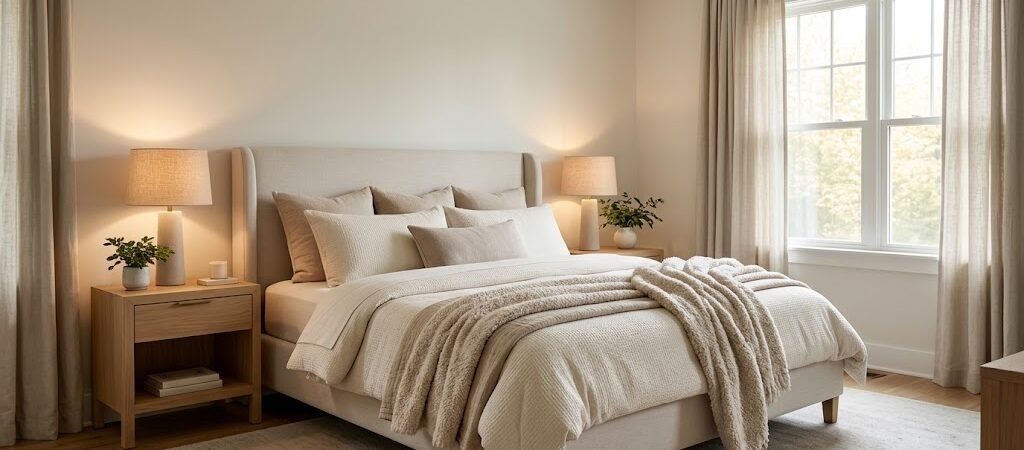
Simple, stylish ways to turn your bedroom into a calm retreat using soft lighting, comfortable layers, warm colors, natural textures, and clutter-free design.
Your bedroom should feel like the place where the day finally slows down. Yet somehow, it often becomes the room where laundry piles up, chargers multiply, random shopping bags collect in corners, and harsh overhead lighting makes everything feel more like a workspace than a place to rest. The good news is that creating a cozy bedroom doesn’t require an expensive renovation or a completely new furniture set. A few thoughtful changes can dramatically alter how the room feels.
The secret is less about buying more and more about choosing the right things. Soft bedding, warm lighting, calming colors, natural materials, and a little visual breathing room can make an ordinary bedroom feel considerably more inviting. Think of the room as a quiet soundtrack: every element should work together rather than compete for attention.
Whether you’re decorating a small apartment bedroom, a primary bedroom, a guest room, or a rental, these 10 cozy bedroom ideas can help you create a space that feels warmer, calmer, and easier to unwind in at the end of the day.
1. Start With Soft, Layered Bedding
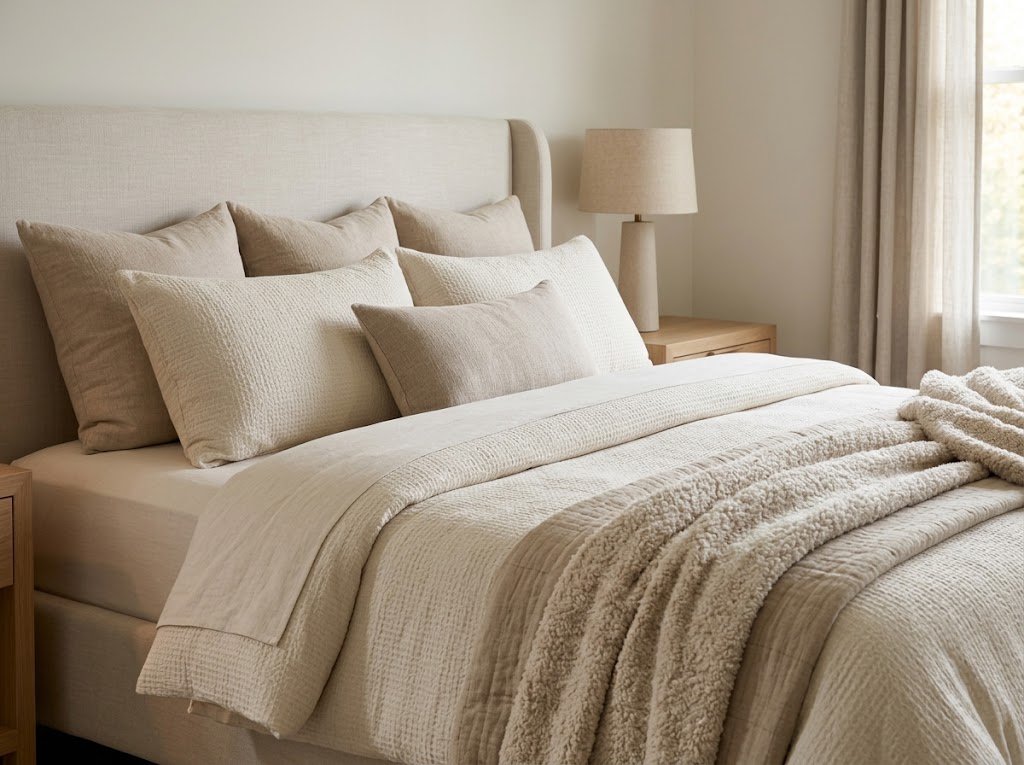
If you want your bedroom to feel cozy quickly, start with the bed. It occupies a large portion of most bedrooms, so changing the bedding can have an outsized effect on the entire room. Instead of treating your bed as a mattress covered by one flat comforter, build it in layers. A breathable sheet set, a duvet or quilt, a folded throw blanket, and several pillows can create that relaxed, inviting look you often see in boutique hotels and well-designed homes.
The trick is to avoid making every layer perfectly identical. A little variation in texture makes the bed feel more natural. Try pairing crisp cotton sheets with a linen duvet cover and a chunky knitted or woven throw. If you prefer a polished minimalist bedroom, keep the colors within the same family—think ivory, oatmeal, warm white, taupe, soft gray, or muted sage. The result feels intentional without looking overly decorated.
Your bedding also needs to work for how you actually sleep. If you tend to get warm at night, lightweight cotton or linen can be more comfortable than piling on heavy synthetic layers. If your room gets chilly, add a washable wool-look throw or quilt that can be removed easily.
A simple layered setup might include:
- Breathable cotton or linen sheets
- A duvet, quilt, or coverlet
- Two sleeping pillows per side, depending on preference
- One or two decorative pillows
- A folded throw blanket at the foot of the bed
You don’t need ten decorative pillows to make a bed look luxurious. In fact, too many can make the room feel fussy and create an annoying pile of things to move every night. The goal is comfortable abundance, not clutter.
2. Replace Harsh Lighting With Warm, Layered Light
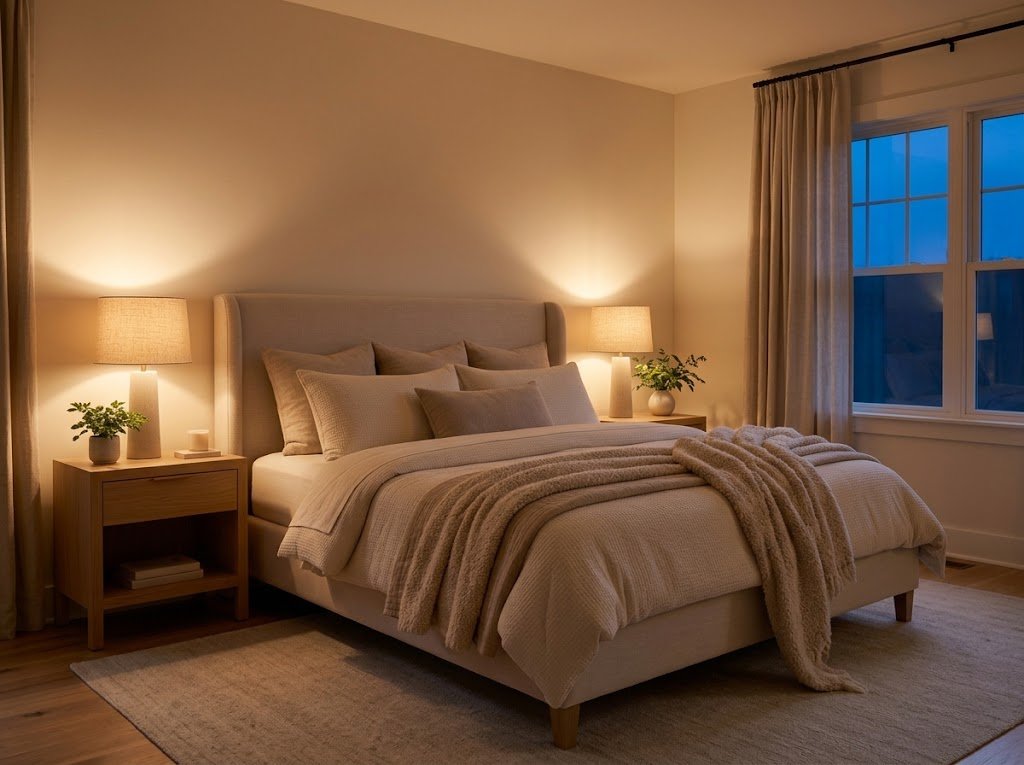
Lighting can completely change the personality of a bedroom. A room with bright, cool overhead lighting can feel clinical, while the same room illuminated with warm lamps can suddenly feel calm and intimate. If your bedroom currently relies on one ceiling fixture, consider that your first opportunity for improvement.
Instead of depending on one light source, create several layers. Ambient lighting provides general illumination, task lighting helps with activities such as reading, and accent lighting adds a softer decorative glow. You don’t have to install complicated smart-home equipment to achieve this. A bedside lamp on each side of the bed can already make a noticeable difference.
Look for bulbs marketed as warm white, especially around the 2700K range, if you want a traditional cozy atmosphere. You can also use dimmable bulbs or lamps so the room can become progressively softer as bedtime approaches.
| Lighting option | Best for | Cozy effect |
|---|---|---|
| Bedside table lamps | Reading and nighttime routines | Warm and intimate |
| Wall sconces | Saving bedside space | Clean and sophisticated |
| Floor lamp | Empty corners | Soft ambient glow |
| Pendant light | Main room illumination | Decorative focal point |
| LED accent lighting | Shelves or behind furniture | Subtle atmosphere |
A bedside lamp with a fabric shade is particularly useful because it diffuses the light instead of throwing a sharp beam across the room. If you’re renting, plug-in wall sconces can provide a similar visual effect without requiring electrical work.
And here’s a small habit that can make the room feel dramatically better: turn off the big overhead light earlier in the evening. Once you start using smaller pools of warm light, the bedroom naturally feels quieter.
3. Choose a Calming Color Palette
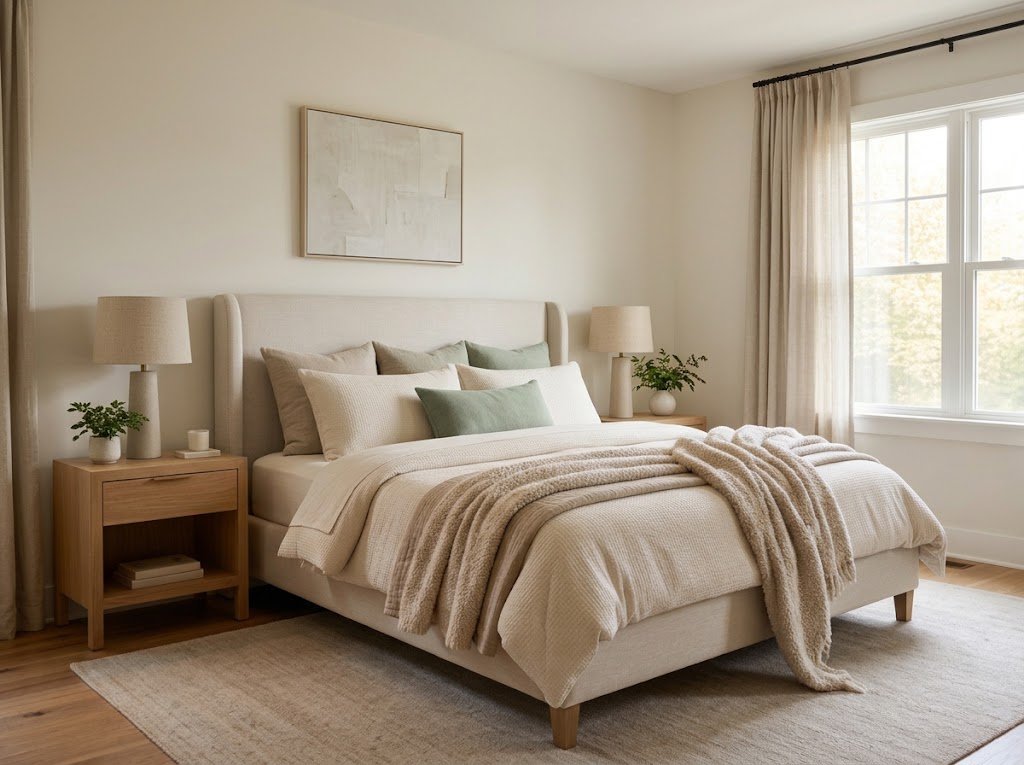
Color has a powerful visual influence on how a room feels. That doesn’t mean there’s one universally perfect bedroom color. Some people relax surrounded by warm neutrals, while others prefer muted greens, dusty blues, or even deeper earthy tones. What matters most is creating a palette that doesn’t feel visually chaotic.
For a modern cozy bedroom, start with two or three main colors. Warm white can serve as the foundation, with beige, taupe, soft brown, muted green, or dusty blue providing contrast. Natural wood is particularly useful because it adds warmth without introducing another loud color.
You don’t necessarily need to repaint the entire bedroom. Bedding, curtains, rugs, artwork, and accent furniture can introduce a new palette without touching the walls. This is especially helpful for renters who can’t make permanent changes.
Some calming combinations include:
- Warm white + beige + natural oak
- Cream + muted sage + walnut
- Soft gray + dusty blue + light wood
- Taupe + ivory + warm brown
- Sand + terracotta + cream
If you love bold colors, you don’t have to abandon them. Instead, use stronger colors in controlled doses. A deep green headboard, rust-colored throw, or dark blue accent chair can provide personality while keeping the overall environment restful.
The key is consistency. When the bedding, curtains, rug, and accessories share related tones, the room feels cohesive. When every object introduces a completely different color, your eyes have more visual information to process.
A relaxing bedroom doesn’t have to be boring. It simply needs visual harmony.
4. Add a Soft Area Rug Under or Beside the Bed
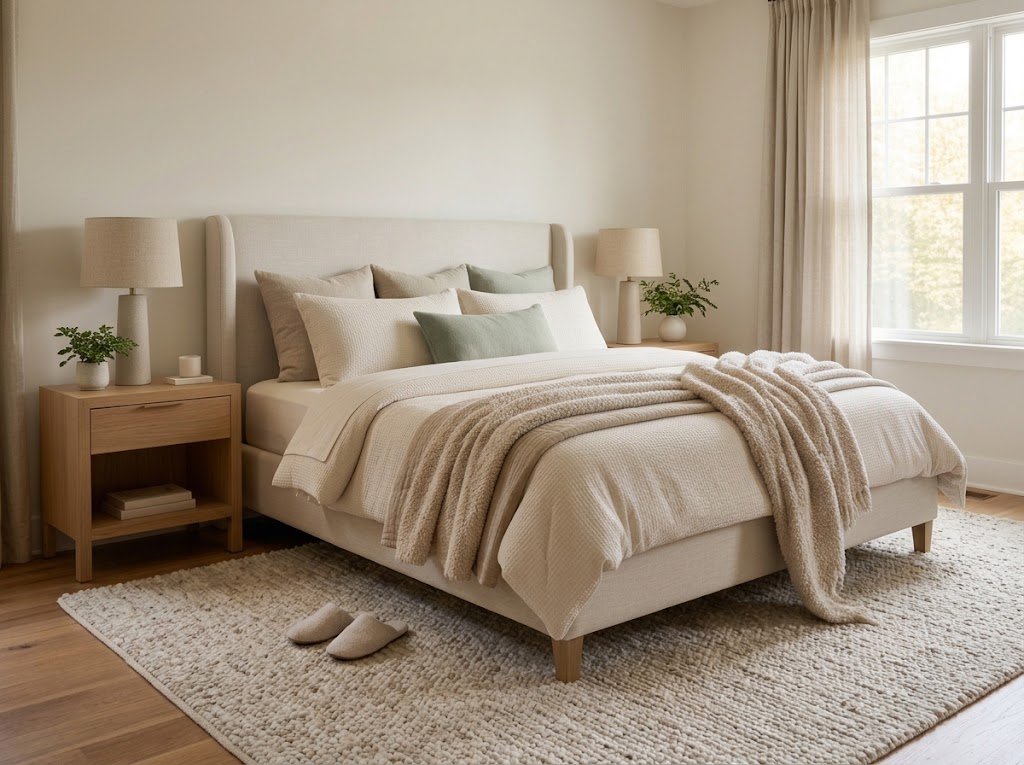
Nobody wants to step out of bed onto a cold, hard floor first thing in the morning. An area rug can solve that practical problem while also adding another layer of softness to the room. Even if you already have carpet, a rug can help define the bed area and introduce texture.
For a larger bedroom, an appropriately sized rug can sit beneath the bed with enough material extending beyond the sides and foot. In smaller rooms, placing runners or smaller rugs along the sides of the bed can create a similar effect without overwhelming the floor plan.
Material matters. Wool and wool-blend rugs are naturally comfortable and can bring substantial texture to a bedroom. Cotton rugs are often easier to wash, while synthetic options can offer affordability and durability. If you have pets, children, or allergies, think about maintenance before choosing a very high-pile design.
A cozy rug doesn’t have to be extremely fluffy. Sometimes a low-pile woven rug with an interesting texture looks more sophisticated and is much easier to maintain.
Match the Rug to the Room
When choosing a rug, don’t think only about whether you like the pattern by itself. Look at the entire bedroom. If your bedding already has a strong pattern, a quieter rug may work better. If the room is mostly solid colors, the rug can introduce subtle pattern or texture.
For a minimalist bedroom, neutral rugs in cream, beige, gray, or natural fibers tend to work especially well. They provide warmth without becoming the visual center of the room.
5. Bring in Natural Materials and Textures
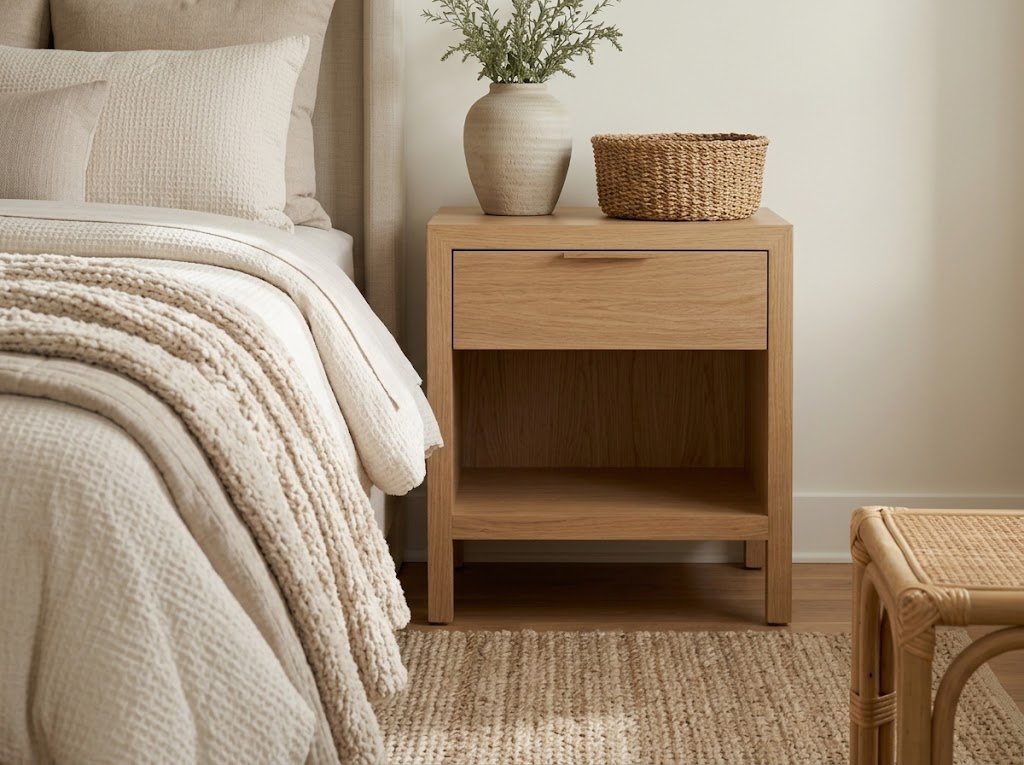
One reason certain bedrooms feel naturally cozy is that they combine several tactile materials. A room made entirely from smooth painted surfaces and synthetic fabrics can feel flat, even when the furniture is attractive. Adding wood, linen, cotton, wool, rattan, ceramic, or woven materials gives the space more visual depth.
Think about what your bedroom looks like from across the room. If everything has the same smooth finish, introduce something with texture. A woven basket beside the dresser, a linen curtain, a wooden nightstand, or a boucle accent chair can create small moments of contrast.
Natural materials are particularly effective in minimalist interiors because they prevent simplicity from becoming sterile. A mostly neutral room can still feel rich when different textures interact.
For example, imagine an ivory duvet next to a chunky woven throw, resting against a wood headboard, with a jute-style rug underneath. There might be very little color variation, but there is plenty of texture. That’s the difference between a room that looks empty and one that looks intentionally simple.
Try incorporating:
- Natural wood furniture
- Linen or cotton bedding
- Woven baskets
- Wool or textured rugs
- Ceramic accessories
- Rattan or cane accents
- Knit or woven blankets
You don’t need all of these. Two or three carefully selected materials can be enough.
6. Create a Clutter-Free Bedside Zone
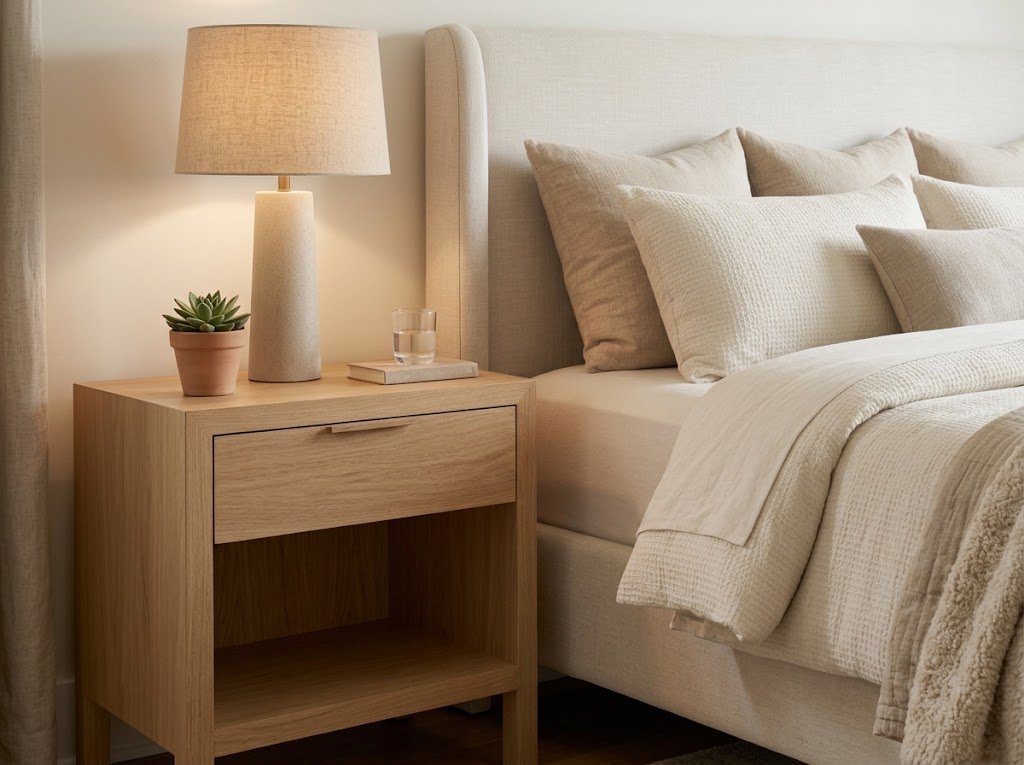
A bedroom can have beautiful furniture and expensive bedding and still feel stressful if every surface is covered with stuff. The nightstand is usually the biggest offender. Old receipts, water bottles, headphones, skincare products, books, cables, and miscellaneous objects can quickly turn a peaceful bedroom into a visual to-do list.
Start by deciding what you genuinely need within arm’s reach at night. For many people, that might be a lamp, a book, a water glass, and a phone charger. Everything else can find another home.
A nightstand with a drawer is particularly helpful because it allows you to keep everyday items nearby without displaying them. Cable management also makes a surprising difference. A simple cable clip or charging station can prevent cords from becoming tangled across the floor.
The same principle applies to the rest of the bedroom. You don’t need an empty room, but you do want the surfaces that your eyes naturally land on to remain relatively calm.
| Bedroom area | Keep visible | Consider storing |
|---|---|---|
| Nightstand | Lamp, book, small accessory | Cables, medicines, miscellaneous items |
| Dresser | Small decorative piece | Cosmetics and daily clutter |
| Bed | Bedding and a few pillows | Excess blankets |
| Floor | Rug and furniture | Laundry and bags |
| Chair | One throw or cushion | Unworn clothing |
This isn’t about creating a picture-perfect room that you have to maintain constantly. It’s about making nighttime cleanup easier. When everything has a designated home, resetting the bedroom takes much less effort.
7. Use Curtains to Make the Room Feel Softer
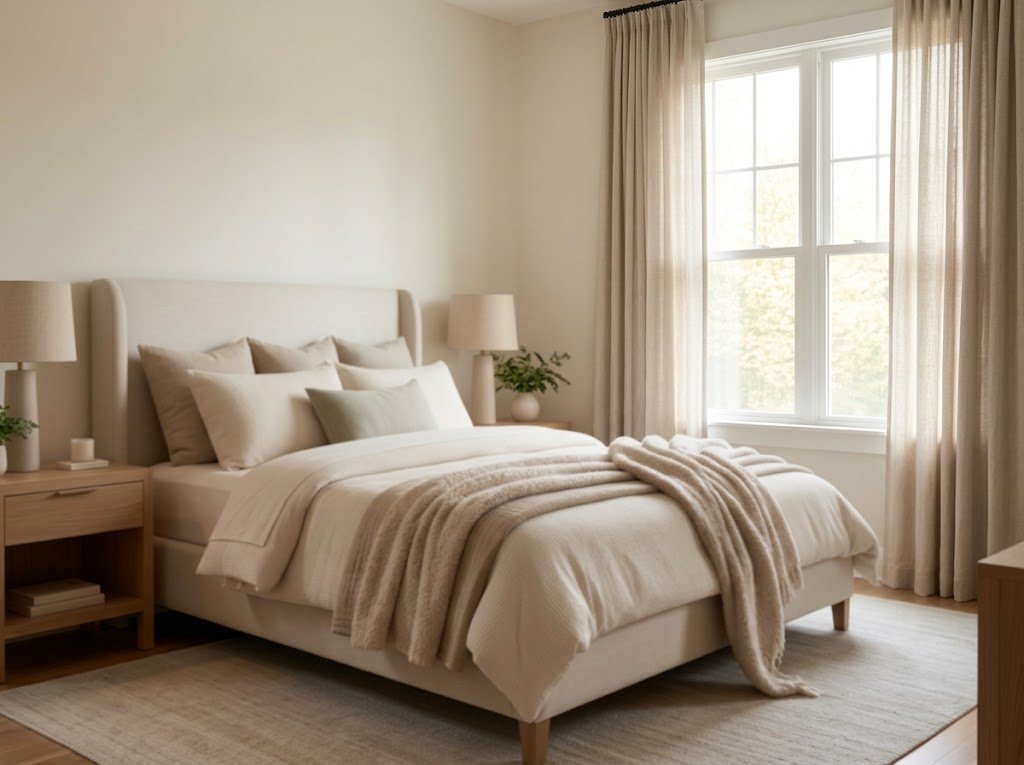
Windows often get overlooked when people decorate bedrooms, but curtains can dramatically change the atmosphere. Bare windows tend to make a room feel more exposed and visually unfinished, while fabric curtains add softness and height.
For a cozy look, consider curtains made from linen-look, cotton, or another softly textured fabric. Neutral colors such as ivory, cream, oatmeal, and light taupe are versatile and work particularly well with minimalist bedrooms.
One useful trick is to mount the curtain rod slightly higher and wider than the window frame, where appropriate. This can make the window appear larger and the ceiling feel taller. Just make sure the installation is structurally appropriate for your wall and the curtain hardware.
Layering can also provide flexibility. Sheer curtains can soften daylight during the morning and daytime, while lined curtains or shades can provide additional privacy and light control.
Don’t Forget Function
Beautiful curtains aren’t much help if they don’t suit the room’s needs. A bedroom that receives strong morning sunlight may benefit from room-darkening shades or lined curtains. If the room already stays dark, lighter window treatments may be sufficient.
Think of window treatments as both decoration and equipment. They should look good, but they should also help you control light, privacy, and temperature.
8. Make the Bed Wall the Main Focal Point
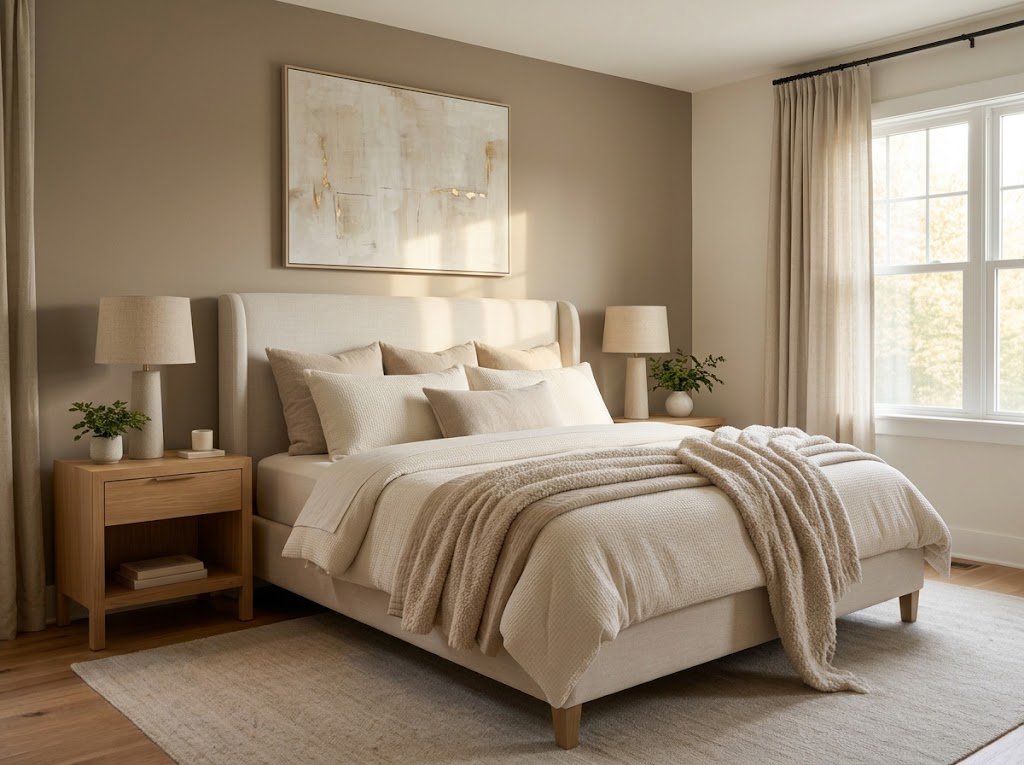
If your bedroom feels visually flat, the wall behind the bed is often the easiest place to introduce personality. Because the bed naturally attracts attention, the wall behind it can become the room’s main design feature without requiring decoration on every wall.
A simple upholstered headboard can immediately add softness. A wood headboard brings warmth and natural character. Alternatively, you can create a focal wall with paint, wallpaper, panel molding, or a large piece of artwork.
The modern minimalist approach works especially well here: choose one strong feature instead of covering the entire wall with small decorative objects.
For example, a warm taupe accent wall behind a cream upholstered bed can create a subtle contrast. Add two simple bedside lamps and neutral bedding, and you may not need much else.
If you’re working with a small bedroom, avoid choosing a focal point that visually overwhelms the room. A large dark feature wall can sometimes make a compact space feel smaller. In that situation, lighter colors, vertical textures, or a softly framed piece of art can provide interest without adding visual weight.
The goal isn’t to make the bed wall Instagram-famous. It’s simply to give the room a visual anchor.
9. Add a Few Plants for a Natural Touch
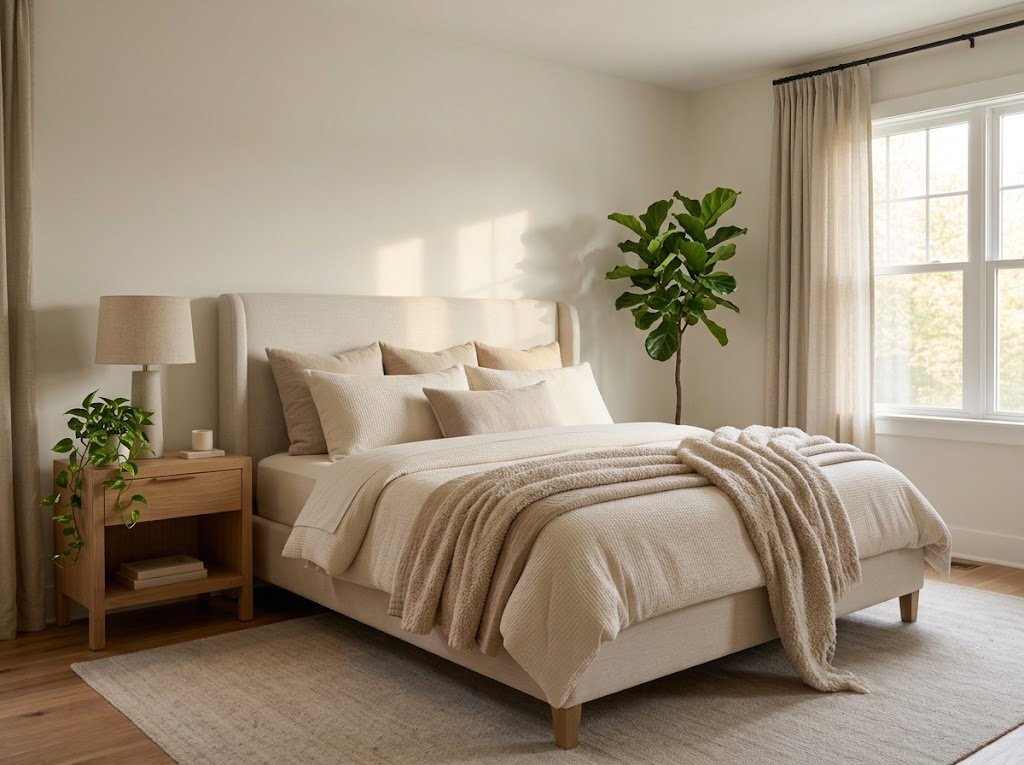
Plants can make a bedroom feel more alive, particularly when the rest of the design uses neutral colors. A small plant on a nightstand, a tall plant in an empty corner, or a trailing plant on a shelf can introduce organic shapes that contrast nicely with straight furniture lines.
Choose plants based on the actual conditions in your bedroom rather than buying something because it looks good online. Consider available sunlight, temperature, humidity, watering requirements, and the amount of care you’re willing to provide.
If your bedroom doesn’t receive much natural light, you can use suitable low-light plants or even high-quality artificial greenery. The purpose is to add a natural visual element, not to create a greenhouse that requires constant maintenance.
A single large plant can sometimes be more effective than a collection of tiny plants. This is especially true in minimalist rooms, where too many small accessories can create visual noise.
For pet owners, plant selection deserves extra attention. Some common houseplants can be harmful if pets chew on them, so check reliable veterinary or plant-safety resources before bringing a new plant home.
10. Create a Small Relaxation Corner
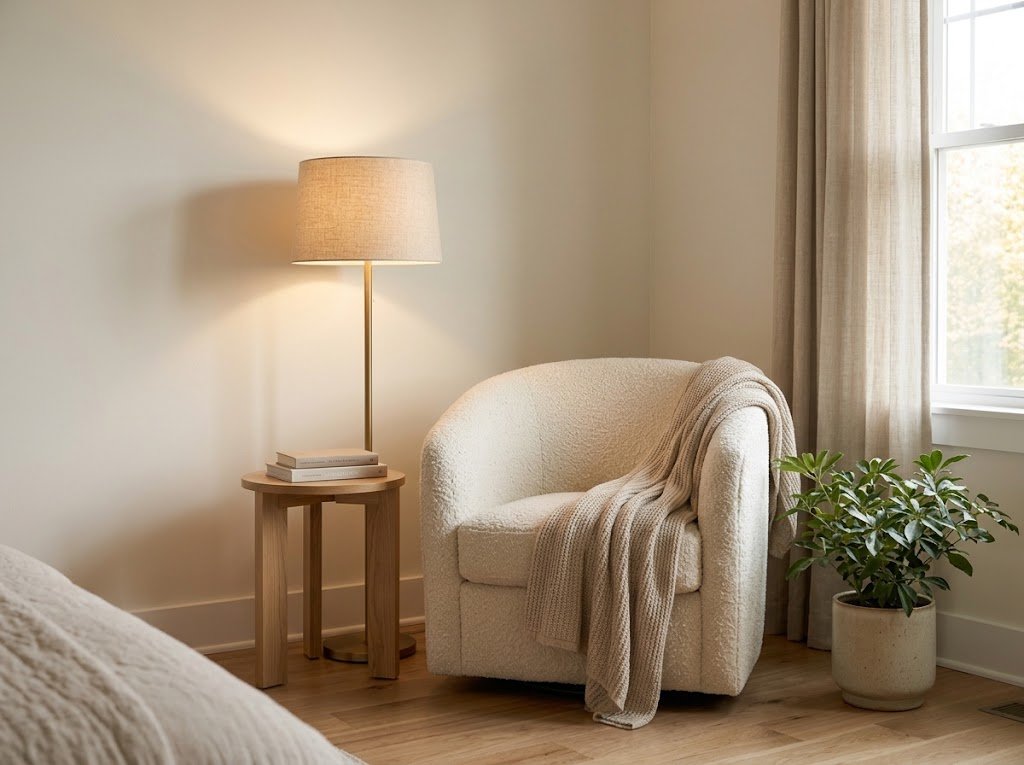
If you have enough space, dedicate one corner of the bedroom to relaxing rather than sleeping. This could be a comfortable chair beside a small table, a bench near the window, or a compact reading nook. The purpose is to create a place where you can slow down without getting into bed.
Why does that matter? Bedrooms often become associated with several different activities—working on a laptop, watching television, folding laundry, scrolling through a phone, and sleeping. A small relaxation corner can give the room another intentional function while keeping it separate from your bed.
A simple setup might include a comfortable accent chair, a small side table, a warm floor lamp, and a soft throw. You don’t need a huge reading library. Even a single shelf with a few favorite books can make the corner feel personal.
If the bedroom is small, don’t force a chair into it just because every cozy-bedroom photograph has one. A small upholstered bench at the foot of the bed or a comfortable floor cushion may be a better fit.
The best bedroom is not necessarily the one with the most furniture. It’s the one where every piece earns its place.
How to Combine These Cozy Bedroom Ideas Without Overdoing It
The biggest mistake people make when trying to create a cozy bedroom is assuming that cozy means adding more. More pillows. More blankets. More candles. More wall art. More decorative baskets. Eventually, the room becomes crowded instead of relaxing.
Instead, think in layers. Start with the foundation: bed, lighting, color, and window treatments. Then add texture through a rug, bedding, curtains, and natural materials. Finally, bring in personality through artwork, plants, books, or a few meaningful accessories.
| Goal | Try | Avoid |
|---|---|---|
| Softer atmosphere | Warm lamps and layered textiles | Bright overhead lighting only |
| Minimalist coziness | Neutral colors and varied textures | Too many decorative objects |
| Better organization | Storage nightstands and baskets | Open piles of belongings |
| More warmth | Wood, woven materials, and soft fabrics | Too many cold finishes |
| Calm visual style | Repeated colors and simple shapes | Excessive patterns |
You also don’t need to complete everything in one weekend. Start with the change that’s most noticeable to you. If the room feels cold, address lighting and textiles. If it feels cluttered, focus on storage. If it feels boring, work on the bed wall or add a piece of artwork.
Cozy Bedroom Ideas for Different Styles
A cozy bedroom doesn’t have to follow one specific design style. The same principles can be adapted to different aesthetics.
A modern minimalist bedroom might use cream bedding, a low-profile bed, light oak furniture, one large artwork, and warm lighting. A Scandinavian-inspired bedroom could introduce pale woods, simple textiles, soft gray tones, and functional furniture. A modern organic bedroom might combine plaster-like walls, linen, earthy colors, wood, and greenery.
| Bedroom style | Key colors | Materials | Signature cozy element |
|---|---|---|---|
| Modern minimalist | Cream, beige, taupe | Wood, linen, cotton | Layered neutral bedding |
| Scandinavian | White, gray, pale blue | Light wood, wool | Soft textiles |
| Modern organic | Sand, sage, brown | Oak, linen, stone | Natural textures |
| Warm contemporary | Taupe, charcoal, cream | Wood, metal, fabric | Layered lighting |
| Boho minimalist | Beige, terracotta, olive | Rattan, cotton, woven fibers | Textured accessories |
The important part is not copying a style exactly. Take the elements that make you feel comfortable and combine them in a way that fits your home.
Small Bedroom? Focus on These Changes First
Small bedrooms can actually become very cozy because their proportions naturally create a sense of intimacy. The challenge is preventing that intimacy from turning into visual overcrowding.
Start by keeping the floor relatively open. Choose furniture that fits the scale of the room rather than trying to squeeze oversized pieces into a compact footprint. Wall-mounted lighting can free up bedside surfaces, while under-bed storage can keep extra bedding and seasonal clothing out of sight.
Mirrors can also help reflect light and create the impression of additional space. However, don’t feel pressured to cover every wall with reflective surfaces. One strategically placed mirror can be enough.
Use vertical space when possible. Tall curtains, vertical artwork, narrow shelving, and a taller headboard can draw the eye upward.
Most importantly, resist the temptation to compensate for a small room by decorating every available surface. A small bedroom needs breathing room even more than a large bedroom does.
Easy Cozy Bedroom Upgrades on a Budget
You don’t need a major furniture budget to make your bedroom feel better. Some of the most noticeable improvements come from inexpensive changes.
Start with the bedding if it’s worn out. Then look at your lighting. A warm bedside lamp can make more difference than an expensive decorative object. Next, consider adding a throw blanket, changing the curtains, or introducing one textured rug.
Rearranging furniture can also cost nothing. Sometimes moving the bed, clearing an awkward corner, or repositioning a lamp completely changes the room’s balance.
Try these low-cost improvements:
- Replace cool-toned bulbs with warm bulbs.
- Add one textured throw blanket.
- Remove unnecessary objects from the nightstand.
- Use matching or coordinated bedding colors.
- Add a small plant or natural element.
- Frame an existing photograph or artwork.
- Use baskets to hide everyday clutter.
- Rearrange furniture to improve movement around the room.
The most effective bedroom makeover isn’t always the one with the biggest shopping list. Sometimes it’s simply the one that removes what isn’t working.
Final Thoughts
Creating a relaxing bedroom comes down to one simple idea: make the room support the way you want to feel. If you want to unwind, choose elements that visually and physically encourage slowing down. Soft bedding, warm lighting, calm colors, natural textures, organized surfaces, and a little greenery can work together to create that feeling without making the room look overly styled.
You also don’t have to follow all ten ideas. Pick two or three that solve the biggest problems in your current bedroom. If your bed feels uncomfortable, start with bedding. If the room feels harsh, change the lighting. If it feels cluttered, simplify the surfaces and improve storage. If it feels cold, introduce texture and natural materials.
A cozy bedroom isn’t about chasing a perfect photograph. It’s about walking through the door at the end of a long day and feeling like you’ve arrived somewhere peaceful. That’s the kind of design that keeps working long after the trend has disappeared.
Suggested:
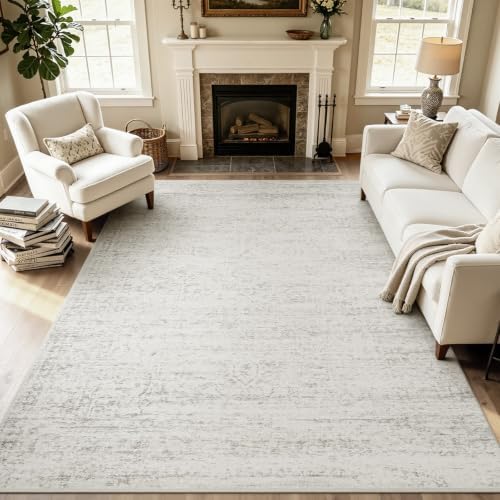
- 【Ideal for small spaces or rooms with limited natural light】The neutral palette (predominantly white and grey) pairs eff…
- 【Efficiently handle muddy paw prints and juice spills】Innovative water-repellent fiber — engineered with advanced water-…

- MODERN MINIMALIST LINE ART FLOWERS – Set of 6 elegant single-line botanical prints featuring delicate leaves, stems, and…
- NEUTRAL BOHO & SCANDINAVIAN STYLE – Clean black line art on white backgrounds with warm neutral tones adds gentle warmth…
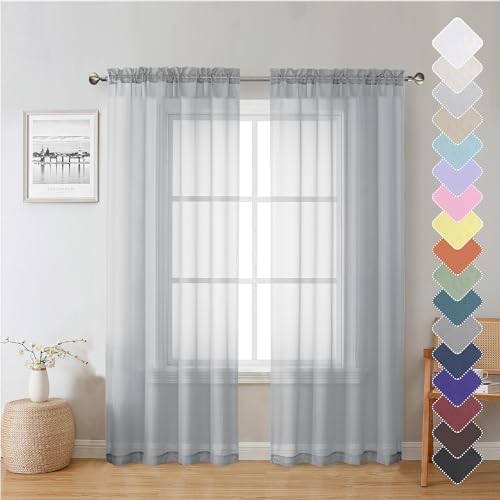
- 100% Polyester
- Sold as 2 Panels: Each pack contains 2 voile sheer curtains, each 40″ wide and 72″ long, total width is 80″. The top 2″ …
FAQs
1. How can I make my bedroom feel cozy without buying new furniture?
Focus on textiles, lighting, and organization first. Add a soft throw, change to warm lighting, rearrange existing furniture, simplify visible clutter, and introduce a few natural textures. These changes can alter the atmosphere without requiring new major furniture pieces.
2. What colors make a bedroom feel more relaxing?
Warm neutrals such as cream, beige, taupe, soft brown, muted green, and dusty blue are popular choices for relaxing bedrooms. The best color depends on your personal preference and the amount of natural light in the room. Keeping the palette cohesive is generally more important than choosing one specific color.
3. How do I make a small bedroom feel cozy instead of cramped?
Choose appropriately scaled furniture, keep walking paths open, reduce visual clutter, and use soft lighting. Vertical curtains, strategically placed mirrors, and wall-mounted lighting can also help use the available space efficiently.
4. What type of lighting is best for a cozy bedroom?
Warm, dimmable lighting is a good choice for creating a relaxing atmosphere. Bedside lamps, wall sconces, floor lamps, and other smaller light sources can create softer pools of illumination than a bright ceiling fixture.
5. How many pillows should I put on my bed?
There isn’t a fixed number, but avoid adding more pillows than you’re willing to move every night. A practical arrangement might include your sleeping pillows plus a small number of decorative pillows and one throw. The goal is to make the bed inviting without turning it into a daily chore.



Leave a Reply