
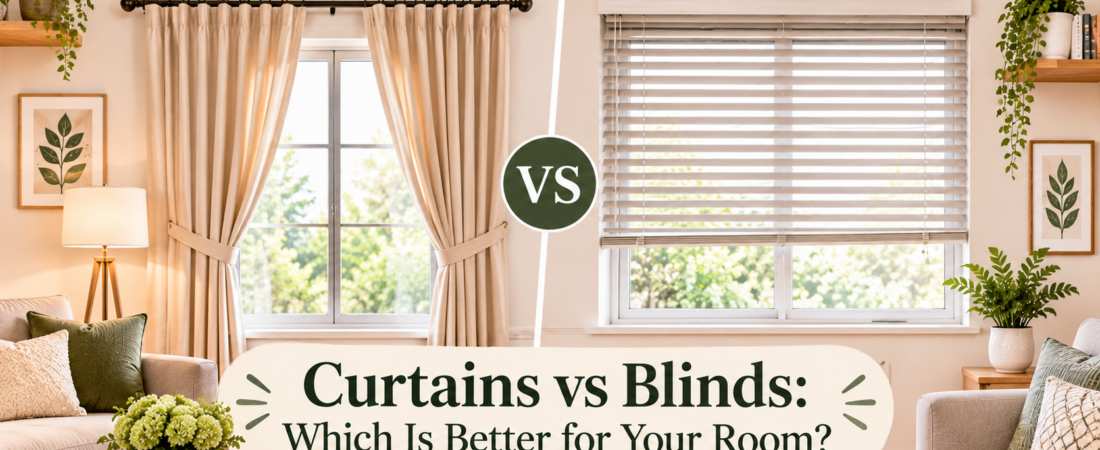
Choosing between curtains and blinds sounds like a small decorating decision until you start looking at your windows. Suddenly, you’re comparing fabrics, colors, slat sizes, mounting styles, privacy levels, cleaning routines, and prices. And that’s before you consider how much natural light you want in the room.
Both curtains and blinds can make a room look more finished, but they create very different effects. Curtains bring softness, texture, and a cozy feeling, while blinds offer a cleaner, more structured appearance with adjustable light control. Some homes look beautiful with full-length fabric curtains, while others benefit from the neat lines of simple roller or Venetian blinds.
So, curtains vs blinds: which is better for your room? The answer depends on how you use the space, how much privacy you need, your decorating style, and how much maintenance you’re comfortable with. A bedroom that needs darkness and comfort has different requirements from a kitchen window that needs practical, easy-to-clean coverage.
In this guide, we’ll compare curtains and blinds in everyday terms, look at their advantages and disadvantages, and explain which option works best in different rooms. You’ll also find styling ideas, practical buying advice, and ways to combine both window treatments for a more polished look.
Curtains vs Blinds: Understanding the Main Differences
The biggest difference between curtains and blinds is how they cover a window and control light. Curtains are fabric panels that hang from a rod or track. You can pull them open, close them across the window, or arrange them to frame the sides. Blinds usually consist of connected slats, fabric panels, or a single material that can be raised, lowered, tilted, or rolled depending on the design.
That difference affects more than appearance. Curtains generally introduce more fabric and softness into a room, which makes them useful when you want a warm, relaxed atmosphere. Blinds tend to have a more tailored appearance, making them a natural choice for contemporary, minimalist, and practical interiors.
There are also several types of each window treatment. Curtains can be sheer, blackout, thermal, linen, velvet, cotton, or polyester. Blinds include roller, Roman, Venetian, vertical, cellular, and other designs. Each type behaves differently, so comparing all curtains with all blinds as if they’re identical can lead to the wrong decision.
Here’s a quick way to understand the difference:
| Feature | Curtains | Blinds |
|---|---|---|
| Appearance | Soft, decorative, and fabric-focused | Neat, structured, and streamlined |
| Light control | Depends on fabric and how panels overlap | Often allows adjustable light through tilting or positioning |
| Privacy | Good when properly sized and closed | Varies by style, material, and slat position |
| Cleaning | Often requires washing or professional care | Usually wiped or dusted, depending on material |
| Space | Fabric can extend beyond the window | Often fits within or close to the window frame |
| Style | Traditional, modern, cozy, elegant | Modern, minimalist, classic, practical |
| Insulation | Heavy or lined curtains can help reduce drafts | Some specialized blinds offer insulation |
| Customization | Many fabrics, patterns, colors, and lengths | Many materials, finishes, slat sizes, and operating styles |
One important detail: the quality of the product matters. A thin decorative curtain won’t offer the same privacy or light blocking as a lined blackout curtain. Similarly, basic blinds may not perform like well-fitted cellular blinds designed to improve insulation.
Think about your actual priorities before choosing. Are you trying to make the room feel softer? Do you need privacy at night? Is controlling glare on your computer screen more important than creating a cozy atmosphere? Once you know what matters most, the decision becomes much easier.
The Pros and Cons of Curtains
Curtains are popular because they do more than cover windows. They can change the proportions of a room, add color, introduce texture, and make a space feel more comfortable. Even a simple pair of neutral curtains can make an unfinished room look more thoughtfully decorated.
They’re also available in a wide range of fabrics and styles. You can choose light sheers for a bright, airy look, cotton panels for everyday use, or heavier lined curtains when you need more privacy and light control.
However, curtains aren’t perfect for every room. They require enough space to hang properly, and certain fabrics collect dust or need special cleaning. Understanding both sides helps you decide whether they’re a practical choice for your home.
Advantages of Curtains
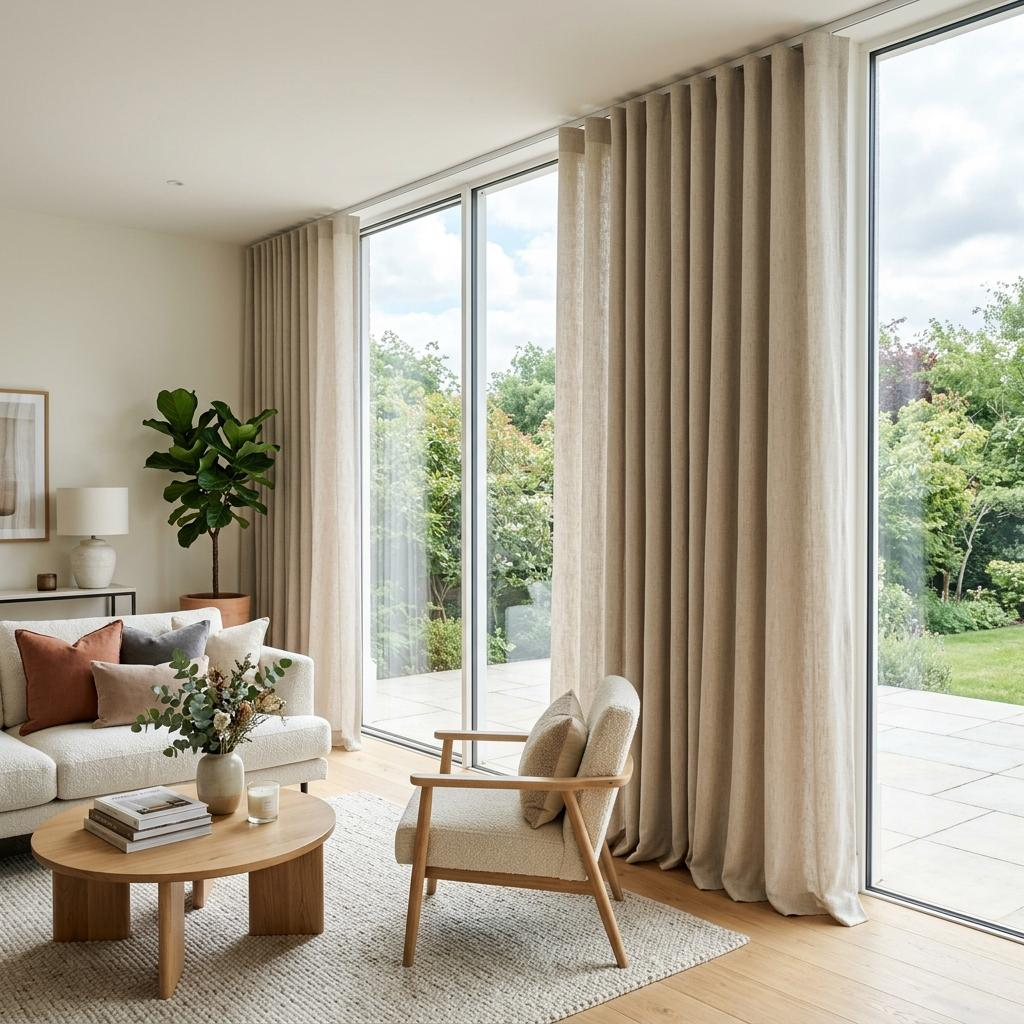
1. They make rooms feel warmer and more inviting.
Fabric adds softness to spaces that might otherwise feel hard or empty. This is particularly useful in bedrooms and living rooms, where comfort matters as much as appearance. Long curtains can frame a window beautifully and create a more relaxed atmosphere.
2. They offer plenty of decorating options.
Curtains come in an enormous variety of colors, patterns, textures, and fabrics. You can use them to introduce a new accent color, complement your bedding, or create contrast against neutral walls. If you enjoy changing your decor seasonally, replacing curtain panels can refresh a room without requiring a complete makeover.
3. They can improve privacy and reduce incoming light.
Thicker fabrics and properly lined curtains can block a significant amount of incoming light. Blackout curtains are especially useful in bedrooms, nurseries, and rooms where you need darkness during the day. Privacy also improves when panels are wide enough to overlap and cover the window properly.
4. They can help with drafts and temperature comfort.
Heavy or thermal-lined curtains can provide an additional barrier between the room and a cold window. They may help reduce drafts and improve comfort, particularly when fitted close to the window and used correctly. Their performance depends on fabric, lining, fit, and installation.
5. They can make windows appear larger.
Hanging curtains higher and wider than the actual window can create the impression of greater height and width. This is a useful styling trick for small bedrooms and living rooms. Full-length panels can draw the eye upward, making the ceiling feel taller.
Disadvantages of Curtains
Despite their decorative appeal, curtains need enough room to hang and move. In a narrow bedroom, bulky panels may interfere with furniture or cover a large portion of the wall when open. If your window sits close to a wardrobe, desk, or bed, you should check how much space the fabric will occupy.
Fabric also needs cleaning. Dust, pet hair, cooking odors, and everyday household particles can collect in curtain fibers. Some lightweight panels are machine washable, but delicate or lined fabrics may require special care. Always check the manufacturer’s instructions rather than assuming every curtain can go straight into the washing machine.
Another consideration is moisture. Thick fabric curtains are not always ideal for poorly ventilated bathrooms or windows close to sinks and cooking areas. Damp conditions can contribute to musty odors or mildew if fabric stays wet.
Finally, curtains may not provide precise light adjustment. You can open or close the panels, but you generally can’t tilt them to redirect sunlight while maintaining partial privacy. If you want that kind of control, blinds may be more convenient.
The Pros and Cons of Blinds
Blinds are a practical option for people who prefer a tidy window treatment with a more structured appearance. They can be fitted inside the window frame, close to the glass, or outside the frame depending on the product and installation method.
One of their biggest advantages is adjustability. Many blinds allow you to change how much light enters the room without completely uncovering the window. Venetian blinds, for example, use horizontal slats that can be tilted to manage light and visibility. Roller blinds work differently, using a continuous sheet of material that moves up and down.
Blinds also come in several materials, including fabric, wood, faux wood, aluminum, and other synthetic options. The best material depends on the room, moisture exposure, appearance, and maintenance requirements.
Advantages of Blinds

1. They offer flexible light control.
Many blind designs allow you to adjust incoming sunlight throughout the day. You can tilt Venetian slats to reduce glare while allowing some daylight into the room. This is useful in home offices, study areas, and rooms with televisions or computer screens.
2. They have a neat, space-conscious appearance.
Blinds usually sit close to the window, which makes them useful when there isn’t much wall space for fabric panels. They’re particularly practical in compact rooms where furniture sits close to the windows.
3. They suit modern and minimalist interiors.
The clean lines of blinds work well with simple furniture, neutral colors, and uncluttered decorating schemes. White, beige, gray, and natural wood finishes can blend into many interior styles without drawing too much attention.
4. Some styles are easy to clean.
Many blinds can be maintained with regular dusting or wiping. Faux wood and aluminum blinds, for example, are generally straightforward to clean when used in suitable environments. However, the cleaning method depends on the material, so always follow product instructions.
5. They come in practical specialty designs.
Cellular blinds, also known as honeycomb blinds, have a structure designed to trap air within their cells. Depending on their construction and fit, they can help improve insulation. Blackout roller blinds can also provide strong light blocking when installed with appropriate coverage.
Disadvantages of Blinds
Blinds can collect dust, especially around slats, cords, and mechanisms. Venetian blinds may require attention to multiple individual surfaces, which can make cleaning feel repetitive. Fabric blinds can also develop stains and may need specialist cleaning.
Some blinds are less effective at blocking light around the edges. Even when the material itself is opaque, small gaps between the blind and the window frame may allow sunlight into the room. If darkness is essential, look for a design specifically intended for blackout performance and consider how it will be fitted.
The appearance can also feel a little stark in rooms that need warmth and softness. A window covered by plain blinds may look unfinished if the rest of the room has layered fabrics, textured furniture, and cozy decorative details.
Finally, quality matters when it comes to mechanisms. Cheap or poorly made blinds may become difficult to raise, lower, or tilt over time. Cordless and motorized options can be convenient, but they may cost more than basic models.
Curtains vs Blinds: A Side-by-Side Comparison
When deciding between curtains and blinds, it helps to compare them according to how you actually use your room. The most attractive option isn’t necessarily the most practical one, and the easiest option to maintain may not create the atmosphere you want.
| Category | Curtains | Blinds | Better choice depends on |
|---|---|---|---|
| Cozy appearance | Excellent | More streamlined | Curtains for softness |
| Precise light adjustment | Limited in most designs | Excellent in adjustable styles | Blinds for glare control |
| Blackout potential | Excellent with suitable blackout fabric | Excellent with suitable blackout products | Fit and product design |
| Privacy | Excellent with adequate coverage | Good to excellent depending on design | Window position and material |
| Dust maintenance | Fabric may collect dust | Slats may collect dust | Material and cleaning routine |
| Small-window styling | Can look decorative | Often looks compact | Room proportions |
| Large-window styling | Many panel options | Depends on blind type and width | Window size and budget |
| Thermal comfort | Heavy lined curtains can help | Cellular blinds can help | Product construction |
| Pattern and color choice | Very broad | Broad, but style-dependent | Curtains for fabric variety |
| Minimalist appearance | Possible with simple panels | Naturally streamlined | Blinds for a clean look |
There isn’t one universal winner. Curtains are often the better decorating choice when you want warmth, texture, and a softer finish. Blinds usually have the advantage when you want adjustable daylight, a compact appearance, and a more tailored look.
You should also consider how the window itself is positioned. A wide living room window may look beautiful with full-length curtains, while a small bathroom window may be easier to manage with a suitable moisture-resistant blind.
Which Is Better for Different Rooms?
The room you’re decorating should influence your decision more than a general trend. A bedroom has different requirements from a kitchen, and a living room may need a combination of privacy, daylight, and visual appeal.
Instead of choosing the same window treatment throughout your home, think about what each room needs. You can create a coordinated look by using similar colors and finishes while choosing different products for different purposes.
Curtains vs Blinds for Bedrooms
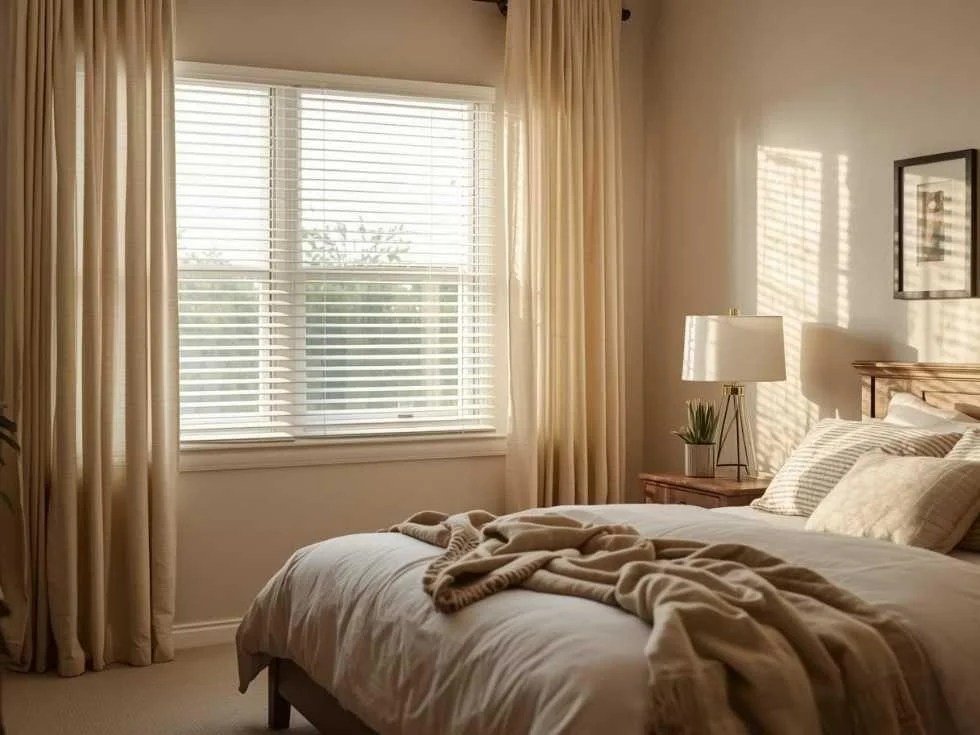
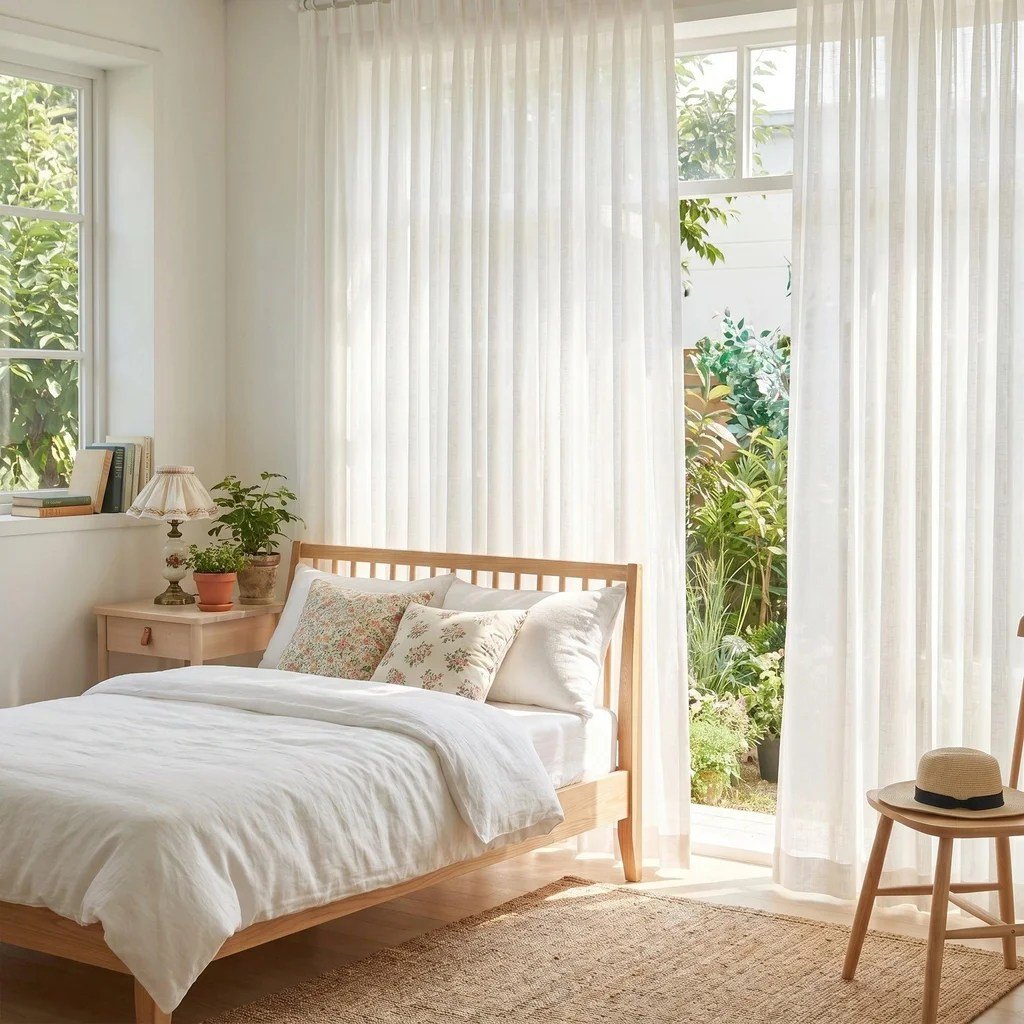
Bedrooms usually benefit from privacy, comfortable lighting, and a relaxing atmosphere. For many bedrooms, curtains are an excellent choice because they introduce softness and can help create a cozy environment.
If you enjoy sleeping in a dark room, consider blackout curtains with an appropriate lining. They’re especially useful for people who work night shifts, have irregular sleeping hours, or are sensitive to early morning sunlight. Make sure the panels are wide enough and long enough to cover the window properly.
Blinds can also work well in bedrooms, particularly if you prefer a minimalist appearance or have limited space around the window. Blackout roller blinds are a popular option, while cellular blinds may provide an additional insulation benefit depending on their construction.
For a more layered arrangement, combine blinds with curtains. The blinds provide practical privacy and light adjustment, while the curtains soften the overall appearance.
Bedroom recommendation: Choose blackout curtains for a soft, comfortable look, or combine blackout blinds with decorative curtains if you want both practical control and visual warmth.
Curtains vs Blinds for Living Rooms
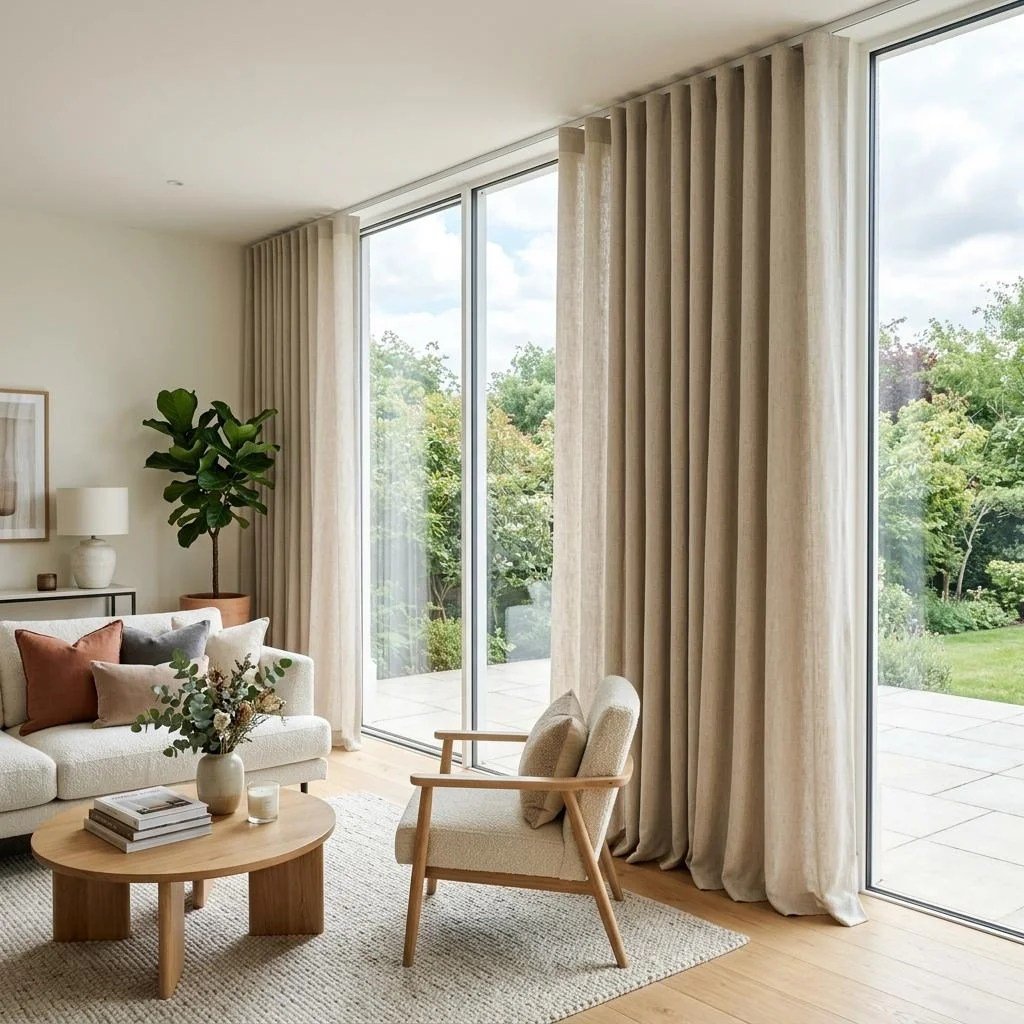

Living rooms often have larger windows and more opportunities for decorative styling. Curtains can make these spaces feel complete by adding height, texture, and color. Full-length panels are especially effective when you want the windows to become part of the room’s overall design.
For a relaxed interior, consider linen-look curtains in warm white, beige, or soft taupe. If your living room already contains neutral furniture, patterned or textured panels can introduce visual interest without requiring additional accessories.
Blinds are a good choice when you prefer clean lines or need to control sunlight throughout the day. They’re particularly useful when the television or seating area is positioned near a bright window.
You can also layer blinds and curtains to get the benefits of both. Keep the blinds in a subtle finish and use curtains to complement the sofa, rug, or wall color.
For more ideas on creating a comfortable living space, see modern interior design ideas.
Living room recommendation: Curtains are often the stronger decorative choice, while blinds are practical for managing glare. Layering them works especially well for large windows.
Curtains vs Blinds for Kitchens and Bathrooms
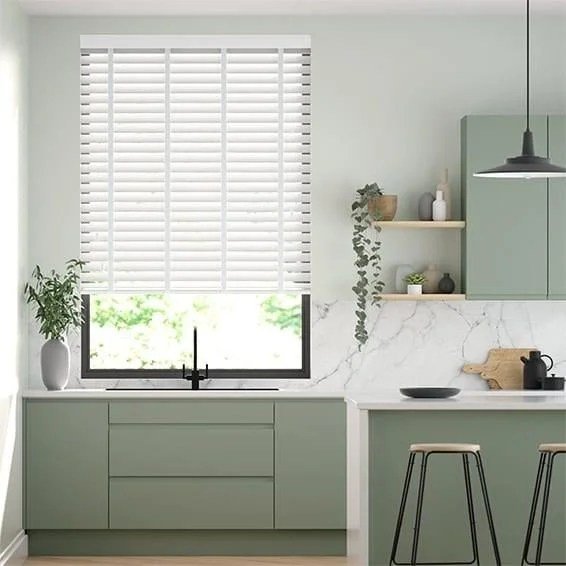
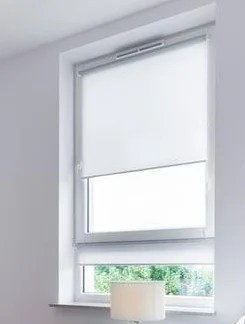
Kitchens and bathrooms require more attention to moisture, stains, and cleaning. Fabric curtains can be less convenient in areas exposed to steam, splashes, cooking grease, and frequent humidity.
For many kitchens, blinds made from suitable moisture-resistant materials are easier to maintain. Faux wood, aluminum, and appropriate synthetic options may be practical, depending on their specifications and how close they are to water or cooking areas.
Bathrooms need even more careful consideration. Choose a product specifically suitable for humid environments, and make sure the room has adequate ventilation. Not every blind material is appropriate for every bathroom, and natural wood products may require special care in damp conditions.
If you prefer the softness of fabric, consider a washable curtain made for the environment, positioned away from direct water exposure. Avoid letting fabric remain wet for long periods.
Kitchen and bathroom recommendation: Choose easy-to-clean, moisture-suitable blinds for many practical installations, but check the material’s care and moisture guidance before buying.
Curtains vs Blinds for Small Rooms
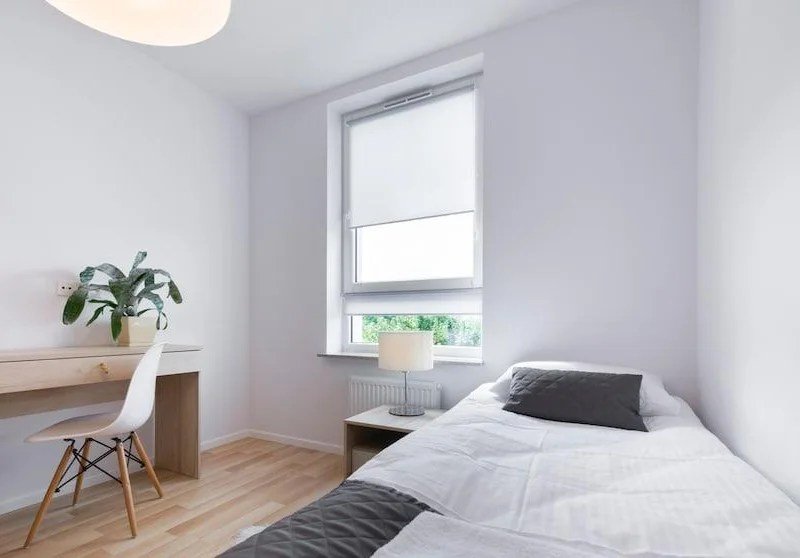
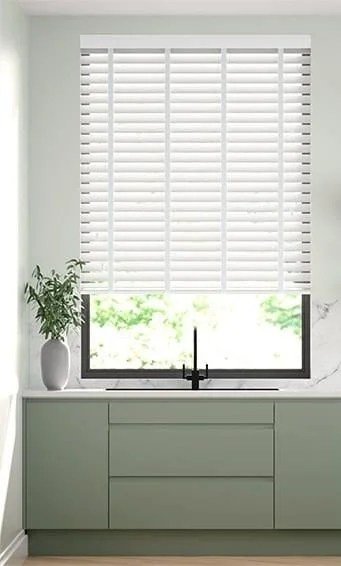
Small rooms need window treatments that don’t make the space feel crowded. Blinds often work well because they sit close to the window and don’t require fabric panels to be stacked at the sides.
Roller blinds are particularly useful for a simple, uncluttered appearance. Choose a color that blends with the walls if you want the window treatment to feel subtle.
However, curtains can also work beautifully in small rooms. The trick is to avoid overly heavy fabrics and choose panels that suit the proportions of the window. Hanging curtains slightly higher and wider than the window can create the illusion of a taller, more generous space, provided there’s enough room for the panels.
Light-colored curtains can also soften a compact bedroom without making it feel visually heavy. If you’re decorating a small apartment or compact bedroom, consider the way the window treatment interacts with furniture and wall space.
For more small-space inspiration, take a look at studio apartment layout ideas.
Small-room recommendation: Choose simple roller blinds when every inch matters, or lightweight curtains when you want to add softness without overwhelming the room.
Which Window Covering Offers Better Privacy and Light Control?

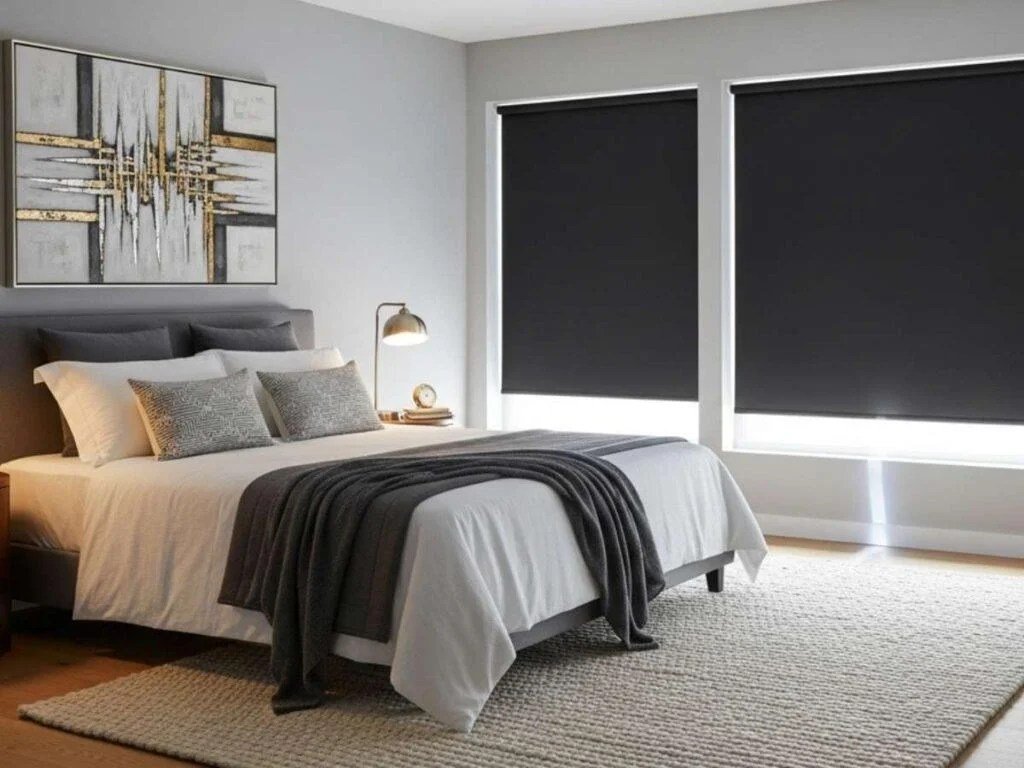
Privacy and light control are two of the biggest reasons people replace their window coverings. The right choice depends on the direction your windows face, how close neighboring buildings are, and when you use the room.
Curtains provide privacy when closed, but the fabric must cover the window adequately. Thin sheer curtains may obscure direct views during some daylight conditions, but they shouldn’t be treated as reliable nighttime privacy coverings. When the room is brightly lit and it’s dark outside, people may be able to see through sheer fabric.
Blinds offer a different kind of control. Venetian blinds can be tilted to reduce visibility while still allowing some daylight through. However, the amount of privacy depends on the slat design, direction, and angle. Roller blinds provide more continuous coverage, but they generally need to be raised or lowered rather than tilted.
For bedrooms, blackout curtains or suitable blackout blinds can help reduce incoming light. If you need a particularly dark room, look for products designed for that purpose and check whether their installation leaves gaps around the edges.
Here’s a practical comparison:
| Your priority | Suitable option |
|---|---|
| Blocking strong sunlight | Blackout curtains or blackout blinds |
| Reducing screen glare | Adjustable blinds |
| Daytime privacy with daylight | Suitable angled blinds or privacy sheers, depending on conditions |
| Nighttime privacy | Fully covering curtains or blinds |
| Softening bright sunlight | Sheer curtains |
| Keeping a bedroom darker | Properly fitted blackout window covering |
One detail people often overlook is window placement. If your bedroom faces a busy street or another building, privacy may matter throughout the day and night. If your living room faces a private garden, you may care more about sunlight and the view.
Choose based on the conditions outside your window, not just the product description.
Which Is Easier to Clean and Maintain?
Cleaning is one of those practical details that can influence how happy you are with your choice over time. A window covering may look beautiful on installation day, but if it becomes difficult to maintain, you may eventually regret buying it.
Curtains generally need occasional laundering or specialist cleaning, depending on their fabric and construction. Lightweight cotton and some polyester curtains may be machine washable, while lined, delicate, or structured panels may require more careful treatment. Dusting or vacuuming with a suitable attachment between washes can help keep them fresh.
Blinds usually need regular dusting or wiping. Roller blinds may be relatively simple to maintain if their material allows gentle cleaning. Venetian blinds have multiple slats, so they can take longer to clean thoroughly. Fabric Roman blinds may require different care from aluminum or faux wood products.
| Window covering | Typical maintenance | Important consideration |
|---|---|---|
| Cotton curtains | Washing when permitted | Check shrinkage and care instructions |
| Polyester curtains | Often relatively easy to maintain | Follow fabric instructions |
| Velvet curtains | May need specialist care | Avoid unsuitable washing methods |
| Sheer curtains | Gentle cleaning | Delicate fabric can snag |
| Roller blinds | Dusting or gentle spot cleaning | Check fabric cleaning guidance |
| Venetian blinds | Dusting and wiping slats | More individual surfaces to clean |
| Faux wood blinds | Wiping with a suitable cloth | Avoid excessive moisture unless permitted |
| Cellular blinds | Gentle cleaning | Avoid damaging the internal structure |
If you have pets, consider how much hair your window coverings may collect. Long curtains can attract pet hair, while blinds may collect dust and fur on horizontal surfaces. The best option depends on your cleaning habits and the specific product.
Maintenance tip: Before purchasing, check the cleaning instructions. Don’t assume that a curtain is machine washable or that a blind can be cleaned with water.
Cost Comparison: Are Curtains or Blinds More Affordable?
Cost depends on the size of the window, the material, the quality, and whether you choose ready-made or custom products. Neither curtains nor blinds are automatically cheaper in every situation.
Ready-made curtains can be an affordable way to update a room, particularly when standard sizes fit your windows. However, you may need to buy curtain rods, brackets, rings, or tracks separately. Custom curtains can cost considerably more because they involve tailored measurements, fabric selection, lining, and labor.
Basic roller blinds can also be budget-friendly, especially for standard windows. Costs may increase when you choose custom sizing, specialty fabrics, cordless mechanisms, or motorized operation. Cellular and other specialized blinds may cost more than simple basic designs.
Use this comparison as a general buying guide rather than a fixed price list:
| Cost factor | Curtains | Blinds |
|---|---|---|
| Budget-friendly options | Ready-made fabric panels | Basic roller blinds |
| Additional hardware | Rods, tracks, rings, brackets | Mounting brackets and operating mechanisms |
| Custom options | Custom fabric, lining, length | Custom sizing and specialty mechanisms |
| Premium options | Designer fabrics and tailored panels | Motorized, cellular, and specialty blinds |
| Replacement | Panels may be replaced separately | Depending on design, fabric or full mechanism may need replacement |
When comparing prices, calculate the cost of the complete installation. Two inexpensive curtain panels may still require a suitable rod and fittings. A blind may appear more expensive initially but include the operating mechanism.
Think about durability as well. A low-cost product that needs replacing frequently may not be the best value. Check product quality, installation requirements, warranty information, and cleaning needs before making a decision.
Curtains and Blinds Together: Can You Use Both?

Absolutely. Combining curtains and blinds is one of the most flexible ways to dress a window. Instead of choosing between softness and practicality, you can use each treatment for a different purpose.
For example, install roller blinds close to the window and hang decorative curtains on a rod outside the frame. During the day, you can adjust the blinds to manage sunlight and privacy. In the evening, close the curtains to create a softer, more finished appearance.
This combination works particularly well in bedrooms and living rooms. Blackout blinds can help reduce incoming light, while lightweight curtains add texture and color. In living rooms, simple blinds can handle glare while full-length curtains frame the windows.
To make the combination look intentional, coordinate the colors and textures. If your blinds are white or light beige, you can choose curtains in a complementary neutral shade. Alternatively, use simple blinds with richer curtain colors to create a little contrast.
A few styling combinations worth considering:
- White roller blinds with beige linen curtains: A relaxed, warm-neutral look.
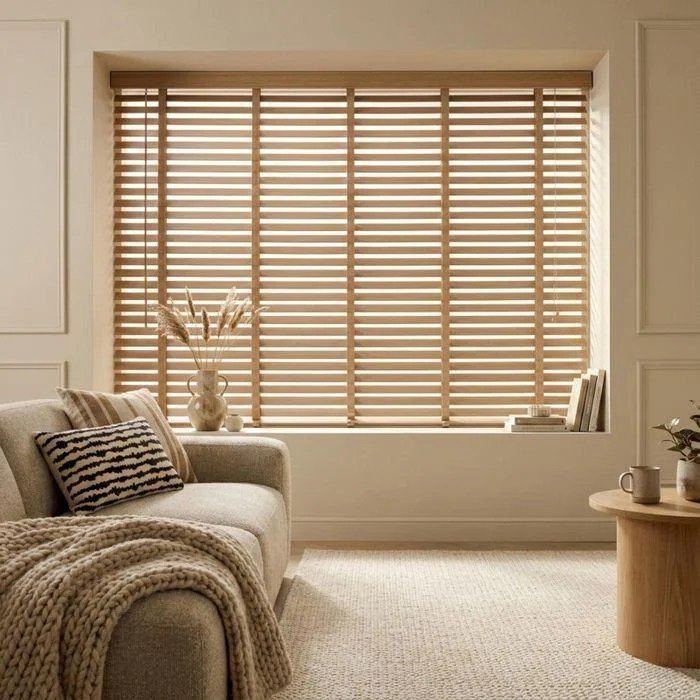
- Wood-look Venetian blinds with cream curtains: A natural combination for classic or contemporary rooms.
- Blackout blinds with soft textured curtains: A practical bedroom arrangement.
- Sheer curtains with adjustable blinds: A layered look that offers different levels of daylight and privacy.
Avoid choosing two heavily patterned window treatments unless you’re confident about balancing the room. Usually, one simple layer and one more decorative layer create a more harmonious result.
How to Choose the Right Window Treatment for Your Home
If you’re still unsure whether curtains or blinds are right for your room, stop comparing products for a moment and think about your everyday routine. The best window treatment is the one that solves your main problem while fitting the way you want the room to look.
Start by identifying your priority. If you want a softer, more decorative space, curtains may be the better choice. If you want a clean appearance and flexible daylight adjustment, blinds may suit you better. If you need both, consider layering.
Next, measure the window carefully. Check the width, height, frame depth, and the surrounding wall space. Decide whether you want an inside mount or outside mount where the product allows it. Accurate measurements help prevent gaps, awkward proportions, and installation problems.
Then consider the room’s conditions. A humid bathroom, a sunny living room, and a dark bedroom all have different needs. Choose materials that are suitable for the environment and follow the manufacturer’s recommendations.
Finally, think about your decorating scheme. Window treatments occupy a noticeable part of the wall, so their color and texture can influence the whole room.
A simple decision guide
| If you want… | Consider… |
|---|---|
| A cozy, soft bedroom | Full-length curtains |
| Better control over daylight | Venetian or adjustable blinds |
| A clean minimalist look | Roller blinds |
| A decorative living room | Full-length curtains |
| A practical kitchen window covering | Suitable easy-clean blinds |
| A darker sleeping environment | Blackout curtains or blinds |
| A layered designer appearance | Blinds with curtains |
| A compact window treatment | Roller blinds |
| More texture and fabric color | Curtains |
You don’t need to follow a strict rule throughout your home. Different rooms can have different window treatments while still looking coordinated. Repeating similar colors, finishes, or hardware can create a consistent design without using exactly the same product everywhere.
Common Window Treatment Mistakes to Avoid
Even a beautiful window treatment can look wrong if the size, material, or installation isn’t suitable. A little planning can help you avoid mistakes that affect both appearance and everyday use.
Choosing curtains that are too short. Curtains that stop awkwardly above the floor can make a room look unfinished unless that length is intentional. Measure from the rod or track to the desired endpoint before ordering.
Buying blinds without measuring properly. Small measurement errors can create unwanted gaps or prevent a blind from fitting inside the frame. Follow the manufacturer’s measuring instructions, particularly for inside-mounted products.
Assuming sheer curtains provide nighttime privacy. Sheers can soften daylight, but they don’t always prevent people from seeing inside after dark. Use a more opaque layer when nighttime privacy matters.
Ignoring the room’s moisture levels. A fabric treatment that works beautifully in a bedroom may not be suitable beside a steamy shower or kitchen sink. Choose materials designed for the conditions.
Selecting a color without considering the rest of the room. Window coverings should relate to your walls, flooring, furniture, and soft furnishings. You don’t have to match everything exactly, but the overall palette should feel balanced.
Forgetting about cleaning. Delicate fabrics and complicated slat designs may require more maintenance than you expect. Check care instructions before making a purchase.
Blocking furniture or walkways. Long curtains can interfere with radiators, desks, bedside tables, or doors if they aren’t planned properly. Check the full movement of the panels before installing the rod.
Choosing style over function. A beautiful curtain won’t solve a privacy problem if it’s too sheer. A sleek blind won’t make a room cozy if the rest of the design needs softness. Start with what the room needs, then choose a style you love.
Conclusion
So, curtains vs blinds: which is better for your room? Both can be excellent choices, but they offer different benefits. Curtains bring warmth, texture, color, and a softer decorative finish. Blinds provide a neat appearance, flexible light adjustment, and practical options for rooms where space and easy maintenance matter.
For bedrooms and living rooms, curtains are often a wonderful choice when comfort and atmosphere are priorities. Blinds can be particularly useful in kitchens, bathrooms, small rooms, and home offices, provided you choose a material suitable for the environment. If you want the advantages of both, layering curtains over blinds can give you a flexible and attractive window treatment.
Before buying, consider privacy, daylight, cleaning, measurements, and the style of your room. Don’t choose a product simply because it’s popular or looks good in a photograph. Choose one that makes your space more comfortable and works with your everyday routine.
The best window treatment isn’t necessarily curtains or blinds. It’s the one that makes your room feel right.
Frequently Asked Questions
1. Are curtains or blinds better for bedrooms?
Curtains are often preferred for bedrooms because they add softness and can create a cozy atmosphere. Blackout curtains can also help reduce incoming light when properly fitted. Blinds are a good alternative if you prefer a minimalist appearance or need adjustable light control. For both benefits, combine blackout blinds with decorative curtains.
2. Do curtains or blinds make a room look bigger?
Blinds often create a compact, streamlined appearance because they sit close to the window. However, curtains can make a room look taller when hung higher than the window and allowed to fall toward the floor. Light-colored, appropriately sized panels can add softness without overwhelming a small space.
3. Are blinds easier to clean than curtains?
Many blinds can be maintained with regular dusting or wiping, while curtains may need washing or specialist cleaning. However, Venetian blinds have multiple slats that can take time to clean, and some fabric blinds require special care. The easiest option depends on the material and product design.
4. Which is better for privacy, curtains or blinds?
Both can provide good privacy when properly selected and installed. Opaque curtains offer full coverage when closed, while adjustable blinds can help control visibility during the day. Sheer curtains alone may not provide reliable nighttime privacy, especially when indoor lights are on.
5. Can I use curtains and blinds on the same window?
Yes. Combining curtains and blinds gives you more flexibility. Blinds can handle everyday light adjustment and privacy, while curtains add color, texture, and a softer appearance. This layered approach works particularly well in bedrooms and living rooms.

Leave a Reply