

A coffee table might seem like a small piece of furniture, but its shape can change the entire feeling of your living room. It sits right in the middle of your seating arrangement, catches your eye when you walk into the space, and gives you a convenient place for drinks, books, remotes, and everyday essentials. Choose the wrong one, and the room can feel awkward, crowded, or unfinished. Choose the right one, and suddenly everything seems to fall into place.
So, when comparing a round vs rectangular coffee table, which shape deserves a place in your home?
The answer depends on more than personal taste. Your sofa style, room dimensions, walking space, household needs, and decorating preferences all play a part. A round coffee table can soften a room filled with straight lines and sharp corners, while a rectangular design can provide a generous surface that works beautifully with longer sofas. Neither shape is automatically better. Each has its own strengths, and understanding those differences makes choosing much easier.
In this guide, we’ll compare round and rectangular coffee tables, look at how they work in different living rooms, discuss sizing and styling, and share practical tips to help you find a table that looks good and works for everyday life.
Why Your Coffee Table Shape Matters
Think of your coffee table as the connecting point between your sofa, chairs, rug, and other living room furniture. It brings the seating area together, much like the center of a conversation. Although it may not be the largest item in the room, its shape influences how the other pieces relate to one another. A long table can reinforce the horizontal lines of a sofa, while a round one can introduce a softer contrast. That small difference can have a surprisingly noticeable effect on the overall design.
Shape also affects how comfortably you move around the room. Imagine squeezing past a table with sharp corners in a narrow walkway. Even if the table looks beautiful, it may become an everyday obstacle. Now picture a rounded design in the same spot. Its curved outline can make the space feel easier to navigate, particularly when the room is compact or the seating arrangement is close together.
Function matters just as much as appearance. Do you regularly serve snacks when friends visit? Do you like keeping a stack of books or decorative objects within reach? Do children play on the living room floor? Your answers can influence which table will suit your routine. A rectangular coffee table may provide a larger, more organized surface, while a round table can encourage a relaxed, flowing arrangement.
Before choosing based on a photo or a passing design trend, look at your actual room. Measure the available space, consider how you use the seating area, and think about what you want the coffee table to do. The best shape is the one that supports your lifestyle without making the room feel crowded.
What Is a Round Coffee Table?

A round coffee table has a circular tabletop and usually stands on one central base, four legs, or a sculptural support. Its curved outline gives it a softer appearance than furniture with straight edges. You’ll find round tables in almost every decorating style, from simple Scandinavian-inspired designs to rustic wooden pieces, elegant glass tables, and bold modern statement furniture.
One reason people love round coffee tables is their ability to break up a room filled with rectangular furniture. Sofas, TV units, rugs, cabinets, and windows often introduce plenty of straight lines. Adding a circular table creates visual contrast without requiring a dramatic color or unusual material. It can make the seating arrangement feel more relaxed and balanced.
Round tables also come in different sizes. A small circular table can work beside a compact loveseat, while a larger design can become the main focal point in a spacious seating area. Some models feature nesting tables, lower shelves, or hidden storage, so you don’t have to sacrifice practicality for appearance.
Benefits of Choosing a Round Coffee Table
The biggest advantage of a round coffee table is its curved shape. Without pointed corners, it can feel more approachable and may be easier to move around in a busy seating area. This can be especially useful in small apartments, narrow living rooms, or homes where the coffee table sits close to the sofa. The rounded edge also creates a softer visual transition between different furniture pieces.
Another benefit is how naturally a round table works with curved or compact seating arrangements. If you have a curved sofa, two accent chairs, or a small loveseat, a circular table can bring everything together without introducing another strong rectangular shape. It can also sit comfortably in the center of a conversation area where people gather from several directions.
Round coffee tables are particularly attractive in rooms that need a little visual softness. A space with a boxy sectional, straight-lined TV console, and angular shelving can sometimes look overly rigid. A circular wooden or upholstered table can break up those hard lines and make the room feel more welcoming.
Here are a few situations where a round table can be a smart choice:
- Small living rooms: Curved edges can make tight seating arrangements easier to navigate.
- Homes with children: The absence of sharp tabletop corners may reduce some bump-related concerns, although supervision and appropriate furniture safety remain important.
- Curved sofas: A circular tabletop complements the softer outline of curved seating.
- Conversation areas: People seated around the table can approach it from different directions.
- Soft, relaxed interiors: Round shapes pair naturally with organic textures and cozy decorating styles.
A round coffee table can also be a useful way to introduce a different material. For example, a warm wooden circle can soften a room with metal furniture, while a glass design can add a lighter appearance without making the center of the room feel visually heavy.
Possible Drawbacks of a Round Coffee Table
Round coffee tables aren’t perfect for every layout. Their curved shape can reduce the amount of usable tabletop space compared with a rectangular design of similar overall width. If you frequently serve several people, spread out board games, or need room for books and trays, a small round table may feel restrictive.
Another challenge is placing a round table alongside a long sofa. The circular tabletop may not extend far enough along the seating area, leaving people at either end with a longer reach. This doesn’t mean round tables cannot work with large sofas, but you’ll need to pay attention to diameter and placement.
Decorating a round tabletop can also require a little thought. Long rectangular trays, oversized books, and linear decorative arrangements may look awkward if they take up too much of the available surface. Instead, you might need to use a central vase, a small tray, or objects arranged at different heights.
Finally, round tables with a single central pedestal can sometimes be less convenient if you want to tuck your feet or legs beneath the table while sitting. The base design matters, so check its shape and position before buying.
What Is a Rectangular Coffee Table?
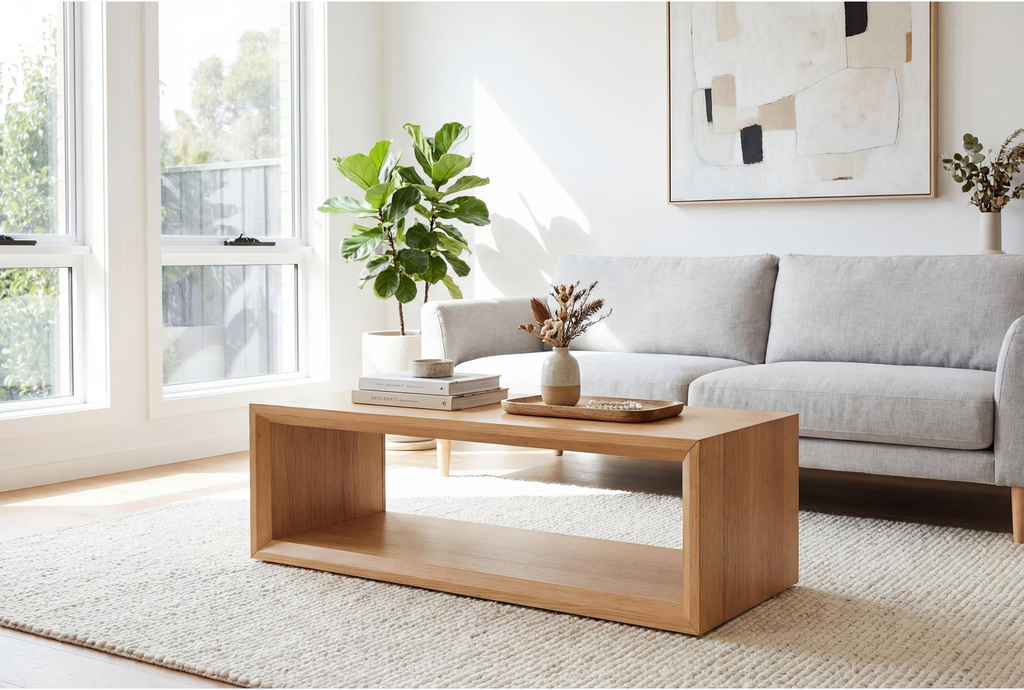
A rectangular coffee table has a long, four-sided tabletop with straight edges and right-angle corners. It’s one of the most familiar coffee table designs, and there’s a good reason for its popularity. Its proportions often complement standard sofas, especially longer three-seat sofas and large sectionals.
Rectangular tables are available in a wide range of materials, including solid wood, engineered wood, glass, metal, stone, and mixed-material combinations. Some have simple open frames, while others include drawers, shelves, lift-up tops, or hidden storage. This makes them suitable for everything from minimalist apartments to traditional family homes.
The long tabletop is one of their most useful features. You can arrange books, a serving tray, a decorative bowl, and a vase without everything competing for the same small area. When guests visit, there’s often more room to place drinks and snacks. The shape also makes it easy to line up decorative accessories in a balanced arrangement.
Rectangular coffee tables tend to look especially natural when positioned parallel to a sofa. Their long outline follows the sofa’s horizontal shape, creating a coordinated appearance. In a large living room, this can help the seating arrangement feel more grounded.
Benefits of Choosing a Rectangular Coffee Table
A rectangular coffee table offers a generous surface area, which is often its biggest selling point. You can use one end for a decorative arrangement and leave the other end open for practical activities. This flexibility makes it useful for households that spend a lot of time in the living room.
Its shape also works well with long sofas. Instead of leaving the ends of a sofa without convenient tabletop access, a properly sized rectangular table can serve several seats along its length. This is particularly helpful when people regularly share the living room for watching television, reading, or enjoying snacks.
Storage is another advantage. Many rectangular coffee tables have lower shelves or drawers that use the long footprint efficiently. You can store remote controls, magazines, coasters, small blankets, and other items without leaving everything on display. Some designs even have lift-top surfaces that create a temporary work or dining area.
Rectangular tables are also easy to style. A long tabletop gives you room to create a balanced arrangement with a tray, books, a small plant, and a decorative object. You can keep everything centered, arrange accessories in a line, or create two separate decorative groupings.
A rectangular coffee table may be especially suitable when:
- You have a long three-seat sofa.
- Your living room has a spacious, open seating area.
- You regularly entertain guests.
- You need extra surface space for snacks, books, or games.
- You want drawers or shelves for everyday storage.
- Your decorating style features clean lines and structured furniture.
When chosen in the right proportions, a rectangular coffee table can make a living room feel organized and complete. The key is avoiding a table that’s too long, too wide, or too visually heavy for the available space.
Possible Drawbacks of a Rectangular Coffee Table
The most obvious drawback is its corners. In a tight room, sharp edges can become obstacles, especially when people regularly walk between the sofa and other furniture. If you have toddlers or young children, you may also prefer a design with rounded corners or a softer alternative. A rectangular shape doesn’t automatically make a table unsafe, but its edge design deserves attention.
Another potential issue is visual heaviness. A large rectangular table with a thick wooden top and solid base can dominate a small living room. Even if the dimensions technically fit, the room may feel crowded because the table occupies so much visual space.
A rectangular table can also be less flexible in an irregular layout. If your seating area has an angled sofa, curved chairs, or an unusual arrangement, the straight edges may not follow the natural flow of the furniture. In those situations, a round or oval table may look more harmonious.
Finally, a large rectangular tabletop can become a dumping ground. Because there’s plenty of room, everyday items may gradually take over the surface. A little styling discipline helps keep the table functional without making it look cluttered.
Round vs Rectangular Coffee Tables: The Main Differences

Both shapes can look beautiful, but they serve slightly different needs. A round table tends to create a softer and more relaxed feeling, while a rectangular table usually offers more usable surface area and a structured appearance. The right choice becomes clearer when you compare how each one performs in your room.
| Feature | Round coffee table | Rectangular coffee table |
|---|---|---|
| Appearance | Soft, curved, relaxed | Structured, clean, classic |
| Best sofa pairing | Curved sofas, loveseats, compact seating | Long sofas and many sectionals |
| Movement | No pointed tabletop corners | Corners may interrupt tight walkways |
| Surface area | Often less usable space at similar width | Usually offers more organized surface space |
| Styling | Central arrangements and compact trays | Books, trays, vases, and longer arrangements |
| Storage | Depends on base and design | Many options with shelves and drawers |
| Small rooms | Can work well in compact layouts | Works when carefully scaled |
| Overall feel | Softens angular interiors | Reinforces straight lines |
The table provides a useful starting point, but don’t treat it as a strict rulebook. A large round table can overwhelm a small room, and a slim rectangular table can fit beautifully in a compact apartment. Dimensions, materials, and placement matter just as much as the basic shape.
Which Shape Works Better in a Small Living Room?


In many small living rooms, a round coffee table is a practical option because it doesn’t have pointed corners. When space is limited, people often need to move around the table to reach a doorway, chair, or storage unit. A circular outline can make these movements feel more natural, particularly when the table sits in the middle of a compact seating arrangement.
However, a rectangular coffee table can still be a great choice in a small room. A narrow design positioned parallel to a loveseat may use the available floor area efficiently. It can also provide a longer surface without needing a large diameter. The trick is to choose a slim table with a lightweight frame rather than a bulky design with a thick base.
Think about the shape of your room before deciding. If your sofa sits against a wall and the walking route runs around the coffee table, a round design may be easier to navigate. If the seating area is long and narrow, a slim rectangular table might follow the room’s proportions more naturally.
A useful tip is to mark the intended tabletop footprint on the floor using painter’s tape. Walk around the outline, sit on the sofa, and check whether you can reach the table comfortably. This simple test can reveal problems before you spend money on furniture.
Which Shape Looks Better With Your Sofa?
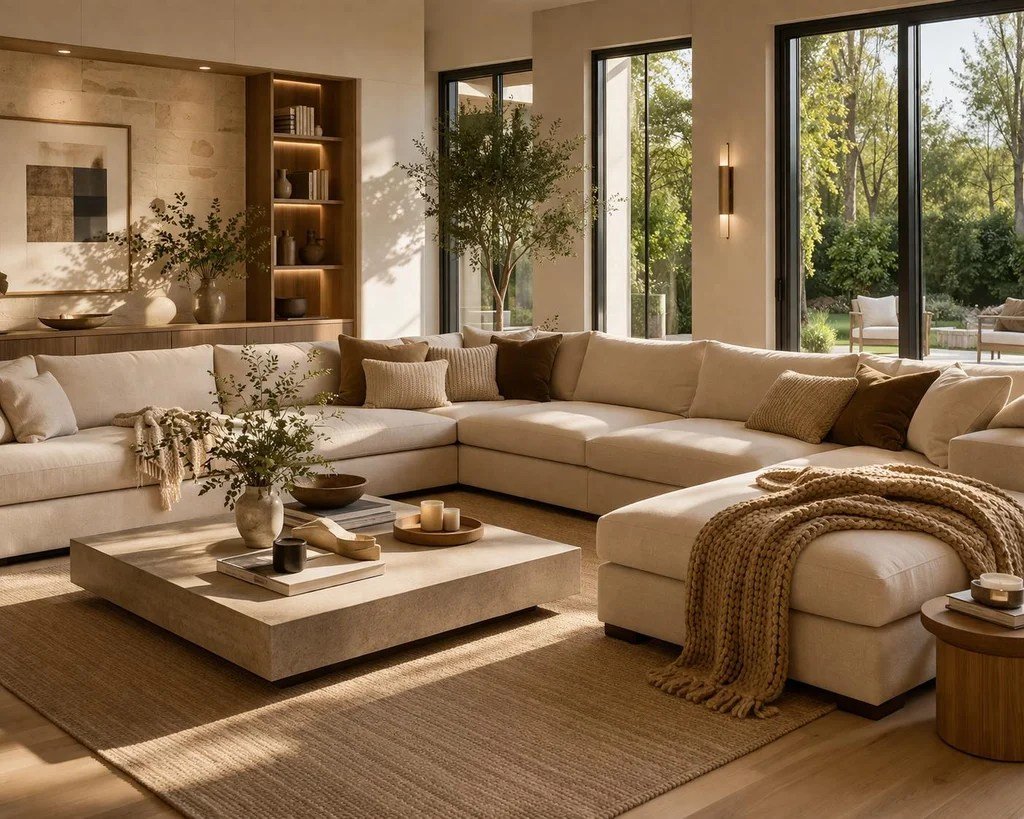

Your sofa is usually the largest piece of furniture in the seating area, so its shape should guide your coffee table choice. A rectangular sofa often pairs naturally with a rectangular coffee table because both share long, straight lines. The result can look coordinated and intentional, particularly in modern, contemporary, or traditional interiors.
A round coffee table creates a different effect. It contrasts with the sofa rather than repeating its outline. That contrast can be attractive because it stops the room from looking too boxy. If your sofa has straight arms and a simple silhouette, a round table can introduce a softer element without making the design feel busy.
Sectional sofas offer even more possibilities. An L-shaped sectional can work with a round table placed in the center of the seating area, especially when the room has enough space around it. A rectangular coffee table can also fit well, provided its length and width suit the open area created by the sectional.
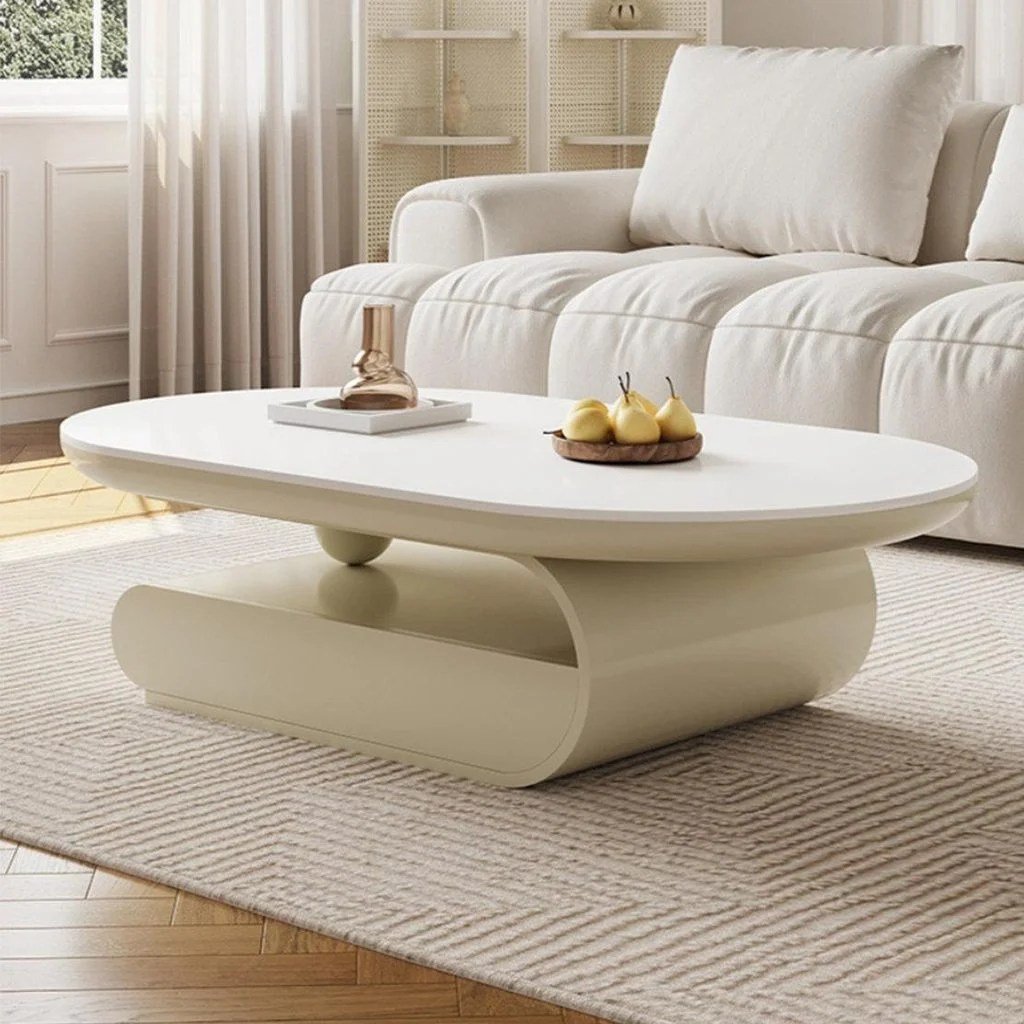
For curved sofas, round tables are often a natural match. Their shapes echo each other and create a cohesive look. Still, an oval table can be another option if you want a longer surface with softer edges.
Don’t forget the height and width of your sofa. A table that looks beautiful on its own may feel awkward if it’s too tall, too low, or too far away. Always consider the full seating arrangement rather than choosing a coffee table in isolation.
Which Shape Makes Movement Easier?
A coffee table should never make you feel as if you’re navigating an obstacle course just to reach your sofa. The amount of walking space around it matters, especially in apartments and family living rooms where several people share the same area.
Round tables can make movement easier because they don’t have pointed corners. You can approach them from different directions, and their curved outline may feel less intrusive in tight spaces. This is particularly useful when the table sits close to an accent chair or near a main walking route.
Rectangular tables require a little more attention to placement. Their corners can interfere with movement if the table is too wide or positioned too close to another piece of furniture. However, a narrow rectangular design can work extremely well when placed parallel to a sofa with a clear path around the ends.
As a practical starting point, many furniture layouts use roughly 14–18 inches between the sofa and coffee table. This allows a comfortable reach while leaving room for movement, although the ideal distance depends on your furniture and the people using the room. Measure your actual space rather than relying on a single number.
If you have a narrow walkway, consider a round or oval design with a compact footprint. If your room has plenty of open floor space, a rectangular table may be perfectly comfortable.
Which Shape Is More Practical for Families?
Family living rooms have to handle more than good-looking furniture arrangements. They often become places for movie nights, homework, board games, snacks, toys, and spontaneous gatherings. Your coffee table should support those activities without making everyday life more difficult.
A round coffee table may be appealing for families because it has no pointed corners. This can reduce the chance of bumping into sharp tabletop edges, although it doesn’t remove every furniture-related risk. Stability, height, weight, and material still matter. If you have very young children, look for a sturdy table with a stable base and a finish that is easy to clean.
A rectangular coffee table may be more practical when the family needs plenty of surface space. It can hold snacks for several people, board games, coloring supplies, or a laptop. Designs with drawers and lower shelves also help keep frequently used items organized.
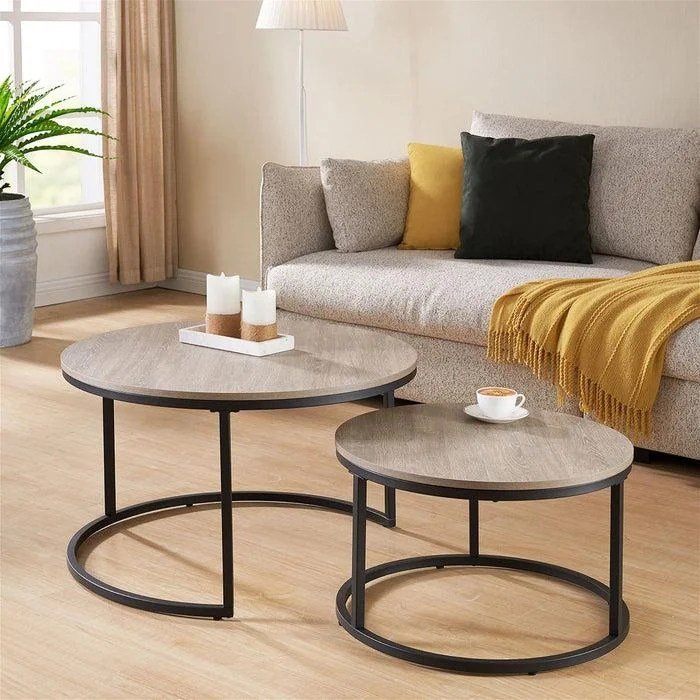
Consider the activities that happen most often in your home. If children regularly play on the floor, a bulky coffee table might take up valuable space regardless of its shape. A lightweight nesting table or a smaller round design could be easier to move when needed. If the coffee table doubles as a place for family games and serving snacks, a rectangular design may offer a more useful surface.
The best family-friendly table is not simply the one with the most fashionable shape. Look for a combination of safe edges, stable construction, practical storage, and easy maintenance.
Materials, Styles, and Overall Appearance
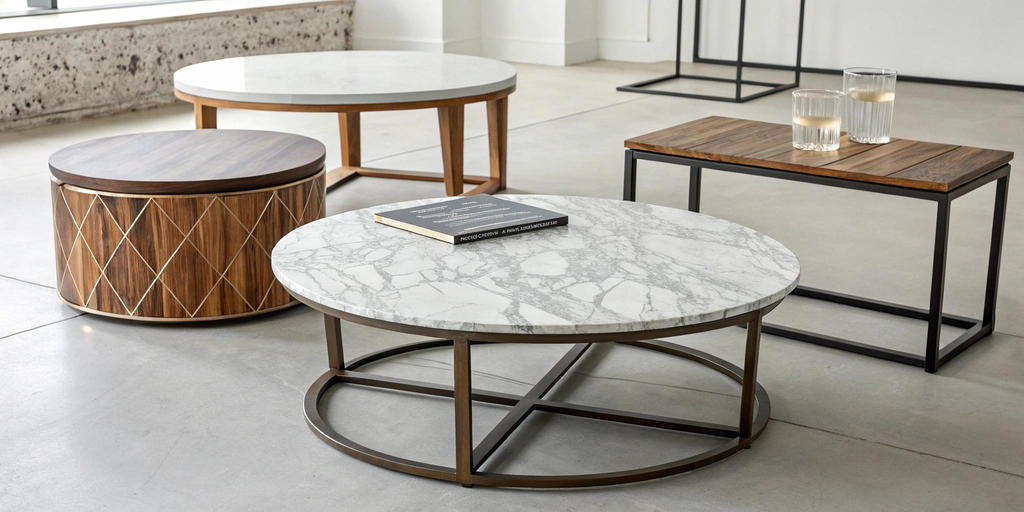
Shape is only one part of the decision. Material can completely change how a coffee table looks and feels, even when two tables have identical dimensions. A round oak table can look warm and relaxed, while a round glass design may feel light and contemporary. The same is true for rectangular tables: a chunky timber design can feel traditional, while a slim metal frame can create a more modern appearance.
Wood is a versatile option for both shapes. It brings warmth and texture into the room and works with a wide range of decorating styles. Light oak, ash, and natural finishes can suit Scandinavian-inspired interiors, while darker walnut tones can add depth and richness. If your living room already has wooden furniture, try to coordinate undertones rather than insisting that every piece has exactly the same finish.
Glass coffee tables are useful when you want a lighter visual effect. Because you can see through the tabletop, the table may appear less bulky than a solid piece of furniture. This can be helpful in a small room, although glass requires regular cleaning and may not be the most practical choice for every household.
Metal and stone introduce a different character. Black metal can give a table an industrial or contemporary edge, while marble and stone-look finishes can create a more luxurious appearance. These materials may be visually heavier, so pay attention to the size and base design.
| Material | Overall appearance | Practical consideration |
|---|---|---|
| Solid wood | Warm and timeless | Can be heavy; finish affects maintenance |
| Glass | Light and modern | Shows fingerprints and needs regular cleaning |
| Metal | Sleek and contemporary | Check stability and finish quality |
| Marble or stone | Elegant and substantial | Often heavy and may need careful maintenance |
| Rattan or woven materials | Relaxed and natural | Check construction and cleaning requirements |
Try to choose a material that complements your existing furniture instead of competing with it. A room with soft fabrics and natural textures may benefit from a warm wooden table. A minimalist interior with clean lines might look better with glass, metal, or a simple sculptural base.
How to Choose the Right Coffee Table Size
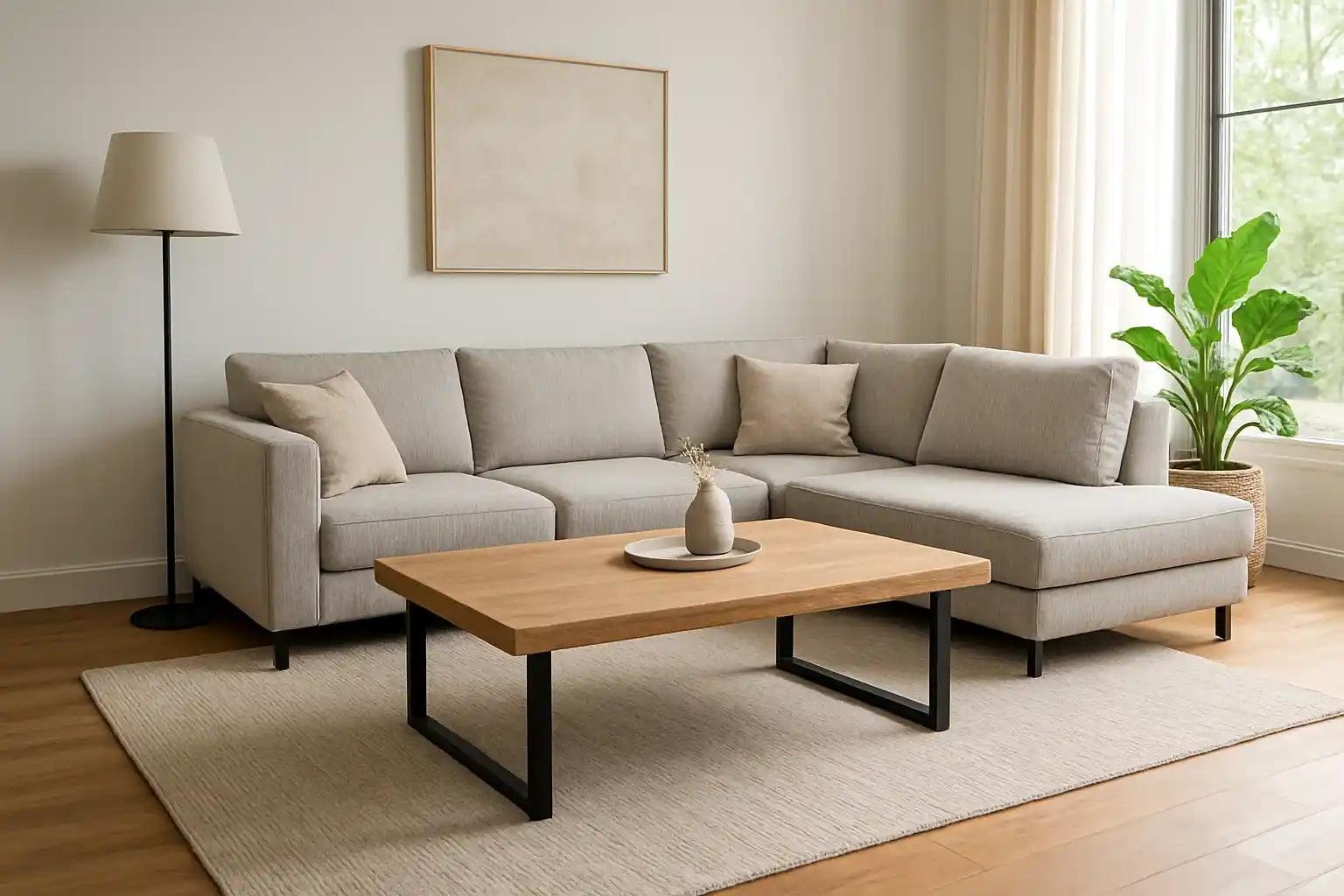
Even the most beautiful coffee table can look wrong if its proportions don’t suit the room. A table that’s too large can make the seating area feel cramped, while one that’s too small may look disconnected from the sofa. Before deciding between round and rectangular, take a few measurements.
Start with the sofa. As a general design guideline, a coffee table is often around two-thirds the length of the sofa, although the ideal proportion depends on the layout and table style. A compact loveseat may need a much smaller table, while a long sectional can accommodate a larger design.
Next, consider the height. Many coffee tables sit close to the height of the sofa seat or slightly lower. A table that’s dramatically higher can feel uncomfortable, while one that’s too low may be difficult to reach. Compare the table’s height with your sofa cushion rather than guessing from product photos.
Finally, check the space around the table. You need enough room to walk comfortably and pull your legs forward while seated. If the table will sit between a sofa and a TV unit, measure that entire gap. Don’t forget drawers, doors, and reclining furniture that may need additional clearance.
Use this simple checklist before buying:
- Measure the length and height of your sofa.
- Measure the open floor area in the seating arrangement.
- Check the distance between the table and nearby furniture.
- Consider the tabletop size you need for everyday activities.
- Check whether the base will interfere with seating or legroom.
- Measure doorways and entrances if the table is large or heavy.
If you’re unsure, use painter’s tape or cardboard to outline the proposed table size. This gives you a realistic idea of how much floor space the table will occupy. It’s a simple step, but it can prevent an expensive furniture mistake.
How to Style a Round or Rectangular Coffee Table

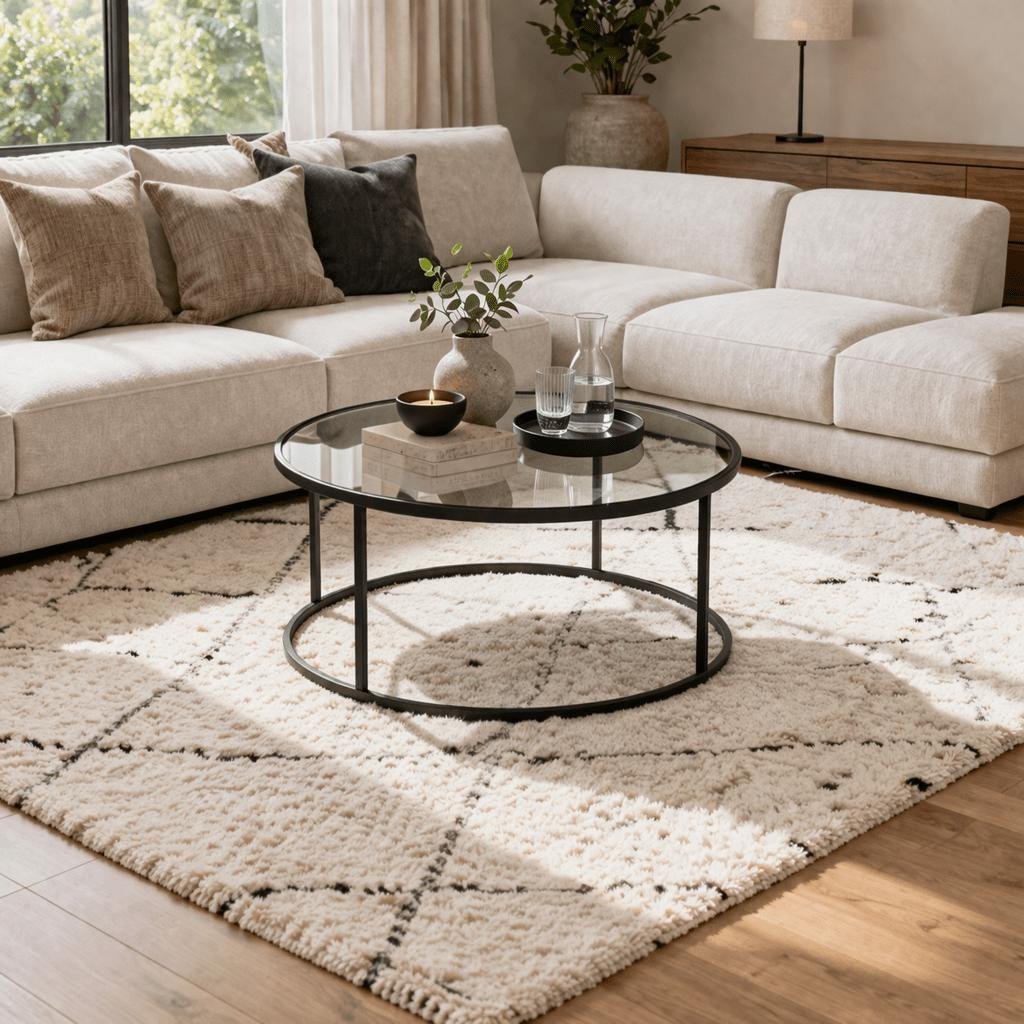
Once you’ve chosen the shape, styling helps the table feel like a natural part of the room. You don’t need a huge collection of accessories. A few carefully selected pieces can create a polished look while leaving enough space for everyday use.
For a round coffee table, try a compact arrangement that follows its circular shape. A small tray can hold a candle and a decorative object, while a low vase or bowl can add height and texture. Avoid placing too many large items around the edge because they can make the tabletop feel crowded. Keeping the arrangement relatively centered usually creates a balanced appearance.
Rectangular coffee tables give you more room to experiment with different groupings. You might place a stack of coffee table books at one end, a tray in the center, and a small vase at the other end. Another approach is to arrange objects in a loose triangle, using different heights to create visual interest. Leave some open space so the table remains practical.
Here are a few easy styling ideas:
- Add a tray: Use one to group small accessories and make them easier to move.
- Include books: A small stack adds color, texture, and personality.
- Use natural elements: Flowers, branches, or a simple plant can soften the arrangement.
- Mix heights: Combine a low bowl with a taller vase or candle.
- Leave breathing room: Don’t cover every inch of the tabletop with decorations.
- Coordinate finishes: Repeat a material or color already found elsewhere in the room.
Think about the rest of your living room, too. If the sofa has patterned cushions, choose simpler accessories for the coffee table. If the room is mostly neutral, a decorative object in a contrasting color can add personality. The goal is to create a connection between the table and the wider room rather than making the tabletop look like a separate display.
Common Coffee Table Shopping Mistakes to Avoid
Shopping for a coffee table can be surprisingly tricky because product photos rarely show how a piece will look in your actual living room. A table may appear compact in a large showroom or online image, but feel enormous once it sits in front of your sofa. Avoiding a few common mistakes can help you make a better decision.
One frequent mistake is choosing a table based only on appearance. It’s easy to fall in love with a sculptural design, but think about how you’ll use it every day. If you need a place for drinks, books, and snacks, a tiny decorative table may not provide enough surface area. If you mainly want something to complete the seating arrangement, a simpler design may be perfectly suitable.
Another mistake is ignoring the walking space. A coffee table should fit naturally into the room without blocking the main route through it. Always measure the gap between the sofa, table, and nearby furniture. A few inches can make a meaningful difference when you’re moving around the room every day.
People also sometimes choose a table that’s too heavy visually. A dark, thick table can dominate a small living room, even when its physical dimensions are reasonable. If your room feels crowded, consider a lighter finish, open base, glass top, or slimmer design.
Other mistakes to watch for include:
- Buying a table without measuring the sofa first.
- Choosing a height that feels uncomfortable from the sofa.
- Ignoring the table’s base and available legroom.
- Selecting a material that is difficult to maintain.
- Forgetting about children, pets, or everyday household activities.
- Choosing a trendy shape that doesn’t suit the room’s layout.
- Filling the tabletop with too many decorative objects.
One final mistake is assuming that a round table is always better for small rooms or that rectangular tables only belong in large spaces. Those are general tendencies, not rules. A narrow rectangular table can fit a compact room beautifully, and a large round table can become overwhelming if it doesn’t leave enough space to move around.
Final Verdict: Round or Rectangular Coffee Table?
So, which shape should you choose? If you want a softer appearance, prefer curved furniture, or need to make movement easier in a compact seating area, a round coffee table may be the better fit. Its curved edges can balance angular furniture, and its shape often works well in relaxed conversation areas. It’s also worth considering if your room has a curved sofa or a layout where people approach the table from several directions.
A rectangular coffee table may be the stronger choice if you have a long sofa, need a generous tabletop, or want extra room for storage and decorative arrangements. Its structured outline works naturally with many traditional sofa layouts, and it can provide a practical surface for families and people who entertain regularly.
Here’s a quick way to make your decision:
| Choose a round coffee table if… | Choose a rectangular coffee table if… |
|---|---|
| You want softer lines | You prefer a structured look |
| Your seating area is compact | Your sofa is long |
| You have curved furniture | Your furniture has straight lines |
| You want to avoid pointed corners | You need a larger tabletop |
| You prefer a central decorative arrangement | You want room for several accessories |
| You want a relaxed conversation layout | You need practical surface and storage space |
If you’re still undecided, look at your room’s existing shapes. A living room filled with straight lines may benefit from a round table, while a room with lots of curves might look more balanced with a rectangular design. You can also consider an oval table as a middle ground: it offers a longer surface than many round tables while keeping softer edges.
The most important thing is to choose a table that fits your room and your routine. A beautiful coffee table should make daily life easier, not create another obstacle to work around.
Conclusion
When comparing a round vs rectangular coffee table, there isn’t one shape that wins in every living room. Round coffee tables bring softer lines, a relaxed appearance, and a shape that can work particularly well in compact or curved seating arrangements. Rectangular coffee tables offer a larger, more structured surface and often pair naturally with long sofas, making them useful for families, entertaining, and everyday storage.
Before making your choice, measure your room, check your sofa proportions, and think about how you actually use the living area. Pay attention to the table’s material, height, base, and overall visual weight, too. Those details can matter just as much as its shape.
Ultimately, the best coffee table is the one that makes your living room feel comfortable, balanced, and easy to use. Whether you choose a simple round wooden table or a spacious rectangular design, let your room’s layout and your everyday needs guide the decision.
Frequently Asked Questions
1. Is a round or rectangular coffee table better for a small living room?
A round coffee table can work particularly well in a small living room because it has no pointed corners and may make movement around the seating area feel easier. However, a slim rectangular table can also be a great option when positioned alongside a loveseat or narrow sofa. The best choice depends on the room’s dimensions, walking routes, and furniture arrangement.
2. Should a coffee table be higher or lower than the sofa?
A coffee table is generally most comfortable when its top is close to the sofa seat height or slightly lower. The exact height depends on the sofa and how you use the table. Compare the measurements before buying, and avoid choosing a table that feels awkward to reach from a seated position.
3. Does a round coffee table work with an L-shaped sectional?
Yes. A round coffee table can look excellent with an L-shaped sectional because its curved shape softens the straight lines of the sofa. Make sure the diameter is large enough to serve the seating area but small enough to leave comfortable walking space around it.
4. What shape coffee table is best for a family with children?
A round coffee table may be worth considering because it doesn’t have pointed tabletop corners. Still, shape alone doesn’t guarantee safety. Choose a stable design with a sturdy base, appropriate height, and durable finish. Keep in mind that very young children still need supervision around furniture.
5. How do I know what size coffee table to buy?
Start by measuring your sofa and the available floor area. As a general guideline, many coffee tables are around two-thirds the length of the sofa, but this is flexible. Check the table height, allow comfortable space between the sofa and table, and make sure there is enough room to walk around it without squeezing past other furniture.


Leave a Reply